
The boho dining room decor ideas below range from a single afternoon swap to full weekend builds, depending on how far you want to push the collected-over-time feel.
What decides your move is whether you rent or own, because the best accents, layered rugs, macrame walls, and flexible pouf seating, leave no scar and move with you.
The hard limit is three textures or colors per space. Cross it and the eye bounces instead of resting.
1. Mix and Match Furniture Styles

A vintage wooden table with modern chairs, or a sleek bench pulled up against ornate antique seating, gives a dining room the collected-over-time feel that defines boho style.
The mix works because the eye reads the pieces as individual finds rather than a showroom set, and that slight tension between eras keeps the space from looking staged.
The practical question is how far to push the contrast.
I would keep at least one thread consistent: seat height within about two inches so no one is towering over their neighbor, or a shared wood tone that lets a carved Victorian chair sit beside a clean-lined Scandinavian piece without chaos.
Color can tie mismatched chairs together too, all white or all natural wood, so the shapes vary but the palette holds.
"Combine different chair styles, materials, and colors around your dining table for a laidback look… Mix wooden chairs with metal bistro chairs, or even add floor pillows for a casual and inviting dining experience."
That "laidback" part matters. A boho dining room is meant for long meals and pulled-up guests, not a formal seating chart.
I would skip the floor pillows for everyday use unless you genuinely live cross-legged, but a bench on one side of the table, antique chairs on the other, and maybe a single modern accent chair at the head: that asymmetry is the move.
It costs less than a matching set, lets you buy pieces as you find them, and the bench alone doubles your seating when friends show up unannounced.

Ergonomic Curved Backrest & Breathable Rattan Design: Experience lasting comfort with our 110-degree angled backrest engineered for perfect lumbar alignment. The hand-woven rattan panel ensures continuous airflow during extended dining sessions, merging mid-century modern chair aesthetics with practical functionality. Ideal as versatile chairs for dining table setups in both casual and formal spaces.

Ergonomic Curved Backrest & Breathable Rattan Design: Experience lasting comfort with our 110-degree angled backrest engineered for perfect lumbar alignment. The hand-woven rattan panel ensures continuous airflow during extended dining sessions, merging mid-century modern chair aesthetics with practical functionality. Ideal as versatile chairs for dining table setups in both casual and formal spaces.
2. Natural Materials

Light oak and maple tables ground a boho dining room in something you can actually live with.
I would pick maple if the space gets afternoon sun; it takes amber tones over time instead of going sallow like some harder woods. The grain stays quiet, which matters when you are already layering patterns elsewhere.
Rattan chairs carry the same warmth into seating.
The weave breathes, so the room does not go flat against drywall, and the hollow frames keep visual weight low. That lightness is what separates boho from the heavier farmhouse look it sometimes gets mistaken for.
For accents, jute underfoot and bamboo overhead do the most work for the least money.
A jute runner costs less than most wool alternatives and wears honest dirt without looking ruined. Bamboo pendant lights, like the Bayou Breeze style from Wayfair, throw patterned shadows that act as extra decoration after dark.
Water hyacinth and seagrass show up in basket storage or chair backs, but I would skip them for primary seating. They sag faster than rattan and read more coastal than bohemian to me.
The real move is mixing these fibers against each other: smooth maple tabletop against raw jute, tight rattan weave against looser bamboo grain. That contrast builds the organic feel without adding a single extra color.

100% Natural Jute: Crafted from premium soft jute fibers sourced from sustainable plants, our rugs are fully handmade and biodegradable. Each rug undergoes rigorous quality...
3. Vibrant Textiles and Patterns

Layered fabrics do the heavy lifting in a boho dining room, and the table is where I start. A kilim runner laid lengthwise grounds the whole setup with geometric pattern and flat-woven texture that reads handmade, not mass-produced.
I pair it with block-printed napkins, the kind with slight imperfections in the dye, because perfect symmetry fights the relaxed mood this style needs.
Embroidered cushions on the chairs add the third layer; linen or cotton covers in running stitch or mirror work hold up to actual use and only look better as they soften.
The color story matters more than the individual pieces. I keep the base quiet: whites, beiges, terracotta on walls and larger furniture so the room does not compete with itself.
The textiles carry the bold accents. Deep blue and mustard are the two I reach for most, delivered through that runner, those napkins, or a single cushion cluster at the head chairs.
Two saturated colors against a warm neutral field is enough; a third starts to look like you are trying too hard.
The layering works because each fabric has a different job: the runner anchors, the napkins rotate with the season, and the cushions invite someone to stay past dessert.

Large Size: This large tapestry wall hanging measures about 43" x 32", making it a bold centerpiece for any room. Its generous scale fills your wall with rich texture and natural boho beauty (lroning makes the tassels straighter and nicer)

Large Size: This large tapestry wall hanging measures about 43" x 32", making it a bold centerpiece for any room. Its generous scale fills your wall with rich texture and natural boho beauty (lroning makes the tassels straighter and nicer)

Unique 3-in-1 Modular Design: Unlike traditional one-piece wall hangings, this boho macrame wall hanging features three connectable wooden rods that can be displayed together as a striking 39 x 29.5 inch statement piece or arranged separately to suit different wall sizes and layouts. Create a look that perfectly fits your space and style
4. Greenery and Plants

Plants are the one element that keeps a boho dining room from feeling like a furniture showroom.
A tall fiddle-leaf fig in a woven basket anchors a corner with height and structure, while trailing pothos on a shelf softens edges and draws the eye upward.
Small succulents on the table keep the greenery present without blocking sightlines across the room.
The mix of sizes matters more than the specific plants; a single large specimen reads as an afterthought, but three scales layered together looks intentional and lived-in.
Low-maintenance varieties win here. Pothos and snake plants tolerate the inconsistent light most dining rooms get, and they forgive a missed watering during a busy week.
Dried flowers or leaves work if you travel often or lack the light even easy plants need; they give the same natural texture without the upkeep.
Woven baskets rather than ceramic pots keep the look grounded and rustic, the right way to bring the outside in.
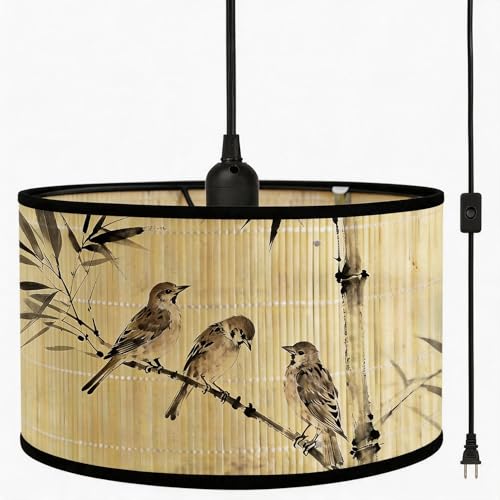
Easy Snap Fit Assembly:Unique design lets you assemble the lampshade and hanging rattan lamp frame in seconds. No tools needed. Assembly demo video included.

[Perfectly Compatible with Standard Lighting Fixtures] Diameter: 11.8 inches, Height: 7.9 inches (30x20 cm). Equipped with three adapter designs to ensure secure installation on most standard desk lamps, floor lamps, and chandelier fixtures without any movement.

DESIGN: Bamboo, Metal, Elegant and unique design style
5. Layered Rugs
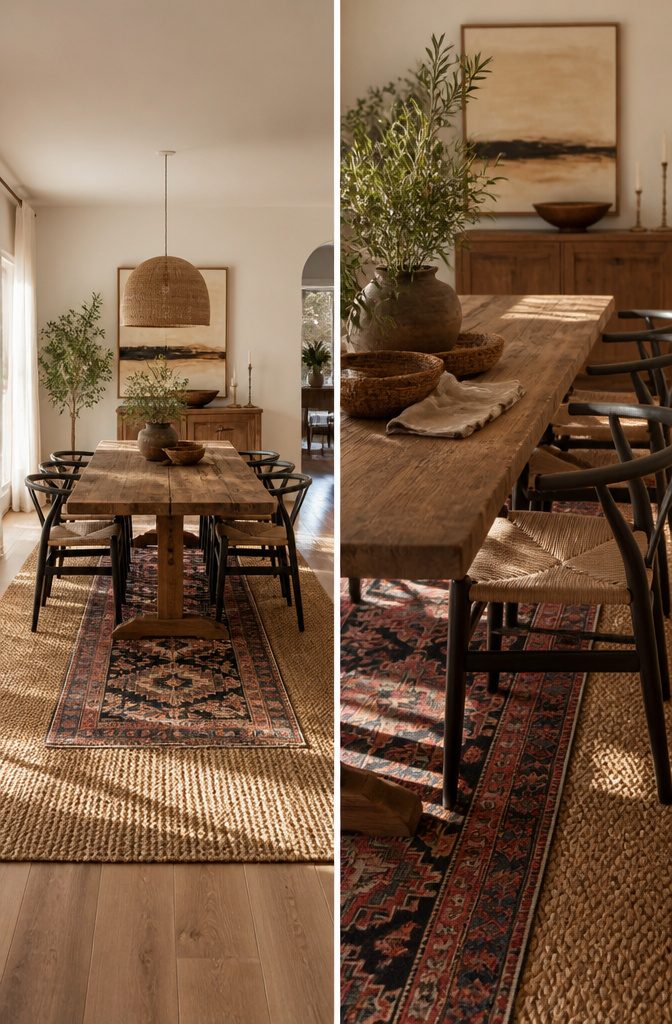
Layering a rug is the move that separates a boho dining room from a room that just has a rug in it.
I start with a large woven base in jute or sisal, something that can take the traffic and the chair scraping without fussing, then set a smaller piece on top for the color and pattern.
The base does the hard work of defining the zone under the table, especially when you are working with bare floors or wall-to-wall that you cannot change.
The top layer adds the depth and textural interest that makes the space feel collected rather than bought as a set.
The technique works because the two rugs talk to each other without matching. A rush or natural jute ground keeps things earthy and anchors the room, while the smaller vintage or brighter piece on top brings the warmth.
I would skip anything too precious on top; this is a dining room, and red wine happens.
The layered look also lets you adjust seasonally or swap the top rug when the mood shifts, which I find more practical than committing to one statement piece.
For a weekend project on a real budget, this is the single change that reads as design rather than decoration.


Comfort Support: Our upholstered dining chairs are designed for lasting comfort, the 3.9-inch thick plush cushion which is filled with high-density foam provides soft support and breathability. The curved supportive backrest of these dining room chairs give more support to your spine's natural shape. This ergonomic design of the dining chairs set of 4 helps enhance comfort, making it ideal for long meals, conversations, or working at the table.

NATURAL MATERIALS: The natural rattan in oak tone is artfully hand-woven to create this graceful backrest. It’s cheerful and eye-catching to pair high-quality velvet fabric cushion filled in high-density sponge, having the advantages of permeability and comfort. The breathable mesh rattan backrest helps to ventilate rooms and dissipate heat, maintaining a cool and dry sitting feeling. In addition to the optimal material, this distinctive dining chair is nearly prefect
6. Vintage and Antique Finds
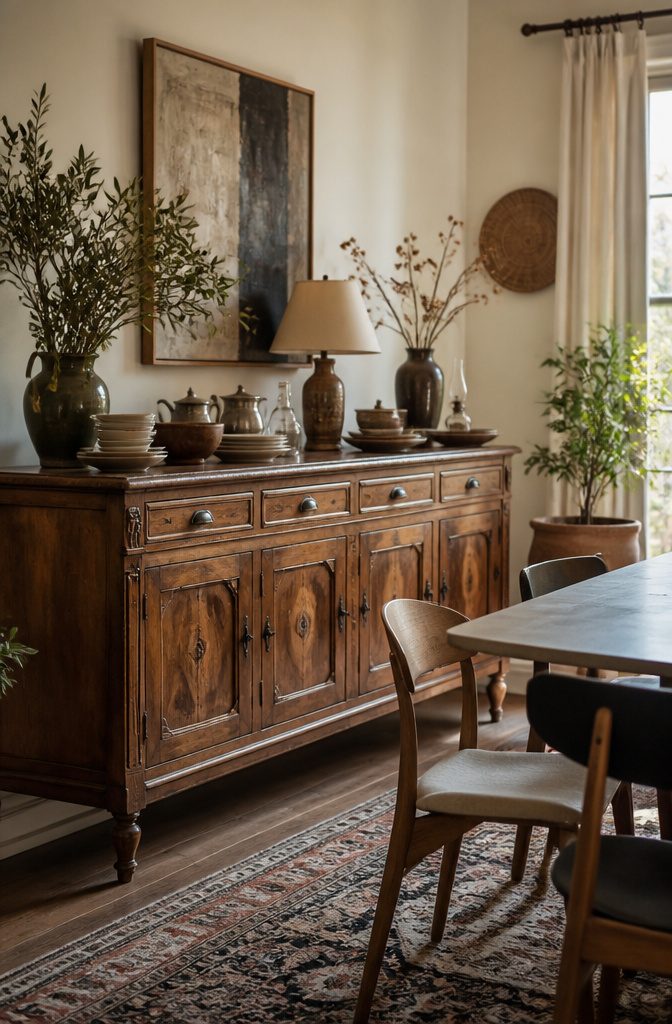
A vintage sideboard or retro bar cart anchors a boho dining room in a way no flat-pack piece can. The surface has settled, the joints have shifted slightly, and that patina carries weight that new paint mimics poorly.
I would start with estate sales and flea markets, where mid-century modern chairs turn up for less than a set of reproductions and carry actual provenance.
Thrift stores and secondhand furniture shops round out the hunt, and I have seen the best finds come from family attics: a relative’s old hutch, forgotten Italian painted plates, a bar cart nobody wanted.
These pieces do not match, and that is exactly right. Mix them with what you already own; the tension between a 1960s chair and a table from last year is what makes the room feel collected rather than decorated.
The limit is space. One or two substantial vintage pieces per room is enough; more and the dining area starts to read as storage.
I would skip the antique dishes unless I planned to use them; display-only collectibles gather dust and demand justification. A single functional piece with age on it beats a shelf of untouched curiosities.

Hand-woven rattan backrest:A comfortable and breathable PE rattan backrest that keeps you cool during long meals. The curved armrests and backrest design perfectly fit the posture of your arms, providing comprehensive support for your back and waist
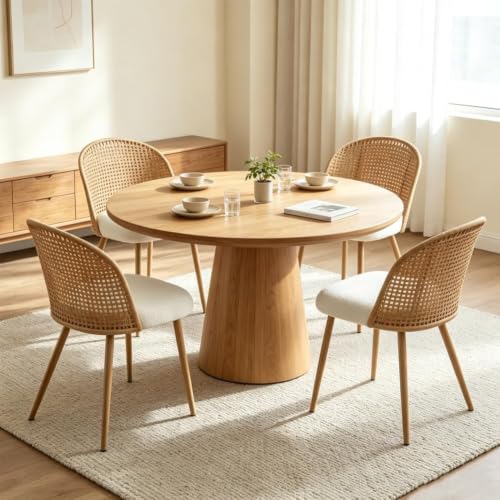
Hand-woven rattan backrest:A comfortable and breathable PE rattan backrest that keeps you cool during long meals. The curved armrests and backrest design perfectly fit the posture of your arms, providing comprehensive support for your back and waist

Farmhouse-Boho Rattan Dining Chairs for a Warm, Stylish Home: Add natural texture and cozy charm to your dining space with these rattan dining chairs. Designed with a warm wood-look frame, handcrafted woven rattan back, and smooth faux leather seat, they bring a relaxed farmhouse-boho feel without looking heavy or outdated. The white seat option creates a bright, airy look, while the brown seat option adds a warmer vintage touch—easy to pair with wood, marble, glass, rustic, or modern dining tables. Pair them with the matching rattan bar stools to create a cohesive farmhouse-boho look across your dining room, kitchen island, or counter area.
7. Statement Lighting
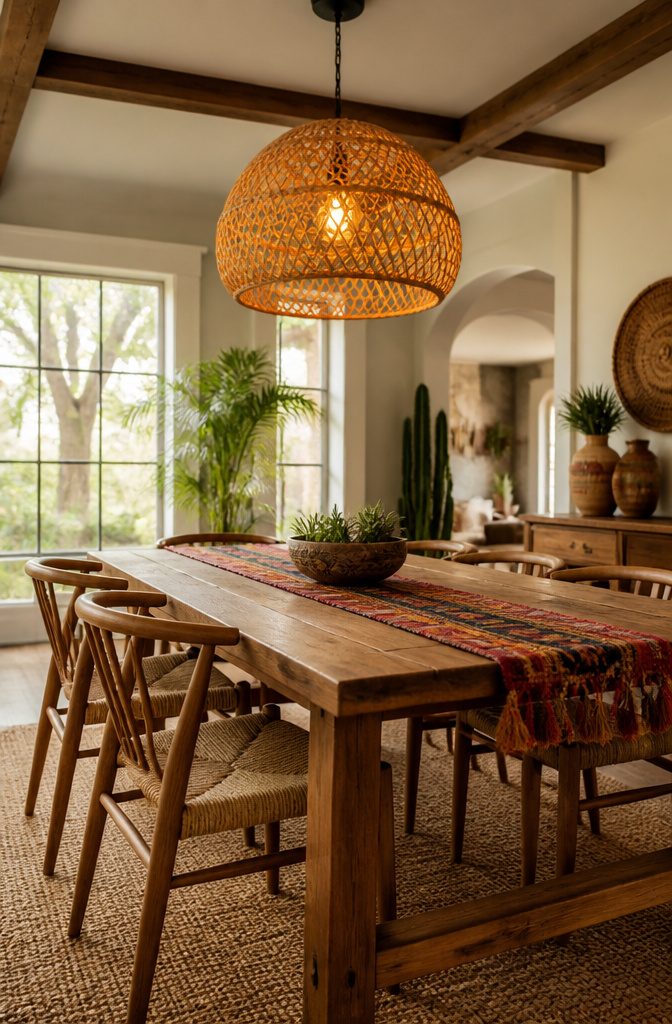
Woven pendant lights, rattan chandeliers, and oversized natural-fiber fixtures are the single fastest way to anchor a boho dining room.
The weave filters light into something warm and directional, not flat overhead glare, and the texture itself becomes the visual center when the table is clear.
Sizing is where most people misstep. A fixture too large for the room drops the ceiling visually and turns cozy into cramped; too small and it reads as an afterthought rather than a statement.
Hang it 30–36 inches above the table surface, and choose a diameter roughly one-third your table width as a working rule.
Rattan, bamboo, sedge, or seagrass all work; I lean toward rattan for its tighter weave and cleaner edge, but a looser bamboo weave throws more interesting shadows if your walls are plain.
Layer in lower light for actual meals. A pendant alone at full brightness is harsh; add candles or a dim table lamp and you get the atmosphere the style promises.
The Mistana Frese Chandelier from Wayfair and the Bayou Breeze Bamboo Light are two solid starting points I’ve seen hold up well in real rooms, both under that natural-fiber umbrella but reading quite different in density.

CLASSIC VINTAGE AESTHETIC BEIGE RUG: The area rug 8x10 features a harmonious blend of beige tones that evoke a timeless vintage charm, making it an ideal addition for any room in your home—from retro bohemian and rustic farmhouse to modern minimalism. Perfect rugs for living room, bedrooms, dining room rugs for under table, entryways, playrooms, or home offices, this 8x10 rug serves as the finishing touch to your interior flooring decor

ROUND JUTE RUG-These 6 ft (6x6ft) Natural Round Area Rugs are handcrafted by artisan rug makers from 100% natural premium Jute and cotton that is elegant and feels soft on bare feet. With its round design, this rug is a perfect way to add balance to a room or incorporate a softer element into an interior design. Embracing the warm, natural colors of jute this rug is very versatile and will suit a variety of home styles.
8. Artwork and Personal Decor

Collected pieces, travel finds, and handmade items are what separate a boho dining room from a styled catalog set.
A gallery wall mixing framed prints, paintings, and macrame hangings lets you show off what you’ve actually gathered rather than what arrived in a single shipment.
I would lean toward leaning art against the wall on a shelf or sideboard instead of hanging every piece; it reads more casual and makes swapping things out easier when you bring home something new from a flea market or trip.
Rotating the display keeps the room from freezing into one look. Vintage dishes, wicker baskets, and family photos mixed in with the art give the sense that someone lives here, the real mark of the style.
Four sources back this approach for making a space feel inhabited rather than staged: the collected element is the personality layer that pulls everything else together.
I would skip the perfectly symmetrical grid and let the arrangement stay slightly off-balance; the asymmetry is what makes it feel found rather than planned.

【Product Size:】Macrame tapestry wall hanging11.8" W x 19.7" L (30x50cm).Per its length and width, it is recommended to choose a spacious wall to hang it on and showcase its beauty and artistic value.

Materials- natural cotton.

【Premium Quality Material】Macrame Wall Decor boho art is handcrafted using the materials of cotton cords and 3 wooden sticks that need to assemble. Large macrame wall decor tapestry is completely handcrafted and carefully woven living room wall decorations, made from natural ropes with careful knotting considerations, and the distance between each macrame rope can be easily adjusted.
9. Soft Neutral Palettes With Color Pops

A soft neutral base of white, beige, or terracotta on the walls and larger pieces gives a boho dining room its breathing room.
I would start there every time. The bolder colors, deep blue, mustard, emerald green, come in through what you swap out: a runner, a set of napkins, a ceramic bowl on the table.
That division matters because an all-neutral room goes flat in a space you actually live in, and an all-bold room exhausts the eye before the first course hits the table.
For the base palette, stick to beige and white with warm earth tones; gray is a gamble that some sources warn against.
I would skip gray here; it pulls cool against the oak, rattan, and jute that make boho feel grounded.
Terracotta as the wall color with mustard textiles is the combination I would bet a weekend on, it warms the room without committing you to a single accent story forever.
Renters especially get the benefit: repaint the walls once if you must, but change the textiles seasonally for almost no cost and no landlord conversation.
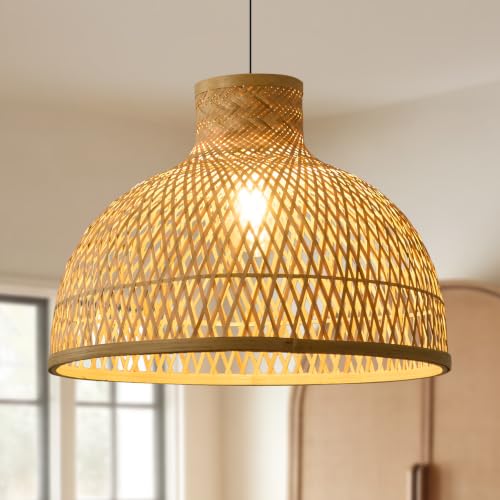
PREMIUM HAND-WOVEN NATURAL BAMBOO : The natural bamboo pendant light is handcrafted from 100% natural bamboo strips into an intricate woven dome shape by skilled artisans. The bamboo surface preserves its raw organic grain to present pure natural beauty.

【Bamboo Pendant Light】Both simple and stylish, The perfect combination of natural bamboo rattan and light, the bamboo hanging lights with bamboo lampshade. Bamboo light fixture gives a pleasant atmosphere for kitchen, bedroom, dining Room, farmhouse, and other decorative accasions.

10. Unique Wall Decor

A boho dining room wall lives on texture more than paint. Macrame hangings, woven baskets, textile art, and mixed-frame galleries all do the same job conventional art tries to do, but they add depth without asking for floor space.
I would start with a single large macrame piece if the wall is bare, something hand-woven in a simple pattern rather than an intricate one; the texture reads from across the room, and the loose knots catch light in a way flat canvas cannot.
Woven baskets and wicker chargers mounted in a loose trail give that collected-over-time feel the style depends on.
Small nails hold most lightweight woven pieces, so this is a Saturday project that costs little and leaves no scar when you move.
I have seen this done with actual chargers pulled from kitchen cupboards, which keeps the budget near zero and ties the dining room back to its function.
The risk is clutter.
A mixed gallery of prints, textiles, and souvenirs only works if the frames share one quiet element, maybe wood tone or a consistent mat width. Without that thread, the wall becomes storage, not design.
My rule: one material type per wall, or one color story running through everything. Textile art softens the hardest spaces, but it collects kitchen grease faster than framed paper, so hang it where the range hood does not blow.

【Superior Material】The french dining chair is upholstered for comfort and elegance. The frame and legs of the chair are made of rubber wood, which provides enough safety to hold up to 280 lbs. The seat cushion has high-rebound foam to provide you with a comfortable seating experience. There are small anti-scratch feet on the bottom of each leg to prevent damage to the floor.

Authentic Medieval Charm: Elevate your home with these meticulously crafted Medieval-style dining chairs. Their compact yet comfortable design exudes timeless elegance, making them an ideal choice for any household seeking a touch of historical allure.

TIMELESS STYLE: Our design pays homage to Marcel Breuer’s timeless “cesca” chair from 1928. The combination of tubular chrome tubing, cane back, and upholstered seating creates a design which is both classic and modern allowing these chairs to integrate seamlessly with virtually any interior decor making them a worthy investment for both your personal or professional spaces
Accent Walls and Vertical Interest

A concentrated wall treatment pulls the eye upward and gives a small dining area breathing room it would not have otherwise.
I would cluster framed prints, tapestries, and macrame hangings on one wall rather than scattering them around the room, because a single vertical focal point reads as architecture instead of clutter.
The Desenio approach Nina describes, mixing paintings with woven pieces, works because the varied textures keep the eye moving without demanding more floor space.
For renters especially, this is a layout fix that costs almost nothing and leaves no mark when you move.
A large hand-woven macrame piece, simple or intricate depending on the wall size, anchors the collection and adds the warmth that bare drywall drains away.
I would skip the family-photo garland the Real Homes piece suggests; it tips the balance toward scrapbook and away from the collected, traveled feel that makes boho read as intentional.
Keep the arrangement tight, within a rough rectangle no wider than your table, and let the ceiling height do the rest of the work.
Floor Cushions and Flexible Seating

Floor cushions and poufs are the seating equivalent of leaving your shoes by the door: a signal that nobody here is keeping up formalities.
I keep a pair of 24-inch woven seagrass poufs tucked under a console table behind my dining chairs.
When a sixth person shows up for tacos, they slide out in ten seconds. When they are not needed, they read as texture, not clutter.
The real advantage is that nothing is bolted down or sized for a specific table.
A floor cushion works with a 28-inch dining table, a coffee table pressed into service, or nothing at all if people are eating cross-legged on a layered rug.
That flexibility is what separates boho from the matching-set look. I would skip the oversized floor pillows that are basically dog beds; 18 to 20 inches in diameter is enough to get you off the floor without swallowing the room.
Materials matter more than pattern here. Recycled wood stools, rattan, water hyacinth, natural fiber weaves: the same sources that work for your permanent furniture keep the temporary seating from looking like an afterthought.
The Intelligent Design Studio Azza Floor Pillow is one I have seen used on a bench for extra cushioning or directly on the floor; either way, it keeps the casual, inviting feel without drifting into dorm-room territory.
Trade-off: this is not your primary seating. Two hours on a pouf and your guests will be scouting the couch.
For a long dinner, I would still want real chairs. For the hour-long, wine-fueled gathering that stretches to three, floor seating keeps the energy loose in a way rigid chairs never do.
Sustainable and Secondhand Choices

Sustainability in boho dining room decor is not a separate checklist. The style already runs on recycled wood, rattan, seagrass, and water hyacinth because those materials read warmer and wear better than factory-fresh alternatives.
I would start with a secondhand table base and add a new top if the old surface is too far gone; you keep the character without the wobble.
Thrift stores and flea markets are where boho actually gets built.
A vintage cabinet with mismatched hardware, antique dishes with hand-painted wear, a single rattan chair that does not match the others: these are the pieces that keep the room from looking like a catalog spread.
The hunt is the work, but the hunt is also why the result feels lived-in rather than staged.
I draw the line at forcing a find to fit. A too-large hutch blocks sightlines and traffic; a chair with a cracked frame stays broken.
Better to wait for the right piece than to build the room around a mistake. The sustainable choice is the one you will keep using, not the one that lands in another thrift pile six months later.
Modern Boho vs. Traditional Boho

Modern boho dials the clutter down and the structure up. Where traditional boho piles on pattern, color, and collected objects, modern boho keeps three textures or colors per space and lets negative space do some of the work.
I would swap the saturated jewel tones for a base of white, beige, or gray, then add warmth through natural materials like rattan, jute, and unfinished wood rather than through competing prints.
The furniture mix stays, but I would tighten it. One vintage piece per room is plenty; pair it with cleaner-lined modern chairs or a simple table so the eye has somewhere to rest.
Traditional boho layers rugs for depth, and I would keep that move in modern boho too, just with a large jute or sisal rug under a smaller, quieter weave instead of two loud patterns fighting each other.
Plants matter in both versions, though I would limit the variety in modern boho.
A few well-chosen shapes beat a crowded indoor jungle. Sustainable materials tip toward modern boho by default now, since thrifted and handmade pieces read as collected rather than chaotic when the lines around them are simple.
For renters and weekend projects, modern boho wins on practicality.
It is easier to add a woven wall piece and a potted plant than to source a full mismatched vintage set, and the neutral base moves with you to the next place.
Avoiding Clutter While Keeping Character

The line between collected and crowded in boho dining room decor is thinner than most people realize, and three textures or colors per space is where I draw it.
A woven pendant, a reclaimed wood table, and linen chairs give you plenty to look at without competing for attention; add a fourth texture and the eye starts bouncing instead of resting.
Alternating statement pieces with negative space keeps the room breathable. I would group a single large macramé wall hanging with a low bowl of dried pampas on the table, then leave the adjacent wall completely bare.
The same rule applies to surfaces: a runner and a cluster of candlesticks on one end of the table, nothing but the wood grain on the other.
For small dining areas, lightweight furniture and vertical wall decor keep the floor plane open, which matters more than any single piece you add. Foldable chairs tucked against a wall when not in use preserve that flexibility.
Vintage finds and mixed patterns work here, but only within the color limit. Stripes, florals, and geometric prints can coexist if they share a muted palette; two competing palettes in one room is where the clutter starts.
I would skip the gallery wall in favor of one oversized piece, or trade the full shelf of ceramics for three vessels in the same tone.
The restraint reads as confidence, and the pieces you keep get the attention they deserve.
Frequently Asked Questions
What defines “modern boho” compared to traditional boho?
Modern boho keeps three textures or colors per space and lets negative space do some of the work, while traditional boho piles on pattern, color, and collected objects.
A modern version uses a base of white, beige, or gray and adds warmth through natural materials like rattan, jute, and unfinished wood rather than competing prints.
One vintage piece per room is plenty; pair it with cleaner-lined modern chairs so the eye has somewhere to rest.
How do I balance boho accents without clutter?
Limit yourself to three textures or colors per space, and alternate between statement pieces and negative space.
Group a single large macramé wall hanging with a low bowl of dried pampas on the table, then leave the adjacent wall completely bare. That restraint reads as confidence, and the pieces you keep get the attention they deserve.
Can boho style work in small dining areas?
Yes.
Choose lightweight furniture, vertical decor like wall hangings, and foldable chairs to keep the area airy and versatile. A concentrated wall treatment pulls the eye upward and gives a small dining area breathing room it would not have otherwise.
Keep the arrangement tight, within a rough rectangle no wider than your table, and let the ceiling height do the rest of the work.
What’s the best way to introduce boho on a budget?
Start with a single change that reads as design rather than decoration: layer a large jute or sisal rug with a smaller vintage piece on top, or swap your table runner for a kilim style.
Thrift stores and flea markets are where boho actually gets built; a vintage cabinet with mismatched hardware or a single rattan chair that does not match the others keeps the room from looking like a catalog spread.
How often should I update my boho decor?
Rotate textiles and tableware seasonally, and refresh greenery quarterly.
The neutral base of white, beige, or terracotta on walls and larger pieces stays constant, while runners, napkins, and cushions swap in and out for almost no cost. This keeps the space feeling dynamic without major redesigns.
Is boho decor out of style in 2026?
No. The style continues to evolve, with modern boho now favoring cleaner lines, muted palettes, and sustainable materials for a refreshed look.
The emphasis on natural fibers, thrifted finds, and flexible seating aligns with broader trends toward sustainability and casual living that show no sign of fading.
What are the dining room decor trends for 2026?
The direction leans toward modern boho: streamlined vintage eclecticism with three textures or colors per space, sustainable materials like recycled wood and rattan, and flexible seating such as floor cushions and foldable chairs.
Layered rugs remain central, but with quieter weaves, and vertical wall treatments replace cluttered surfaces. The overall move is toward breathable, lived-in spaces that mix old and new without visual chaos.
What are common boho design mistakes?
The most frequent error is crossing the line from collected to crowded.
Adding a fourth texture or color beyond your three causes the eye to bounce instead of rest. Another misstep is hanging statement lighting too high or too low; keep it 30–36 inches above the table surface.
Finally, forcing a thrift find to fit: a too-large hutch blocks sightlines, and a chair with a cracked frame stays broken. Better to wait for the right piece than to build the room around a mistake.