
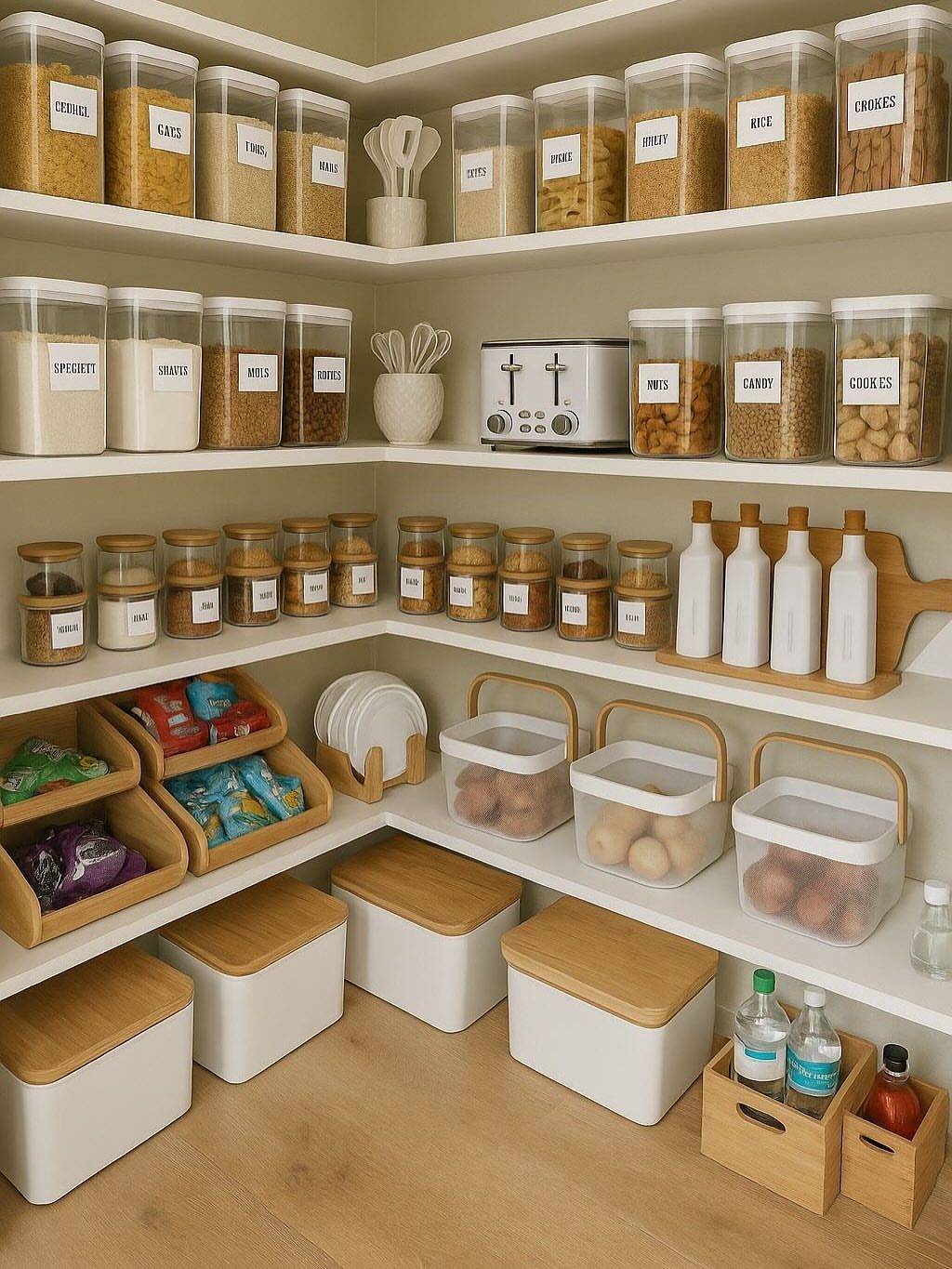
These kitchen pantry organization ideas cover everything from clear containers to custom built-ins, and the one that belongs in your pantry depends on whether you are working inside an existing closet or building from scratch.
A pull-out drawer on full-extension slides rated for heavy loads does nothing for you if your pantry is a freestanding cabinet on casters, and that mismatch is where most projects stall.
1. Use Clear Containers
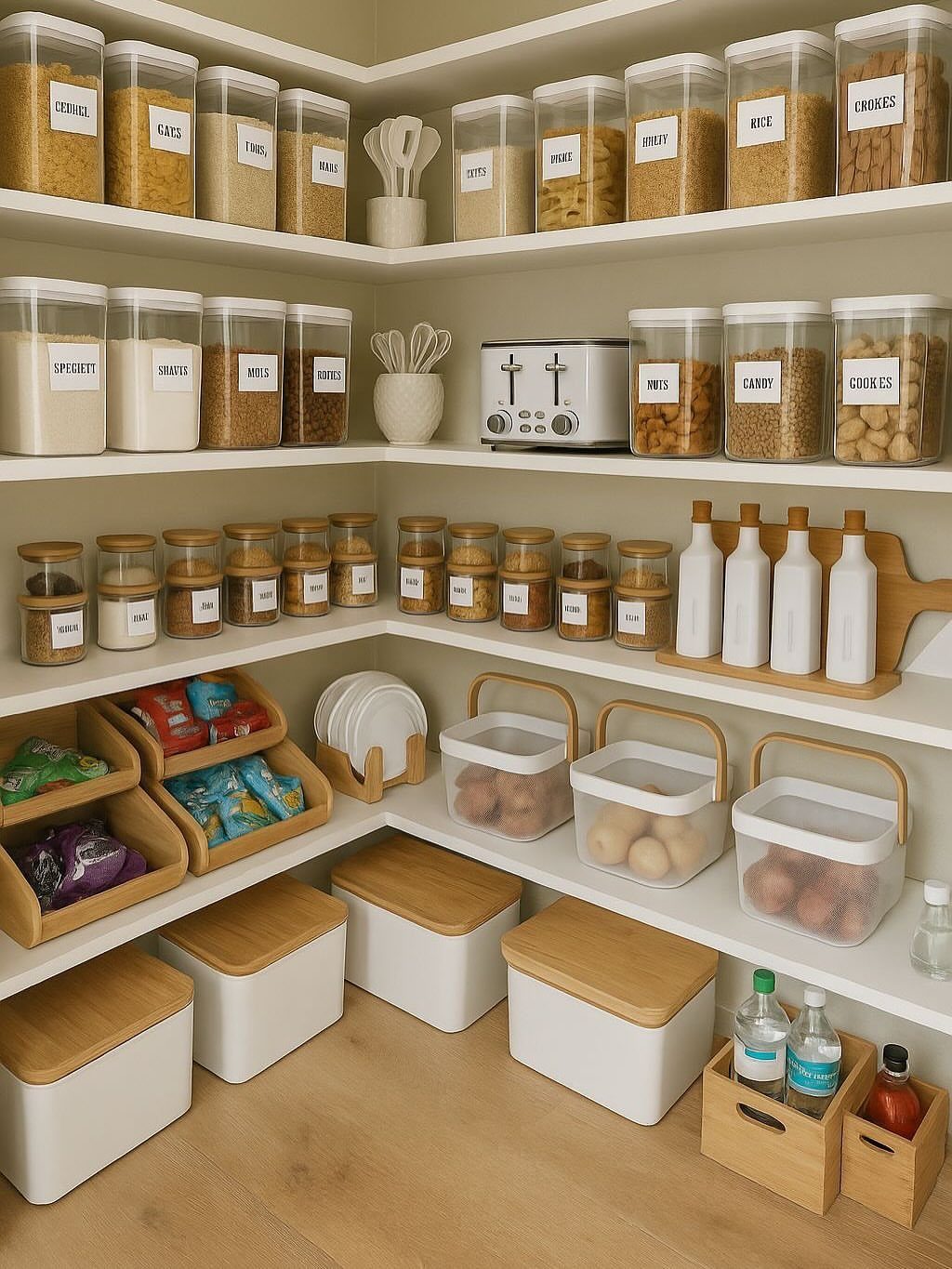
Clear containers turn a pantry into something you can read at a glance. I would go with square or rectangular over round; they sit flush against each other and do not waste shelf depth.
Glass looks cleaner but weighs more and breaks; acrylic or PET plastic is what I would pick for upper shelves or homes with kids.
Check that the lid seals tight enough for flour and sugar, not just for show. Labels on the front, not the lid, save you from lifting 3 containers to find the rice.

3-Size Set - Complete Pantry Organization: This 6-piece pantry container set includes three sizes (0.7, 1.2Qt and 1.6 Qt), each with a 3.9-inch opening; ideal for neatly storing spices, sugar, candy, and more for a tidy, organized kitchen

OXO Good Grips POP Containers’ airtight, space-efficient design keeps dry foods fresh and your cupboards organized

【Beautiful Gift-Ready Packaging with pantry Labels】Presented in a stunning, full-color gift box, this set makes for a perfect and thoughtful housewarming, wedding, or holiday gift. We’ve included a set of chic, classification pantry labels as a FREE bonus, helping you effortlessly organize and identify your glass pantry storage contents in style.
2. Install Pull-out Drawers
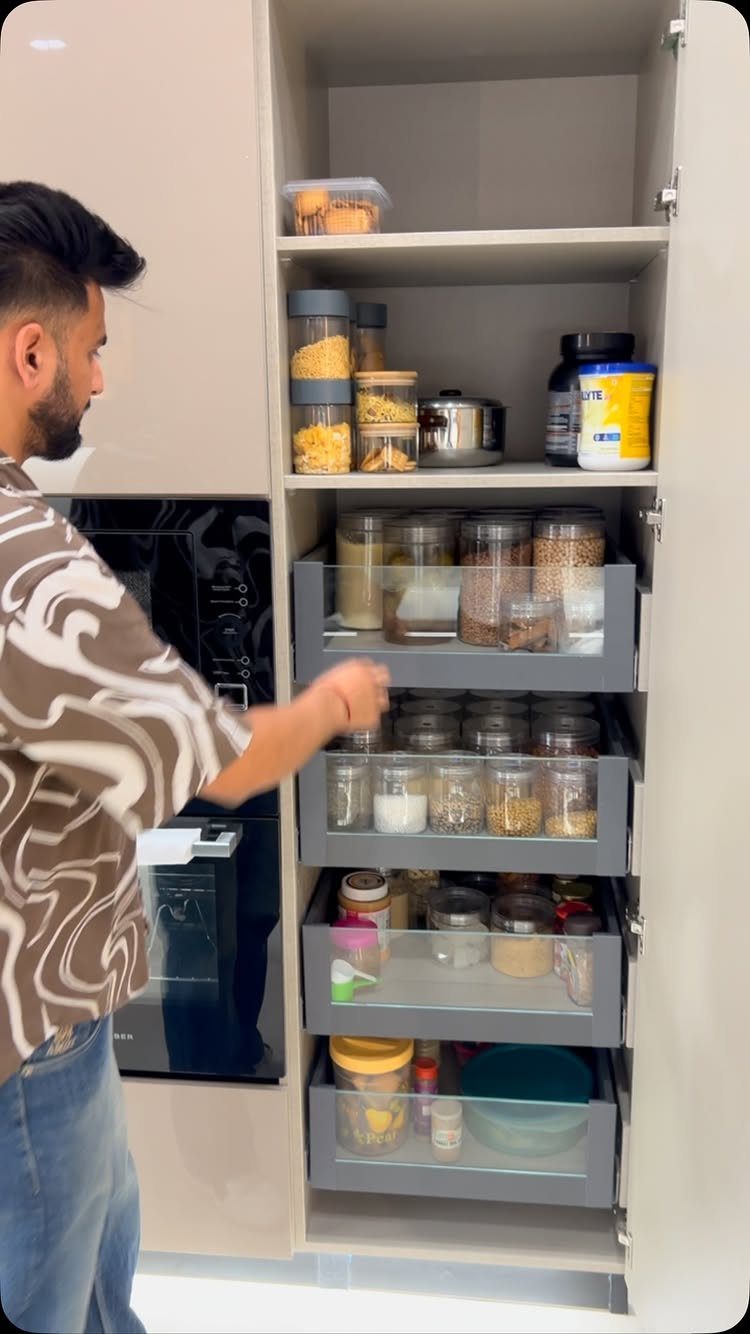
Deep pantries swallow items whole; pull-out drawers bring the back row to you.
The hardware matters more than the box itself. Full-extension slides rated for heavy loads let a loaded drawer move without sagging, and soft-close is worth the few extra dollars if you open the pantry half-asleep.
I would build around standard container sizes rather than cut drawers to fit odd shapes.

Compatibility Note: This pull out cabinet drawer is for frameless cabinets only (not for cabinets with door frames). Drawer size: 13.8"W x 21"D x 3.1"H. For optimal fit, ensure your cabinet width exceeds 15" and depth exceeds 22".

【Heavy Load capacity up to 150 lb】 The drawer slides is made of high-density high-strength Q235 industrial grade cold rolled steel and industrial solid steel ball, which take 150,000 times push-pull tests without damage. The maximum load weight is 150 lb,which vary with the length of slides. REGUDA is committed to produce sturdy and durable drawer slides , the service life of the slide rail could be 30 years at least.

Compatibility Note: This pull out cabinet drawer is for frameless cabinets only (not for cabinets with door frames). Drawer size: 20"W x 21"D x 3.1"H. For optimal fit, ensure your cabinet width exceeds 21" and depth exceeds 22".
3. Add Hanging Baskets
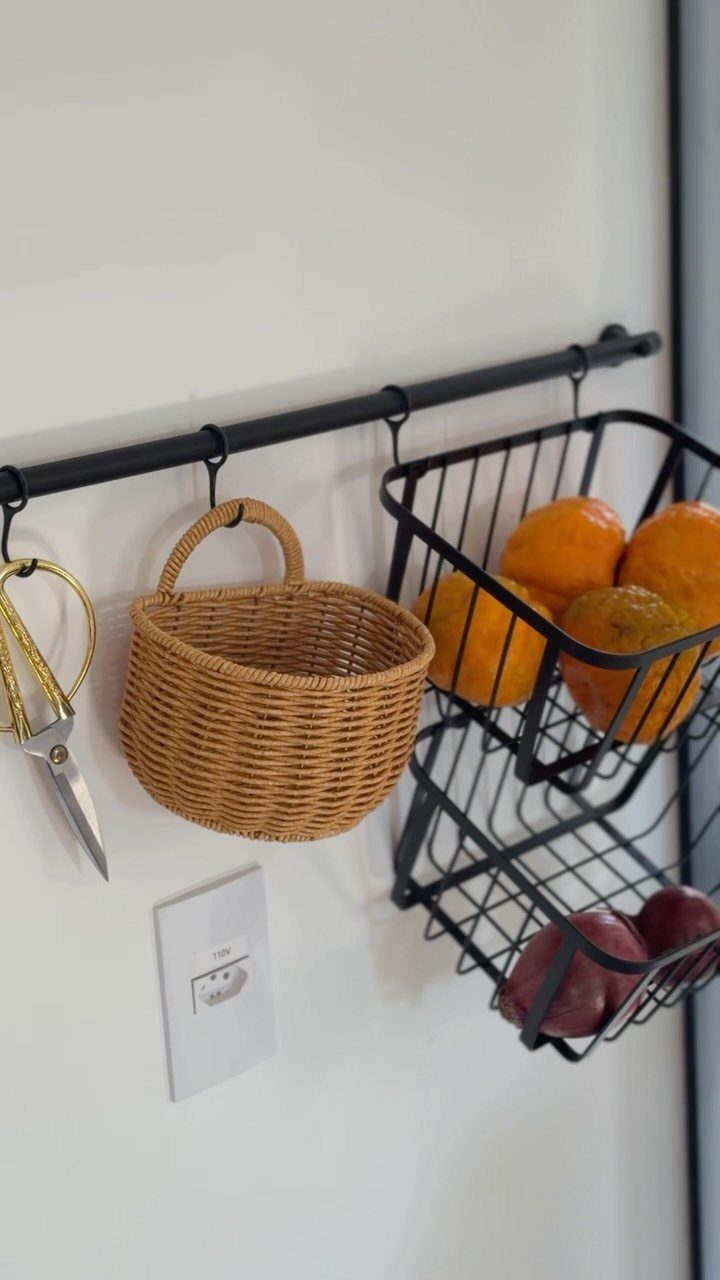
A wall-mounted rail with hanging baskets buys storage in kitchens where floor and shelf space are already gone.
A hanging rod with wire tiers handles onions, oranges, and tools without claiming counter space. I would mount it on the pantry door or an inside wall, never the hinge side where swinging baskets collide with shelves.
Wicker looks warmer but wire drains better and shows you when the fruit is turning. Check the bracket spacing against your wall studs; toggle bolts work but flex over time.

🍎【Sturdy wire baskets that can hold 50 pounds】 These baskets are made of durable steel wire with durable anti-rust and anti-corrosion coating, as well as wall-mounted hardware and hooks, which can hold 50 pounds. (Note: If you use non-marking paste instead of screws, the basket can hold 11 pounds)

10s QUICK INSTALLATION: Our fruit basket for kitchen features a 4 step quick installation process , just fold up the basket with build-in snaps, then put on the lid and mount on the wall, and we have offered a installation manual for you.

Decorative Hanging Storage: Storage baskets can be organized with spices, coffee, mugs ,fruits,vegetables,patatoes,onions or stored with wine bottles,also papers,tissues,shampoos in your bathroom, very useful, can be decorative hanging on the wall as well.
4. Zone Your Pantry
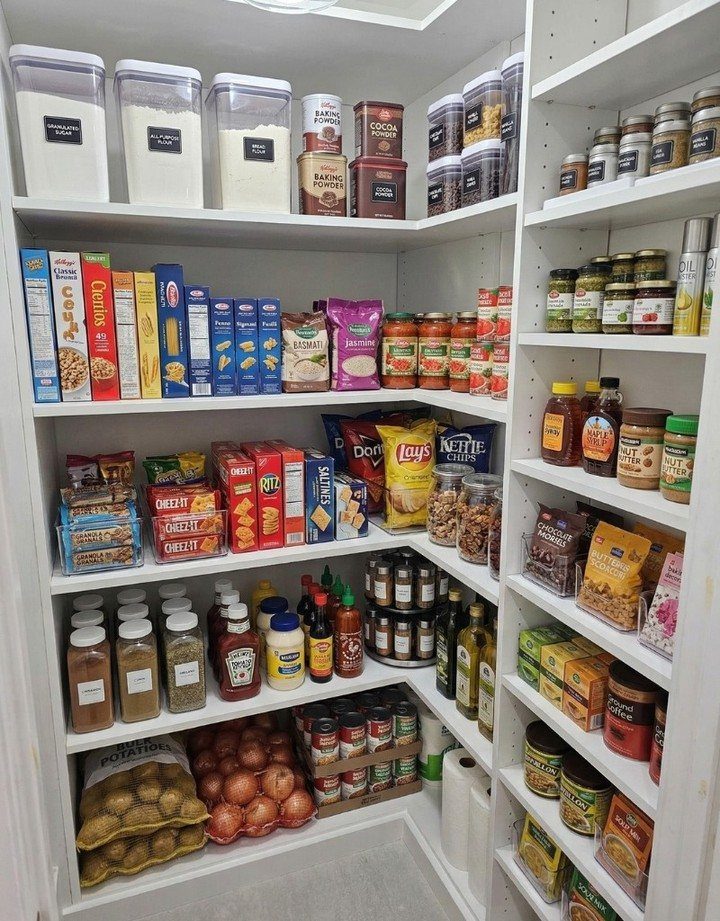
Zoning means deciding where each category lives and keeping it there. I would put breakfast items together for morning efficiency and baking supplies on one shelf so I am not circling the room for cocoa and baking powder.
The real work is maintaining the border; a bag of chips tossed into the flour zone undoes the system in a week. Start with broad zones and subdivide only if you have the discipline.

PRODUCT CONFIGURATION: 8 woven pattern plastic baskets, Black. Dimensions:10.6” L x 7.2” W x 3.2” H, basket use small holes design helping ventilation, better organization and storage items

★IMPORTANT - Note: please measure your closet/cabinet shelf space or tabletop/countertop space and refer to the basket bin's dimensions before ordering in case it does not meet your needs or space size!
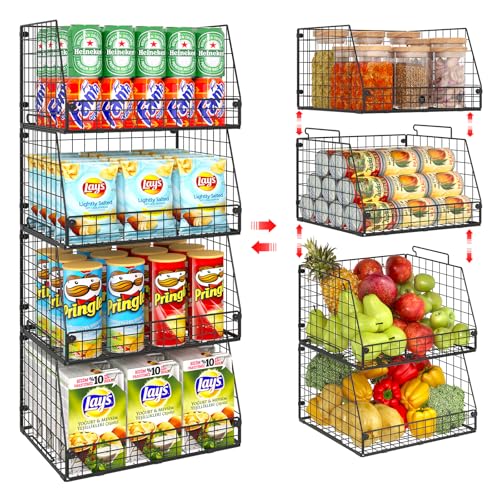
【Stackable Storage Baskets】Each fruit basket for kitchen counter can be used individually or stacked to save space. The open front design of each storage bin allows for easy viewing and access to items.
5. Use Baskets and Bins
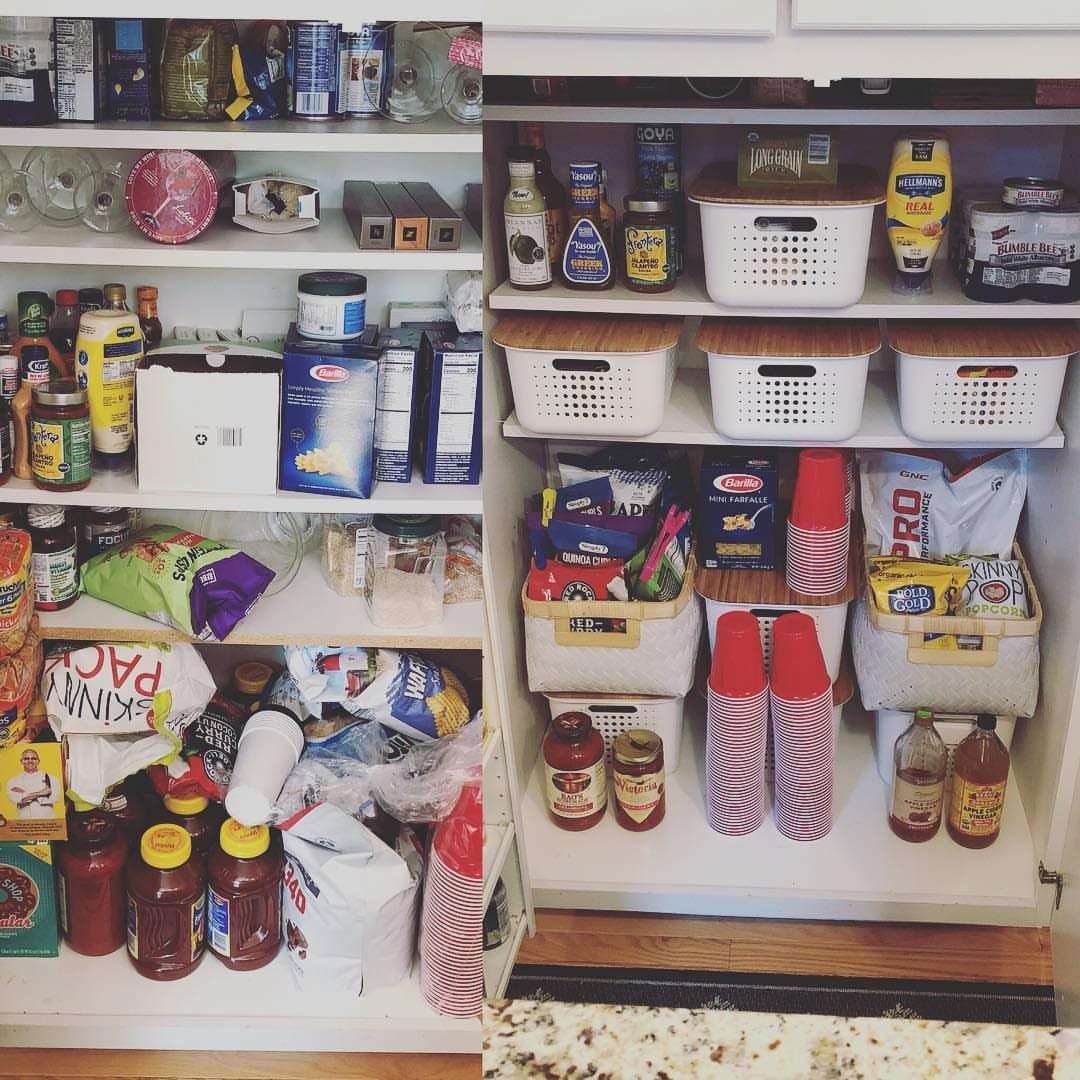
Baskets and bins turn a shelf of loose packets and small jars into something you can pull out and sort through.
Perforated bins let air move and let you see what is inside without full transparency. I would size them to fill the shelf width; a bin with gaps on each side is a shelf that looks organized and functions poorly.
Woven baskets hide clutter but hide contents too; use them for backup stock, not for daily items.

(MULTI-FUNCTIONAL STORAGE ARTIFACT): 4-pack wire storage baskets make messy spaces tidy in seconds! Perfect for a variety of scenarios such as kitchens, pantries, living rooms and bathrooms. Whether you need to organize kitchen ingredients or store clutter in the living room, it can easily do the job! As an efficient food basket, store fresh food such as potatoes, onions, fruits, vegetables, steaks, or store dry goods such as spice jars and cans. The open mesh design is clear at a glance and easy to access quickly. These stackable pantry storage baskets can neatly display snacks and sundries to meet all your organization needs.

Large Kitchen Storage Container: TBMax large rice container is ideal for storing dry bulk ingredients such as rice, flour, grain, soybeans, corn, pasta, fusilli or pet food. The volume of the food container is 5 Liter / 5.28Qt and can hold about 10 lbs of rice or 7 lbs of flour. Capacity will vary depending on differdent goods

① 12 PACK BULK CLEAR STORAGE BINS WITH LABELS - This set includes 12 pack large clear storage bins and 12 black blank labels, ideal for bulk home organization. Easily label pantry items, fridge food, household supplies and create a neat, well-organized storage system.
6. Pantry Coffee Bar Setup
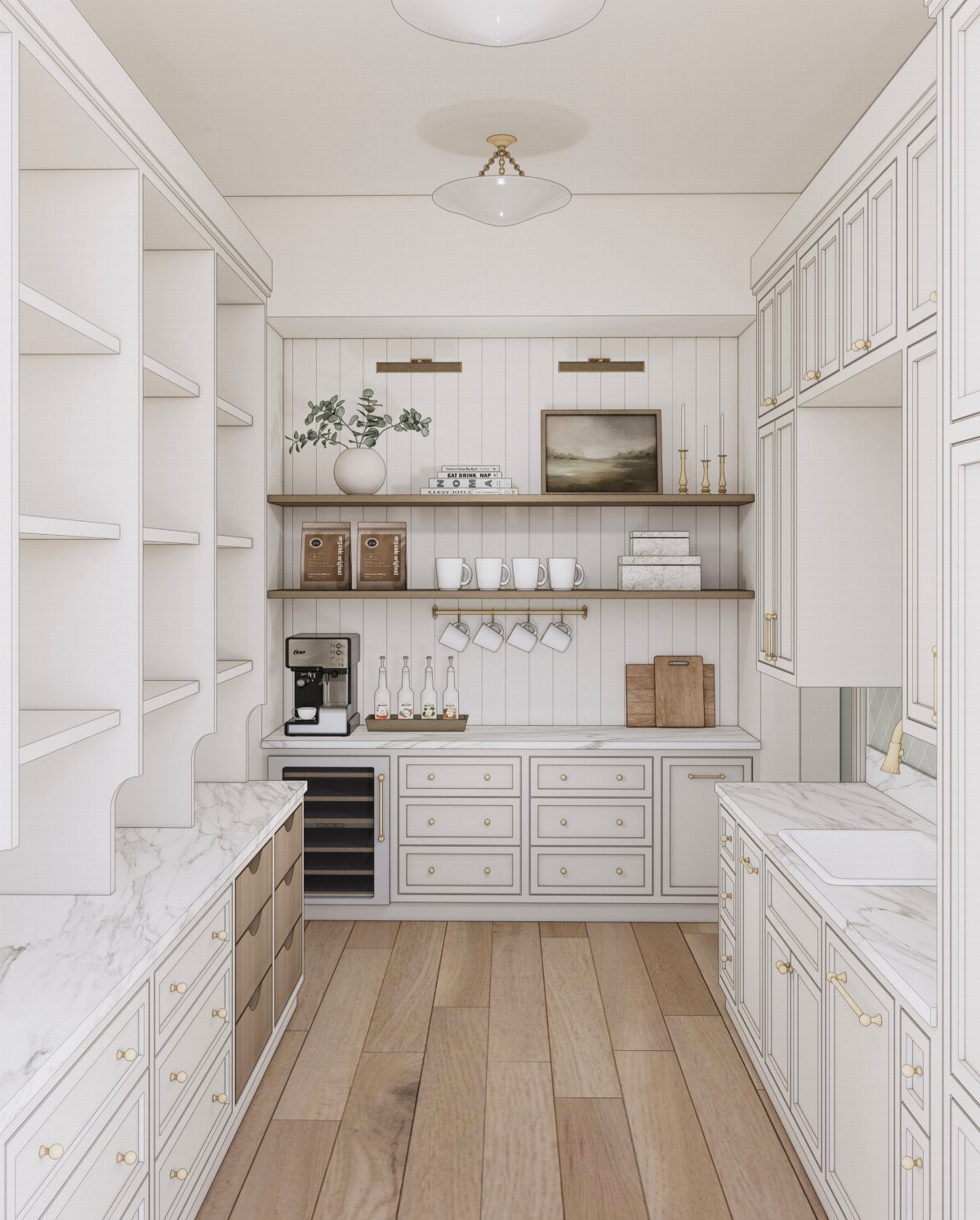
A pantry coffee bar moves the morning ritual out of the main kitchen traffic. I would put this in a butler’s pantry or a walk-in with enough depth for prep; a shallow counter is tight for tamping and frothing.
Power is the detail that kills the idea; confirm a dedicated outlet before you commit to the layout.
Mugs overhead stay dry and within reach, but I would keep them to one row so the cabinet does not feel like a diner.

【Beautiful Gift-Ready Packaging with pantry Labels】Presented in a stunning, full-color gift box, this set makes for a perfect and thoughtful housewarming, wedding, or holiday gift. We’ve included a set of chic, classification pantry labels as a FREE bonus, helping you effortlessly organize and identify your glass pantry storage contents in style.

【BEAUTIFUL GIFT BOX PACKAGING】5 pack square glass jars with bamboo lids are great, but with minimalist white labels preprinted they’re even better! So remember them as a mother’s day gift or housewarming gift for someone who loves kitchen organization and storage, too. Order your set of 5 glass containers with bamboo lids and labels, now.

7. Use a Spice Rack
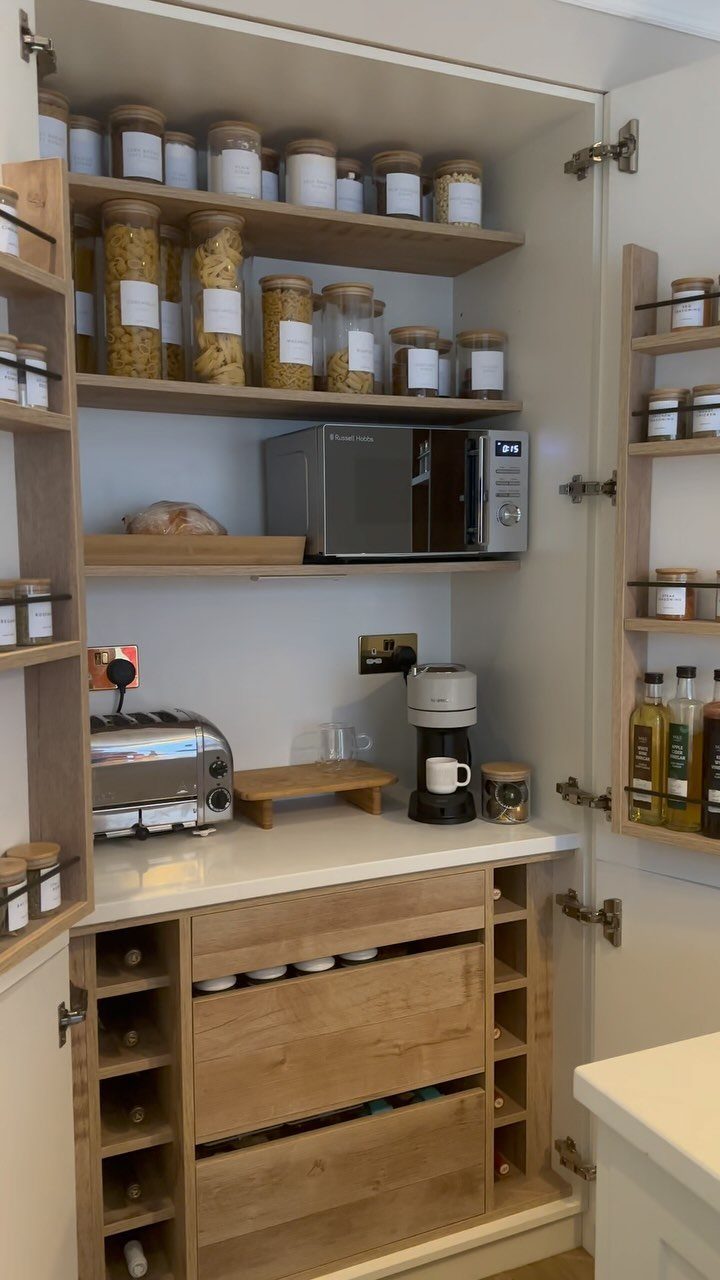
A door-mounted spice rack turns dead space into usable storage without touching a shelf. I would pick wood over wire for the look; it reads as cabinetry, not hardware store.
Labels facing out matter more than the rack material; if you cannot read cumin at a glance, you will buy a second jar. Check that the door still closes fully once loaded; spices add weight fast, and hinges sag.
Compatibility Note: This pull out cabinet drawer is for frameless cabinets only (not for cabinets with door frames). Drawer size: 13.8"W x 21"D x 3.1"H. For optimal fit, ensure your cabinet width exceeds 15" and depth exceeds 22".

Compatibility Note: This pull out cabinet drawer is for frameless cabinets only (not for cabinets with door frames). Drawer size: 11.8"W x 21"D x 3.1"H. For optimal fit, ensure your cabinet width exceeds 13" and depth exceeds 22".

FLEXIBLE BOTTOM OR SIDE MOUNT INSTALLATION: Designed for both bottom-mount and side-mount installation to fit different cabinet layouts and storage needs. Drawer size measures 14" W × 21" D × 6.2" H, with total installed width of 15".
8. Freestanding Pantry Cabinet
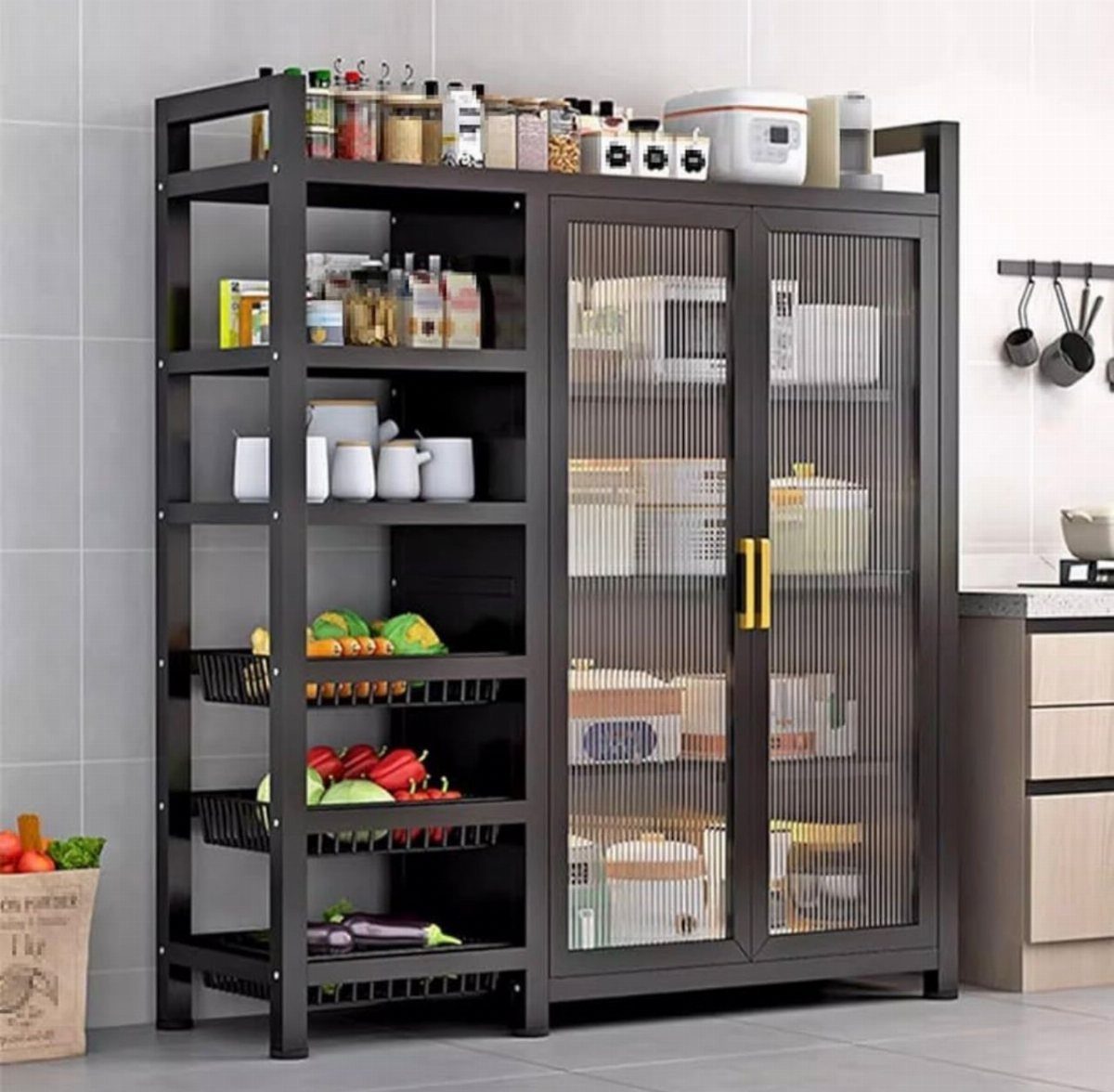
A freestanding pantry cabinet fills gaps where built-ins never happened.
Dark metal with glass doors looks sharp, though I would want glass only if I keep the inside tidy, since it displays everything. Open shelves on the side handle daily items, the cabinet hides bulk.
Check floor level first; these units rock on tile seams and need shimming. Measure your path through doorways; a freestanding cabinet arrives in one piece and does not bend.

10s QUICK INSTALLATION: Our fruit basket for kitchen features a 4 step quick installation process , just fold up the basket with build-in snaps, then put on the lid and mount on the wall, and we have offered a installation manual for you.

★Please Note - Read the dimensions of the basket before ordering in case it does not meet your needs or space size!

Solid metal construction in black coated or satin nickel finishes is durable and attractive.
9. Labeled Oil and Vinegar Cruets
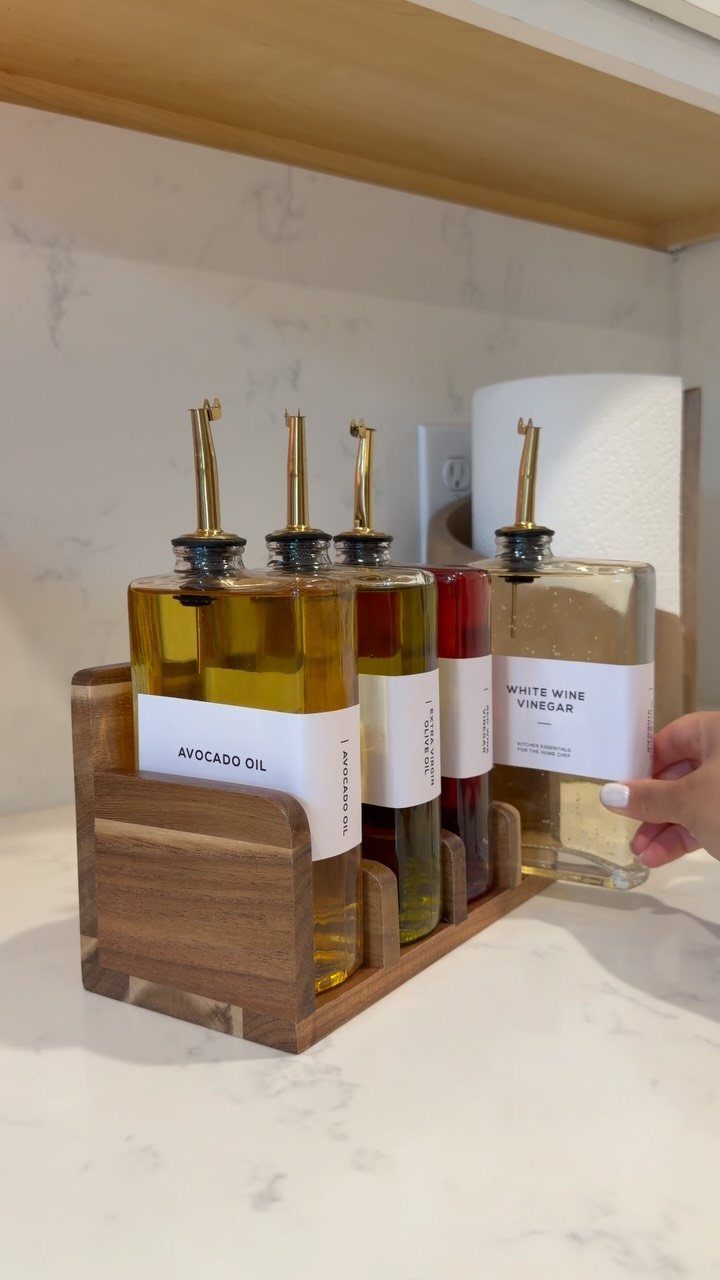
Matching cruets with printed labels turn oil and vinegar from clutter into a deliberate look. The wooden caddy keeps them together and upright; without it, bottles drift and labels peel in cabinets.
I would fill only what I use in a month; oil turns faster than most people think, and a full set sitting pretty is wasted money. Check that the spout pours without dripping; a ring of oil on marble etches.

【12 BASKETS, 3 SIZES】The 12 Small wire baskets come with 3 different sizes - 4 Large (11.8 x 7.3 x 3.4 inch), 4 Medium (10.6 x 6.7 x 3.2inch) and 4 Small (9.8 x 6 x 2.9inch).You can use different sizes for different purposes

【Set of 8 Baskets for Organizing】 These plastic storage baskets with lids are constructed from lightweight and durable plastic materials, and come equipped with a lid made of natural bamboo. Baskets use small holes design helping ventilation, better organization and storage items. Our small plastic storage basket containers come with 12 adhesive kraft paper labels for easy categorization.

WUWEOT storage basket is made of durable plastic, stackable, save space when not in use.
10. Integrated Shelf Lighting
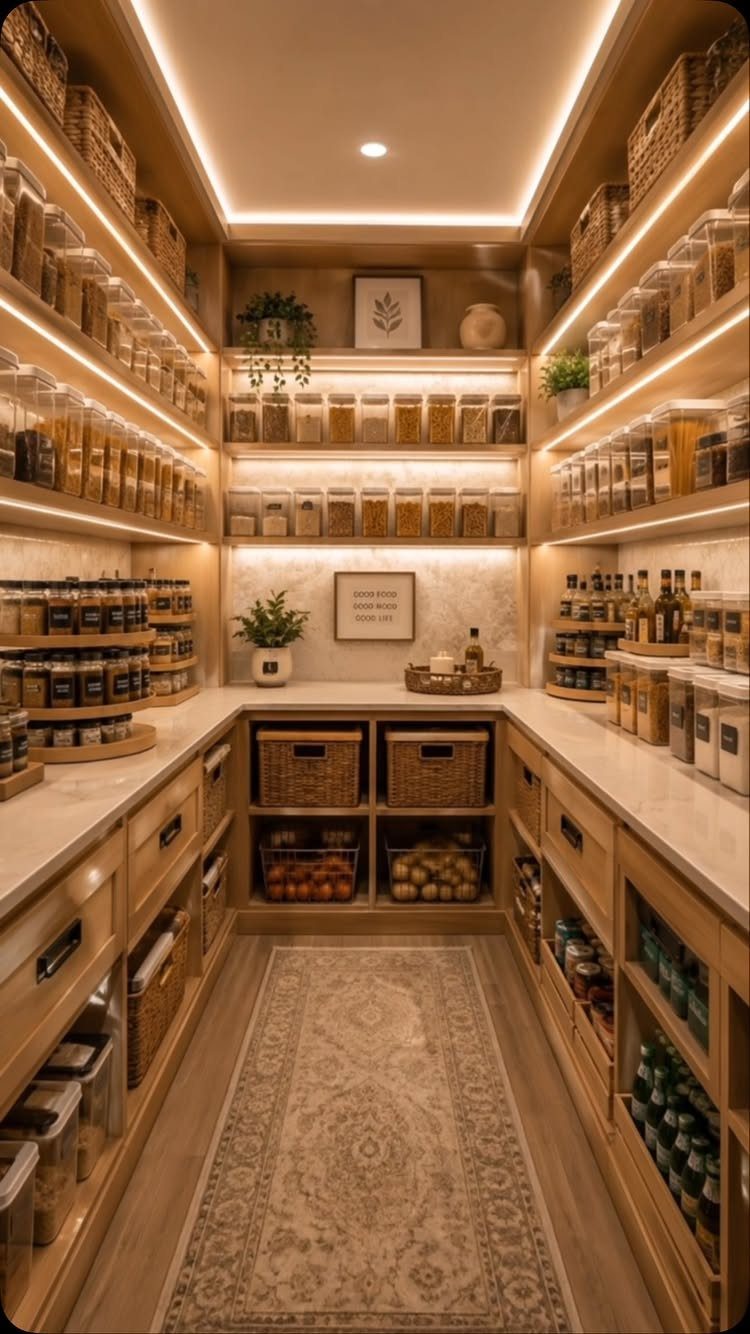
Integrated shelf lighting strips out the shadow that makes back corners useless.
Warm tone reads as wood-friendly; cooler light feels clinical against baskets and grain. I would wire to a door switch so it turns on when I enter, not a wall plate I forget exists.
LED strips run on low voltage, but the transformer needs housing; confirm your shelf cavity has space or plan for a visible driver box.

Large Storage Capacity: This ingredient flour bin features a large capacity of 11.4 gallons; Can store different ingredients separately such as 110 rice,baking sugar, 90lb flour ,70lb pet dry food and so on.

BPA Free Material: Our storage bins are made of premium BPA free, durable, shatter-resistant, clear plastic. Food Safe. These organizer bins are clear, allows you to find the contents quickly.

★IMPORTANT - Please measure your closet / cabinet shelf space or tabletop / countertop space and refer to the basket bin's dimensions before ordering In case it does not meet your needs or space size!
11. Pantry Step Ladder
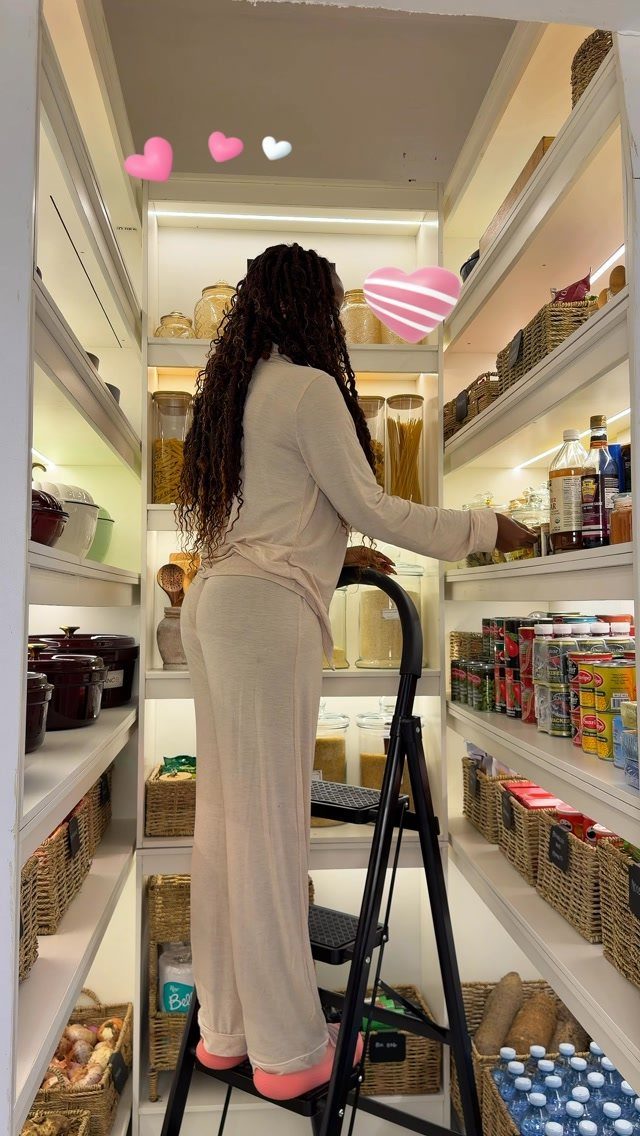
A slim folding step ladder lives in the pantry and ends the stretch-and-guess routine on high shelves. I would want black or white; it disappears against most cabinetry better than primary colors.
Check the folded depth against your floor space; a slim profile still blocks a narrow aisle. Rubber feet matter on hard floors; metal on tile slides when you lean.
12. Tiered Produce Stand
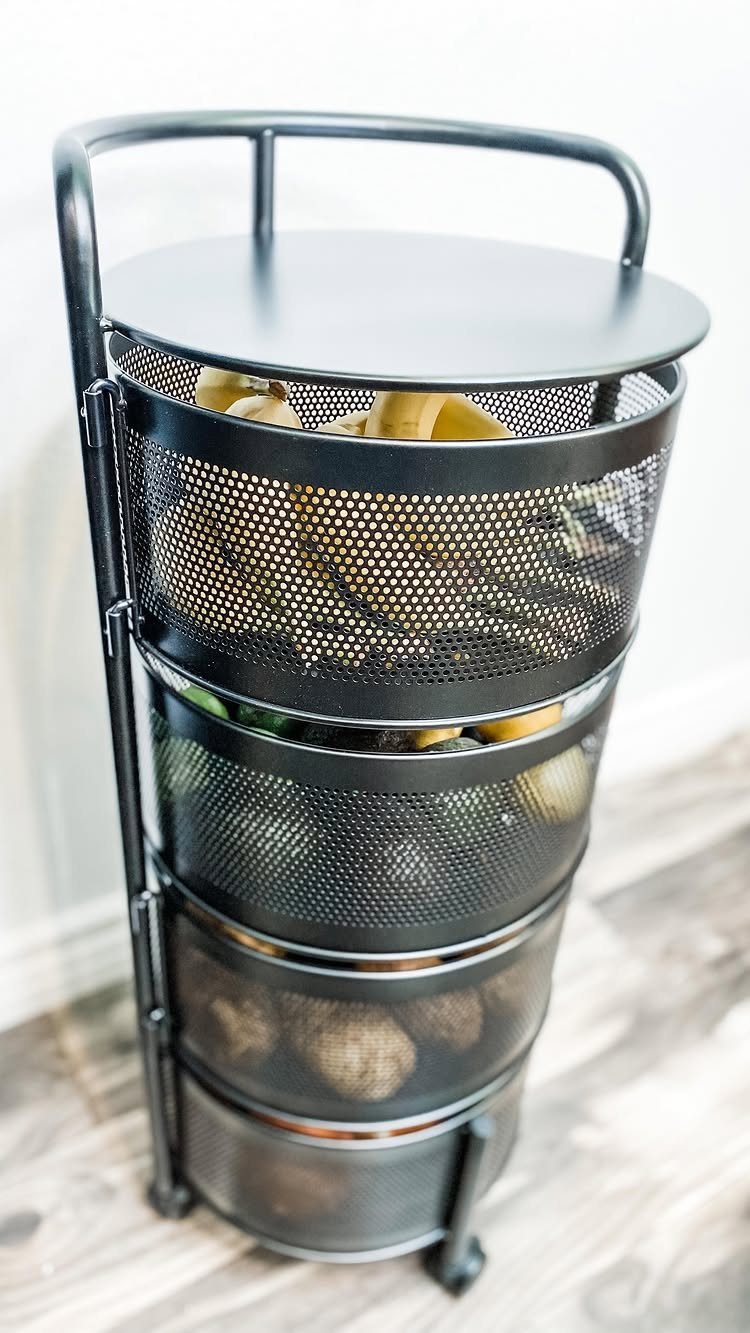
A rolling tiered stand moves produce off the counter and into air that slows spoilage. Perforated metal baskets let onions and potatoes breathe; solid bins trap moisture and sprout eyes faster.
I would keep it on casters for cleaning behind; fruit drops and sticky rings happen. Check the basket depth against your typical haul; a tall rim holds avocados, a shallow one sends them rolling.
13. Clear Acrylic Turntables
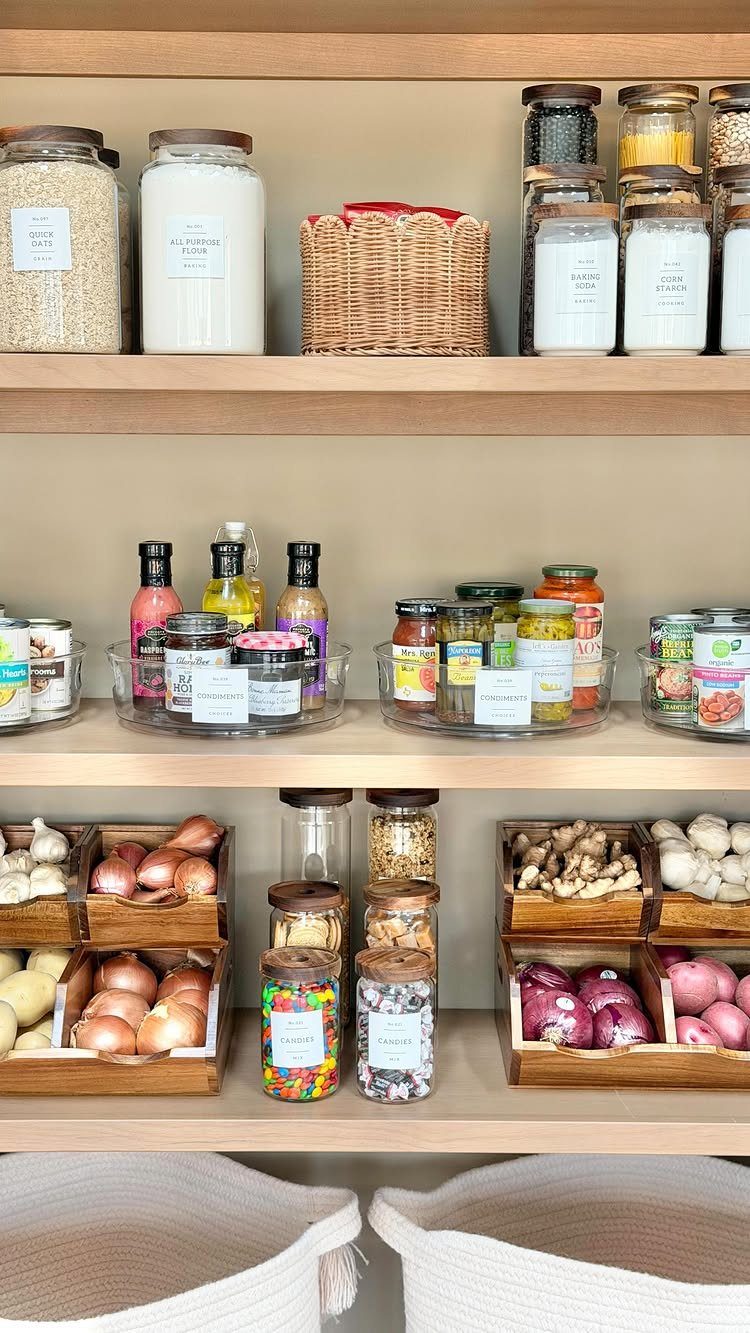
Clear acrylic turntables bring the back of a deep shelf to your hand with a quarter turn.
I would use them for bottles and jars that fall over when pushed to the rear; oils, sauces, and tall condiments behave better spinning than standing in rows.
The rim height matters more than diameter; a low lip lets tall bottles tip, a tall one blocks the view.
Check that the base spins freely under weight; cheap ones bind once loaded. Felt pads on the base keep the turntable from scratching wood shelves, which is a small step that pays off.
14. Plate Racks and Dividers
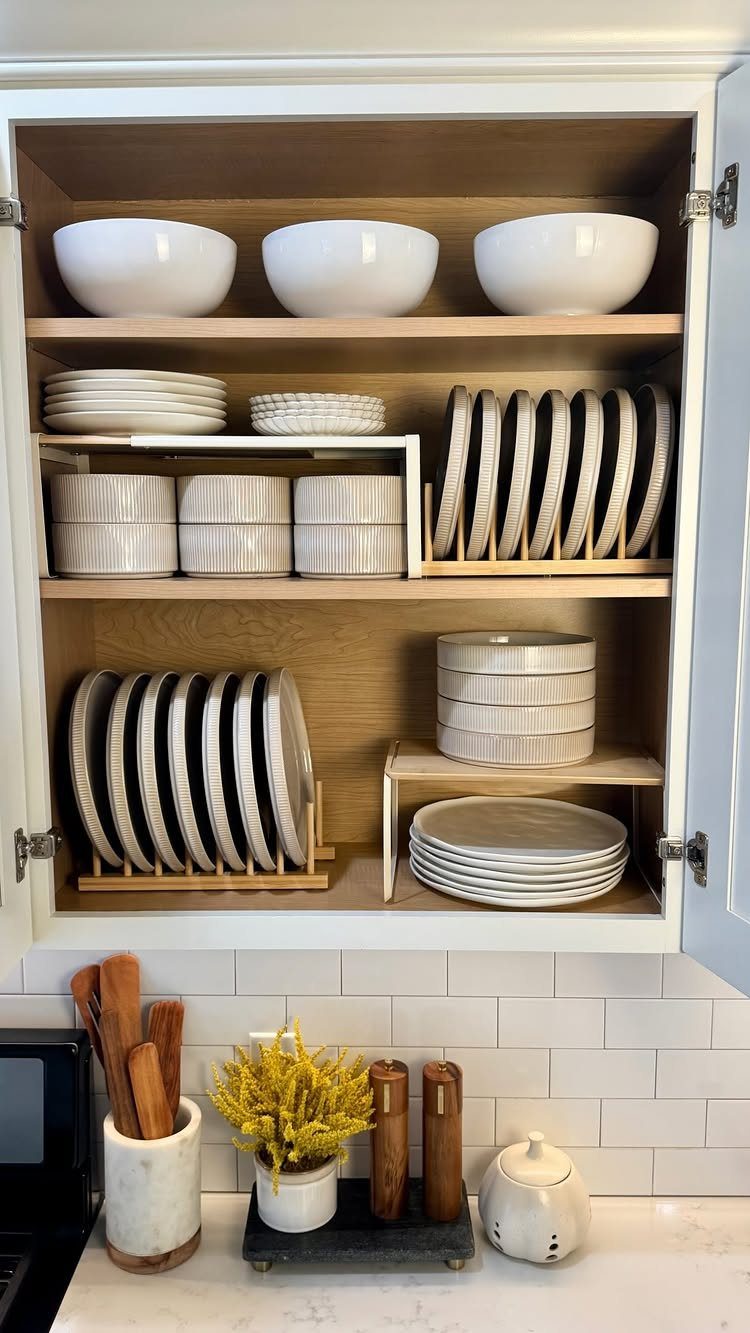
Vertical plate racks turn a stack of dishes into a file you can pull from without lifting the whole pile.
I would measure my cabinet depth against the rack length first; a divider that bottoms out on the shelf back leaves plates proud of the door.
The spacing between slats needs to match my bowls, not just my dinner plates; a rack built for flatware sends pasta bowls sliding.
A shelf riser above the rack buys a second row for smaller items without squeezing the plates below. Check that the wood finish matches or complements the cabinet interior; mismatched tones read as afterthought.
Importance of Pantry Organization
A well-organized pantry pays back in 3 currencies: time, money, and patience.
When you can see what you have, you stop buying duplicates and letting food expire behind a cereal box. A small kitchen feels larger when the pantry stays organized, no walls need moving.
Meal prep speeds up when ingredients have addresses. I would keep a trash can within reach during any reorganization; half the battle is tossing expired packets and lids without boxes.
The calm that follows is real. A pantry that works makes the kitchen feel less like a traffic jam and more like a room you want to cook in.
Long-term Organization Tips
Every item needs a home, and that home needs to stay put.
I would pick a spot for breakfast goods, another for baking, and enforce the border. A five-minute weekly reset keeps the system from drifting; without it, a bag of chips in the flour zone undoes your work in days.
The "first in, first out" rule matters for anything you buy in bulk. Older stock moves to the front, new supply drops behind it.
Expiration dates become less of a gamble. Apps and printables exist for inventory, but a visual system you actually check beats a digital one you forget exists.
Leave breathing room on each shelf. New groceries need a landing spot; a packed pantry forces you to stack and hide, which starts the cycle again.
Custom Pantry Design Benefits
Custom storage wins when generic shelving fights your habits.
Store-bought bins and wire racks make you work around their shape; a built system works around yours. The upfront cost is higher, but the maintenance drops because the system fits the space instead of fighting it.
I would plan the layout before putting anything away. Where you reach first, what you grab daily, how you move with a hot pan: these shape the design more than any catalog photo.
A system built around your routine keeps itself tidy longer than one that looks good in a magazine but ignores that you bake every weekend or buy rice in bulk.
The best custom work disappears into your rhythm. You stop noticing it because it simply works.
Frequently Asked Questions
How would you organize a pantry?
I start every pantry reset the same way: everything comes out, then I group what I have into breakfast, baking, snacks, and cans before anything goes back in.
Then assign each category a zone and stick to it. I would use clear square containers for dry goods, add pull-out drawers for deep shelves, and mount a spice rack on the door to reclaim dead space.
5 minutes at the end of the week, putting stray items back in their zones, is what keeps the whole setup from sliding back into chaos.
What are common pantry organization mistakes?
Cramming shelves full is where most pantries fail; once you are stacking and hiding to make it fit, the system is already broken. Skipping labels on clear containers wastes the visibility you paid for.
Another is buying bins that do not fill the shelf width; gaps on each side look organized but function poorly. I would also avoid putting daily items in woven baskets that hide contents, and never skip the weekly reset.