
The ideas below run from a $20 LED strip to a full ceiling-height rebuild, and the one that belongs in your kitchen depends on how long you plan to stay.
Renters should skip glass-front cabinets and chalkboard paint; owners staying put can justify the appliance panels and pull-out pantries that require modifying the box.
What every choice shares is that satin at 35 to 40 percent sheen holds up better than matte or high-gloss once grease and daily use set in.
1. Bold Color Choices

Royal blue lower cabinets against white uppers, or sunset orange on a single island, deliver the impact without overwhelming the room.
Test 12-by-12-inch samples on your actual cabinet material, because paint reads differently on MDF than on real wood, and morning kitchen light changes everything by afternoon.
Well-chosen bold colors can actually intrigue buyers rather than hurt resale. The risk is in going too specialized: an all-over neon or an overly personal shade like purple narrows your audience.
I would keep the brave color to lowers, an island, or even just the interior of glass-front cabinets where it hits as a hint rather than a statement.
That way the kitchen photographs well and the next owner sees character they can live with, not a project they have to undo.
For finish, satin at 35 to 40 percent sheen gives you the richness without the upkeep nightmare of high-gloss or the staining headache of matte. Semi-gloss works too, especially if you are painting over existing cabinets and need the forgiving surface.

The ultimate acrylic cabinet paint for a “factory-like” finish when refurbishing kitchen and bathroom cabinets, shelving, furniture, trim, and crown molding.
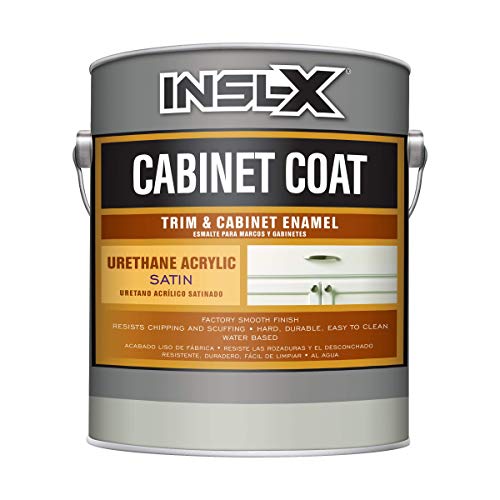
The ultimate acrylic cabinet paint for a “factory-like” finish when refurbishing kitchen and bathroom cabinets, shelving, furniture, trim, and crown molding.

The ultimate acrylic cabinet paint for a “factory-like” finish when refurbishing kitchen and bathroom cabinets, shelving, furniture, trim, and crown molding.
2. Mix-and-Match Styles

Shaker uppers with flat-panel lowers is the pairing I would actually build.
The shaker frame catches light and reads as detail where you look, while the slab doors below stay quiet and handle the abuse of pots and pans. Pick one element that locks them together.
I would run the same paint across both, or keep the hardware finish identical from top to bottom. Without that, two styles become a clash instead of a conversation.
Stop at two, maybe three styles.
I would stop at two. More than that and the eye has nowhere to rest, which is the opposite of what a kitchen needs.
Glass-front uppers against solid lowers is another workable split, but only if you are prepared to keep the contents presentable. For most weekend renovators, the shaker-and-slab route asks less daily maintenance and still delivers the custom look.
The unifying element matters more than the styles you pick.
Color is the safest bridge; hardware runs a close second. Choose one, commit to it, and the mix reads intentional rather than accidental.

Belong To Your kitchen: The kitchen cabinet features 2 large door cabinets and 2 full extension drawers great for storing coffee beans, seasoner, spare kitchen paper, or some sundries. Meanwhile, your coffee maker, toaster, can sit on our wide tabletop

SUPERIOR SAFETY: At 13.7 inches long, our hot pads for the kitchen are designed to provide superior protection for your fingers, hands, and wrists from burns. The extended wrist coverage ensures safety from your fingertips to well past your wrist. These hot pads offer a reliable, non-slip grip, allowing you to handle hot pots, pans, and cookware with confidence and without accidents.

【Important Notes Before Purchase】To ensure the product fits your space, please carefully review the size information in the product images. We hope you purchase a suitable product
3. Glass-Front Cabinets

Glass-front cabinets lighten the visual weight of solid cabinetry and make a kitchen look bigger, which matters most in the row nearest the ceiling where standard uppers start to feel heavy.
I would install them on the top run only, keeping the lower cabinets solid to hide the clutter of daily dishes.
The glass itself comes in options: clear for display, or obscured if you want the light without the pressure of perfect organization inside.
LED strips tucked into the interior framing turn the cabinet into a lantern after dark. Concealed LEDs under plinth lines or behind recessed shelving are where the technology has headed, and the same principle works here.
You will see everything inside, always. Fingerprints and smudges need more frequent wiping than wood, and whatever sits behind the glass has to be arranged with intention.
I think the effect is worth it if you already own dishware worth showing, but skip the glass entirely if your everyday plates are mismatched and your storage is tight.
For renters, this is a harder sell. It means either replacing existing doors or living with what the landlord chose.
If you are staying put for a while and the cabinet frames are standard sizes, swapping in glass inserts is a weekend project that pays off every evening when the lights come up.

[Maximize Your Storage Space]Our wall cabinets feature 2 doors which is made of transparent ACRYLIC GLASS, and an adjustable shelf, providing ample space for all your storage needs

【Premium Solid Wood Structure, Sturdy and Durable】 This wall cabinet wall-mounted glass display cabinet is carefully crafted from high-quality multi-layer solid wood panels, featuring a stable and durable structure with excellent resistance to deformation, ensuring long-lasting performance. The natural wood grain texture combined with a minimalist design makes wall cabinets with glass doors not only a practical storage cabinet but also an elegant decorative piece that enhances your home style.
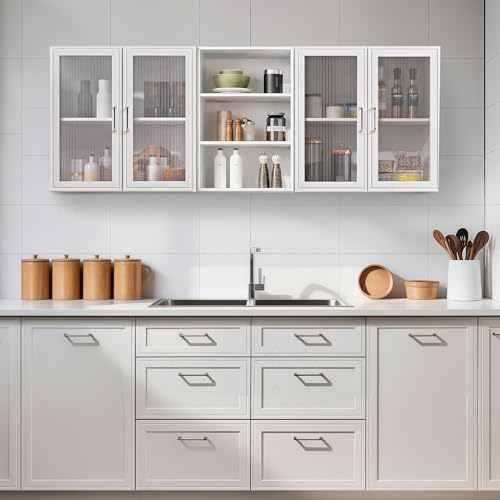
Space-Saving Design: This Kitchen wall-mounted cabinet set includes 2 enclosed cabinets (23.6"W x 11"D x 23.6"H each) and 1 open shelf (15.8"W), offering generous storage without taking up floor space. With acrylic doors and a clean design, these laundry wall cabinets are perfect for organizing detergents, towels, pantry goods.
4. Floating Shelves

Floating shelves strip away the cabinet box entirely, leaving only a thin plank that appears to hover on the wall.
I would use them in a kitchen with low ceilings where every visual inch matters, or anywhere I want the room to feel less like storage and more like breathing space.
The look pairs cleanly with slab panels or shaker cabinets, and the contrast keeps a long wall of solid doors from turning monotonous.
What you put on them makes or breaks the look. Keep the display to a few small items you actually use; a stack of plates, a row of cups, maybe a small herb pot.
Everything else belongs behind closed doors. Grease and dust settle on exposed dishes, so you will wipe these shelves more often than you would wipe a cabinet front.
If that rhythm sounds exhausting, this idea is not for you. I would rather stagger the heights and lengths for balance than run them in a straight line; the variation reads as intentional, not improvised.

Measurement: Knob Diameter: =1.1 inch (28 mm), Width =1.1 inch (28 mm) Projection =1-2/5inch (35 mm), Bottom diameter: 4/5 inch (21mm)

Contemporary style cabinet pull adds a sleek, modern look to cabinets, drawers or furniture and has an overall length of 6-1/8 inches with a 3-3/4 inch center-to-center measurement between mounting holes

Product Size: Diameter 1.25inch (32mm) Height 1.5inch(38mm) Bottom diameter 0.9in ch(23mm)
5. Vintage-Inspired Cabinetry

Distressed finishes and antique hardware carry the look, but the real work is marrying that nostalgia to drawers that actually glide.
Beadboard panels and distressed wood signal vintage warmth, while antique brass or wrought iron knobs supply the period detail. I would keep the hardware consistent across every door; mixing eras reads as accident, not curation.
The tension comes with appliances.
Stainless steel against retro cabinetry can look either intentional or jarring, and the difference is usually color palette. Neutral-toned appliances settle in where bright ones fight the room.
Behind those charming doors, pull-out shelves or lazy Susans keep the functionality modern without breaking the facade. Distressed wood has a practical side too: future dings and wear blend into the finish instead of announcing themselves.
For renters or first-home owners, this is a style that tolerates imperfection, which suits a lived-in kitchen on a real budget. Commit fully enough that the vintage feels chosen, not inherited by default.
6. Two-Toned Cabinets

Two-toned cabinets split the color load between upper and lower runs, which keeps any single shade from taking over the room.
I would paint the lowers in a deep, grounding color like forest green or charcoal and keep the uppers in a warm natural wood or a quiet off-white.
That contrast draws the eye horizontally and makes the ceiling feel higher, since the lighter color sits where the light already lives.
For paint that holds up, satin or semi-gloss with about 35–40% sheen gives you richness without the maintenance headache of high-gloss or the scrubbing struggle of matte.
If you are hesitant about committing, the island is the safest place to test a bolder lower tone.
It is a smaller surface to repaint if the color wears on you, and it still delivers the layered look that makes this approach feel designed rather than accidental.
Test samples at least 12 inches square on your actual cabinet material, because paint reads differently on MDF than on real wood.
The two-tone approach wins over an all-over bold color for most kitchens because it gives you personality without the showroom intensity.

Ample Flexible Storage Space: This kitchen bar cabinet boasts with a buffet and upper hutch. The upper hutch features 2 wide shelves for storing various items, while the bottom buffet has 4 shelves and 2 drawers to organize utensils, jars, snacks, and wine.

Spacious Vertical Storage: Keep your bathroom or kitchen organized with 6-door design and multiple compartments that maximize vertical storage without taking up much floor space

[HEAVY-DUTY METAL] This heavy-duty metal storage cabinet is built with high-quality cold-rolled steel and a powder-coated surface that resists rust, scratches, and corrosion. The reinforced frame makes the tall storage cabinet extremely stable and durable for long-term daily use. The steel surface is also magnetic-friendly, so you can attach magnetic hooks, baskets, or spice racks to the sides and doors for extra storage (magnetic accessories shown in images are for display only and not included).
7. Open Shelving with Closed Cabinets

A full wall of closed cabinets can feel like a bank of lockers, while open shelves alone leave you nowhere to hide the mismatched cereal boxes and coffee mugs.
The move that actually works is splitting the difference: run traditional cabinets along most of the wall, then carve out a section of open shelving where it earns its keep.
I would put the open shelves at the end of a run, or flanking a window, never dead center where they fight the range hood for attention.
The closed storage still needs to carry the load. One practical rule I have seen hold up: keep at least 60 percent of your total cabinet space behind doors.
That leaves you 40 percent for display, which is plenty for the everyday dishes you actually want to look at and the cookbooks you reach for weekly.
Wine racks built into the open section, like Valcucine does with their elm Sine Tempore kitchen, give the shelves a job beyond looking pretty.
They break up the flat plane and give the wall some rhythm. Glass-front cabinets are another layer you can mix in if you want a middle ground, something that reads open but keeps the dust out.
You need discipline to keep it from looking cluttered. Open shelves collect grease near the cooktop and demand you stack plates with some care.
I would skip them entirely above the range and keep them for the coffee station or the prep area across the kitchen, where what you store is cleaner and the view is worth the effort.

Shaker Style Glass Door Wall Cabinet for Clean Display:This glass door wall cabinet features a clear glass front that lets you proudly display dishes, cups, collectibles and decor while keeping them dust-free. The sleek modern design blends seamlessly with kitchen, living room and bathroom decor.(Glass NOT Included. Sold separately.)

【Versatile Usage Cabinet】: This multiple purpose sideboard is suitable for both large and small spaces. You can use it as a kitchen pantry to store seasonings, tea, other food stored at room temperature, utensils and bowls. Also it is ideal as an entry cabinet for placing sundries. In addition, the sideboard cabinet is stackable so that you can stack two cabinets vertically to get more storage space.

[Smart LED Light] Illuminate your storage room with our energy-efficient wall cabinets. When the door opens, the intuitive LED lights up automatically. Although a lighting feature is added, it won't cost you ANYTHING, you just NEED TO remember to buy the batteries as they're NOT included the cabient
8. Unique Hardware Choices

Hardware is where you can add personality without tearing out a single cabinet. I think of knobs and pulls as jewelry for the kitchen: small, swappable, and capable of changing the whole mood of the room in an afternoon.
For something unexpected, skip the standard bin pulls and look at leather-wrapped options on Shaker-style cabinets.
The contrast of rustic leather against clean lines works better than it sounds. Scale matters more than most people realize.
On drawers wider than 24 inches, use two pulls or a single pull that is at least one-third the width of the drawer. For upper cabinets, I prefer knobs; they are easier to grip when you are reaching up.
Material is the make-or-break detail.
Solid brass or zinc alloy hardware will last decades, while cheaper materials chip and tarnish within a few years. Ceramic knobs can make basic cabinets feel custom without the custom price.
Hinges deserve attention too.
Exposed hinges in a black finish give cabinets an industrial feel, while concealed soft-close hinges keep things minimal. Invest in solid metal hardware; it is the difference between a kitchen that looks finished and one that looks almost there.

Contemporary style cabinet pull adds a sleek, modern look to cabinets, drawers or furniture and has an overall length of 19-1/2 inches with a 16-3/8 inch center-to-center measurement between mounting holes

Contemporary style cabinet pull adds a sleek, modern look to cabinets, drawers or furniture and has an overall length of 5-3/8 inches with a 3 inch center-to-center measurement between mounting holes

【4D Smart Adjustment】Speed Control! ! Our soft close cabinet hinges have 4D adjustment function, which can also adjust the cabinet door up and down ±2mm, left and right ±2mm, back and forth ±2mm, so that the cabinet door can be placed flat on the cabinet body, almost no door gap (less than 1mm).
9. Built-in Beverage Stations

A 24-inch base cabinet depth is the standard you are working with, and that number decides whether a mini-fridge or wine cooler will slide in cleanly or stick out past the door plane.
Most compact beverage refrigerators run shallower than full-size units, but the hinge swing and ventilation gap still eat into that dimension.
I would skip any appliance that needs more than 21 inches of usable box depth, including the required rear clearance, or the finished look turns into a clumsy bump-out.
The move I would actually make is carving out a section of a tall pantry cabinet rather than sacrificing base real estate.
A wine cooler at counter height keeps glasses and bottles in one vertical zone, and the 24-inch depth constraint matters less when you are not bending below the countertop to load it.
For a lower station, pull-out beverage drawers above the fridge box keep the front profile flush and the contents reachable.
Wall-mounted placement works if you have upper cabinet depth to spare, though I would only do it for a slim wine unit, not a mini-fridge.
The weight and the compressor noise travel differently at eye level, and the ventilation requirement becomes harder to hide.
10. Chalkboard Paint
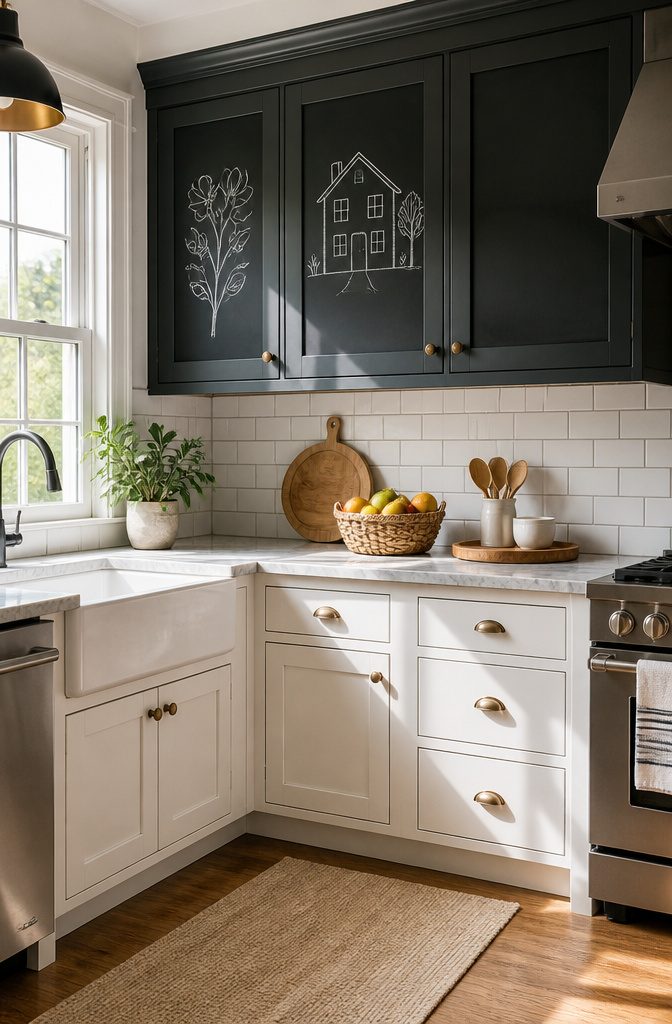
Chalkboard paint on cabinet doors is one of the few ideas that still feels genuinely uncommon in kitchen design.
Most homeowners never consider it, which is exactly why it works if you want something that stops short of a full custom build.
The functional side matters more than the novelty.
A chalkboard panel on a pantry door or the cabinet facing the breakfast table gives you a place for grocery lists, meal plans, or the note that tells your kid where you went.
It erases clean with a damp cloth and rewrites in seconds, so it stays useful past the first month of novelty.
I would limit it to one or two doors, not the whole kitchen.
Full coverage starts to read as a daycare craft project rather than a design choice. Satin or eggshell chalkboard paint in black or deep charcoal keeps it restrained; green or red veers into gimmick territory fast.
The surface needs regular upkeep to stay clean and legible. Chalk dust settles on nearby counters and floors, so I would skip it entirely if your cabinets sit directly above open food-prep surfaces.
A single pantry door across from the main work zone avoids that problem while keeping the idea intact.

Flexible Storage: Featuring a wide tabletop and three smooth-glide center drawers for easy organization. The side cabinets include adjustable shelves with 5 height options, allowing you to customize storage for items of different sizes—or remove the shelves entirely to fit larger belongings with ease.

Elegant Arched Design: If you're looking for a furniture piece that adds a distinctive touch to your interior, an arched bookcase is a great option. The arched design draws attention to the items without overpowering them.Place it in the dining area to display china sets and glassware collections or in the living room to showcase your books, albums and decorative objects.

【Perfect Solution for Space-Saving】Looking for simpler kitchen solutions with full functionality when space is tight? Our modern pantry are beautiful and affordable with clever, compact design. You can store everything from cutlery and tableware to pans since this combination has drawers and cabinets. The exquisite handleless design makes the kitchen more personal. The smooth-running drawer provides a good overview of the contents and makes things easily accessible.
11. Concealed Appliances

A refrigerator with a slab-front cabinet panel reads as wall, not appliance, and that continuity is what makes a kitchen feel intentional rather than assembled.
Push-to-open hardware or an integrated channel pull keeps the line unbroken; a conventional handle would telegraph exactly what you are trying to hide.
The same treatment works for dishwashers and under-counter microwaves, though I would skip it for a range or cooktop where ventilation requirements and heat clearance make the panel more trouble than it is worth.
High-gloss finishes amplify the effect by catching light across the whole run, which matters in a galley or small U-shaped kitchen where every visual inch counts.
A service call means removing the panel first, so leave the hinge side unobstructed and avoid boxing the unit in with fixed trim.
For a weekend project on a real budget, start with one appliance, the refrigerator, and build the surrounding cabinets to match its depth exactly; an eighth-inch proud or shy reads as a mistake from across the room.
12. Mini Pull-Out Pantries

A 12-inch gap between the refrigerator and the wall is dead space in most kitchens, but it is exactly where I would install a mini pull-out pantry.
The narrow cabinet faces read as filler panels, yet full-extension slides bring every shelf into the light.
I would load the top tiers with oils and vinegars, the middle with daily spices, and reserve the lower baskets for heavier dry goods.
Most pull-out shelves are rated to hold up to 100 pounds, so weight is rarely the limit; depth is. A 15-inch base version, tucked below counter height, works the same way if you cannot spare the vertical run.
I prefer the tall install when possible, since the narrow footprint sacrifices so little wall storage and the motion, a smooth tug and roll, turns the worst corner of the kitchen into the most useful.
13. Tall Cabinets to the Ceiling

Running cabinets straight to the ceiling is the single easiest way to make a kitchen feel built rather than installed.
The 12 or 18 inches you gain above a standard 84-inch cabinet line is storage you will actually use for platters and small appliances you pull out twice a year. Visually, it draws the eye up and frames the room.
You need a plan for reaching the top shelf. I would skip the library ladder unless the kitchen is enormous; a simple fold-away step stowed in the toe-kick keeps the look clean and costs a fraction.
Before you commit, tape out the wall.
42 inches of clearance between cabinets and island is the minimum for two people to work back-to-back without a collision. Less than that, and the island becomes an obstacle, not a tool.
If your kitchen is tight, ceiling-height cabinets on one wall only keeps the storage gain without choking the workflow. I would choose the wall opposite the range, where you do not need the elbow room as desperately.
14. Textured Finishes
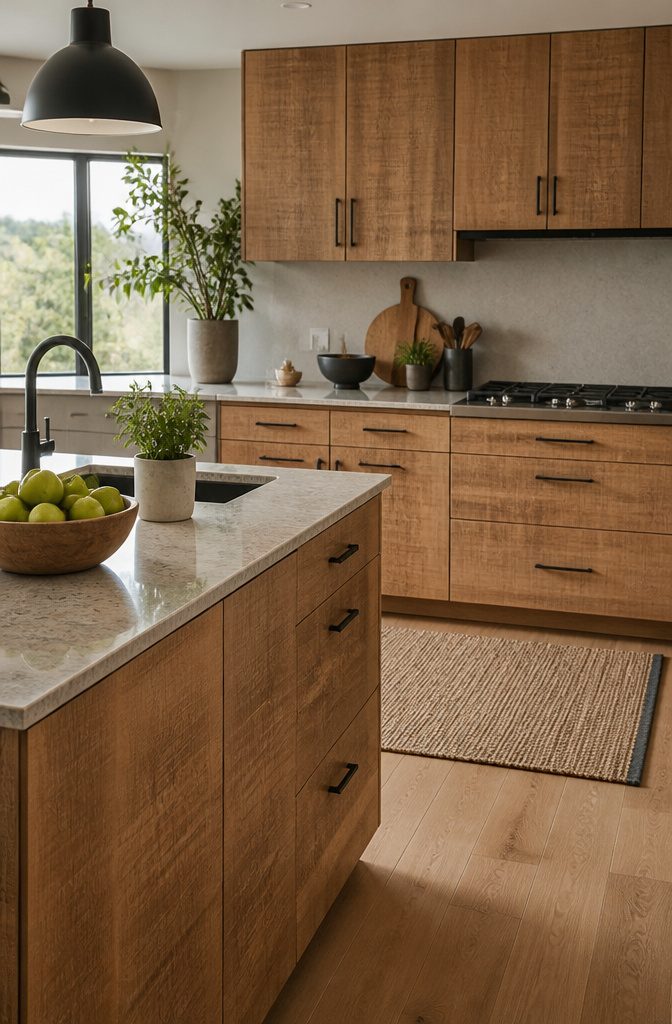
Cross-sawn timbers leave the rugged marks of the saw blade unsanded, giving cabinets a surface you actually want to run your hand across.
I would pick this for a kitchen that reads modern rather than farmhouse, because the raw texture supplies the warmth without the kitsch.
Roundhouse does it well with their River-washed ply doors on the Urban Metro range; the ply keeps the cost sane and the grain stays interesting even under paint.
Beadboard works the same way, though it moves in the opposite direction.
The vertical grooves catch light across the day and stop a painted cabinet from looking flat. I would skip the traditional cottage pairing and go with matte black hardware instead; the contrast sharpens the lines and keeps the look current.
What beadboard offers is a surface that disguises the small dings of real use, which matters more in a kitchen that sees projects every weekend.
Either treatment beats a glossy flat panel if you want the room to feel finished rather than merely installed.
15. Smart Storage Solutions

Pull-out shelves turn deep base cabinets into usable storage, but the hardware matters more than most people realize.
A shelf rated for 100 pounds keeps a stand mixer or a stack of cast iron from sagging after six months, and that capacity is the minimum I would spec for anything below counter height.
The cheaper 75-pound kits flex under a full load of pots, so the upgrade pays for itself in longevity.
Corner cabinets are where kitchens lose the most square footage.
The old center-pole Lazy Susan wobbles and wastes the central column; I would skip it entirely for a Super Susan setup with two independent pie-cut carousels, each shelf spinning on its own base.
The pair holds more and nothing gets trapped behind a fixed post.
If you are planning a double-bin trash pull-out, reserve 18 inches of width in the base cabinet run. Anything narrower forces a single bin or a cramped tilt-out, and retrofitting later means rebuilding the whole cabinet box.
16. Handleless Designs

Handleless cabinets read as modern because the eye moves across the face without interruption, but the hardware underneath decides whether the look survives daily use.
Push-to-open latches wear out fastest in high-traffic kitchens; I would put them only on uppers you open a few times a day, not the drawer you reach for every plate.
Integrated grip rails, routed into the top or side edge of the door, cost more to fabricate but keep working after five years of grease and humidity.
The rail needs at least a 15 mm recess to catch a hand with wet or full fingers, and that depth limits how thin you can make the door profile.
Pair handleless runs with concealed appliances behind matching cabinet fronts. A refrigerator or dishwasher that reads as a flat panel, not a break in the line, is what makes the kitchen feel designed rather than assembled.
Touch-latch hardware on those panels keeps the surface uninterrupted, though I would add a small recessed pull inside the toe-kick or upper reveal for the appliance you open most, since a failed latch on a 200-pound door is not a problem you want mid-dinner prep.
Glossy finishes amplify the effect by catching light across the continuous plane, especially in smaller kitchens where every visual inch counts, though fingerprints become part of the texture you live with.
17. Rustic Elements
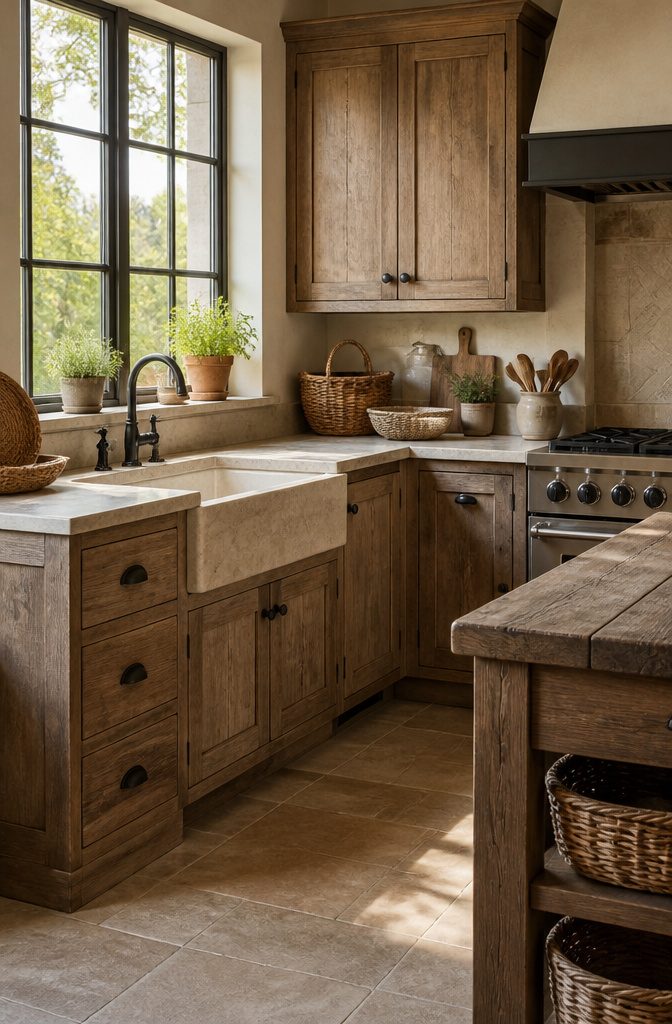
New wood with a deliberate rustic finish gives you the warmth of a farmhouse kitchen without the hunt for reclaimed lumber.
I would pick a distressed oak or hickory with a hand-scraped texture and a low-sheen sealant that lets the grain read as matte rather than glossy.
The distressing is done with sanding and staining before the topcoat goes on, so the wear looks baked in from day one and future scratches blend instead of glaring.
Pair these cabinets with a natural stone countertop and a farmhouse sink if the layout allows, but the cabinets themselves carry the look.
A woven basket or two on the counter and potted herbs on the sill complete it without cluttering the work triangle.
Open shelving mixed with closed uppers keeps the kitchen practical; everything on display forces the discipline of organization, while the lower cabinets hide the bulky stuff.
For a weekend project on a real budget, distressed new wood hits the same notes as salvage with easier sourcing and more consistent sizing.
18. Lighting Inside Cabinets

Advances in LED technology have made concealed cabinet lighting genuinely worth doing, not just a showroom gimmick.
Strip lights tucked behind the face frame of a glass-front upper cabinet cast a soft wash that turns everyday dishes or a few wine bottles into something you actually notice when you walk in.
The hardware is cheap; a 16-foot reel of warm-white LEDs with an adhesive back runs about $20, and the transformer hides inside the cabinet box with a hole drilled through the shelf pin line. I would skip color-changing strips here.
The effect works because it reads as ambient light, not a display, and cycling through rainbow modes kills that mood fast. If your cabinets run to the ceiling, the top row of glass-fronts is where this pays off most.
The plinth line at the bottom of the cabinet is another option, but I think that belongs under base cabinets for toe-kick glow, not in the uppers where you want the light to travel outward through the glass.
A dimmer switch is non-negotiable. Full brightness inside a cabinet looks like a refrigerator; aim for the gentle spill that brings the cabinetry to life after dark.
19. Decorative Inserts
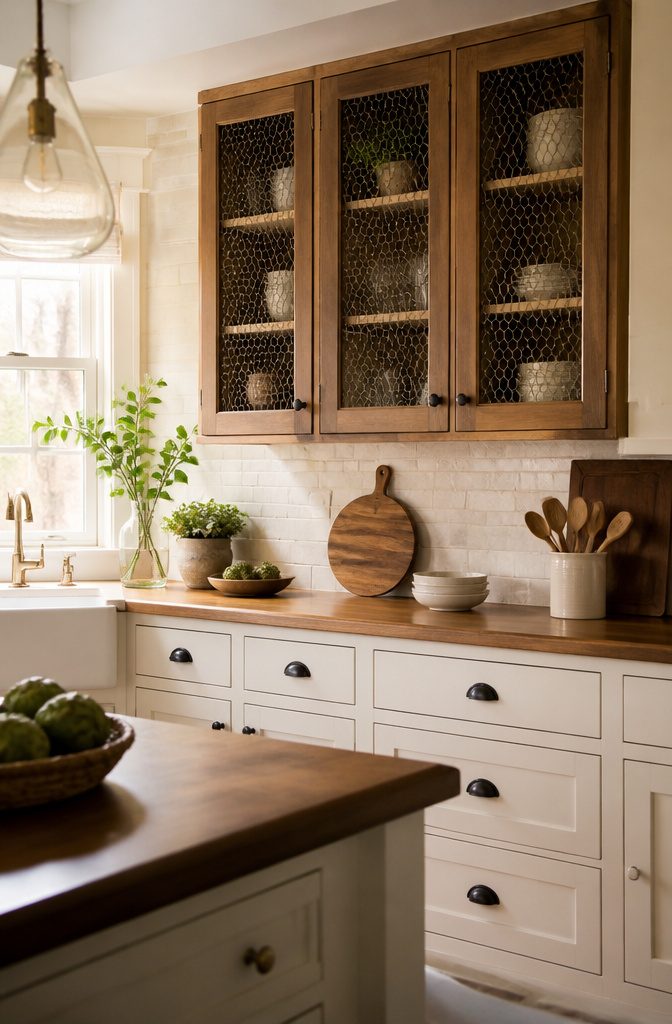
Replacing the center panel of a standard cabinet door with a decorative insert is the quickest way to make stock cabinetry read as custom without touching the frame or the hinges.
I would go with metal mesh set in an oak frame for a pantry or vegetable cabinet where you actually need airflow; the mesh keeps potatoes and onions from trapping moisture while the wood border stops the look from going industrial.
If you want something brighter, a glass insert with clear knobs against bright white paint reflects light around a small kitchen, though I would skip the glitter-flecked quartz that usually gets paired with it.
The mesh runs warmer and hides clutter; glass demands everything behind it stay tidy.
Either swap takes a weekend if you order inserts pre-cut to your door dimensions, and both work on the original hinges so you are not re-drilling anything.
20. Custom Cabinetry
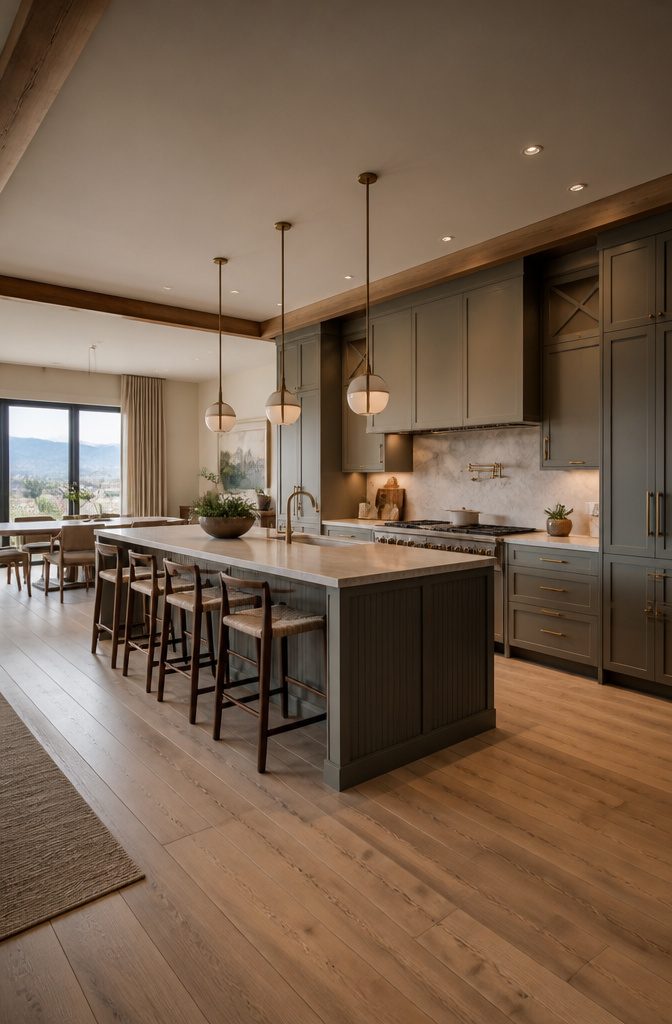
Custom cabinetry is where you stop adapting your habits to a factory floor plan and start building around the way you actually cook.
Fully custom work runs 20–40% above stock cabinets, and semi-custom lines split the difference at 10–20% more for modifications like altered door styles or sizing.
I would go semi-custom most of the time. You keep the budget breathing room while still landing on dimensions that fit a too-narrow galley or a ceiling that scoffs at standard heights.
What pulls custom work out of the "nice but generic" zone is the detailing you layer on top.
Hand-painted finishes, decorative inlays, or a deliberate mix of shaker uppers with flat-panel lowers turn storage into something that reads intentional rather than catalog-ordered.
Hardware does disproportionate work here: solid brass or zinc alloy pulls and knobs wear for decades, while cheap alloys chip and tarnish within a few years of grease and steam.
For drawers wider than 24 inches, I would use two pulls or a single pull at least one-third the drawer width; for uppers, knobs win because they are easier to grip at full extension.
Exposed black hinges add an industrial note, soft-close concealed ones keep the look minimal.
The limit I would watch is style count: two cabinet styles, unified by a single paint color or finish family, keeps the kitchen from feeling like a collage.
Frequently Asked Questions
What are some unique kitchen cabinet ideas?
Bold color choices on lowers or islands, mix-and-match styles like shaker uppers with flat-panel lowers, glass-front cabinets, floating shelves, and two-toned schemes all deliver a custom look without a full rebuild.
What’s the best way to choose a color scheme for my kitchen cabinets?
Test 12-by-12-inch samples on your actual cabinet material, because paint reads differently on MDF than on real wood and kitchen light shifts from morning to afternoon.
Keep the brave color to lowers, an island, or the interior of glass-front cabinets so it photographs well and future buyers see character, not a project to undo.
Can I mix two types of cabinet finishes in one kitchen?
Yes, but cap it at two styles and lock them together with one unifying element.
Run the same paint across both, or keep hardware finish identical from top to bottom; without that bridge, two styles become a clash instead of a conversation.
Will bold cabinet colors affect my home’s resale value?
Well-chosen bold colors can intrigue buyers rather than hurt resale.
The risk is going too specialized: all-over neon or overly personal shades like purple narrow your audience. Keep the strong color to a smaller surface so the next owner sees character they can live with.
How do I incorporate vintage cabinets with modern appliances?
The difference between intentional and jarring usually comes down to color palette.
Neutral-toned appliances settle in where bright ones fight the room. Keep hardware consistent across every door, and hide modern function like pull-out shelves behind those charming period doors.