
Kitchen tools and gadgets are the equipment you actually touch while turning raw ingredients into a finished meal.
What separates a useful collection from drawer clutter is knowing which items earn their storage space in a rental kitchen with limited cabinets.
A 10-inch chef’s knife, not the standard 8-inch home size, handles ninety percent of cutting tasks because the extra blade length lets you guide food with your knuckles instead of sawing.
Prep and Cutting Tools

A 10-inch chef’s knife handles the bulk of kitchen work for most renters, and the extra two inches over the standard home size matters more than people expect.
The longer blade lets you guide food under it with your knuckles instead of sawing, which is where speed comes from.
I keep a paring knife around for hulling strawberries or deveining shrimp, but if I had to choose one, the chef’s knife does ninety percent of what I need.
Cutting boards are where I see people damage good knives fast. Wood wins for blade edge and feels better underhand, though poly boards go in the dishwasher and that convenience keeps them popular in rentals.
I use wood and scrub it with soap and water; the bacteria argument against wood never held up in practice for home cooks who clean after use.
A Y-peeler costs almost nothing and saves more time than any other small tool in my drawer.
I add a mandoline when someone actually slices vegetables often enough to justify the storage, and a bench scraper for moving chopped piles to the pan without using the knife edge as a spatula.
The tool most people skip is the knife sharpener. A dull chef’s knife is slower and more dangerous than a sharp one, and a simple honing rod or pull-through sharpener fixes the edge in under a minute.
I sharpen mine every few weeks of regular use; the difference is immediate.

QUALITY CONSTRUCTION: Knives are crafted with high-carbon Japanese steel for easy edge maintenance and a razor sharp blade that lasts

QUALITY CONSTRUCTION: Knife is crafted with one-piece high-carbon Japanese steel for easy edge maintenance and long-lasting sharpness
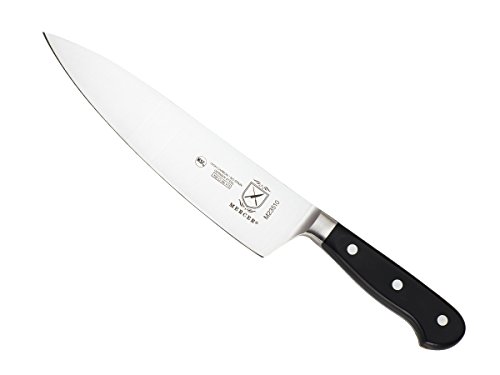
QUALITY CONSTRUCTION: Knife is precision-forged with high-carbon German cutlery steel for incredible long-lasting sharpness
Mixing and Measuring

Nested stainless bowls beat glass for most cooks because you can drop them without a funeral.
The thin lip on a cheap restaurant-style set stacks tight and stays cool enough to handle after sitting in a warm oven, which glass never does. I keep four sizes and use the smallest for whisking a single egg.
A kitchen scale set to grams is the tool that finally made my baking repeatable.
Volume measures for flour vary by twenty percent depending on whether you scoop or sift, and that is the difference between a dense banana bread and one that actually rises.
The scale lives on the counter now; the cup measure lives in the drawer.
Dry and liquid measuring cups are not interchangeable. Dry cups are meant to level flush with a straight edge, while a 1-quart liquid measure gives you room to read the meniscus at eye level without spilling.
That quart measure is the one I reach for most, even for smaller jobs, because the extra space saves me from overflow when I am not paying attention.
An offset spatula and a bench scraper finish the job other tools abandon.
The spatula bends to scrape a stand mixer bowl clean in one pass; the scraper gathers every last bit of dough from the counter. Neither costs much, and together they recover ingredients you would otherwise wash down the drain.

Premium Steel Construction - The steel rod is made of carbon steel and plated with nickel-chrome; the fine surface of the steel rod prevents the cutting edge from damage when sharpening.

HONE A KEEN EDGE BETWEEN SHARPENINGS The ceramic rod refines and realigns your blade so kitchen knives stay slicing-sharp longer, giving home cooks a quick edge tune-up before every meal

KEEPS KNIVES RAZOR-SHARP: Maintain knife edges between professional sharpenings.
Cooking Vessels

A stainless steel skillet handles everything that needs color, but eggs belong in nonstick.
The stainless builds fond you can deglaze; the nonstick releases an omelet without a fight. I keep one of each and reach for the nonstick maybe twice a week, the stainless almost daily.
The 6-quart enameled Dutch oven is heavy and not cheap, and I would still call it the single most useful pot in the kitchen. It holds a whole chicken, a loaf of no-knead bread, or a batch of chili.
The enamel cleans easier than bare cast iron, and the lid seals tight enough for long braises. The weight is real, about eleven pounds empty, so I store it on a lower shelf.
For sheet pans, aluminum beats stainless for heat distribution.
I look for a 1-inch rim minimum; it keeps roasted vegetables from sliding off when I pull the pan from the oven and catches juices from chicken thighs. A half-sheet size fits most home ovens with room to spare.
One baking dish shape does the work of three: a 9 by 13-inch rectangular pan.
Lasagna layers evenly, a spatchcocked chicken fits flat, and brownie corners come out chewy without a specialty pan. I prefer borosilicate glass or light-colored ceramic; dark metal runs hot on the edges.
A collapsible steamer basket that opens to fit any pot from 8 to 12 inches costs little and stores flat. I use it for broccoli, dumplings, and reheating tamales without drying them out.

THREE IDEAL SIZES FOR EVERY TASK - This bamboo cutting board set includes three essential cutting board sizes - 15x10”, 12x8”, 9x6” - covering all your kitchen needs. Use the small board for quick fruit prep, the medium for slicing vegetables, and the large for carving meats, rolling dough, or creating an elegant charcuterie board spread.

PREMIUM BAMBOO CONSTRUCTION – Crafted from dense, carefully selected bamboo, this Cutting Board & Knife Sets offers exceptional strength and durability. The high-density material resists cracking and warping, providing a reliable food prep surface that outlasts ordinary wooden boards.

Dishwasher Safe Wood Fiber Set: Made from compressed wood fiber composite with 80% pine wood fiber, this set of 2 kitchen cutting boards, medium 12 x 9 inch and large 15 x 11.25 inch, goes straight in the dishwasher. A non-plastic choice for everyday chopping, slicing, and dicing.
Hand Tools for Heat

The right tongs grip without shredding, and that distinction sits in the tip material. I reach for silicone-tipped tongs with a simple scissor hinge over any spring-loaded model.
The spring wears out, pinches drawer space, and flings food when it slips. A scissor hinge gives steady pressure you control by hand.
For fish, a thin, angled metal spatula beats a standard slotted turner.
The blade slides under delicate fillets without splitting them, and the offset angle keeps your knuckles above the pan. A slotted turner works for burgers but mashes sole.
A ladle with a pouring rim on both sides lets you work left- or right-handed without drips down the pot wall. That small lip costs nothing extra and saves sauce.
Wooden spoons survive decades because the material tolerates abuse that cracks silicone, melts nylon, and transfers heat to your palm. I keep one with a flat edge for scraping fond and a rounded twin for stirring.
Oven mitts that stop at the base of your thumb are a liability. Fabric long enough to cover your wrist lets you reach into the oven without bracing for the burn.

𝗘𝗳𝗳𝗼𝗿𝘁𝗹𝗲𝘀𝘀 𝗪𝗲𝗶𝗴𝗵𝗶𝗻𝗴: Supports 5 units (oz/lb:oz/fl'oz/g/mL), tare function, and includes 2 AAA batteries for hassle-free operation

UNIQUE FEATURE: IPX7 Waterproof rating for easy clean up. Scale's digital components are water tight and can be rinsed under water. See instruction manual for additional cleaning information.

𝗣𝗿𝗲𝗰𝗶𝘀𝗲 𝗠𝗲𝗮𝘀𝘂𝗿𝗲𝗺𝗲𝗻𝘁: 11 lb/5 kg capacity with a division of 0.1 oz/1 g. High precision strain gauge sensors that deliver trustworthy results every time; LCD display for clear readout in g, kg, oz, lb:oz and ℉
Small Appliances That Earn Counter Space
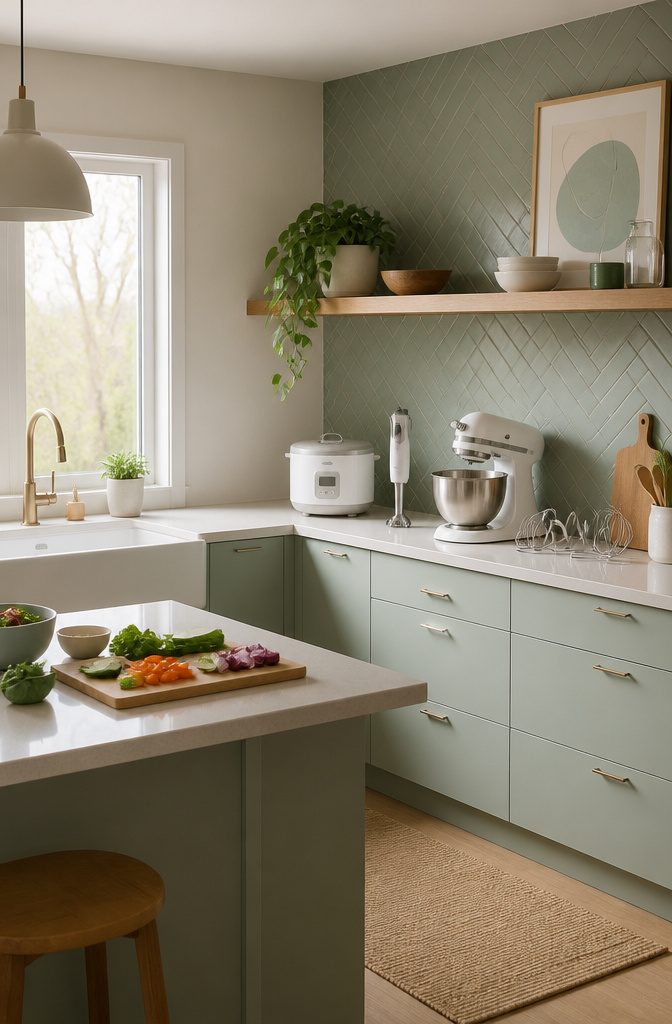
A rice cooker earns its outlet not for speed but for forgiveness. The stovetop demands timing and attention; the electric version holds warmth without penalty, so Tuesday’s dinner survives Wednesday’s distraction.
For one or two people, a 3-cup model sits on a shelf without complaint. Larger households need the 6-cup capacity, not for rice alone but for the batch-cooked grains that become fried rice later in the week.
An immersion blender replaces the full-size machine in kitchens where counter space is the limiting reagent. It handles soup, sauce, and even whipped cream with a wand that stores in a drawer.
What it cannot do is bread dough or thick nut butter, and that trade-off is the point: buy the tool that matches the work you actually do, not the kitchen you imagine having.
Stand mixers occupy precious real estate, so the question becomes which attachments earn that footprint. The dough hook does, if bread is a weekly habit.
The pasta roller does, if fresh noodles replace restaurant spending. The juicing attachment rarely does; a separate juicer cleans faster and clogs less.
Food processors run from 7 to 14 cups.
The 11-cup bowl handles a standard pie crust without the blade riding above the flour, yet still fits a cabinet shelf. Smaller bowls save neither money nor cleanup time.
An instant-read thermometer saves more meat than any recipe. Color lies; internal temperature does not.

Contains (1) PrepSolutions Adjust-A-Slice Mandoline in Green – adjustable slicing thickness for all your prep needs.
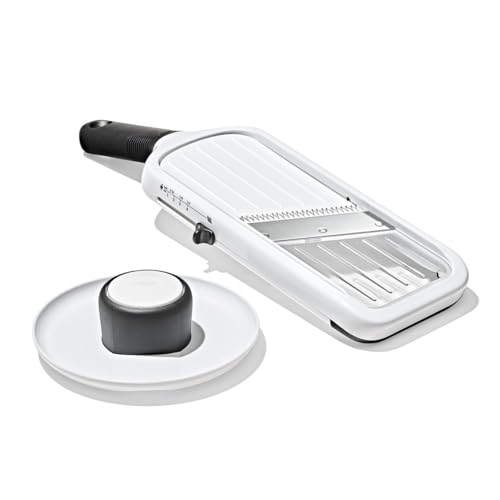
Precision slicing control: Designed as a mandoline slicer for kitchen use, this handheld tool offers five cutting options, including julienne, thin, medium, thick and extra thick

Get Just the Right Slice: The handheld mandoline slicer for kitchen easily adjusts to 1 mm, 2.5 mm, or 4 mm so you can perfectly slice a range of vegetables and fruit.
Specialty Prep Tools

A garlic press wins on weeknight speed if you are cooking for three or more, though a sharp chef’s knife leaves you with cleaner flavor and one less tool to clean.
For citrus, a microplane zester pulls oil from the skin without the bitter pith a box grater drags in, and the difference in a vinaigrette is immediate.
Salad spinners earn their drawer space by drying lettuce fast enough that dressed greens actually cling instead of sliding to the bowl bottom; stored spun, those same greens keep crisp an extra two days.
A mortar and pestle is slower than an electric spice grinder but releases oils in whole spices that pre-ground jars lost months ago, and the texture of a hand-pounded curry paste has no substitute.
The citrus juicer I skip is the hinged hand press: it halves squeeze time against bare hands but jams on thick-skinned fruit and demands counter space a simple reamer does not, and the reamer still cuts the task to under a minute per lime.

【10” Kitchen Gyuto Knife】- This MOSFiATA 10 Inch Kitchen Knife is made of high-quality German stainless steel that resists rust, corrosion and discoloration. It can be used for your daily kitchen tasks of chopping, slicing, dicing and mincing of all kinds of meat, vegetables, fruits and bread. It is suitable for both home and restaurant kitchens.

PROFESSIONAL CHEF KNIFE: The BOLEXINO10 inch Chef Knife is designed to meet the various need when cutting. Multipurpose cooking knife ideal for chopping, slicing, dicing and mincing all vegetables, meats, fruit and more. The extra length gives you extreme cutting power.

Professional Chef's Knife:Command your kitchen with 10 inch chef knife.Its length provides superior leverage and efficiency for slicing large vegetables, carving roasts, dicing bulk ingredients, and tackling substantial meal prep with authority.
Baking Specifics
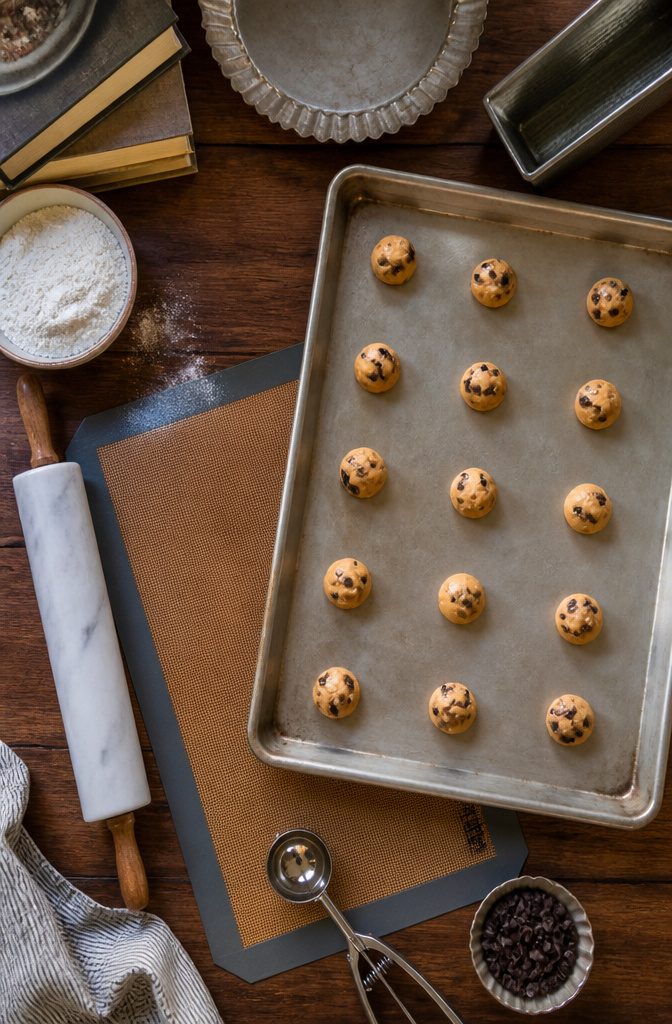
Half-sheet pans fit most rental ovens without forcing the door, and that alone makes them the starting point over the bulkier full-sheet size.
I keep one quarter-sheet too, since it slides easily into a toaster oven and handles smaller jobs without heating the big cavity for four cookies.
A silicone mat pays for itself inside a year if you bake weekly; parchment works fine for sticky or high-heat jobs where silicone can retain a faint odor, but the per-sheet cost adds up fast.
For rolling, a marble pin stays cold and handles butter-rich dough well, though a solid maple pin with ball bearings costs less and travels lighter. I would skip the fancy tapered French styles unless you already know you need one.
Loaf pans should measure 9 by 5 inches, and pie pans 9 inches across, because those are the dimensions most recipes assume without saying so.
A wire cooling rack with feet tall enough to straddle a sheet pan doubles as a roasting rack for poultry or vegetables, which saves buying a separate unit.
If I were buying one pan first, it would be the half-sheet. Everything else builds around it.
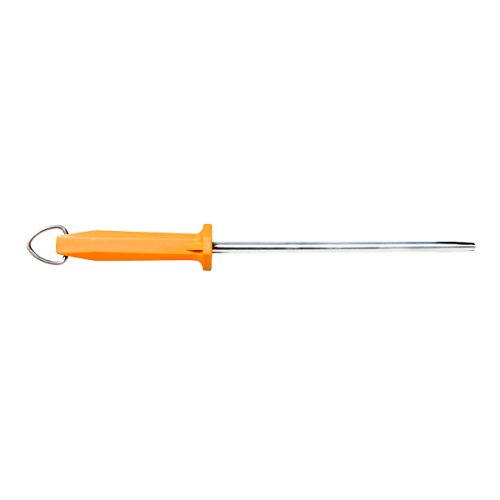
SMOOTH HONING SURFACE: Realigns and finishes established knife edges during routine maintenance without aggressive abrasion.
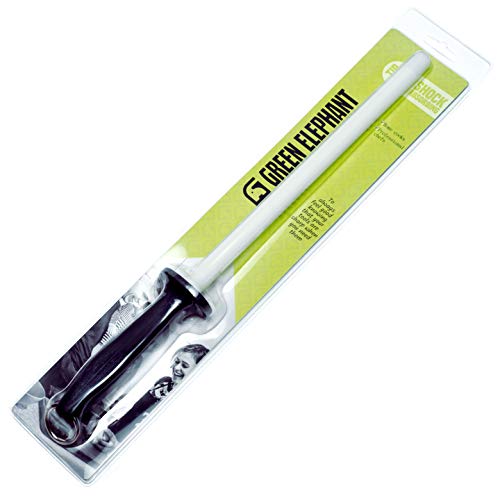
DURABILITY with the highest quality ceramic available on the market – hardness of this ceramic sharpening steel is 9 Mohs. Rockwell hardness over 100. Grit #1500.

Hard Ceramics: the hardness of the ceramics provided by our ceramic knife sharpener is several times that of steel, and the texture is fine; It is a nice tool for tool grinding
Coffee and Breakfast Gear
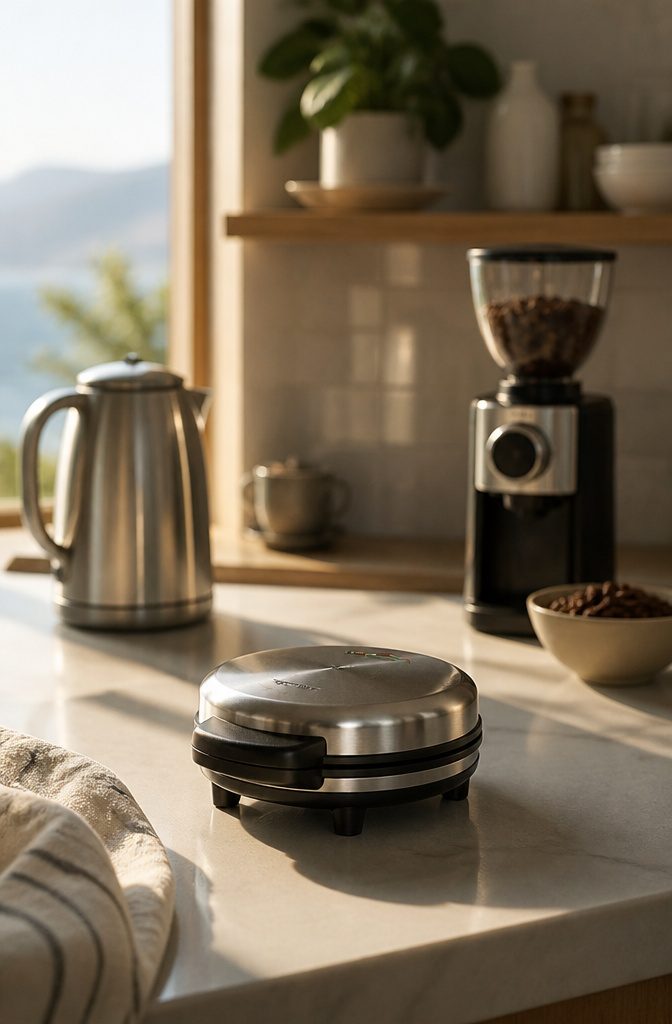
A drip machine wins on weekday mornings if you value speed over nuance: water goes in, grounds go in, you walk away.
Pour-over takes three to four active minutes and demands cleanup of the dripper and carafe, but the control over bloom time and water temperature matters more than most buyers expect.
For a solo renter, the single-cup drip or a small pour-over setup saves both counter space and the stale half-pot problem.
A burr grinder beats a blade grinder on consistency, which is what separates drinkable coffee from good coffee.
Conical burrs run cooler and handle oily dark roasts without clogging; flat burrs excel at fine, even grounds for espresso but cost more and run hotter. Adjustment matters: stepped grinders click between presets, stepless grinders dial freely.
For drip or pour-over, stepped is enough. For espresso, stepless is nearly mandatory.
An electric kettle with temperature control pays off if you drink tea.
Green tea steeps around 175°F, black at 212°F, and boiling water scorches the former. The variable kettle removes guesswork and speeds heating by about a minute over stovetop, though any basic gooseneck kettle works for coffee alone.
The waffle maker most reviews skip is the storage question. A flip-style Belgian maker makes better waffles but needs 12 inches of vertical cabinet space.
A compact stovetop model stores flat in a drawer and costs a third as much, though it sacrifices the crisp edge you get from sustained contact heat.
For a small kitchen, the stovetop model wins on shelf space alone, and the waffle quality gap closes with practice.

Non-Toxic Food-Grade —The Healthy Choice for Your Family: Made of natural bamboo with zero plastic, this non toxic cutting board is a great plastic alternative for healthy, eco-friendly kitchens. Its dense, fine-grained texture delivers great quality and natural food-safe properties, making it safe for raw meat, fruits, vegetables and bread. Health-conscious home cooks love the material for daily meal prep, enjoying plastic-free chopping that protects both family health and the planet.

【Is this cutting board really dishwasher safe?】 Yes. The dishwasher-safe cutting board is built to handle the demands of everyday machine washing. It has been tested through more than 200 high-temperature dishwasher cycles without cracking or warping. Instead of spending extra time hand washing after every meal, you can simply place it in the dishwasher and get back to the rest of your day.

DISHWASHER-SAFE BAMBOO, FINALLY REAL: Specially engineered bamboo cutting board that withstands heat and water without warping or cracking — created for effortless cleaning and a stress-free cooking routine.
Storage and Organization

Glass storage earns its spot for anything that touches heat.
Borosilicate handles the microwave without warping, and tomato sauce won’t ghost inside it the way it does in polypropylene. Plastic still wins for packed lunches and anything that might get dropped; just keep it away from the reheat setting.
Spice racks live or die by proximity to the stove.
Mine sits inside a cabinet two steps away, not on the counter where steam turns ground cumin into a solid brick. 4-ounce jars fit standard racks without wasted height; anything taller tips or gets shoved to the back.
For apartment composting, a countertop bin with a charcoal filter beats the freezer-bag method. Empty it every two days or the fruit flies arrive, filter or not.
Chip clips gather in junk drawers while the bag fold works fine.
Pinch the air out, fold the top twice, clip if you must. The fold fails on humidity; the clip fails when you cannot find one.
A lazy Susan turns deep cabinets into usable space. I have bought the same OXO set twice: first in a rental with 24-inch cabinets, again after moving to a place with identical blind corners.
The grip on the base matters more than the diameter; if it slides, you are still reaching.

Battery-Free Precision You Can Count On: Powered by a reliable spring mechanism, this mechanical analog scale delivers consistent weight readings without batteries or charging - always ready when you need it for baking, meal prep, or portion control.

【Precise Weight】 10kg/22lb capacity, 1g/0.1oz resolution, Great for cooking, baking, weight loss, Meal Prep, Coffee, Package, Postage.

Contemporary Slim Design: Made of Stainless Steel Material; It is easy to use and clean; Provides accurate weight data with a user-friendly control panel and system; With high precision sensors to ensure correct performance and readouts
Serving and Small Touches

A salad bowl needs real capacity if you actually eat together. I would skip the oversized decorative kind and pick one that holds a full head of lettuce plus toppings without spilling on the way to the table.
Pepper mill guts matter more than the outside.
A metal grinder with an adjustment screw at the base lets you move from cracked steak to fine dust, and the good ones stay sharp for years. Plastic mills bind up and shed into your food.
Dish towels are the item you think you own enough of until you hand-wash anything. Six to eight in rotation keeps you from drying plates with the same damp rag that dried breakfast.
Apron fabric makes the difference between something you grab and something that hangs ignored. A cotton-poly blend releases grease in the wash; pure linen looks nice but sets stains permanently.
Serving utensils with silicone or nylon heads protect nonstick surfaces. Metal tongs and spoons will gouge a skillet in one careless pass, and that damage is not coming back.
If budget forces a cut, I would skip the fancy pepper mill first. Pre-ground pepper is not ideal, but it will not ruin a meal the way a scratched pan or a stained apron does.

Adjustable for slices in 3 thicknesses: 1mm, 2.5mm and 4mm

SAFETY MANDOLINE SLICER: This mandoline slicer whit build-in blades design, no need to touching blades,safe & quickly slicing vegetable & fruits, easy to set up and clean up.If you’re looking for a fast way to slice up vegetables, This will be your great choice.
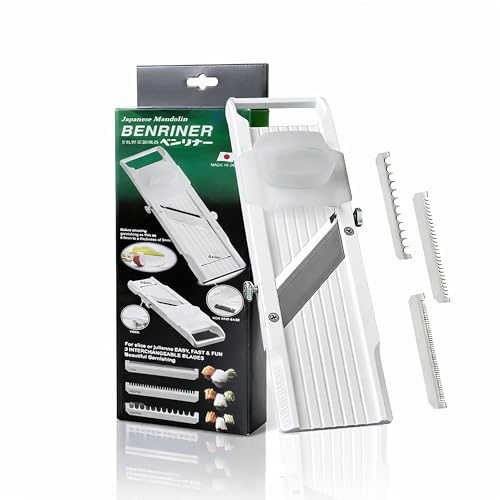
Benriner’s Mandoline Slicer creates wide slices, chunky cuts, and long narrow julienne strips that are equally sized to cook evenly
What to Buy First on a $300 Budget

- A chef’s knife, a cutting board, and a pair of tongs handle about 60% of all cooking tasks, and together they should pull roughly $80–$110 from your $300. The knife alone eats $40–$60; buy the best steel you can hold comfortably, because a dull edge wastes more time than any missing gadget. The board should be hardwood or a quality composite, and the tongs should have a simple spring, no locking mechanism to jam.
- One good skillet covers the next 20% of what you actually cook. Cast iron runs $25–$40 and outlasts three nonstick pans, though it asks for a little oil and patience while it heats. Stainless clad is the other solid choice at $50–$70 if you want something you can scrub hard and never worry about acidity.
- The remaining $120–$170 goes to flexibility: a sheet pan, a medium pot with a lid, a wooden spoon, and a liquid measuring cup. These fill the gaps without duplicating what you already have.
- I would spend less on the cutting board than most guides suggest. A $20 board does the job; the $60 end-grain heirloom is a joy, but the knife matters more, and the difference in daily use is smaller than the price gap implies.
Frequently Asked Questions
What are the top 10 gadgets for a kitchen?
The ten essentials are: a 10-inch chef’s knife, a Y-peeler, a kitchen scale set to grams, a stainless steel skillet, a nonstick skillet, a 6-quart enameled Dutch oven, a half-sheet pan, silicone-tipped tongs, a wooden spoon, and an instant-read thermometer.
Each earns its spot by handling tasks that other tools cannot match, from building fond in the stainless pan to rescuing overcooked meat with a temperature check.
What are 10 essential kitchen tools?
Start with a 10-inch chef’s knife, a hardwood cutting board, nested stainless bowls, a kitchen scale in grams, a 6-quart enameled Dutch oven, a half-sheet pan with a 1-inch rim, silicone-tipped tongs, a wooden spoon, a bench scraper, and a knife sharpener or honing rod.
These cover prep, cooking, and cleanup without duplication, and the sharpener in particular prevents the most common kitchen slowdown: a dull blade.