

The right small apartment storage hack depends on how much you can modify the space and what you are willing to spend.
Wall-mounted shelves and $11 zippered under-bed bags work without a drill; ceiling hoists and $150 Elfa racks need landlord permission and solid structure.
One detail separates the solutions that hold up from the ones that become clutter themselves: a door organizer that keeps the door from closing fully is worse than no organizer at all.
1. Wall-Mounted Shelves for Vertical Storage

Wall-mounted shelves turn the vertical real estate you already own into storage without surrendering a single square foot of floor.
I would put them in every room that lacks a closet: a narrow ledge above the sofa for books, a pair of flanking shelves in a corner that otherwise collects nothing but dust, or a shallow run of open shelving in the kitchen for spices and the two or three cookbooks you actually open.
The deeper the shelf, the more it can hide small bins behind whatever sits up front, which keeps the visual clutter down.
Floating styles sit flush to the wall and read as cleaner than bracketed ones, though both do the same work.
Corner units nest where no other furniture fits, and that is where I would start if wall space is already tight.
Wall-mounted shelves cost less than a storage unit, install in an afternoon, and the stuff you store becomes the decoration.

Storage & Decoration Solution: Corner shelves for wall fit into the corner and increase storage space. The modern wall shelf complements any decorating style, providing a display space where you can decorate the room with whatever you like while making more space

【Maximize Corner Space】This set of 2 quarter-circle floating corner shelves turns wasted wall corners into usable storage space. Ideal for living room, bathroom, bedroom to organize small items and display decor.

FITS BOTH INSIDE & OUTSIDE CORNERS:Corner shelves which size is 15.7 x 7.9 x 7.9 inch,Designed for maximum flexibility, these corner shelves can be installed on both inside corners and outside corners—perfect for any wall layout in your home
2. Multifunctional Furniture
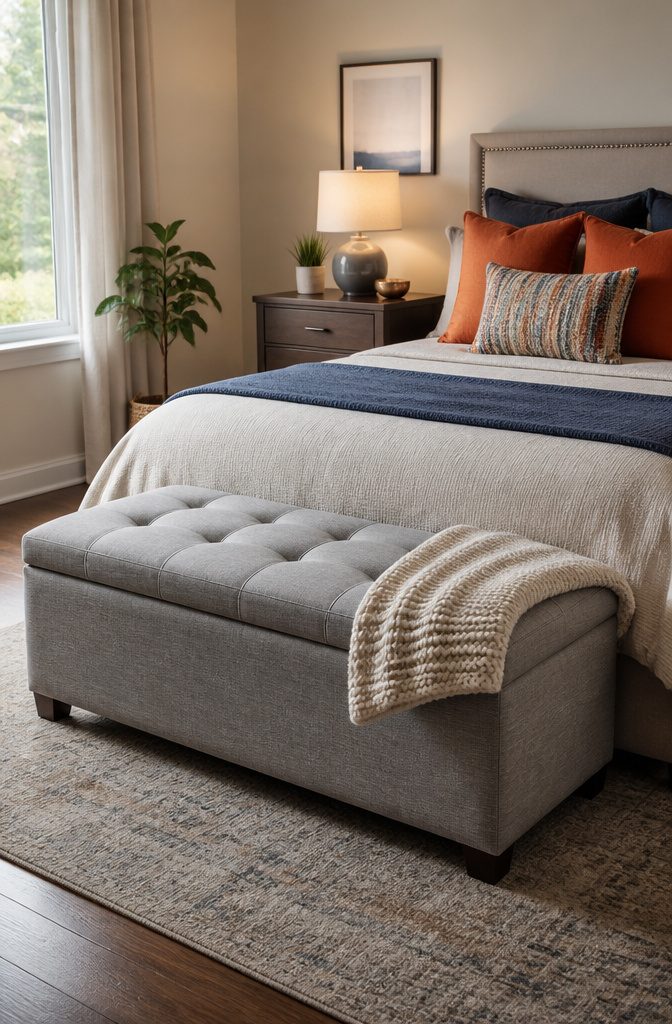
A storage ottoman hides the clutter you do not want to stare at. The Youdenova 30-inch folding model runs about $40 and swallows throw blankets, board games, or that growing pile of cables.
I would keep one at the foot of the bed or as a side table, because a piece that only holds your feet is wasted real estate in a small apartment.
Beds with drawers underneath are the heavier investment.
The Allewie upholstered storage bed sits at $179.99 and gives you a full platform’s worth of hidden space without the dust-collecting gap standard frames leave behind. Out-of-season clothes, extra bedding, or shoes slide into the compartments and actually stay clean.
Coffee tables with built-in storage work best when the hidden space nests something you use.
One option at $999 from Homary lifts to eating height and stores three ottomans inside, plus room for remotes and magazines underneath. At that price, it replaces four pieces, which is the only math that justifies it.
Skip the lift-top unless you eat from the couch regularly; a simpler drawer model hides just as much for half the cost and fewer mechanical parts to fail.

Foldable & Quick Setup: This foldable storage ottoman allows effortless tool-free quick assembly within just minutes. The storage bench can fold completely flat when unused and neatly tucked under bed or closet to save extra indoor storage space

Reinforced Stable Frame: Solid thick MDF plates form the whole frame of foldable ottoman, delivering reliable bearing performance up to 660 lbs. The cushioned surface is filled with dense foam and wrapped in faux leather material, bringing cozy touch

Fireproof and Water-resistant(17"X13"X13"): Compared with other storage ottoman, our fireproof storage ottoman is made of 3 layered non-itchy silicone coated fiberglass which stands up the temperature up to 2000℉. The Storage Chest is fireproof and waterproof,which can effectively protect your important files in a fire and wet weather. They will further keep your files intact. It has been passed by SGS TEST(UL94 Certified) for a longer life and can be used with peace of mind.
3. Under-Bed Storage Solutions

The space under a bed is usually the first place renters look when they need to reclaim floor area, and it works if you are strict about what goes there.
I would put seasonal clothing, extra bedding, and shoes in low-profile bins or zippered bags, and I would keep anything I touch weekly, like gym clothes or the current book I am reading, out entirely.
The height limit decides it: most standard bed frames leave six to eight inches of clearance, and a bin taller than that will scuff the mattress base or simply not slide in.
Wheeled containers solve the retrieval problem for heavier loads, since pulling a full box of winter sweaters from under a bed without wheels means crawling after it.
Clear tops or fully transparent bins let you see which container holds the down comforter and which holds the hiking boots without unstacking.
At $11 for a set of two zippered bags, this is one of the cheapest square footage gains in a small apartment.
Dust is the catch; fabric bags breathe but let particles in, and rigid bins seal better yet cost more and eat up precious height.
For a renter on a one-year lease, I would start with the zippered bags and only upgrade to hard bins if I stayed long enough to justify the space lost to thicker walls.
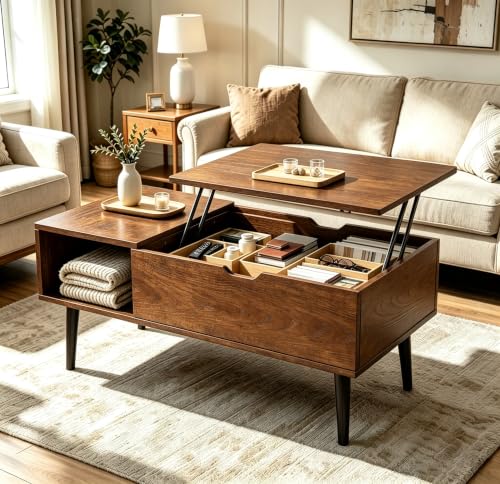
Lift Top Design: The tabletop smoothly lifts to 6.3 inches, transforming this coffee table into a versatile piece for everyday use. Whether you need a temporary dining surface, a convenient computer desk, or a raised workspace, the elevated floating design adapts to your needs while adding modern functionality to your living space

4-IN-1 DUAL LIFT-TOP COFFEE TABLE: A 35.4"L x 19.7"W coffee table becomes a 35.4"L x 39.4"W dining top. Lift one side for laptop time, both sides for shared projects, or fully open it for meals and game night
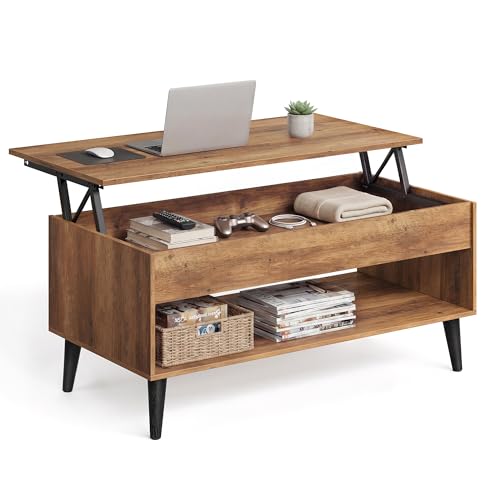
Versatile Mid-Century Charm: The refined finish and crisp lines give this center table a mid‑century modern vibe that fits beautifully in apartments, dorms, and other small spaces
4. Over-the-Door Organizers

Over-the-door organizers turn the six to eight square feet behind a standard door into usable storage without drilling into walls.
The mesh and fabric pocket styles run about $28–$37 for a six-tier unit, which is enough to hold a full shoe collection or a pantry’s worth of snacks and spices.
I would put one on the back of a closet door for bags and accessories, where the 18-slot purse organizers that hook over the top rail keep everything visible and off the floor.
Cleaning supplies fit well on the inside of a bathroom or kitchen cabinet door with adhesive hooks or shallow racks, though the door must still close fully or the organizer becomes its own clutter problem.
Rental restrictions on hardware make the hook-over style the safer bet; screw-mounted systems like the $150 Elfa rack hold more weight and allow basket customization, but they require permission and patching on move-out.
Where these fail is on doors you open constantly or that sit in tight hallways. The swinging motion adds time to every trip through, and a loaded organizer slaps against the frame.
I would skip the bedroom entry door and use the closet interior instead, or reserve the back of a pantry door where traffic is lower and the contents stay hidden.

Under-the-bed storage bag (2-pack) helps keep items safely stored, freeing up extra closet and drawer space

12-Pack Clear Zippered Storage Bags with Size Details: You’ll receive 12 clear storage bags, each measuring 15.7 x 11.8 x 4.7 inches, capable of holding 2-3 double bedding sets. Lightweight and compact, the set occupies only half the space of a 24-inch suitcase and can be folded flat for convenient closet or under-bed storage when not in use.

Large Capacity: This under bed storage bag measures 39.4"(100cm) x 19.7"(50cm) x 7.1"(18cm) and has a capacity of 95L which can easily hold 20 sweaters, 4 thick blankets and 14 sheets. Ideal for under-bed storage, closet or shelves.
5. Pegboards for Flexible Storage
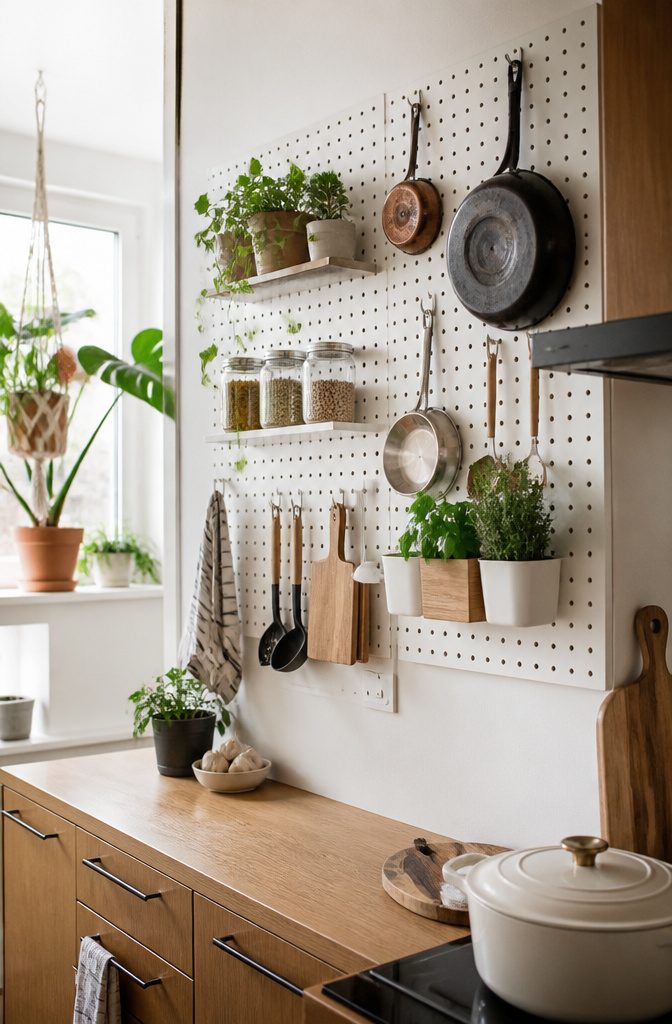
A pegboard mounted on an open kitchen wall turns every tool into visible storage. I would skip the drawer-crammed approach for spatulas and ladles and hang them within arm’s reach of the stove instead.
The same board holds mugs or even pots if the mounting hardware is rated for the weight, which frees cabinet space for the bulky items you use once a month.
The real advantage over fixed shelving is reconfiguration. Move a hook two inches left when you buy a wider pan; cluster baking tools during the holidays then spread them back out.
A two-piece Nafenai set runs about $25.99, or the Brightroom pegboard at Target lands around $35 if you want cleaner edges. Both beat a $200 pot rack that your lease might not allow.
I would take pegboard to the bedroom or bathroom too, but only with the same discipline: items you grab daily, nothing that collects dust. The moment it becomes a display surface, the flexibility stops working for you.

Hold Up to 66lbs: Yecaye under bed storage with wheels is made of high quality 300D PU fabric and sturdy metal frame, can hold up to 66 lbs, stronger than other fragile metal mesh, spacious capacity perfect for storing clothes, toys, books, shoes and other heavy items also won't compromise stability and durability

[Quality Metal Container] Never settle for flimsy plastic&linen under bed storage bins which rip all too easily. This under the bed storage container is completely made of metal, compared with other under bed storage bins, smaller mesh size of the shelf is used for a larger load-bearing capacity. Plus, the whole frame was welded into a whole that never falls apart.
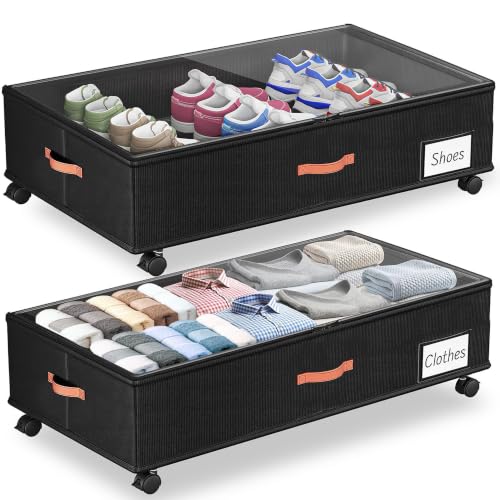
Large Capacity Construction: Engineered with 600D PU-coated fabric and reinforced metal frame, 30% stronger than standard mesh organizers. Two removable partition panels let you create compartments for clothes, shoes, books, or toys, getting the most storage space in the least space without compromising stability and durability
6. Rolling Carts for Mobile Storage

A rolling utility cart earns its keep when the gap is narrow and the stuff is heavy.
The slim models that slide between a washer and dryer, or between a toilet and vanity wall, run about 15 inches deep and under 5 inches wide.
That is just enough real estate for detergent bottles, spare washcloths, or a hair tool caddy, and the wheels mean you pull the load to you instead of crawling into the gap.
Wheels are not always an upgrade.
On a cart that stays put as a coffee station or nightstand, casters add wobble and collect floor grit. I would skip them unless I planned to move the thing at least twice a week.
For the kitchen, a portable chef’s cart with a solid top doubles as prep space and rolls to an outlet when the stand mixer or blender needs power.
The same cart parked in a closet with hooks on the side handles scarves, belts, and bags without drilling into a landlord’s walls.
Price fluctuates fast on the thinnest units. I have watched a three-tier slim cart bounce between $17 and $21 on the same listing before settling under $17 with patience.
The build is tool-free and takes under three minutes, which matters more than it should for something you will probably reassign three times in a year.

【FOR REFINED LIVING】This jewelry cabinet comes from our AILEAS collection, where form meets function. This line of full-length mirrors and jewelry cabinets boasts practical mirrors and elegant round edges, enhancing your beauty routine and living space

STYLISH & ELEGANT: Transform your corner into an elegant and practical display area using our charming Set of 4 Wooden Corner Shelves Wall Mounted! These corner shelves provide additional storage while keeping your items organized.

【Universal Compatibility】: Built for versatility, this PS5 game holder breaks free from single-platform limitations. Tailored to fit various game discs, the video game organizers and storage caters to gaming lovers of all stripes, whether you're into PS5, PS4, Switch, Switch2 or Xbox. From PS5's sleek designs to Switch cartridges and standard PS4/Xbox boxes. Effortlessly integrating into any gaming setup, it organizes your games in one spot, sparing you the need for multiple storage solutions. A perfect mix of function and flexibility, the game rack tower is a must-have for every game enthusiast.
7. Hooks for Hanging Items
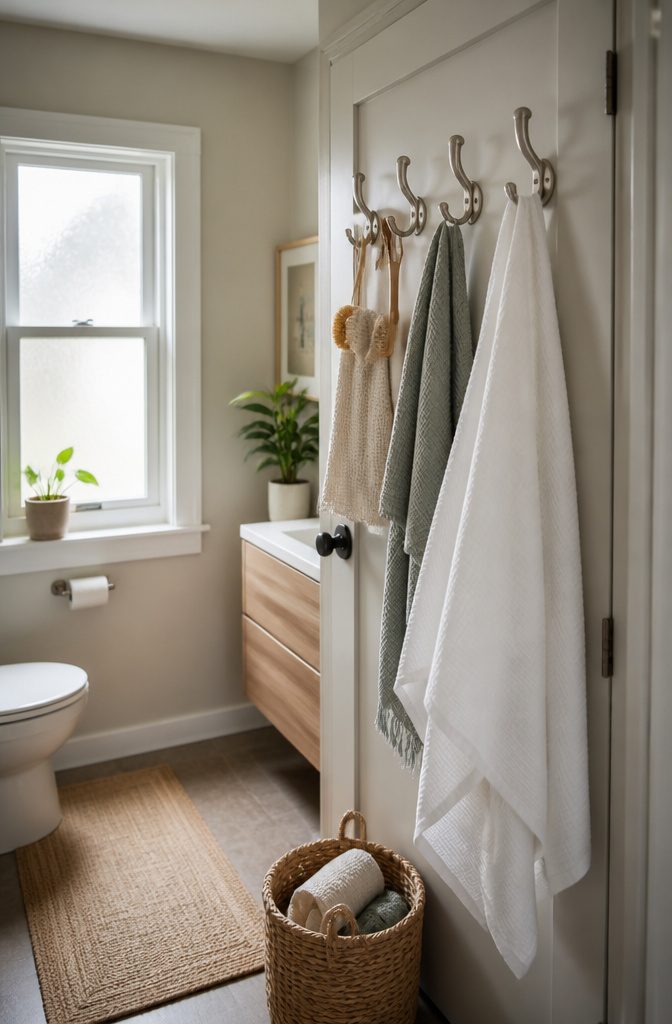
A single hook rated for 15 pounds holds a loaded tote or a wet winter coat without drama, but most adhesive strips top out around 5 pounds, which is fine for a dish towel or a mug rack under the cabinet.
The FOMANSH under-cabinet mug rack runs about $15 and practically doubles real estate for utensils and mugs, though I would keep it away from the stove.
Screw-in hooks win for bags; the Perfect Curve over-door organizer holds up to 18 bags at roughly $8 on sale and needs no drilling at all. For renters, the real question is whether the landlord notices a hole.
Adhesive hooks come off clean until they do not, and a failed strip at 3 a.m. is its own education. I would screw into the back of a solid door every time and touch up with spackle before move-out.
Over-door hooks on the bathroom side handle wet towels without touching tile, and the same hook on a cabinet interior keeps a hairdryer from colonizing the sink.

SUPER STURDY: The medium density fiberboard used in this ottoman is made from FSC certified wood, strong and durable, has the load bearing capacity up to 330 lbs (static load capacity). The thick padding and soft fabric make this end of bed bench comfortable and welcoming in any entryway or bedroom

Foldable & Quick Setup: This foldable storage ottoman allows effortless tool-free quick assembly within just minutes. The storage bench can fold completely flat when unused and neatly tucked under bed or closet to save extra indoor storage space

Heavy-Duty Support: Built with thick MDF panels for strong structural support, this storage ottoman bench holds up to 660 lbs. The cushioned top features high-density foam and breathable linen fabric, providing a comfortable seating experience
8. Ceiling Storage Options

Ceiling hoists turn the one surface most renters ignore into real storage, but only when the numbers actually work.
A system like the G-Bike rig holds up to four bikes overhead, which clears an entire corner of a studio for a desk or a walking path.
You need two things for this to work: enough vertical height that the lifted item hangs above head level, and access to joists or solid concrete overhead.
In older buildings with plaster-and-lath ceilings or dropped acoustic tile, finding a secure anchor point gets complicated fast.
The hardware itself runs a real cost, and for a single bike or one bulky item, wall hooks or a floor stand usually win on dollars and labor.
I would only drill upward if I had at least nine feet of clearance and could confirm solid structure, concrete or exposed beam. Otherwise the risk of a pulled anchor and a damaged ceiling outweighs the floor space you gain.
Renters need landlord sign-off before any drilling, and some leases prohibit ceiling penetrations entirely. Where the structure cooperates, though, a hoist is the cleanest way to store seasonal gear, kayaks, or that road bike you use three months a year.

【MID CENTURY STYLE】 Elevate your living room with this mid century modern coffee table featuring an exquisite fluted texture and warm finish; distinctive slatted tambour doors of this walnut coffee table slide smoothly along curved edges to seamlessly conceal clutter and provide effortless access with retro sophistication

3-in-1 Lift Top Design: This lift top coffee table works as a daily coffee table, raised workstation, shared work surface, or fully expanded table. The convertible tabletop gives you flexible surface space for reading, using a laptop, enjoying snacks, or relaxing from the sofa without needing an extra table

Lift-top Design: The tabletop of this coffee table can be effortlessly elevated to a comfortable height to create a spacious workspace or dining surface while you’re sitting on the sofa. The heavy-duty gas mechanism allows smooth and easy operation
9. Clear Storage Bins
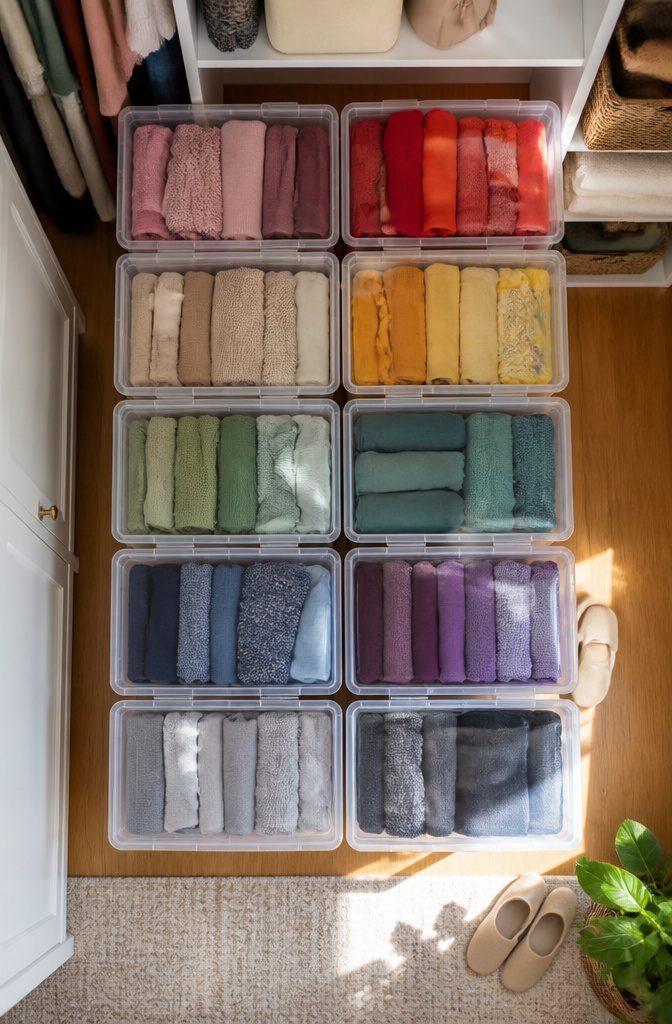
Clear storage bins earn their space in a closet or under a bed for one reason: you can see what is inside without unstacking the pile.
For seasonal items, that visibility matters more than the tidy look of matching opaque containers. I would rather open a closet and read a label through plastic than pull down three bins to find the one sweater I need.
Under the bed, low-profile bins slide into the gap most bed frames leave, and risers can add a few more inches if the frame allows.
The same containers work there as in the closet, so one standard size stacks in both places. I buy one footprint, 16 to 28 quarts, and stack them five or six high on shelves, two deep under the bed.
They nest when empty and interlock when full, which keeps the piles from sliding when I swap winter coats for summer linens.
The trade-off is noise.
Plastic scratches and rattles where fabric bins stay quiet. For items I touch daily, I might still choose canvas.
For the twice-a-year rotation of off-season gear, clear plastic wins because the label does not have to be perfect; I can see the puffy coat or the spare bedding before I lift the lid.

Extremely Sturdy: The plastic clothing storage bags is made from transparent heavy-duty PVC material, which is thick, sturdy, and offers superior toughness, tear resistance, and abrasion resistance compared to ordinary plastic

【Quality Material】TasticTotes clear storage bags are made of clear high-quality material, which is lightweight and wear-resistant. It is easy to clean and long-lasting

Maximize Underbed Space: Perfect for freeing up closet space, these storage bags fit easily under most beds and help keep comforters, blankets, and seasonal clothing neatly organized without taking up extra room
10. Drawer Dividers

Adjustable drawer dividers run about $40 for a pack of eight, and that cost lands squarely where it matters: the dresser drawers you open every morning.
Fixed dividers have their place in shallow top drawers where socks and underwear stay one deep, but adjustable dividers win in deeper drawers where t-shirts stack alongside jeans or accessories migrate with the season.
The move is simple: measure your drawer’s interior width, set the dividers snug, and give each category its own real estate so nothing buries the item you need at 7 a.m.
This type of bed has completely eliminated the need for having a dresser in my room. That’s excellent news, considering I don’t have space for one.
If you are that cramped, a bed with built-in drawers removes the dresser entirely and the divider question with it. For everyone else keeping the dresser, skip the fixed organizers unless every drawer holds the same contents year-round.

80L Expandable Larger Capacity : Under the bed storage with dimensions 31.5 x 15.75 x 9.45 inches (with wheels), height adjustable from 9.45" to 11.02" to fit most bed frames. Perfect for storing clothing, shoe, bedding, pillow, towel, and seasonal decor like wrapping paper, Christmas and Halloween supplies. Slides smoothly under bed, couch, closet and table to maximize unused space

Leather Handles&Rotating wheels: our underbed storage is equipped with leather handles, which are comfortable to hold; it comes with 4 x 360°rotating wheels, two of which have locking function; when placed under the bed, the wheels make it very convenient to push and pull
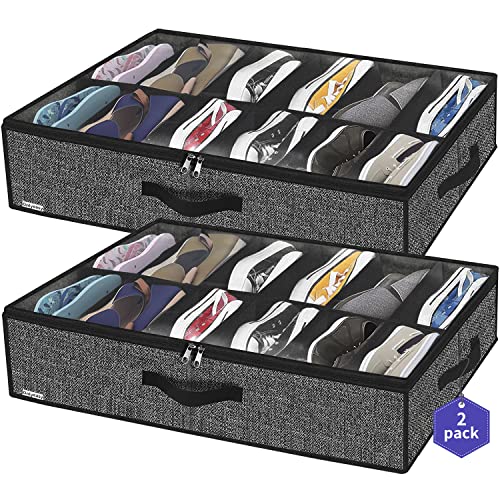
LARGE STORAGE CAPACITY: This shoes under bed organiser set can store up to total 24 pairs of flat shoes or 12 pairs of sneakers with ease. Foldable to save space when not in use. Large size: 29.3"x23.6"x5.9"(74.5x60x15cm), each cell: L11.8"x W4.9"x H5.9"(30x12.4x15cm), more suitable for women and girls.
Room Dividers With Storage

A shelving unit placed perpendicular to a wall can carve a sleeping area out of a studio without the claustrophobia of a solid partition.
The open-back cube styles that IKEA sells work for this: you get cubbies facing both directions, so the bed side holds clothes or linens and the living side faces books or baskets.
I would skip anything taller than eye level when you are standing; a 5-foot unit defines the zone but still lets light pass over the top.
Solid-backed bookcases kill that flow and tend to make both spaces feel boxed in, especially if the apartment has only one window.
The real limit is walkway width. Leave yourself at least 30 inches on the living-room side or the traffic line pinches and the storage becomes an obstacle you resent.
For renters, these units assemble with an Allen key and move out with you, which matters more than built-in polish when your lease runs 12 months at a time.
DIY Storage Solutions

Repurposed wood crates and decorative baskets sit in that narrow zone where DIY either saves you thirty bucks or costs you an afternoon you will not get back.
A basic pine crate runs about $8 unfinished at most hardware stores; stain and furniture pads add another $6, and you have a rolling under-bed drawer or a wall-mounted bathroom cubby in under two hours.
Stack two crates with the open faces aligned and bolt them together for a narrow side table that holds throws and charging cables.
I have done this for a rental where wall damage was not an option, and the weight alone kept the unit stable on a sloped floor.
Decorative baskets follow the same math but reversed. A handwoven seagrass basket large enough for throw pillows starts around $25 retail.
Weaving your own reed basket requires a $40 kit, six hours of learning curve, and the result usually looks like practice. For pantry or closet storage where the container hides on a shelf, I buy ready-made every time.
The place to build instead is in odd dimensions: a crate cut to 14 inches fits that dead space beside the refrigerator where nothing commercial ever slides in right. Build when the size is wrong, buy when the size is standard.
Declutter Before You Organize
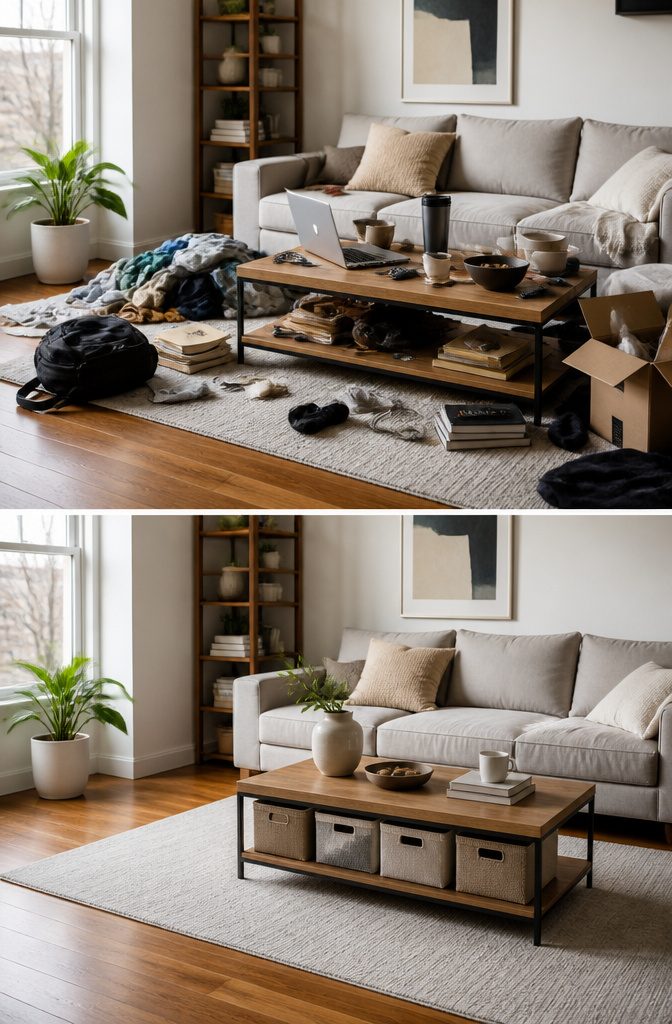
The first thing I do in any small apartment is pull everything out and decide what actually earns its keep. Organizing clutter you do not need is a sunk cost: bins, labels, and clever systems only preserve the problem.
Decluttering is prerequisite, not optional. Less really is more when square footage is tight.
A weekly reset keeps the habit alive.
I put things back in their designated spots, purge what has gone unused, and reassess whether my storage still matches what I actually own. Surfaces stay clearer, and the space stops feeling like it is shrinking.
Seasonal Rotation
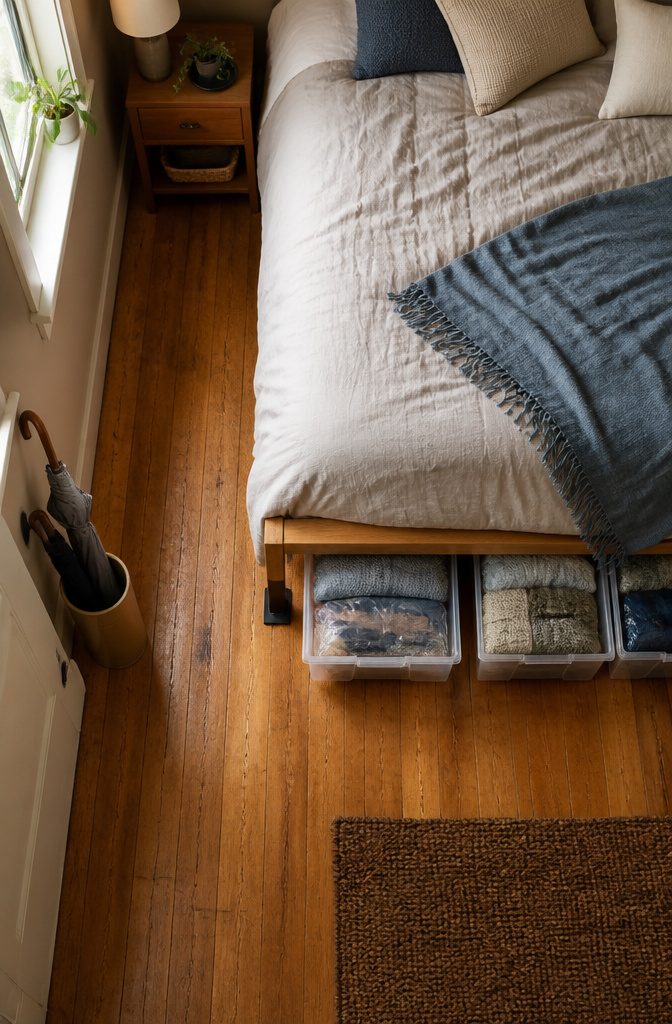
Vacuum-sealed bags buy the most space for the least money in a small apartment storage system. I run mine in April and October, the two weekends when the weather actually forces a wardrobe change.
That timing matters more than the bags themselves. Wait until the first 80-degree day and the closet crisis arrives before the solution does.
Under-bed storage handles what the bags compress. Clear bins let me confirm I grabbed the right stack without dragging everything out, and bed risers add the extra six inches if the frame sits low.
I skip the built-in drawer frames; they cost too much for a rental and the clearance rarely beats a standard bin plus risers.
The swap itself takes an afternoon.
Off-season clothes go flat, current season gets hung, and the floor stays visible for another six months. Crisis averted, routine kept.
Unexpected Spaces

The space above kitchen cabinets and the refrigerator is where good intentions go to die. In most small apartments, that ledge already holds a graveyard of mismatched containers, dusty baskets, and things you meant to deal with later.
A steel basket with a handle, something like the Yamazaki Tosca at $42, turns that dead zone into actual storage you can pull down and clean. Food spills wipe off steel; fabric or wicker traps grease and dust.
Behind doors is different. The back of a door sounds underused, but in a rental it usually is not.
Most tenants with a closet already have an over-the-door shoe rack or hooks for towels. The real opening is inside cabinet doors.
A $19 organizer on the back of a lower cabinet door, say under the sink, keeps cutting boards out of the drawer jumble and off the counter. It costs less than a dinner out and takes ten minutes to install.
Under sinks look promising and usually are not.
Plumbing eats the vertical space, and anything you store there ends up damp. Clear stackable drawers, around $10, work because they box out the pipes and let you see what you have without crouching into the dark.
I would skip fabric bins here; they mildew. Plastic wins in the one spot in your apartment that is guaranteed to leak eventually.
Frequently Asked Questions
How do I maximize storage in a small apartment?
Use vertical space with wall-mounted shelves, choose multifunctional furniture like storage ottomans and beds with drawers, and exploit hidden areas such as under the bed and behind doors.
What are some cheap storage solutions for small apartments?
Zippered under-bed bags run about $11 for two, a pine crate costs roughly $8 for DIY projects, and slim rolling carts sometimes drop under $17 with patience.
How can I organize my closet in a small apartment?
Stack shirts or pants on shelves, use an over-the-door shoe organizer to clear the floor, and install shower curtain hangers for scarves and belts to free drawer space.
What should I store under my bed?
Seasonal clothing, extra bedding, and shoes belong in low-profile bins or zippered bags, but keep weekly-use items like gym clothes out entirely.
How can I create more space in my kitchen?
Mount a pegboard on an open wall for utensils and mugs within arm’s reach of the stove, add a steel basket above cabinets for items you can pull down and clean, and use under-cabinet mug racks around $15 to double real estate.