
Rustic kitchen cabinets are built from woods that wear their flaws openly, and the best ones get that look without requiring a professional workshop.
Reclaimed boards with nail holes and mineral streaks carry real history, but the grain varies enough that you will need to sort boards by tone yourself if the finished run is going to look intentional.
For a tighter budget, knotty pine offers the same cabin warmth at a fraction of the cost, though it dents fast around sinks and drawer fronts.
Reclaimed Wood

Reclaimed wood carries the knots, nail holes, and wear that factory-fresh lumber spends years trying to fake.
For rustic kitchen cabinets, that visible history is exactly what you want: every scar marks a previous life, and the grain variation means no two doors match.
I would pick it for the sustainability angle alone, since the material has already been harvested once and reusing it keeps new timber standing.
The character marks that define rustic style, the open knots and mineral streaks that read as flaws in modern kitchens, are exactly what you want here.
You give up predictability. Reclaimed boards vary in hardness and moisture content, so a cabinetmaker needs experience working with mixed stock.
Budget for slightly longer lead times and expect to sort boards by tone yourself if you want the finished run to read as intentional rather than chaotic.
For a weekend project with ready-made boxes, reclaimed-look veneers on standard plywood save the hassle but lose the depth you get from real age.
I would skip the veneer unless cost is the deciding factor; the authentic article ages better and handles the kitchen’s humidity shifts without separating.

⭐【Ample Storage Space】Are you still worried about the messy utensils? Now the buffet cabinet can help you keep your dining area tidy and organized. You can place nice-looking cups on the 2 open shelves, and use inside shelves(3 adjustable height) to store canned and boxed foods, plates, and table cloths. Ideal for bread maker or microwave oven on the spacious tabletop.

STYLISH STORAGE SOLUTION – The Sauder Select two-door storage cabinet enhances your living area while providing ample space for linens, laundry soap, and more, ensuring your home remains organized and aesthetically pleasing

Bring in Farmhouse Flair: This storage cabinet comes from our LIRY Collection—a line of farmhouse-inspired storage furniture boasting versatile storage and rustic charm to transform any room into an inviting, organized retreat
Knotty Pine

Knotty pine carries a light, warm tone that reads as cozy rather than rustic in the heavy sense, which is exactly why it works so well for budget-conscious kitchens.
The natural knots and soft grain do the visual lifting; you are not paying for elaborate milling or applied distressing to get character.
I would reach for it when you want that cabin-adjacent feeling without the reclaimed-wood price tag or the maintenance headaches that come with harder, more temperamental species.
Pine is soft, and that matters. Dents accumulate around the sink and drawer fronts where daily life happens, and the knots can bleed through paint if you ever want to shift direction.
I think that trade is worth it for a weekend install on a few hundred dollars of material, but only if you go in knowing the surface will age visibly and quickly.
For a rental or a first home where resale is years away, that patina is exactly what you want.
If you need the cabinets to stay pristine, knotty pine is the wrong wood no matter how warm it looks in the sample.

Solid Pinewood Frame: Built with a solid pinewood frame and varnish-treated surfaces, this kitchen pantry cabinet brings natural warmth and dependable support to everyday storage. The visible wood grain gives each cabinet an inviting, timeless character.

Smart Space Optimization: Features an intelligent design with three upper drawers and three spacious lower compartments, offering a seamless home organization storage solution to beautifully declutter your dining or living room area.

Rustic Black Cabinet Pulls Dimensions: Distance from hole to hole:=3-3/4 inch(96mm),length=6.1inch(155mm),Widdth=2.2 inch(56mm),Projection=1 inch(25mm)
Oak

Oak brings the hardness and weight that rustic kitchens need to feel grounded. Its grain stays prominent through stains and years of use, which matters in a style built on texture rather than perfection.
I would pick white oak for the softer, neutral tone it takes, but rustic oak with its stronger character marks works just as well if you want the kitchen to read as older than it is.
The wood darkens with age and sun exposure, a quality some materials fight and oak simply accepts.
That patina becomes the point. In a ranch house or a first home where you are staining the cabinets yourself over a long weekend, oak forgives the uneven spots that would telegraph as mistakes on a smoother surface.
The grain is the feature, not the flaw.
Hardware and countertops should stay simple, letting the oak do the visual work. Stone or iron fixtures pair well, as the wood already carries enough warmth to balance cooler metals.
Sustainability counts for renters and owners alike, and responsibly sourced oak sits among the better choices if that matters to your build.
The material costs more than pine, but it outlasts it by decades. For a kitchen you plan to live with, that trade pays.

STYLE: Easily update your kitchen and bathroom cabinets or furniture with our casual cabinet hardware collection.

Package includes 12 pack TOPZEA kitchen cabinet pulls handles, color: black matte, each one is individually wrapped and comes in 2 screws, the quantity is sufficient to replacement needs and apply for kitchen, bathroom, vanity, dresser, office, etc

HIGH-QUALITY, SOLID METAL CORE: Crafted with a solid metal core, our cabinet pulls and knobs stand far above the hollow knockoffs flooding the market. Embrace the difference as you feel the weight and sturdiness in your hands, experiencing the unmistakable mark of true high-end hardware. Built to last, these pulls exude unparalleled durability, ensuring they withstand the test of time and daily use. Elevate your space with our superior, solid core pulls and knobs- the epitome of elegance, strength, and unmatched craftsmanship.
Hickory

Hickory carries the most dramatic grain pattern of any standard cabinet wood, with color variation that swings from near-white to deep brown even within a single board.
That bold streaking is the reason you choose it, and it is the reason you might pass.
In a rustic kitchen, the grain becomes the entire story; every cabinet door competes for attention, and quieter elements like backsplash tile or countertop veining tend to disappear against it.
The color movement only intensifies as the wood ages. Hickory darkens with sun exposure, and the patina finishes available, from green-tinged Fern to grey Smoke, ride that natural shift rather than fighting it.
What looks balanced on a sample board can feel overwhelming once fifteen linear feet of upper cabinets repeat the same figure across a wall.
I would use hickory in a kitchen with strong natural light and simple hardware, where the wood itself is meant to dominate.
In a smaller galley or a space with detailed tilework already installed, I would look to oak or alder instead and let those materials do the quieter job the room actually needs.

Ideal for creating antique looks on chalked painted surfaces like wood, laminate, melamine or metal

Rustic Elegance: Featuring carved doors, a weathered texture, and antique metal handles, this accent cabinet brings warm French country charm to your space. The painted finish enhances the natural texture while adding durability and lasting beauty.

𝐖𝐨𝐨𝐝 𝐂𝐨𝐧𝐭𝐚𝐜𝐭 𝐏𝐚𝐩𝐞𝐫: Peel and stick, self adhesive, removable, bubble free, repositionable. Not sticky residue left, not damage the surface.
Alder
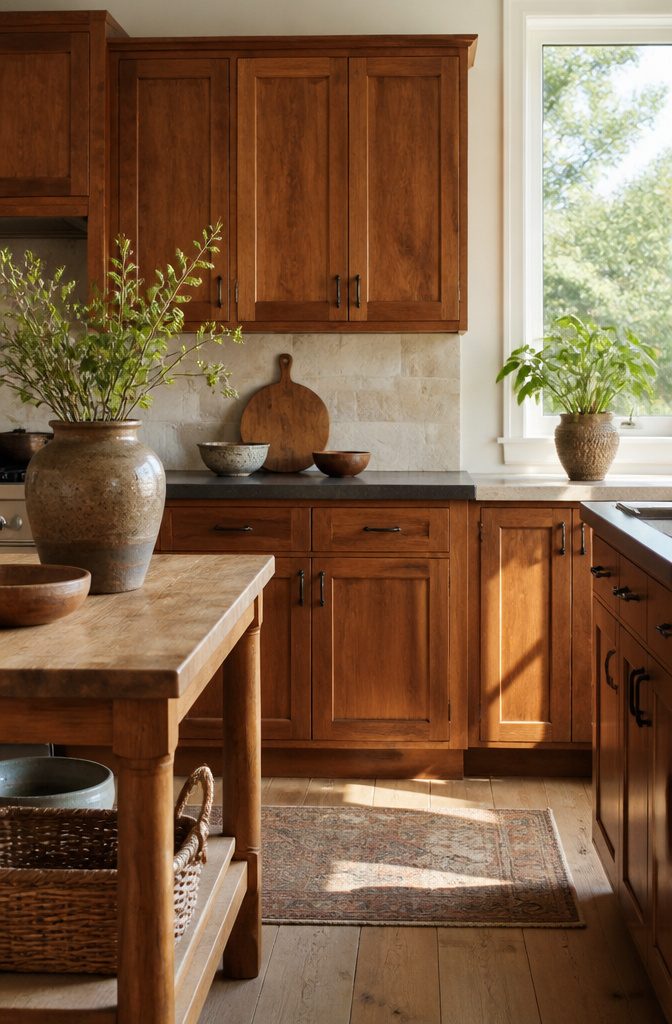
Alder sits in an interesting spot for rustic kitchens.
It is softer than oak or hickory, which means it dings and scratches more easily, but that same softness lets it take stain in a way that reads warm and weathered rather than flat and factory-finished.
The grain runs even and straight without the dramatic figuring you get in pricier woods, so the rustic effect comes from the color and the hand-rubbed finish, not from the wood shouting for attention.
I would pick alder for a kitchen that needs to feel rustic without sliding into log-cabin territory.
It stains beautifully toward the gray-browns and washed-out reds that read as modern rustic, and because the grain is subtle, you can use a slightly bolder hardware choice without the two competing.
You give up longevity. Alder cabinets in a high-traffic kitchen will show wear faster than harder woods, and I would not recommend them if you have kids who slam doors or a habit of tossing keys onto the counter.
For a weekend remodel on a moderate budget where atmosphere matters more than heirloom-grade durability, alder delivers the look without the markup of reclaimed or specialty lumber.

Package Contents: you will receive 2 unfinished pine kitchen drawer front replacements, about 17.5" W x 6" H x 0.79" D; Our drawer panels are pre-sanded and can be painted directly to your liking, meeting your kitchen renovation and everyday replacement needs; Please confirm the drawer panel dimensions before purchasing

MULTIFUNCTIONAL & STYLISH: This chest of drawers with storage spaces, 5 drawers storage cabinet can perfectly match with any color schemes and tones, simple design and practicality is perfect for home office, study room, living room.

Spacious & Flexible: Featuring a tabletop, 4 drawers, and a cabinet, this storage unit neatly stores your daily items. The adjustable shelf behind the door (with 3 height options) easily holds items of various sizes
Distressed Finishes
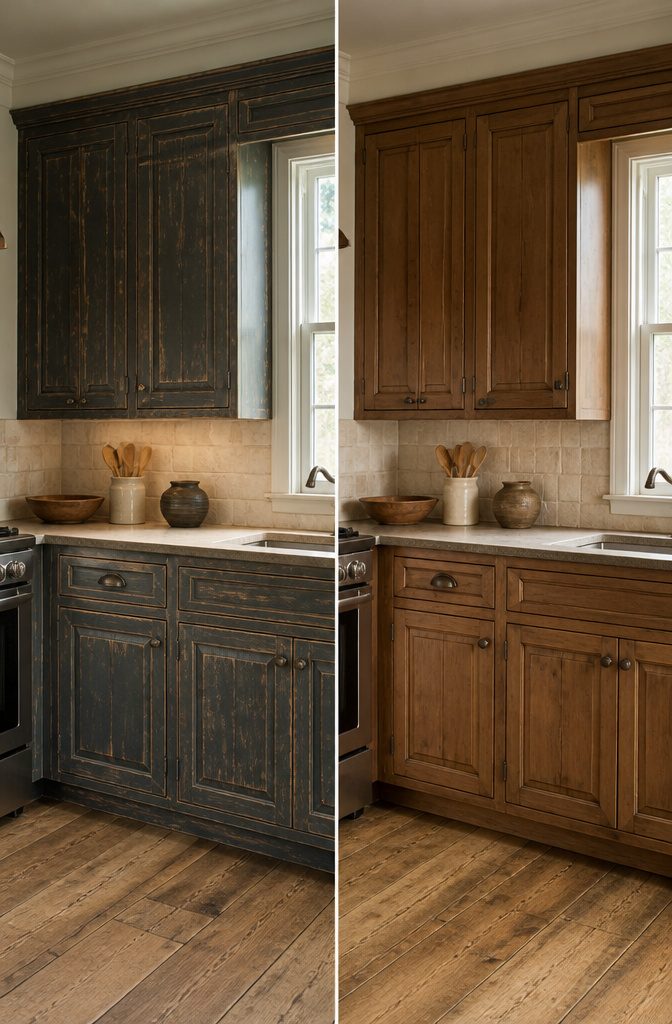
A wire-brushed finish strips away the softer earlywood between the grain lines, leaving the harder latewood raised so the surface catches light the way a century of boot traffic would.
I would pick this over actual reclaimed barn wood for a first kitchen; you get the tactile depth without the warping, nail holes, or lead-paint risk that reclaimed timber sometimes carries.
Light distressing goes a step further, adding hand-rubbed wear at corners and edges where decades of use would naturally concentrate.
Matte or satin topcoats work better than anything glossy, since shine reads as new and factory-fresh against the worn, aged surface you are after.
Warm stains like walnut, honey, chestnut, or driftwood grey deepen the illusion, and a glaze wiped into the pores adds shadow that reads as genuine grime accumulated over time.
You give up easy maintenance: raised grain collects dust and cooking grease more readily than a sealed, flat surface, so I would budget an extra wipe-down into the weekly routine.
For a weekend project with a few hundred dollars in materials, these techniques turn stock cabinets into something that looks inherited rather than installed, which is exactly the effect most renters and first-home owners I see are chasing.

100% Solid Wood: Constructed of high-quality Maple wood, this cabinet door is strong and durable, and the surface is smooth and easy to clean

Functional Storage Cabinet: This vertical storage cabinet is designed with 2 doors, 2 drawers, and 1 adjustable shelf which offers neat organization and ample storage space. It can be used as a kitchen pantry, a sideboard, a cupboard, or even a bookcase with doors to organize your books. Explore the versatile uses of this cabinet with your imagination

【Extra-Tall Design】Standing at an impressive 80 inches, this pantry cabinet offers a sleek solid-color finish that's not only long-lasting but also dust-resistant and easy to wipe clean. With six spacious compartments and two adjustable, removable shelves—each customizable across three height settings—it adapts effortlessly to your unique storage demands.
Two-Tone Cabinets

Painting the base cabinets one color and the uppers another is the move that keeps a rustic kitchen from feeling like a wood box closing in on you.
The lower cabinets carry the heavier, earthy tone, mushroom or a muted green with real depth, while white open shelving or lighter uppers draw the eye upward and let the ceiling breathe.
That split of color breaks the visual weight so the room reads as layered, not squat, which matters in rustic spaces where beams, wood countertops, and collected pieces already add mass.
I would keep the hardware simple, black knobs and pulls that do not compete, and let the two-tone scheme do the work of tying the room together.
A freestanding island in a different wood variety than the base cabinets extends the same logic: it interrupts the run of matching surfaces and keeps the kitchen from looking too planned.
The two-tone approach fits rustic kitchens specifically because the style already tolerates mismatch, a striped jute runner, vintage copper, framed art. The cabinets just join that conversation rather than insisting on uniformity.

Perfect space adaptability: This bathroom cabinet 23.62"L x 7.87"W x 24.57"H makes room for toiletries and bathroom clutter, effectively optimizing your bathroom layout

𝐏𝐫𝐨𝐝𝐮𝐜𝐭 𝐃𝐞𝐭𝐚𝐢𝐥𝐬: Wood contact paper, pine wood look wallpaper, tan orange color, smooth finish, made of thick vinyl, sturdy. 15.7 inch wide by 708 inch long, covers 77.5 Sq. Ft. each roll

Solid Knotty Pine - Modest and rustic in the tradition of cottage style furniture.
Painted Finishes

Painted finishes can read just as rustic as bare wood if you choose the right product and color.
I start with milk paint, which dries to a soft, chalky surface that looks like it has already faded in sun for a decade. It chips naturally rather than peeling in sheets, so the wear looks earned, not damaged.
Chalk paint works similarly and layers well if you want to build up subtle variation between cabinets. Both beat standard latex here because they absorb light instead of reflecting it, and that flatness is what separates aged from modern.
The color matters as much as the paint type. Black on traditional cabinet frames reads rich and grounded, especially when the surrounding wood flooring and island keep the farmhouse connection intact.
I would skip crisp whites and cool grays; warm neutrals, soft greige, or driftwood tones do the work of suggesting history without the actual decades. Matte or satin sheen is the ceiling; anything glossier breaks the illusion immediately.
If you want to push the texture further, a light glaze over the base coat deepens the corners and grain lines without turning the kitchen into a distressed furniture showroom.

365-Day Experience Period: Our cabinet knobs and door pulls are crafted with high excellence. For your convenience, we offer ample time to explore our 3-inch drawer pulls

Measurement: Hole center distance: =3 inches (76 mm), Length =4.2 inches (106 mm), width =7/8 inches (22 mm), projection =1.2 inches (30 mm)

Measurement: Hole centers(CC):3 inch(76mm), Total Length:5 inch(127mm), Width:1/2 inch(12mm), Height:1-5/16in (33mm)
Hardware Options
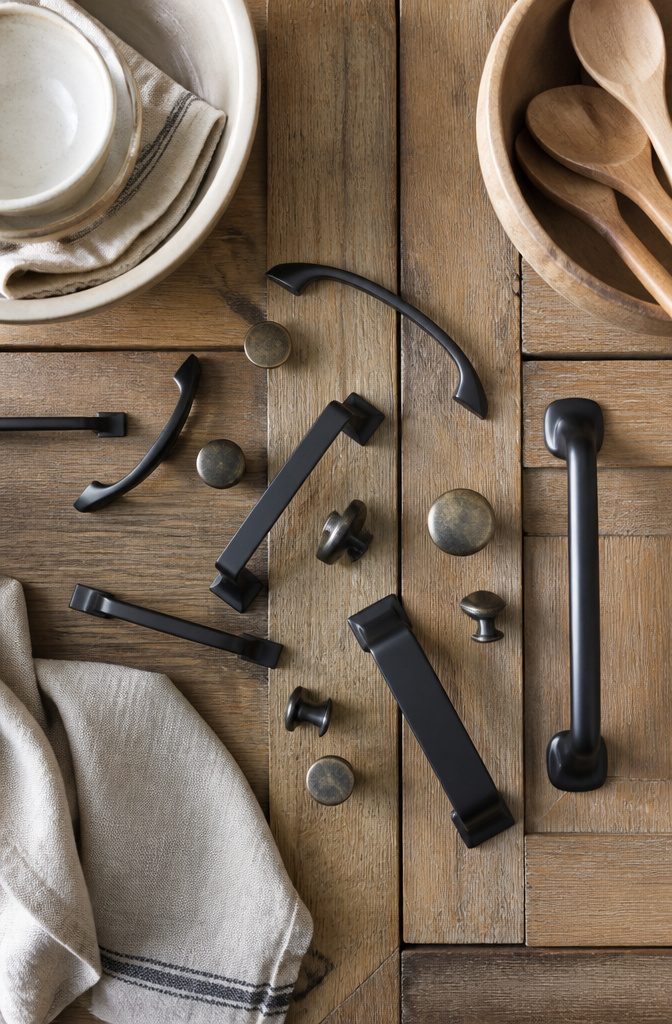
Iron pulls and weathered bronze knobs are the hardware pairings that dominate rustic kitchens for good reason.
The weight of iron gives a hand-forged feel that reads as older than it is, while weathered bronze carries a patina that softens under kitchen light rather than reflecting it back sharply.
I would skip antique-style latches for daily cabinets; they look charming in a photo but slow down every trip to the pantry.
Scale matters more than finish.
A 3-inch center-to-center pull looks undersized on a 36-inch drawer and oversized on a narrow spice cabinet. The rule I follow: the pull should span roughly one-third of the drawer width, or about 5–7 inches for standard base cabinets.
For knobs, placement on the lower corner of upper cabinets and upper corner of base doors keeps the motion natural.
Matte black hardware bridges modern rustic cabinetry to appliances and lighting fixtures, while aged brass ties classic cabin aesthetics to wood tones.
Black hardware against white painted cabinets, as in French country-inspired layouts, creates enough contrast that the rustic element reads intentional rather than accidental.
The hardware becomes the thread that carries the eye from cabinet to island to open shelving without matching everything too precisely.

【Size and Material】This wood peel and stick wallpaper, 17.3 inches x 78.8 inches per roll, with an area of 9.4 square feet per roll. This white wood wallpaper is made of vinyl material and has a waterproof film on the surface, which can protect furniture and walls from damage

Sufficient Storage Space: This credenza features a pull-out drawer and a 2-tier double door cabinet, providing compact storage for utensils and plates. A 3-level adjustable shelf is behind the doors for flexible storage convenience.

Detail enhancing coverage for antiquing or creating an aged affect over painted surfaces.
Cabinet Door Styles

Door style is the fastest way to signal which kind of rustic you are after.
Shaker doors read as the safe middle ground: clean enough for a modern kitchen, warm enough in knotty alder or a honey-toned stain to keep the rustic feel without going full cabin.
I would pick these for a first home where resale still matters, or for a rental refresh that needs to look intentional rather than themed.
Beadboard fronts lean harder into cottage territory.
The vertical grooves add texture that catches morning light and hides the minor dings that come from actually cooking. They work best when the rest of the kitchen is simple; too many competing textures and the room turns busy fast.
Slab doors surprise people here. Flat panels with no frame read modern at first glance, but slab doors with visible knots or a rough-sawn surface pull off a straight-from-the-forest look that framed styles cannot quite match.
The material does the work, not the joinery. I would skip slab in a painted finish; you want the grain and imperfections to show.
Wire-brushed or distressed wood slab doors make sense in a kitchen where you want rustic impact without traditional detailing, though they demand better hardware to keep the design from going flat.
Mesh inserts on uppers, noted in one of the industrial-rustic examples, sit adjacent to this choice: they add texture without committing to a full door style, useful when you want airiness above and solid wood below.

Multiple Occasions: This 7 drawer storage organizer can be well matched with any color scheme and tone, simple design and practicality are very suitable for office, studio, living room

Modern Design for Multiple Spaces: Featuring a clean and modern appearance, this file cabinet works well as under desk storage for home offices, study rooms, studios, or other workspaces, helping keep your area organized and efficient

⭐【Clutter-to-Calm in Seconds】With 2 spacious drawers to stash away odds and ends, wide tabletop and 2 open shelves for showcasing your decor, and roomy bottom cabinet for larger items, this bathroom cabinet meet to your various storage needs. You can absolutely end the chaos with this tall cabinet and enjoy a clutter-free home
What Rustic Style Means Now

Rustic kitchen cabinets still carry the warmth and texture that made them popular, but the look has shifted.
What once read as heavy cabin style now mixes clean lines with natural wood, aged brass hardware, and hand-worn finishes that feel intentional rather than inherited.
I see the difference in how designers pair aged barnwood panels with black hardware on refrigerator doors, or soften bright white cabinets with weathered terra-cotta and wood cutting boards.
The style has become a modern staple because it adapts, not because it stayed the same.
The core remains: earthy materials, imperfect surfaces, and a sense that the kitchen was built to be used.
A farmhouse sink or built-in plate rack still fits, but now it sits beside glass-front cabinets and an ornate tiled backsplash that lifts the whole room. For a renter or first-time owner doing one project a year, this matters.
You are not rebuilding a lodge; you are adding character that looks intentional, not cluttered, and that works on a weekend timeline with materials you can actually source.
Color Palettes That Work
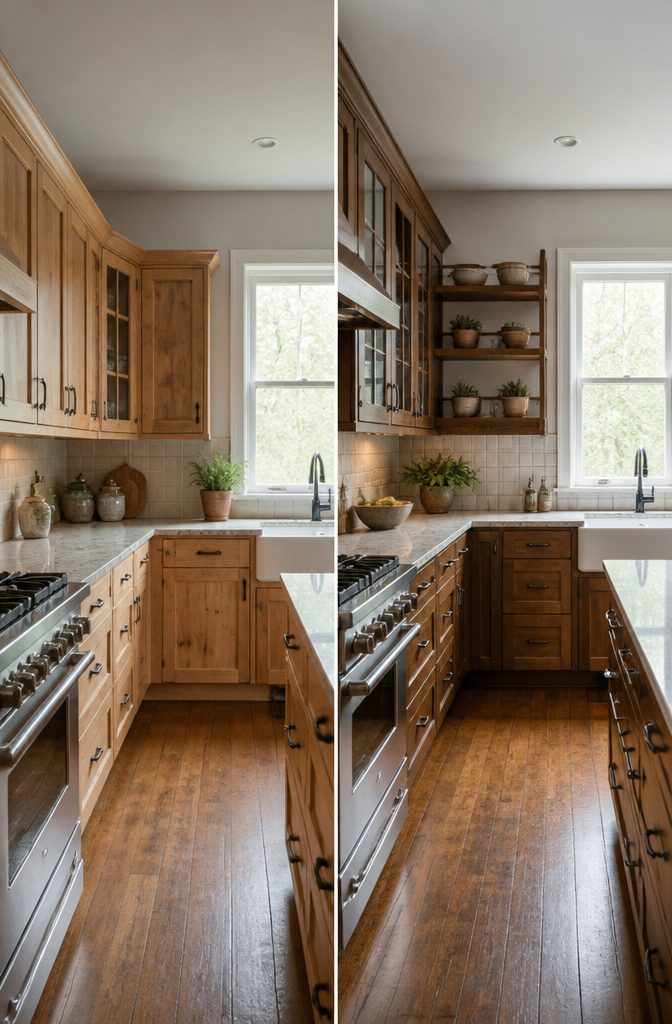
Warm earthy tones, soft greys, and natural wood colors each carry a rustic kitchen without turning it into a cave.
Honey to chestnut wood tones keep the space open because the grain catches light, and a stained wood range hood or floating shelves can break up a wall of white cabinets the same way.
Sage green and antique white read cozy rather than cramped when the finish is distressed; the slight unevenness bounces light around.
Black-washed wood goes bolder, but it still feels organic enough for a small kitchen if you balance it with lighter countertops.
I would skip the deep blue hutch look in a galley layout. The color itself works, yet floor-to-ceiling saturated paint on every cabinet draws the walls inward.
Two ways to play this: run natural wood on the uppers and save any darker or brighter color for a single island or accent wall, or keep the whole room in soft grey with warm wood floors tying it together.
The second option wins for a rental or a first home you might sell, since grey reads modern rustic to buyers while the wood keeps it from feeling sterile.
Small Kitchen Layouts

Rustic cabinets in a small kitchen live or die by how much visual weight they add.
I would start with lighter wood tones or a soft paint like sage or antique white rather than going straight for the dark, heavily grained look.
The eye reads dark masses as walls, and in a galley or L-shaped layout that shrinks the room fast.
Open shelving is the move here, but only in the right spots. A run of wall cabinets above eye level closes a small kitchen in; swapping even one section for open shelves breaks the line and lets the wall breathe.
I would keep the closed base cabinets for the bulky stuff, the stand mixer and the stockpot stack, and use the open shelves for the pieces you actually want to look at.
That is the balance that keeps rustic from turning into cluttered.
Mix and match your storage to keep your rustic kitchen cabinets from overwhelming your space. Here, glass-front cupboards and open shelving break things up.
— Domino
Slim shaker doors win over ornate raised panels in this context. The simpler profile catches less shadow, and shadow is what reads as heaviness.
Hardware matters too: a simple bar pull or a small bin cup in oil-rubbed bronze adds the rustic note without the visual clutter of something oversized or hammered.
I would skip the glass knobs entirely; they fight the rustic story and add one more texture the eye has to sort.
If you want one darker element, anchor it low. A black or deep charcoal base on the island or lower cabinets grounds the room without dropping a ceiling on it.
The lighter uppers do the work of keeping the space open, and the contrast actually reads as intentional rather than cramped.
Mixing Rustic with Modern

The pairing that actually works is aged brass hardware against white or light-stained rustic cabinets, not the chrome or matte black finishes that read too industrial.
Brass warms up the modern element without fighting the hand-worn texture. I would skip acrylic bar stools in a kitchen that already has visual weight from wood; they look like a style exercise rather than a room someone lives in.
Where contrast helps: a freestanding wood island in a kitchen of painted cabinets gives the rustic piece a frame to stand against, and the mix keeps either style from going flat.
Where it fights itself: barnwood panels on a refrigerator surround next to a stainless steel door.
The two textures draw the eye to the appliance instead of away from it. If you want the wood, put it on the pantry doors beside the fridge, not on the fridge itself.
White walls and floating shelves keep the air moving around heavier cabinets.
I would keep the countertop styling minimal, a wood cutting board or one aged crock, not a cluster of props. You want a kitchen that looks collected over time, not staged for a photograph.
Cleaning and Care

- Dust the cabinets weekly with a dry microfiber cloth so grit does not scratch the finish when you wipe them down.
- Use a gentle wood cleaner cut with warm water, about a capful per half gallon, and ring the cloth almost dry before it touches the surface. Standing water is what warps joints and lifts veneer.
- Dry immediately with a fresh cloth, working with the grain so you do not leave streaks in the patina.
- Condition the wood every three to four months, more often if the kitchen runs dry in winter. I like a beeswax and mineral oil blend rubbed in thin, then buffed out the next morning. It darkens the grain slightly, which suits rustic cabinets, but skip this step on painted finishes; the wax will gum up the sheen.
- What to avoid: vinegar solutions, spray disinfectants, and anything with ammonia. They strip oil from open-grain woods and etch distressed paint. Also skip the Magic Eraser. It looks harmless but it is abrasive, and on a hand-rubbed glaze it will leave a pale spot you cannot blend back in.
- For hardware, a damp cloth with a drop of dish soap does the job. Dry the iron or oil-rubbed bronze right after, or the water spots will start rust you will have to sand off later.
Frequently Asked Questions
Are rustic kitchen cabinets still in style?
Yes, rustic kitchen cabinets remain a modern staple, though the look has shifted toward cleaner lines mixed with natural wood, aged brass hardware, and hand-worn finishes that feel intentional rather than inherited.
Designers now pair aged barnwood with black hardware or soften bright white cabinets with weathered terra-cotta and wood cutting boards.
The style works because it adapts: earthy materials and imperfect surfaces still read as warm and usable, but now sit beside glass-front cabinets and ornate tilework that lifts the whole room.
What is the best wood for rustic kitchen cabinets?
Oak, hickory, reclaimed wood, knotty pine, and alder each suit different rustic kitchens depending on your budget and how much wear you expect.
Oak brings hardness and grain that stays prominent through stains; hickory offers the most dramatic color variation but can overwhelm a small space; reclaimed wood carries authentic history at the cost of predictability; knotty pine delivers cabin warmth on a budget though it dents easily; alder stains beautifully toward modern rustic grays but shows wear faster than harder species.
Can I mix rustic cabinets with modern appliances?
Yes, rustic cabinets pair well with modern appliances when you bridge the two with the right hardware and layout choices.
Aged brass hardware warms up modern elements without fighting hand-worn texture, and a freestanding wood island in a kitchen of painted cabinets gives the rustic piece a frame to stand against.
Avoid putting barnwood panels directly on refrigerator surrounds, which draws the eye to the appliance rather than away from it; instead, use wood on nearby pantry doors.
How do I maintain and clean rustic wood cabinets?
Dust weekly with a dry microfiber cloth, then wipe with a gentle wood cleaner cut with warm water, about a capful per half gallon, using a cloth rung almost dry. Dry immediately with a fresh cloth, working with the grain.
Condition the wood every 3–4 months with a beeswax and mineral oil blend rubbed in thin and buffed out the next morning, but skip conditioning on painted finishes where wax will gum up the sheen.
Avoid vinegar, ammonia, spray disinfectants, and Magic Erasers, all of which strip oil or leave pale spots you cannot blend back in.