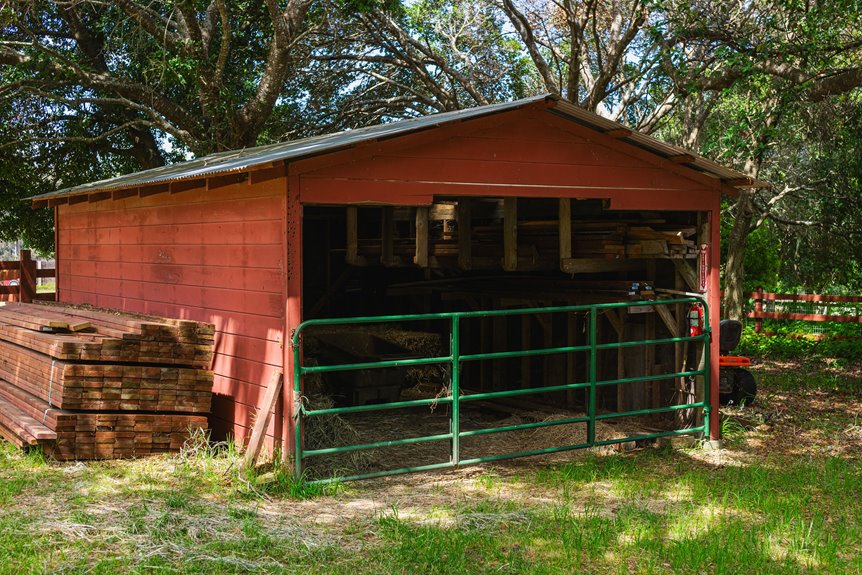
I chose between resin and wood based on seven practical differences. Resin is cheaper upfront and sets up quickly, requiring just a hose-down for cleaning.
Wood, however, lasts decades longer and handles heavy equipment better.
Resin works fine for basic storage, while wood allows for added shelves, various paint colors, or even the option to turn it into a workshop.
Wood requires regular staining and sealing against weather and pests, while resin can fade in strong sunlight and may feel stuffy in heat.
Depending on the climate and the effort someone is willing to invest, resin saves time, but wood builds lasting value.
Evaluating these factors will help determine which material suits a particular situation.
How to Choose Between Resin and Wood Sheds for Your Property
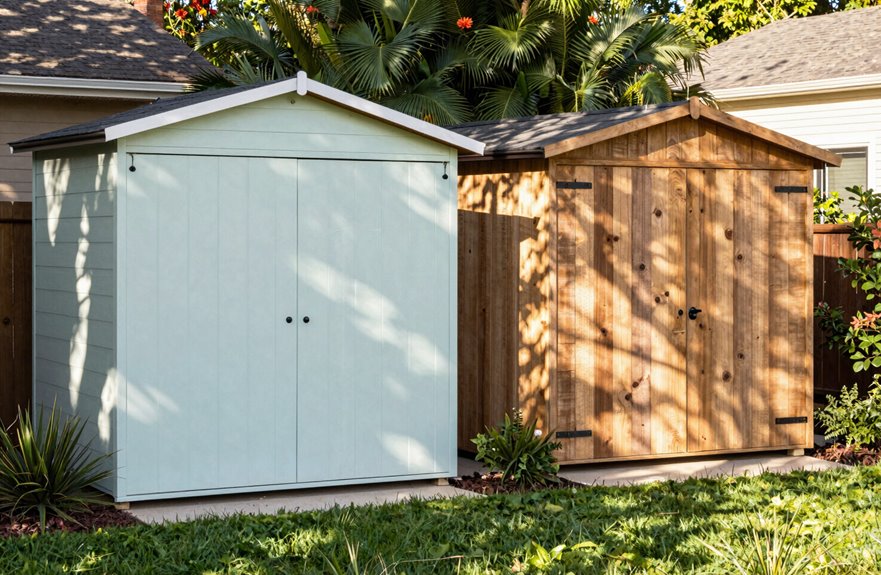
So you’re considering a shed and weighing your options between resin and wood. Let’s explore which option suits your needs.
1. Think about your time
Resin sheds require minimal maintenance. There’s no need for painting or sealing; a simple hose-down will do. In contrast, wood sheds require regular staining and pest control. If you have a busy schedule, resin may be the more practical choice.
Resin sheds need only a quick rinse, while wood demands regular upkeep—choose based on how much time you can spare.
2. Consider your climate
Resin sheds are excellent at resisting water, though they can suffer from UV damage over time. Wood can manage sunlight better, provided you stay on top of maintenance.
3. Check your budget and skills
Resin sheds are easy to assemble with lightweight components. Building a wood shed involves more tools, skills, and a solid foundation.
4. Plan for the long haul
With proper care, quality wood can last for decades. Resin sheds may not last as long, but they require significantly less effort to maintain.
Choose the option that aligns with your lifestyle.

【Durable Resin Shed with Two Exterior Looks】 Built from low-maintenance resin panels, this plastic outdoor shed is made for everyday backyard storage through changing seasons. The surface helps resist rain, UV exposure, rust, rot, cracking and fading, while the reversible panel design lets you choose between two different exterior appearances to better match your outdoor setting

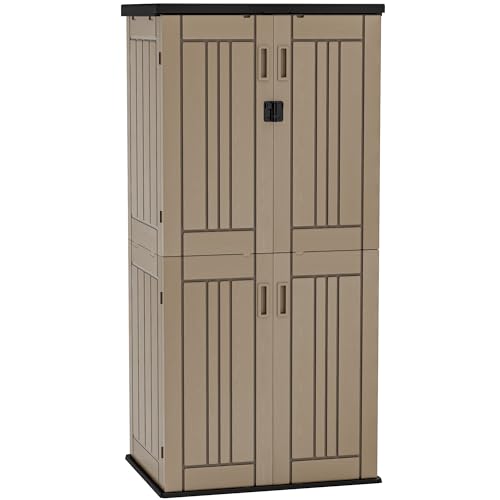
KEEP LONG-HANDLED TOOLS UPRIGHT AND EASY TO REACH. This vertical resin storage shed or tall outdoor storage cabinet fits long-handled tools, patio umbrellas, and gardening supplies, so yard gear stays organized and off the ground.

VERSATILE STORAGE OPTIONS: With external dimensions measuring 31.8" L * 55.3" W * 74.4”H, this garden tool storage comes in a multitude of sizes, colors, and shapes to choose from; Perfect for outdoor backyards, gardens, courtyards, and utility rooms; Additionally, it can serve as a cozy and secure shelter for pets
Weather and Climate: How Resin Sheds Beat Wood in Any Environment
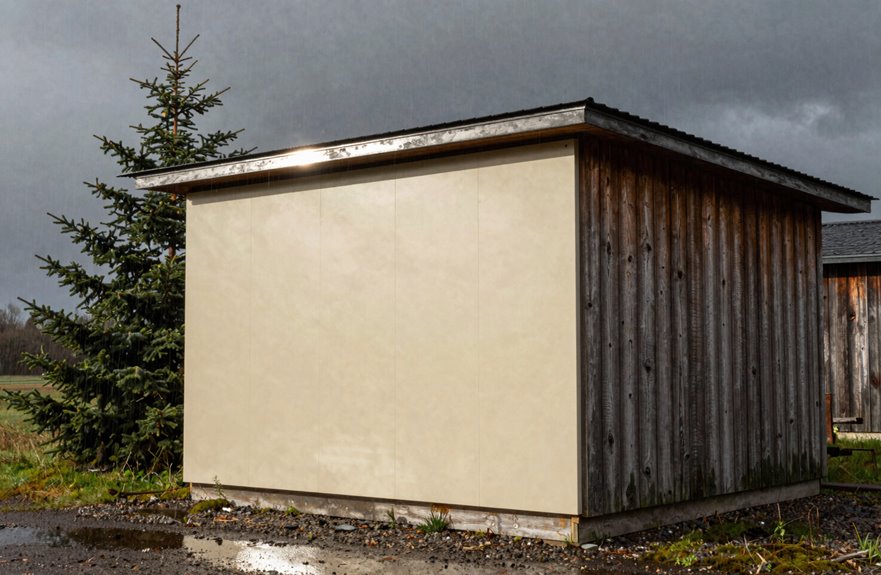
How does your shed hold up when the weather turns rough? I’ve seen too many neighbors watch their wood sheds warp, rot, and fade when seasons change. That’s why I believe resin durability is superior.
Why Resin Handles Anything
- Weather resistance keeps your gear safe through blazing summers and freezing winters.
- Moisture resistance means no rotting floors or swollen doors; your belongings stay dry.
- UV protection prevents that sun-bleached look that ruins wood’s appearance.
My resin shed features reinforced floors and blow-molded panels that are built to last. In contrast, wood absorbs water, invites pests, and requires constant maintenance to remain functional. I’ve observed that resin interiors stay brighter too, with smart windows that help you see what you’ve stored.
Consider choosing sheds that work with nature rather than against it.

VERSATILE STORAGE OPTIONS: With external dimensions measuring 55.3 inches in length, 31.8 inches in width, and 74.4 inches in height, DWVO's garden tool storage comes in a multitude of sizes, colors, and shapes to choose from; Great for outdoor backyards, gardens, courtyards, and utility rooms; Additionally, DWVO's outdoor storage can serve as a cozy and secure shelter for pets

【Enhanced Structural Integrity】Polar Aurora outdoor shed boasts a reinforced structure, methodically tested to facilitate a 29% easier and more stable assembly, aligning with practicality and durability.
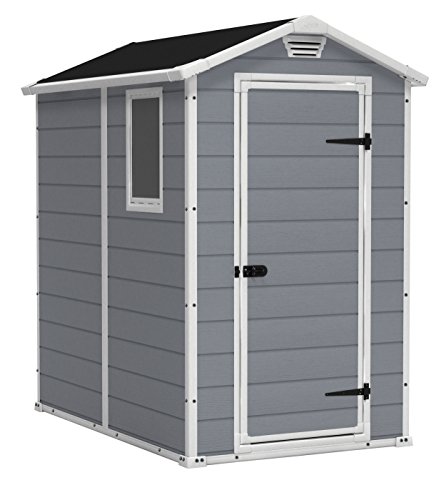
DIMENSIONS: Exterior: 51. 2 in. W x 75. 6 in. D x 78 in. H / Interior: 43. 7 in. W x 69. 7 in. D x 74. 8 in. H
Maintenance Reality: The True Time Cost of Owning a Wood Shed
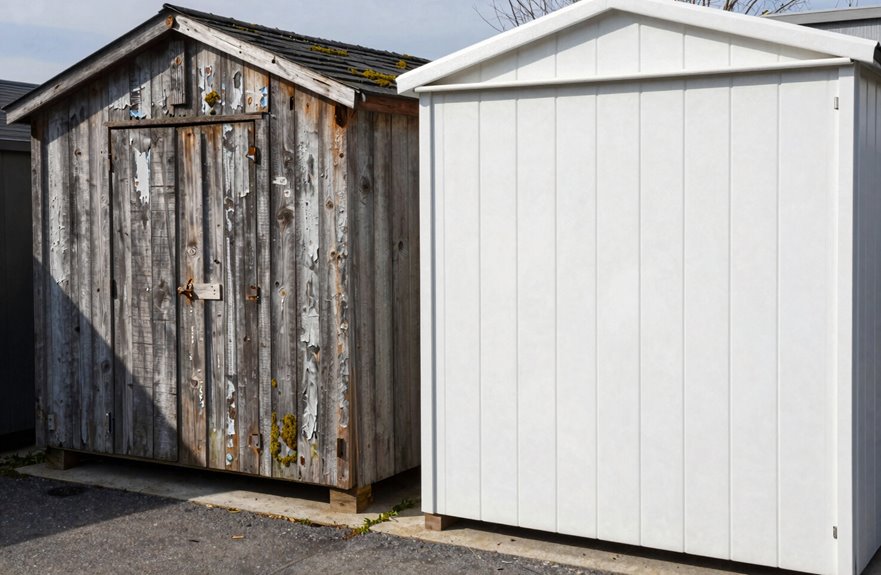
What does “low maintenance” really mean when you’re the one holding the paintbrush?
Wood sheds demand real commitment. Here’s what you’re signing up for:
- Regular upkeep tasks
- Sealing, staining, or painting every few years
- Checking for termites and carpenter ants
- Reapplying protective coatings based on your climate
- Foundation matters
Your wood shed needs a stable, moisture-protective foundation. Without it, you’ll face warping and rot that shortens your shed’s lifespan.
3. The trade-off
Quality woods like cedar or pressure-treated pine extend lifespan but raise both upfront costs and ongoing maintenance.
The payoff is decades of reliable storage when you stay on top of it. Neglect the work, and your investment will deteriorate.

【Spacious 8x 8ft Outdoor Shed】Roof: 90.55 inch (L)x 103.54 inch (W); Base: 85.83 inch (L)x 99.21 inch (W); Height 89.17 inch. UDPATIO provides spacious storage space for your various tools

Perfect Compatibility: Specifically designed as the left shed door hinge for Rubbermaid 5L40 6x5 sliding resin shed doors, it seamlessly replaces part numbers 3T16 2 and 3T16 3 for a perfect fit.

【8 ft x 10 ft Outdoor Storage Shed】- Dimensions: 87.53" W x 112.17" D x 90.77" H. Offers approximately 515 cubic feet of storage space, perfect for securely storing your gardening tools, lawn equipment, bicycles, patio furniture, and more
Strength Test: Can Resin Shed Floors Handle Heavy Equipment Like Wood?
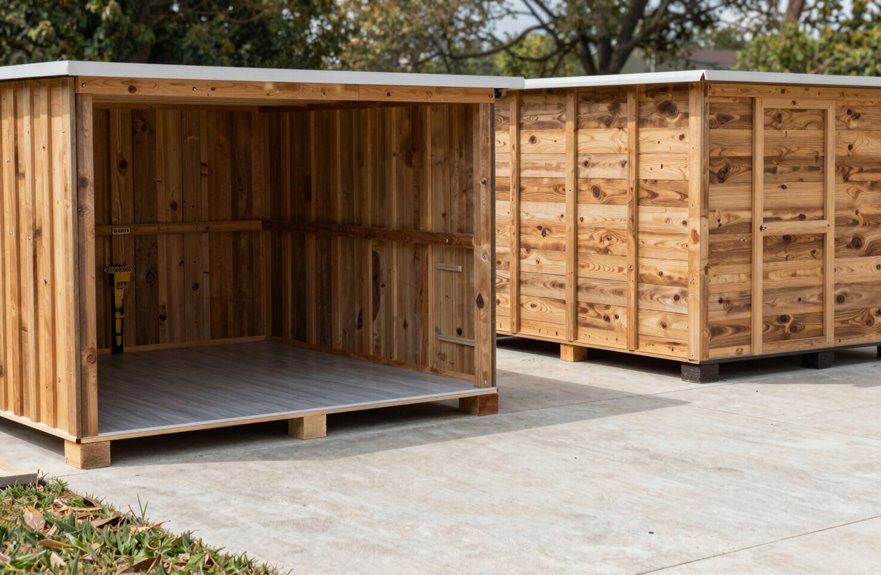
When you’re loading up your shed with heavy gear, you want to ensure your floor won’t let you down. I have researched how resin floors compare to wood when it comes to serious weight.
Resin floors can handle your lawn tractor and basic garden tools just fine. They are reinforced for everyday durability. Here’s the information about load-bearing capacity:
Resin floors handle lawn tractors and garden tools with reinforced everyday durability.
- Wood floors use solid framing and thick plywood for heavier machinery.
- Resin floors work well for standard equipment but can fatigue under constant heavy pressure.
- Weight distribution is crucial for both types.
- Wood handles point loads and large equipment more reliably.
- Proper base preparation helps any floor perform better.
If you’re storing heavy equipment regularly, wood is the stronger choice. For typical home use, resin floors perform adequately with smart weight distribution.

DUAL ARMOR CONSTRUCTION: Master Lock Magnum padlock features a laminated steel lock body wrapped in a weather-resistant cover, delivering heavy duty padlock protection for outdoor storage units, gates, sheds, and lockers.

KEEP LONG-HANDLED TOOLS UPRIGHT AND EASY TO REACH. This vertical resin storage shed or tall outdoor storage cabinet fits long-handled tools, patio umbrellas, and gardening supplies, so yard gear stays organized and off the ground.

VERTICAL OUTDOOR STORAGE SHED FOR SMALL SPACES. This vertical storage shed gives patios, porches, and balconies a compact resin outdoor storage cabinet for ladders, long-handled tools, and everyday gear without taking over your layout.
Customization: What Wood Sheds Offer That Resin Simply Can’t
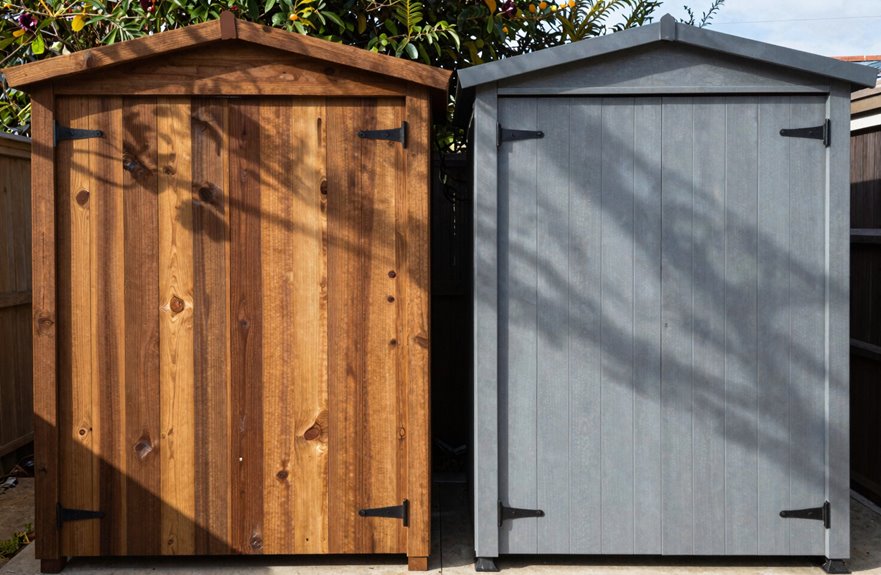
Storage-shed customization offers many advantages when you choose wood over resin. Imagine creating a space that truly feels like yours.
Why Wood Wins on Customization
- Paint/stain freedom – You can select any color to match your home. Resin remains beige indefinitely.
- Built-in features – You can add shelves, workbenches, pegboards, and even wiring for lights.
- Architectural charm – Flower boxes, shutters, French doors, or a small porch can enhance your shed and make it part of your home.
- Size flexibility – Wood accommodates larger builds and heavy-duty storage without instability.
- Easy fixes – If a board breaks, you can replace just that piece instead of needing to replace an entire wall.
Wood allows you to create a space tailored specifically to your needs.

VERSATILE STORAGE OPTIONS: With external dimensions measuring 55.3 inches in length, 31.8 inches in width, and 74.4 inches in height, DWVO's garden tool storage comes in a multitude of sizes, colors, and shapes to choose from; Great for outdoor backyards, gardens, courtyards, and utility rooms; Additionally, DWVO's outdoor storage can serve as a cozy and secure shelter for pets

Versatile Storage Space: The bike storage shed measures 71.6‘’L x 40.6‘’ W x 86.6’’ H externally, this 6x4 feet resin outdoor shed is available in a variety of sizes, colors, and shapes; Ideal for storing garden tools, lawn equipment, bicycles, patio furniture, and other sundry items; It can also serve as a cozy shelter for pets or a greenhouse for nurturing plants

VERSATILE STORAGE OPTIONS: With external dimensions measuring 55.3'' L * 31.8'' W * 74.4'' H, this garden tool storage comes in a multitude of sizes, colors, and shapes to choose from; Great for outdoor backyards, gardens, courtyards, and utility rooms; Additionally, it can serve as a cozy and secure shelter for pets
Long-Term Costs: Resin Shed Vs Wood Shed Over 10 Years
When considering the true cost of a shed over ten years, it’s important to focus on more than just the initial price tag. I’ll break down how the initial purchase price, ongoing maintenance expenses, and replacement and resale value compare between resin and wood options. Let’s examine where your money actually goes, year after year.

Versatile Storage Space: The bike storage shed measures 48.6" L * 67.1" W * 81.1" H externally, this 6x4.4 feet resin outdoor shed is available in a variety of sizes, colors, and shapes; Ideal for storing garden tools, lawn equipment, bicycles, patio furniture, and other sundry items; It can also serve as a cozy shelter for pets or a greenhouse for nurturing plants

ALL-WEATHER RESIN BUILD: HDPE resin panels with UV protection and waterproof sealing stand up to sun, rain, snow, and frost without warping, fading, or rusting so your outdoor storage shed keeps trash cans and garden tools protected year-round

Easy Assembly Storage Shed Kit: Our outside resin shed 8x10 FT come with clearly labeled parts, detailed instructions, and the necessary tools for quick setup. We have uploaded a detailed step-by-step installation video tutorial on the product page as well. With a helping hand and by following the manual, you can easily build a sturdy storage shed for your backyard garden patio or lawn
Initial Purchase Price
How much should you really expect to spend when you first buy a shed? Resin sheds usually have a lower upfront price, while wood sheds require a larger initial investment. This difference is important when you’re building your backyard space without exhausting your budget.
Here’s what I’ve learned about that first purchase:
- Resin sheds cost less at checkout, allowing you to keep more cash in your pocket.
- Wood sheds require a bigger initial investment, but you’re paying for sturdier materials.
- Your upfront price influences what other projects you can undertake in your yard that season.
- I see resin as the option to start immediately for many of us.
- Wood sheds appeal to those who prefer long-term planning.
Ongoing Maintenance Expenses
That first price tag isn’t the whole story. When I compare resin and wood, I consider what I’ll spend over ten years, not just today.
Resin Sheds: Set It and Forget It
Resin sheds require almost no upkeep. There is no need for painting, sealing, or shingling at any point. My maintenance costs remain low because the material naturally resists rot and pests.
Wood Sheds: Regular TLC Required
With wood, I commit to ongoing work. I need to stain or paint every few years to prevent rot. Those treatments, sealants, and occasional repairs can accumulate quickly.
The Trade-Off
Resin can suffer UV damage in sunny climates, potentially affecting longevity. However, well-maintained wood might outlast resin, depending on the climate and quality of care.
Replacement and Resale Value
So what happens when I look past the ten-year mark?
I start thinking about replacement and resale value. Here’s what I’ve learned about resin sheds and wood sheds.
- Resin sheds fade and get brittle from sun exposure, so I might need replacement parts or a whole new shed sooner.
- Wood sheds can last decades if I keep up with sealing and staining.
- My resale value stays higher with wood sheds because buyers trust their durability.
- Resin sheds depreciate faster in markets where looks matter long-term.
- I pay less upkeep with resin, but I might replace it twice while my neighbor’s wood shed still stands.
Choosing between resin sheds and wood sheds involves weighing low hassle now against better resale value later.
Final Verdict: Picking the Right Shed Material for Your Lifestyle
I start my final decision by considering what matters most to my daily life, not just what looks good on paper. If I want something quick to set up and I’m not staying forever, resin makes sense; however, I will trade off some strength and color retention over time. If I’m building a space I’ll use for years and don’t mind the upkeep, wood offers more room for customization, even if it requires more time and effort in the long run.

Built for All-Weather Durability: Crafted from a solid fir wood frame, rigid waterproof plastic panels, and a sloped asphalt roof. Engineered as an all-new outdoor storage cabinet with a waterproof roof, this premium unit easily withstands intense sun, heavy rain, and winter snow without fading, cracking, or warping over time.
Installation Tips: 1) Use M4 flat head screws to attach the hinge to the door.2) Use M5 pointed-tip screws to attach the hinge to the side panel.3) If the door won't close, make sure M4 flat head screws are used on the door side.

Sturdy Structure: This outdoor storage shed is made from high-quality natural fir wood and treated for excellent waterproofing and corrosion resistance. The thoughtful anti-tip design effectively prevents the cabinet from tipping over, ensuring it can withstand various climate conditions for long-term use.
Lifestyle Priorities First
When you’re looking at your backyard to decide what belongs there, it helps to picture how you’ll actually use the space day-to-day. Your lifestyle priorities shape this choice.
I examine your daily habits and ask straightforward questions. Do you want to grab tools quickly without unlocking multiple doors? Does your family need a cozy potting corner or just basic bike storage?
Here are some considerations:
- Resin sheds require minimal maintenance, allowing you to spend weekends relaxing instead of sealing.
- Wood storage allows for the addition of shelves, hooks, and personal touches over time.
- Hot climates can make resin uncomfortable for spending time inside.
- Heavy equipment benefits from wood’s sturdy framing and flooring.
- Budget constraints often favor resin for quick, functional storage options.
Choose a shed that aligns with your actual life.
Long-Term Value Trade-offs
Although price tags matter today, I’m considering what you’ll gain from your shed years down the road.
Value That Grows Over Time
Wood offers longevity. With proper care, quality wood sheds outlast resin by decades. You’re building something that can stay in the family.
Resin excels in maintenance. Avoid painting, sealing, and pest issues. Your weekends remain free for enjoyable activities.
The Trade-Off
Wood requires effort. Resin limits customization but provides hassle-free storage.
My Take
If you’re looking for a workshop, home office, or creative space, wood is the better value. For simple tool storage with minimal upkeep, resin suits your needs.
Choose based on how you plan to use it, rather than what appears appealing today.