

Self-storage can be a solid investment when you choose the right location and manage it effectively. I look for steady demand driven by life events such as moves and downsizing, as well as markets where incomes range from $50k to $60k, and where competition is manageable. I verify that local supply remains under 10 square feet per person in the area. Additionally, I can increase profits by 15 to 20% through straightforward add-ons like tenant insurance, packing supplies, and 24/7 access upgrades. Financing is most effective with a down payment of 35 to 40% or through SBA loans if you qualify. It is important to monitor hidden costs like maintenance and staffing, as these can quickly diminish margins. Below, I will discuss six factors that distinguish successful facilities from those that may not be financially viable.
Why Self-Storage Demand Defies Recessions (Until It Doesn’t)
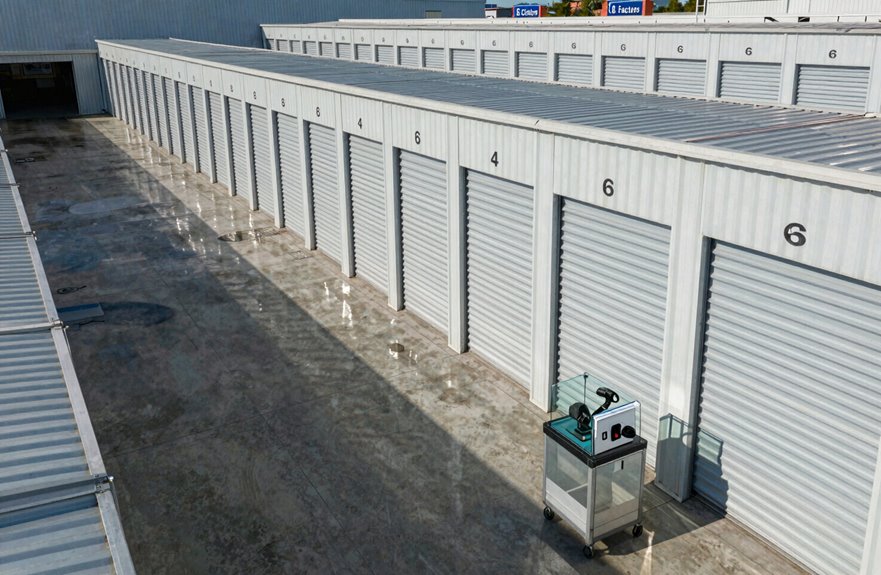
When I first looked into self-storage investing, I wondered why people keep renting units even during economic downturns. Self-storage demand arises from common life events—moving, downsizing, managing business inventory, and significant life changes. This asset class exhibits inherent recession resilience.
Self-storage demand persists through economic cycles because life keeps happening—people move, downsize, and adapt regardless of market conditions.
Here are some insights I’ve gained about why storage unit investments remain strong:
- Steady occupancy rates: People require storage in both favorable and challenging times, resulting in stable occupancy trends.
- Reliable rental rates: Monthly fees generate predictable long-term cash flow with less complexity than other real estate investments.
- Growing market demand: Urban areas and regions experiencing population growth continue to see expansion, enhancing diversification in your portfolio.
- Strong NOI focus: Valuations are based on net operating income, cap rates, and the ability of demand resilience to translate into tangible value.
Until market saturation occurs, this niche consistently performs well.


Financing That Still Pencils at 7% Interest Rates
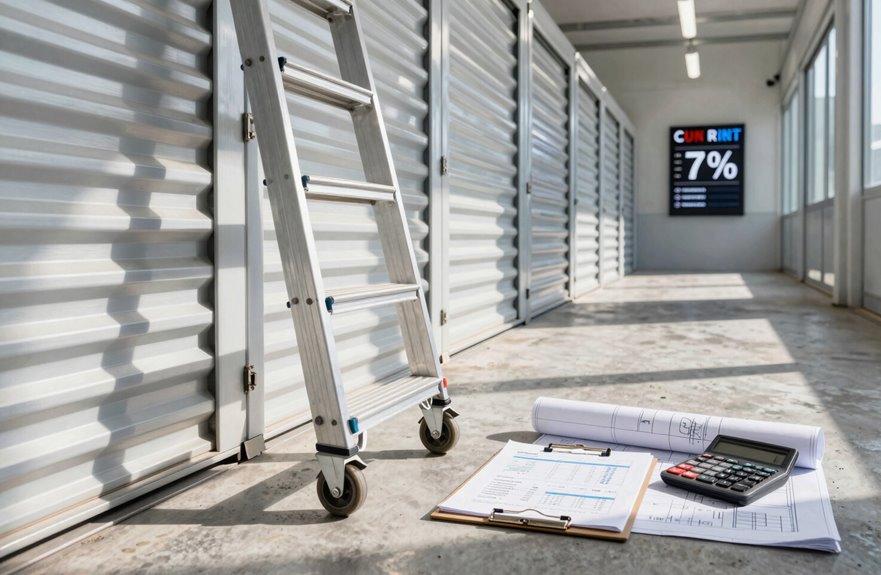
Self-storage may perform well in challenging economic conditions, but securing financing remains crucial.
Higher interest rates have significantly impacted the market. When rates were at 3.5–4%, evaluating deals was relatively straightforward. Now that 7% financing has become the standard, debt service consumes more cash flow quickly.
Here are two paths to fund your deal:
- SBA loans: These assist newcomers with lower cash down payments. The terms are more favorable than market-rate financing; however, underwriting criteria have tightened recently.
- Market-rate financing: Expect to put down 35–40%. Lenders require strong occupancy rates and evidence that your cash flow can cover payments.
To ensure the numbers work, I run each deal twice. First, I analyze it at current rates, then I stress-test it at higher rates. If occupancy drops by 10%, will you still manage financially? That is the key consideration.
The positive aspect is that top markets are showing signs of recovery. Well-capitalized buyers who conduct thorough evaluations can still identify opportunities.

✔️ [ULTRA CAPACITY & 8-PACK VALUE] Each bag measures 29" L x 13" H x 14" W, providing a massive 86 liters (24 gallons) of space. This upgraded 8-pack set offers the ultimate solution for moving entire households or organizing seasonal gear. Each bag can easily swallow 4 king-size down comforters, 36 pairs of jeans, or 60 T-shirts.

PACKING TAPE: 6 rolls of Scotch Heavy Duty Shipping Packing Tape come in dispensers for convenient application and offer excellent holding power for your holiday packing and shipping needs

Including 100 pack packing paper sheets at12” x 24”, perfect size for most dishes and glassware.
How to Spot Oversaturated Markets Before You Bid
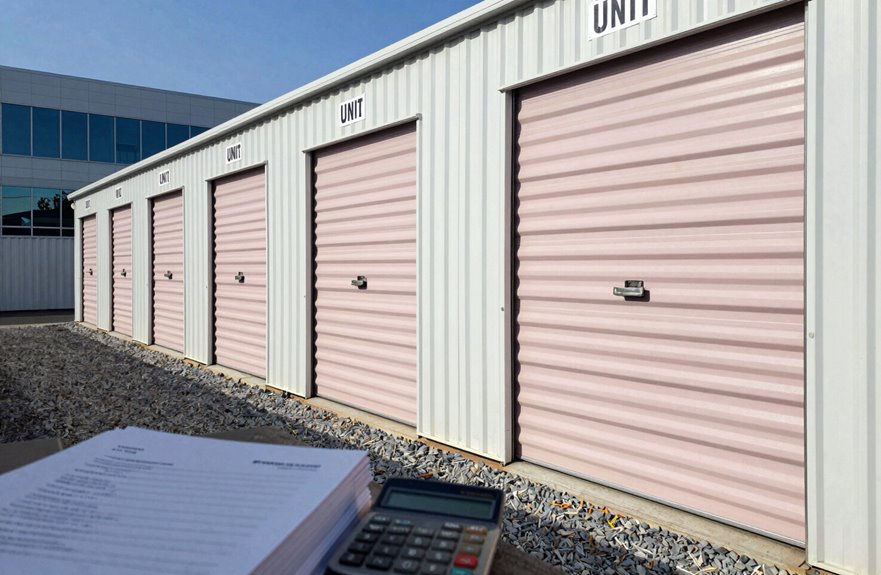
I start by checking how much storage space exists near my target property. A high number of facilities in close proximity often indicates potential issues. I analyze square feet per person within a few miles and observe whether existing facilities are consistently full or remain half-empty. These two indicators—local supply and demand trends—help me avoid bidding on markets that cannot sustain another competitor.

UPDATE & OPTIMIZE - A lot of customers who bought our 5 tier wire shelving rack want to make the rack wider and higher, so we have developed a new shelf which is 24 inches wide and 72 inches height and have 7 shelves, create a lot of storage space in kitchen, office, garage, bathroom and more.

Modular Storage: This 7-tier single-sided rolling bin rack includes 24 small PP bins. Each bin has a label slot, so you tag, sort, and find parts fast to keep your space tidy

Modular Storage: This 7-tier single-sided rolling bin rack includes 12 small, 8 medium, and 4 large PP bins. Each bin has a label slot, so you tag, sort, and find parts fast to keep your space tidy
Local Supply Analysis
Before I invest in a storage facility, it’s essential to understand the market dynamics. Here’s how I evaluate the storage supply.
1. Check per-capita supply
I look for 7–7.5 square feet per person. More than 10 within 3–5 miles raises concerns.
2. Pick your playground
Secondary markets often have less competition from major players. I avoid the cities that attract everyone.
3. Follow the money
A median income of $50k–$60k indicates solid demand drivers and pricing power.
4. Size matters
Large operators control half the market. I focus on facilities under 50,000 square feet to find less crowded options.
Conducting thorough local market analysis helps me avoid oversaturated areas before placing a bid.
Demand Trend Indicators
Once I’ve mapped out local supply, I shift my attention to where the market is headed. I look for demand trends that indicate whether I’m joining a strong community or entering a problematic area.
I check per capita storage first. I want 7–7.5 square feet per person; this provides enough room to grow without risking a price crash. I also monitor occupancy rates closely. High occupancy (85%+) indicates that people actually need the space.
Here’s what I track:
| Market Indicator | What It Tells Me |
|---|---|
| Rate momentum | Rising rental rates mean healthy demand |
| New construction | Too much supply signals market saturation |
| Top MSAs | Secondary markets with $50k–$60k incomes beat oversaturated urban cores |
I avoid areas where large operators own half the facilities. These situations often signal market challenges rather than opportunities.
The Location Metrics That Actually Predict Profit
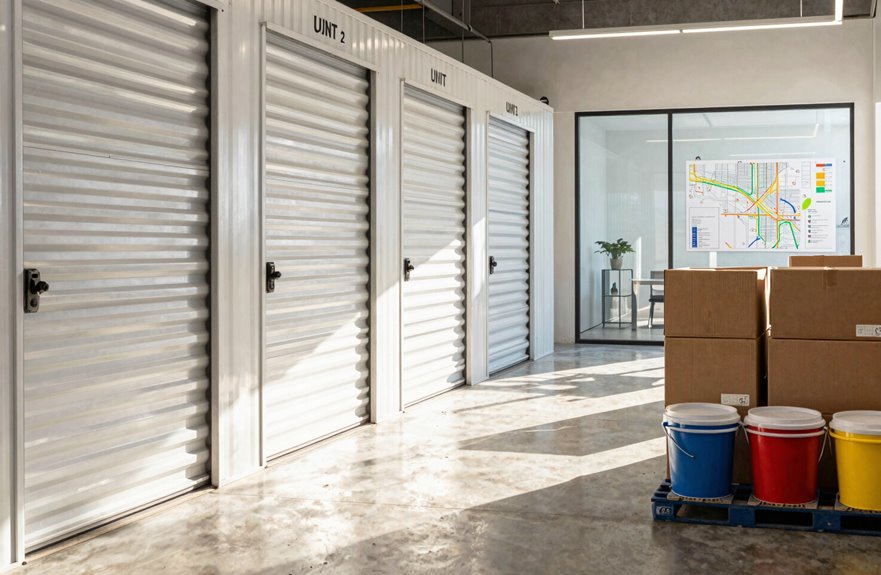
I first examine two key numbers when evaluating a storage location: the local population and their income levels. Next, I assess whether the area has a high concentration of competitors or if there is potential for me to capture market share. These factors—population density, income, and competition saturation—provide the essential insights needed before further analysis.

Full-sleeve design keeps your message visible even when there is no wind
Full-sleeve design keeps your message visible even when there is no wind

Population Density and Income
Here’s what I check:
- Solid population density. Crowded areas mean more people need space for their belongings.
- Healthy median income. I target $50k–$60k neighborhoods where residents can afford monthly rents.
- Low per capita square feet. Less than 10 square feet per person in a 3–5 mile radius keeps market saturation manageable.
- Growth trends and relocation patterns. Moving populations drive steady demand.
These factors protect your occupancy and support stronger rental rates over time. Avoid areas with oversupply, as they negatively impact asset performance. By focusing on these criteria, you are establishing a solid foundation for investment.
Competition Saturation Analysis
Why do some storage facilities thrive while others struggle to fill units? It often comes down to competition and saturation.
I analyze supply and demand before entering any market. Here’s my checklist:
- Find markets with 7–7.5 square feet of storage per person. Higher levels indicate an oversupply risk.
- Focus on secondary markets where competition remains below 10 square feet per capita within 3–5 miles. This leads to fewer barriers and better occupancy.
- Target smaller facilities around 50,000 square feet. Larger operators often overlook these, making market entry more manageable.
Primary markets tend to rebound faster, but secondary markets offer steady returns. With 35–40% down payments or SBA assistance, you can succeed in this fragmented industry where small operators continue to thrive.
Operating Costs That Kill Margins (and How to Stop Them)
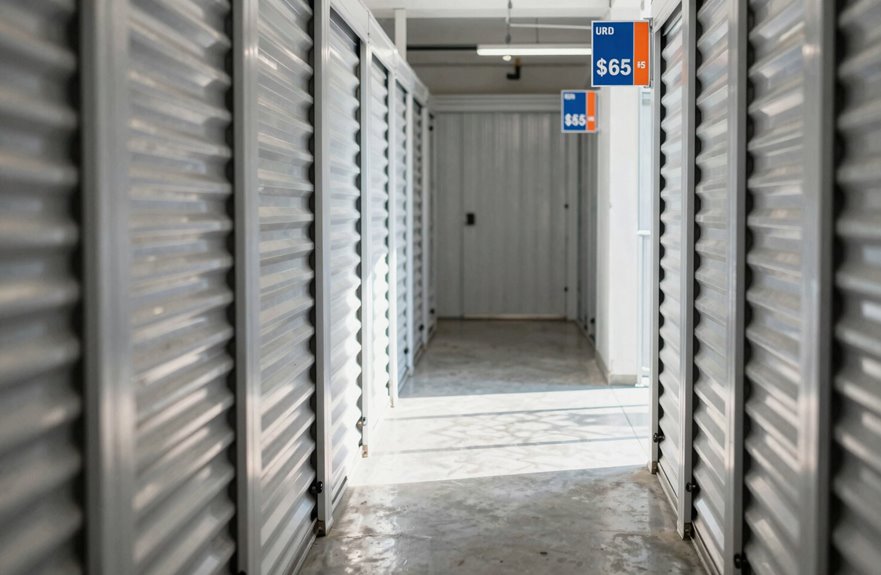
Because I’ve seen too many storage investors caught off guard by unexpected expenses, I will outline the costs that can significantly impact your profits and how to address them.
Running storage units involves more than just collecting rent. Operating costs can consume up to 35% of revenue, particularly with third-party management, which negatively affects your margins and lowers your NOI.
Here are the key expenses to monitor:
The Big Six Expenses
- Utilities – Electricity for gates and lighting can accumulate quickly.
- Insurance – Required, but can be expensive; shop around annually.
- Security – Cameras and gates help protect assets but involve initial costs.
- Marketing – Vacant units do not generate income; visibility is essential.
- Management fees – Third parties can take a significant portion of revenue.
- Property taxes – Often overlooked in financial projections.
Boosting Efficiency
Simple solutions can make a difference. Switch to LED lighting. Automate bookings and payments. Manage marketing yourself or consider hiring freelancers instead of agencies. Each dollar saved directly increases your bottom line.

No Monthly Fees With 128GB Secure Local Storage: All recordings are encrypted and stored securely in the home hub—Lifetime no subscriptions,cloud fees & hidden charges, save up to $200 yearly.The built-in 128GB memory provides up to 3 months of loop recording for all X4 home security camera system.so you can remote view or remote playback anytime anywhere on your phone. Even if an outdoor camera is damaged or lost, your recorded data remains safely stored in the home hub.

【2K FHD Clarity & Color Night Vision】Cameras for home security delivers 2304×1296 resolution—4x sharper than 1080P—with a wide viewing angle for 2K HD live streaming. It features dual night vision modes (full-color & infrared) with a 33ft range, ensuring clear footage day or night. Access real-time or recorded videos remotely via the mobile app.

No Monthly Fees & With 128GB Secure Local Storage: All recordings are encrypted and stored securely in the expandable 4channels Home Hub—Lifetime no subscriptions,The built-in 128GB memory provides up to 3 months of loop recording for your solar security cameras wireless outdoor.Even if the outdoor security camera is damaged or lost,your data stays safe.
Strategic Add-Ons That Boost Facility NOI
Cutting costs helps, but the real transformation occurs when you find ways to earn more from every tenant already walking through your door.
Smart add-ons transform Storage NOI without adding units. Here are effective strategies:
Smart add-ons transform Storage NOI without adding units. Here are effective strategies:
Easy Wins
- Tenant insurance partnerships create steady monthly income.
- Packing supplies and truck rental help alleviate moving day stress.
- Mailbox services cater to those needing package security.
Premium Upgrades
- Enhanced security with cameras and gated entry allows for higher rates.
- 24/7 access and parking access justify monthly premiums.
These enhancements increase revenue per tenant while fostering loyalty. Many facilities have achieved margin increases of 15-20% through these methods. The community benefits as you simplify their experiences. This is a worthwhile investment strategy.