
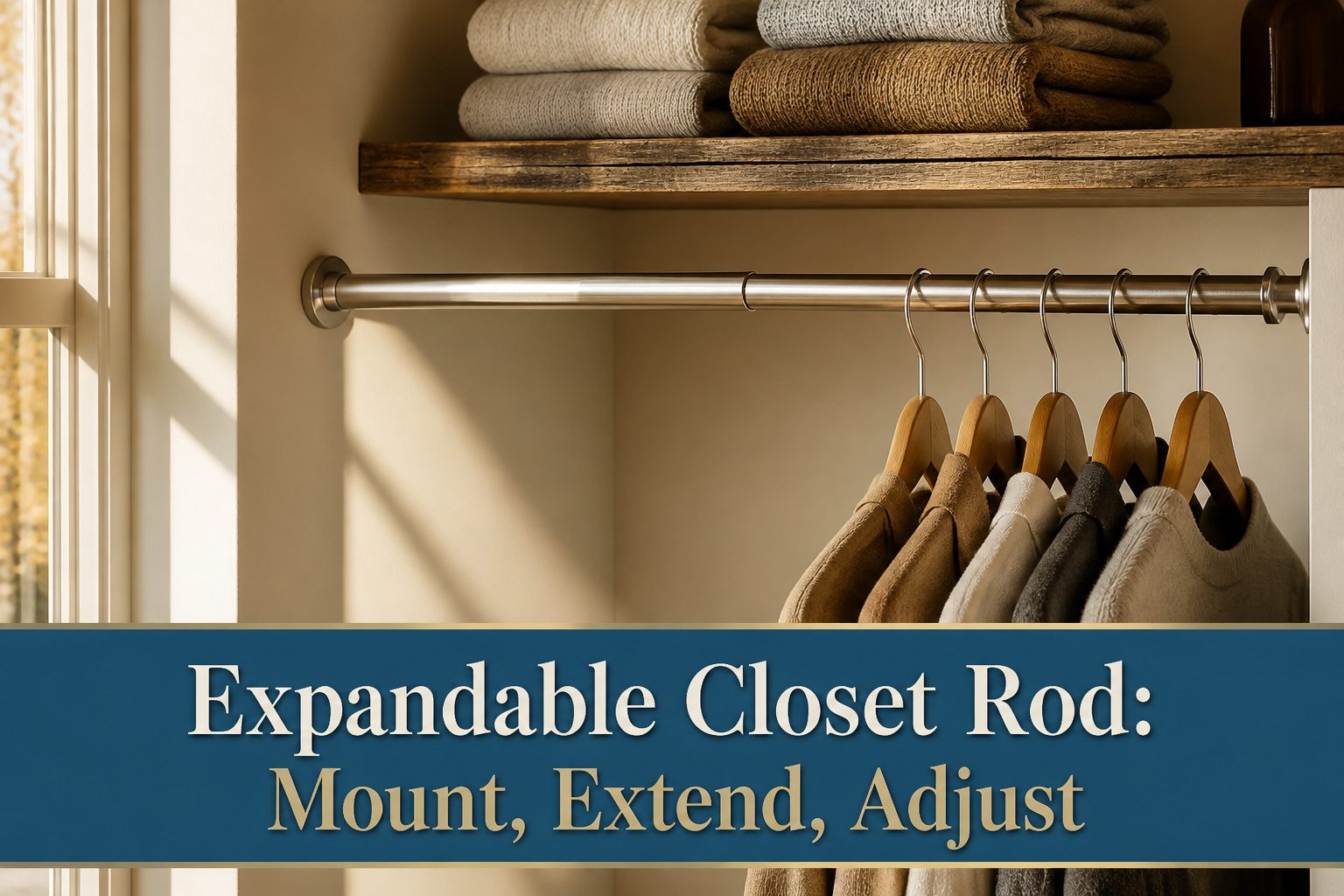
An expandable closet rod is a telescoping metal tube that mounts between closet walls and adjusts to fit openings from roughly 18 inches to 50 inches without cutting.
The mounting style, not the width range, decides whether it actually works in your space: side-mount brackets eat an inch or more of usable hanging depth per side, which turns a 24-inch opening into 22 inches of actual rod, and in a closet under 14 inches deep that lost space makes hangers scrape the door.
Rev-A-Shelf’s pulldown model spans 34" to 50" and drops straight down for seated reach, but only because it mounts to the cabinet sides rather than the back wall.
Pulldown Closet Rod
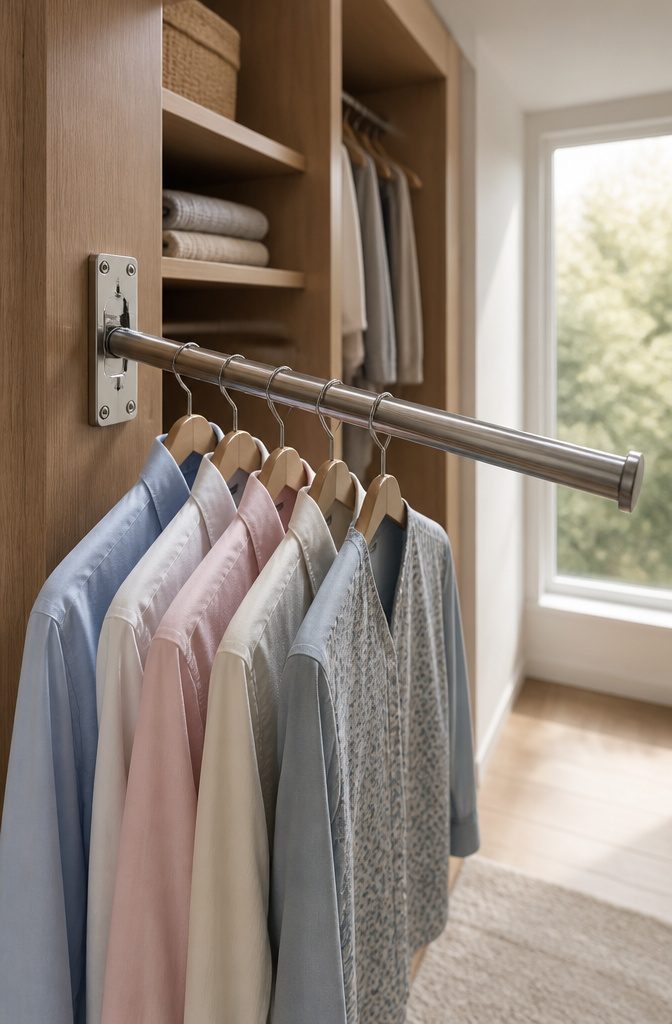
Rev-A-Shelf’s side-mounted pulldown closet rod telescopes from 34" to 50", which is the range that matters if you’re building for accessibility or planning to age in place.
The hardware mounts to the cabinet sides rather than the back wall, so the rod drops straight down and forward within easy reach from a seated position.
That side-mount geometry is what makes it work for wheelchair users; a back-mounted rod would swing into the user’s lap or require too much forward reach.
Universal design, in practice, means you install this once and it serves whoever uses the closet later.
The 34" collapsed length fits a narrow reach-in closet; extended to 50", it spans most standard double openings without cutting or splicing. I would pick this over a fixed-length accessible rod because the adjustability covers measurement mistakes and future reconfigurations.
The mechanism adds bulk; in a closet under 24" deep, the lowered rod may sit close to your hanging clothes. Check your depth before ordering.

Heavy-Duty Stainless Steel Closet Rod: Built with a 1.3-inch diameter tube that supports up to 70 lbs for enhanced strength and stability. Holds coats, jackets, jeans, sweaters, and other garments

【Upgrade Adjustable Width & Height】The width range is from 17 to 29 inches, and the height range is from 14.6 to 37.1 inches. The user-friendly design has six adjustable heights, which can maximize the unused space beneath hanging clothes. Dimensions: 37.1"H x 29"W (Fully Expand)

1. Space-Saving Closet Organizer with Pull-Out Design: Simplify your routine with this pull out valet rod for closet, perfect for planning tomorrow’s outfit or staging travel looks. Keep your clothes visible, wrinkle-free, and ready to go—an essential solution for efficient closet organizers and storage.
What Adjustability Actually Means

A 34" to 50" range sounds generous until you realize most closets are not built to even numbers.
The wall framing shifts, the drywall adds thickness you did not plan for, and suddenly your 36" opening measures 35¼" at the back where the bracket sits.
That is why I would not trust a fixed rod in any space I did not measure myself, at three points: the front of the opening, the back where the mount plate lands, and the height where the rod will actually hang.
The same span also matters for who uses the closet. A pull-down rod set to its full 50" extension drops lower when you bring it down, which changes how far a seated user or someone on a stool can reach.
I would set mine closer to 34" in a guest closet that sees all ages, because the shorter tube has less travel and less sag when loaded.
The adjustment is not just about fitting the hole in the wall; it is about where the rod ends up in someone’s hand when they cannot stand to reach it.
Before buying, measure the opening width at both ends and the depth from the door frame to the back wall.
Write all three down. The rod you pick needs to collapse shorter than your smallest width and extend past your largest, or you are cutting the tube yourself or returning it.
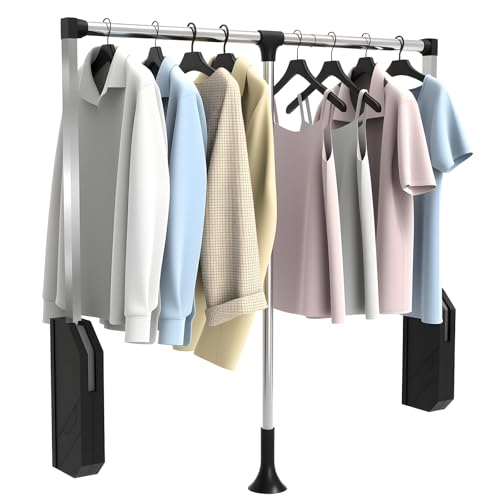
Smooth Hydraulic Pull-Down System:Our pull-down closet rod features gas-powered hydraulic lifts for effortless operation - gently push down to lock in place, then simply lift the lever to automatically rebound to upper position. Perfect for high closets and accessible clothing storage

ADJUSTABLE WIDTH: This pull down closet rod has a width range of 32.6 to 45.2 inches and a height of 33.1 inches. Suitable for most spaces. Please remember to measure the size of your closet before purchasing

【Durable Closet Rod】The pull-down wardrobe rod is made of stainless steel, high strength, corrosion resistance, and stable load-bearing. The chrome-plated surface adds a touch of sophistication and enhances the overall gloss.
Measuring Your Opening

- Measure width, depth, and height in that order. Side to side first; that dimension decides whether the expandable closet rod will compress enough or extend far enough for your opening. Front to back second, because a rod that fits your width but crashes into a protruding hinge or pipe is a return waiting to happen. Top to bottom last, to confirm the rod and whatever hangs from it clear the shelf above and the floor below.
- Know your cabinet type before you write anything down. Face frame cabinets have that visible border around the opening; frameless do not. The usable width sits inside that frame, not across it, and most rods mount to the side walls, not the frame itself.
- Subtract the obstructions. Plumbing lines, door hinges, and shelf brackets all steal space the rod needs to slide past during installation or to sit clear once mounted. I knock off an extra half inch beyond the obstruction’s own depth, because a rod that just clears a hinge on paper will scrape it in practice once weight goes on.
- Double check against the product’s listed minimum cabinet opening, not its maximum extension. The rod’s collapsed length must be smaller than your opening, and its extended length must be larger, or the tension mount will not grip.

Size & Capacity: The pull-down closet rod measures 21.5"W x 4"D x 34.75"H and extends up to 26"W to fit your closet width. This adjustable clothes rod comes with mounting hardware and holds up to 25 lb.

Sturdy & Durable: Crafted from stainless steel for lasting strength, corrosion resistance, and a lasting shine. Its dual-arm design features a smooth damping system for stable, two-way cushioned lifting that keeps garments secure

Heavy-Duty Construction: Crafted from premium carbon steel with anti-rust coating, this pull-down closet rod supports up to 60 lbs—double the strength of typical aluminum rods. Perfect for heavy coats, suits, and seasonal storage without sagging or wear
Fitting the Rod to the Cabinet

Width is only the first filter.
An expandable closet rod that collapses to 18 inches and stretches to 30 will still fail if the bracket arms hit a face-frame stile or if the mounting plate needs more side clearance than the cabinet allows.
I check depth next: a side-mount bracket adds its own projection, and in a shallow 12-inch cabinet that can leave the rod sitting so far forward that hangers scrape the door.
The real loss, though, is usable hanging space. Side-mount brackets eat an inch or more per side, so a 24-inch opening becomes roughly 22 inches of actual rod.
For shirts or folded pants that is fine. For coats on wide hangers, that lost inch per side is the difference between clothes hanging straight and jamming at the shoulders.
I would rather see a rod with a rear-mount option in anything under 14 inches deep, even if it means giving up the tool-free adjustability that side-mount kits advertise.

Effortless High : This pull down clothes rail brings high closet rods within easy . A gentle tug lowers the rail to a comfortable height, allowing you to hang shirts, pants, and coats without a step stool. Release it, and the pneumatic lift system smoothly guides it back up

Effortless High : This pull down clothes rail brings high closet rods within easy . A gentle tug lowers the rail to a comfortable height, allowing you to hang shirts, pants, and coats without a step stool. Release it, and the pneumatic lift system smoothly guides it back up

Effortless High : This pull down clothes rail brings high closet rods within easy . A gentle tug lowers the rail to a comfortable height, allowing you to hang shirts, pants, and coats without a step stool. Release it, and the pneumatic lift system smoothly guides it back up
Frequently Asked Questions
What is an expandable closet rod?
An expandable closet rod is a telescoping bar that adjusts in length to fit different closet openings. That adjustability also covers measurement mistakes and future reconfigurations.
Are adjustable closet rods good?
Yes, if you value flexibility over absolute minimal bulk.
An adjustable rod covers wall framing shifts, drywall thickness variations, and changing users, which a fixed rod cannot do. The mechanism adds bulk; in closets under 24" deep, the lowered rod may sit too close to hanging clothes.
What is a good closet rod that won’t bend?
For heavy loads, the shorter 34" setting has less travel and less sag than the full 50" extension. Check that your side-mount brackets do not reduce usable hanging space so much that wide hangers jam at the shoulders.
What are some alternatives to closet rods?
Side-mount expandable rods like the one discussed offer tool-free length changes but eat an inch or more of usable rod space per side.