
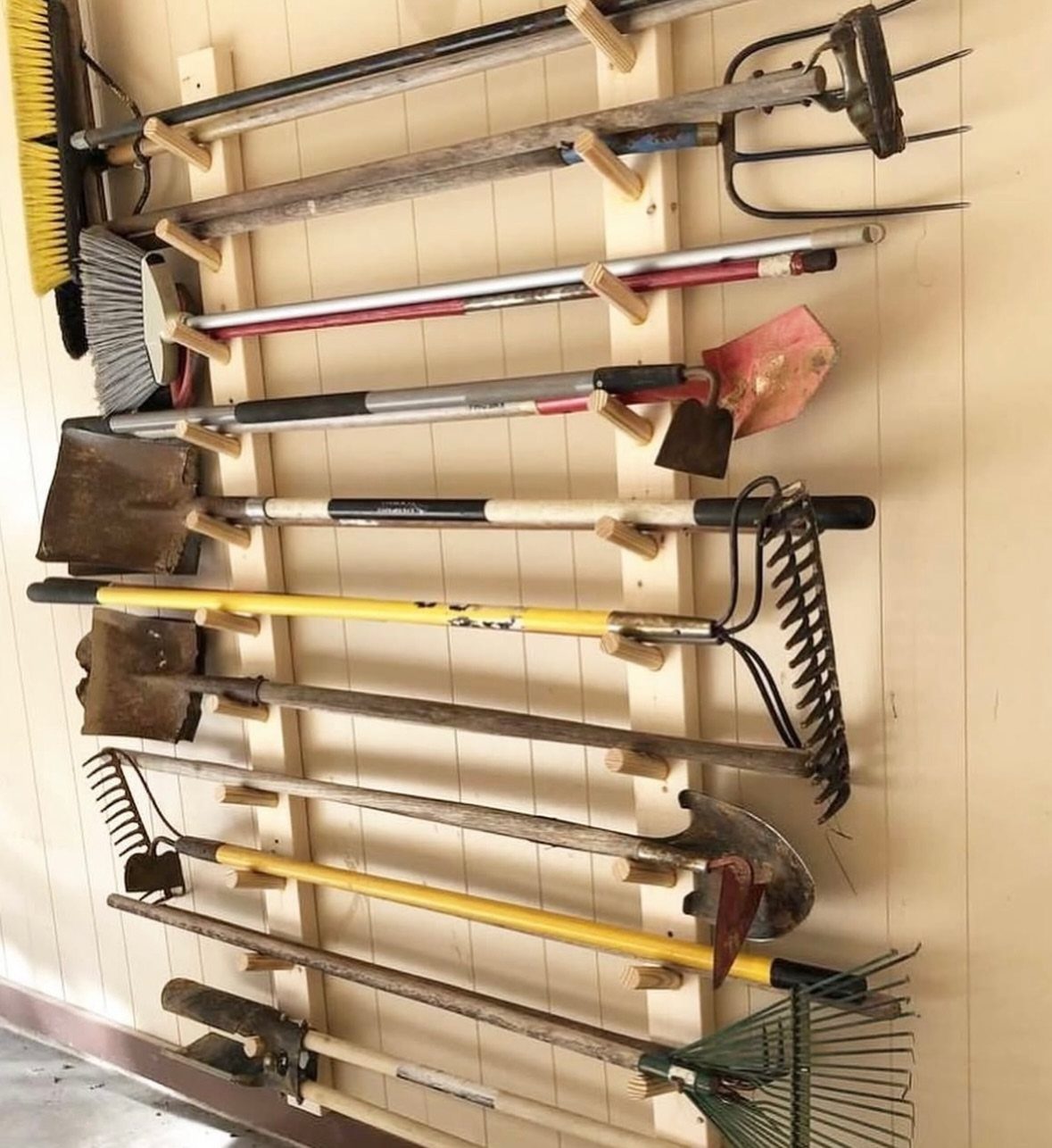
Options run from free scrap-wood holders to a steel shed, and the right one depends on whether you rent or own, how often you mow, and whether your garage floor stays dry through spring.
A mobile pallet tool cart is the option I would pick for a rental, while overhead joist racks make sense only if you are staying put and your mower is small enough to lift.
The proving detail that ties this list together is the 2×4 scrap and a bungee cord: those two cheap fasteners show up in three of the seven projects, because lawn gear is heavy, awkward, and always trying to tip over.
1. Outdoor Storage Shed
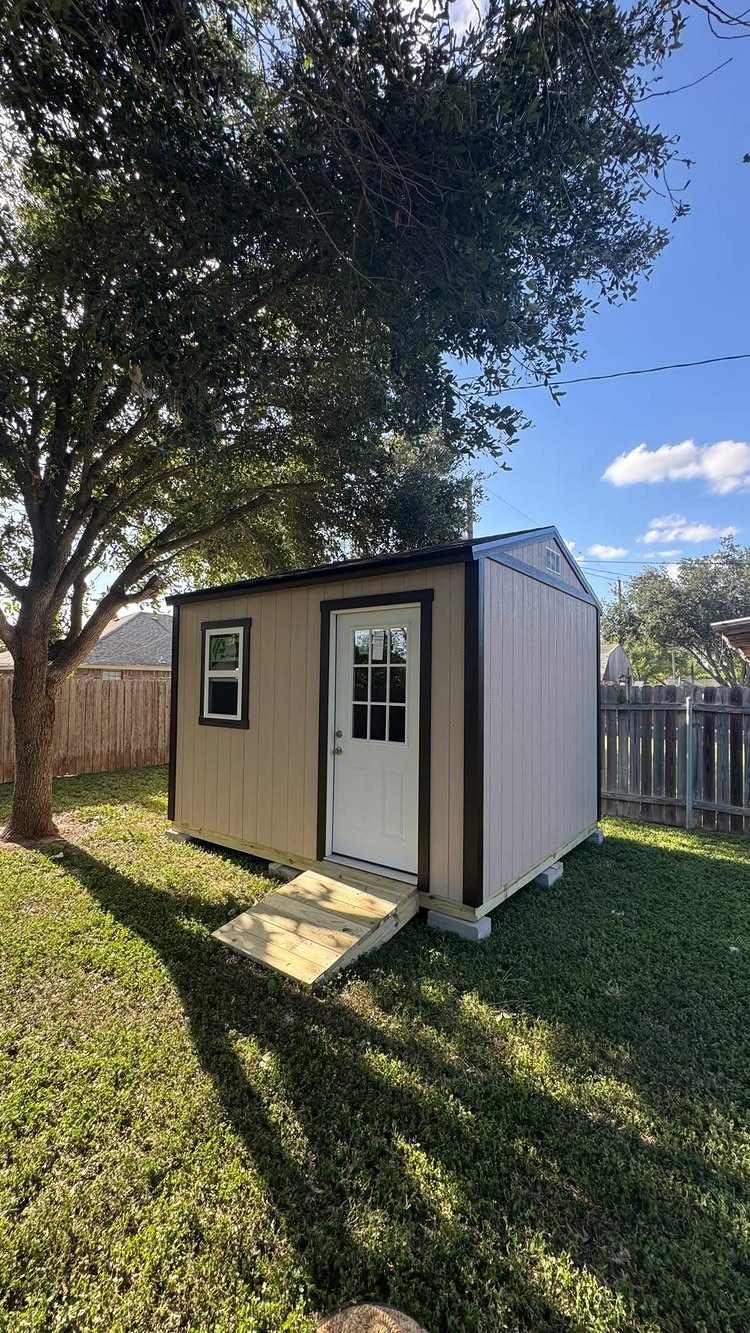
A shed moves the mower, trimmer and gas cans out of the garage entirely. I would check local setback rules before ordering; some towns want clearance from the fence line and a gravel pad underneath.
A ramp is worth copying, since a steel shed door sits above grade and a loaded mower gets heavy fast.

KEEP LONG-HANDLED TOOLS UPRIGHT AND EASY TO REACH. This vertical resin storage shed or tall outdoor storage cabinet fits long-handled tools, patio umbrellas, and gardening supplies, so yard gear stays organized and off the ground.
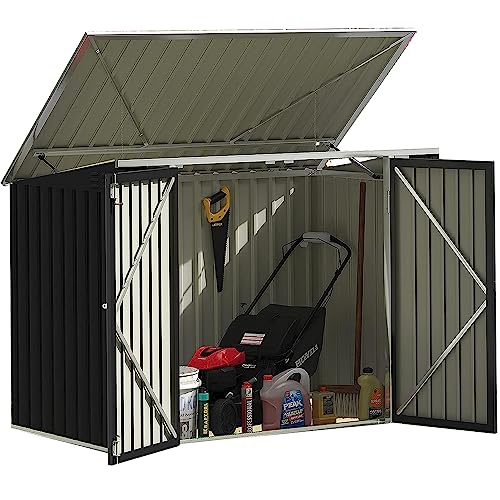
[Reinforced Structure] The storage shed is constructed with a steel frame and is reinforced with additional metal inside the product to ensure stability regardless of wind or rain.In addition, an anti-rust coating is added to the surface

KEEP LONG-HANDLED TOOLS UPRIGHT AND EASY TO REACH. This vertical resin storage shed or tall outdoor storage cabinet fits long-handled tools, patio umbrellas, and gardening supplies, so yard gear stays organized and off the ground.
2. Dedicated Lawn Equipment Rack
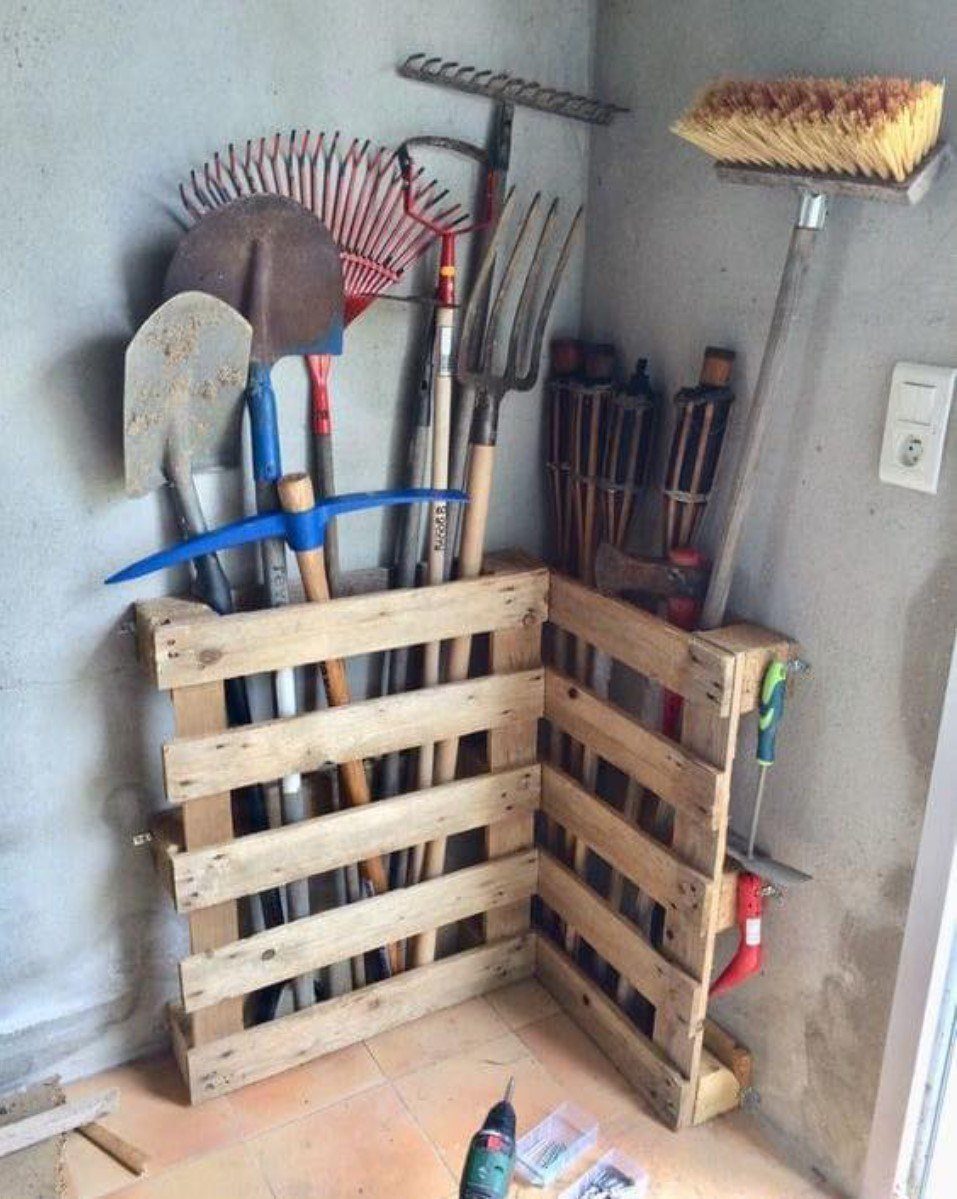
2 pallets stood on edge in a corner catch rakes, shovels and brooms without a single screw into the garage wall.
I like this because it rents: when you move, it moves. The pallets are secured to each other, not to the studs, so they lean into the corner and the tools lean into them.
A bungee or a scrap 2×4 across the front keeps everything from sliding out when you bump it with the car.
Check that your corner is dry; pallets wick concrete moisture and rot if the floor stays damp.

1. [Extra heavy duty] metal heavy duty tool cart, can hold 22 heavy duty long handled garden tools, 5 light duty cleaning tools, lots of small tools, maximum weight 300 lbs

HEAVY-DUTY GARAGE TOOL ORGANIZER: Revolutionize your garage with this wall-mounted storage hero! Designed to hold shovels, brooms, power tools, and more, it can support up to an impressive 300 lbs.

Generous Storage Capacity: The garden tool storage is equipped with 35 square slots, which are suitable for I-handle tools such as shovel and rake; garden tool rack equipped with 11 hooks, it is easy to hang accessories such as water pipes, pruning shears, axes, etc
3. Garden Tool Storage Bin
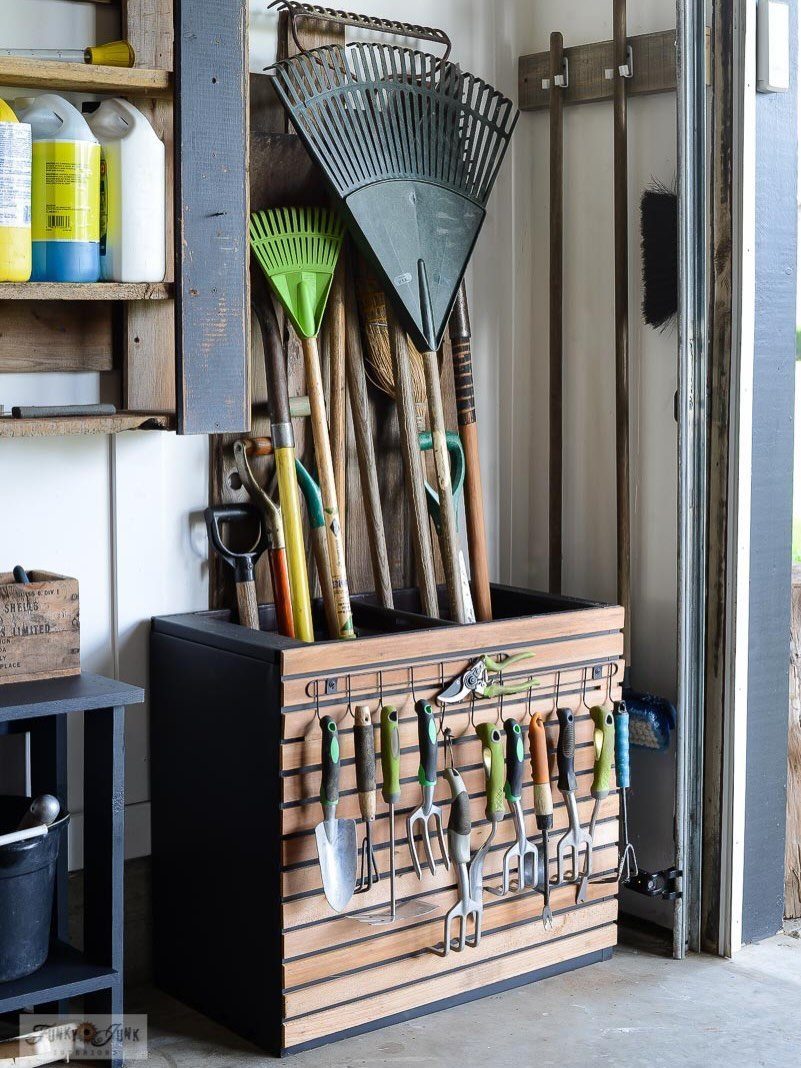
This slatted-wood bin with its black frame keeps long-handled tools upright in a small footprint.
The wire racks on the front are the detail I would copy: hand trowels, pruners and gloves hang where I can grab them without opening anything.
The bin looks built from 1×6 slats with a gap for airflow, important if you are putting away tools damp from morning dew.
A pair of L-brackets into the back wall keeps it from tipping when you pull a shovel free.

Spacious dimensions provide ample capacity for organizing cushions, gardening tools, mats, and various outdoor equipment in one convenient location.

Provides ample space to store garden furniture cushions, toys, and household items, keeping your outdoor living area tidy and organized.

CLUTTER FREE PATIO: Keep your outdoor living space neat and organized with ample room for furniture cushions, porch mats, and garden gear.
4. Heavy-Duty Garage Storage Shelving
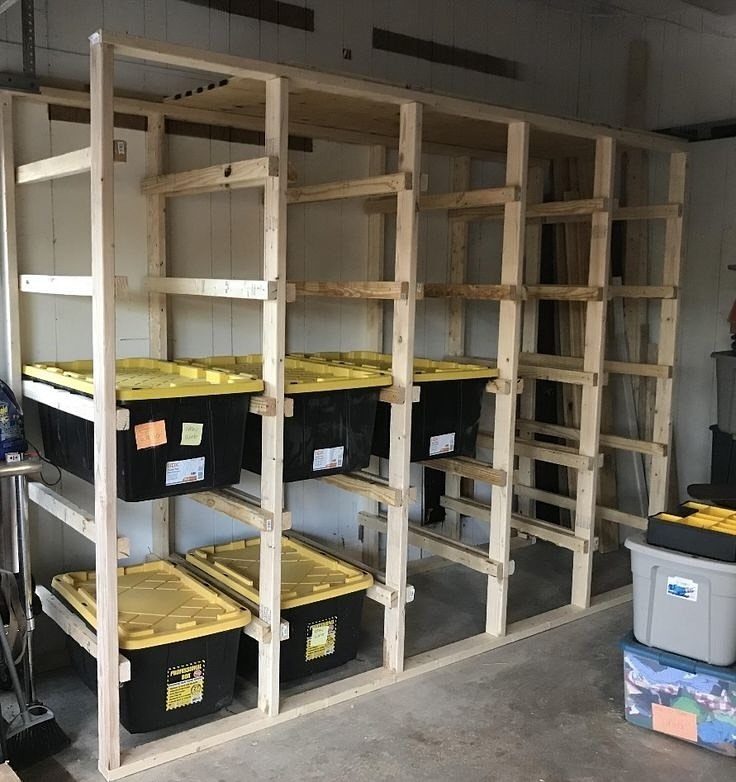
Open shelving with bins beats closed cabinets for lawn gear because you can see the empty bin that means the fertilizer spreader is still outside. Black bins with yellow lids are easy to spot under a single garage bulb.


Universal Fit for 27-Gal Totes: Rail spacing adjusts from 18 1/8" to 20 1/2" to fit bins across different brands, making it compatible with all 27-gallon totes commonly sold at major warehouse clubs and home improvement retailers, including models from HDX, Greenmade, Sterilite, CX, Black & Yellow, and others (brand names for reference only, no affiliation). Works as garage shelving for totes or a storage rack for bins, meeting 27 gallon tote/bin storage rack needs.
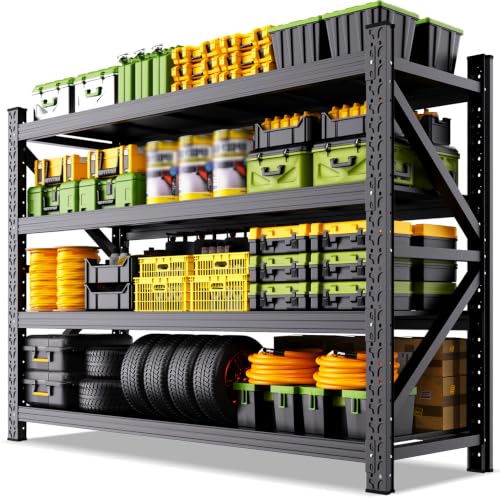
【6000 LBS Garage Heavy Duty Shelving】 This metal shelving is constructed from high-quality thickened cold-rolled steel. Its one‑piece upright design not only boosts load‑bearing capacity but also keeps the unit strong and stable even when fully loaded with heavy items. The thicker, reinforced beams allow each shelf to support up to 1,500 lbs, ensuring that the shelving remains safe and secure under frequent use in any workspace or storage setting.
5. Overhead Garage Storage Rack
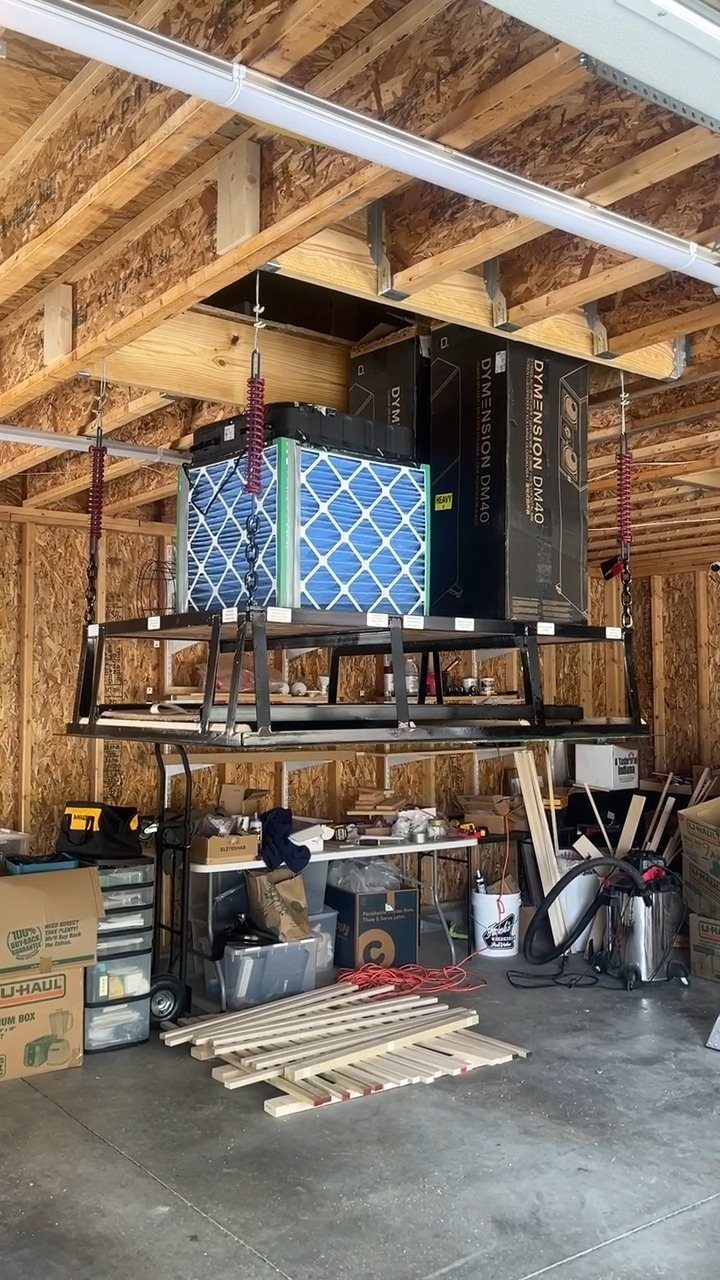
Ceiling racks borrow space you are not using and free the walls for things you reach daily.
The platform bolts directly to joists; that rigid mount spreads the load across three joists instead of two, and it keeps the rack level even if you load one corner heavier than the rest.
I would not store the mower up here, but bags of potting soil, the spreader in winter and the snowblower in July are exactly right.
Check your joist spacing before you buy; most racks fit standard spacing on center, and an adapter kit is cheap if you guess wrong.

RECLAIM YOUR GARAGE:Use garage ceiling space to store seasonal and unused items. 22'' to 40'' ceiling dropdown provides up to 52 cu. ft. of storage. Dimensions: 96 in. L x 24 in. W x 22-40 in. H.(Hooks sold separately)

1200 lbs Tested, 750 lbs Rated: Our overhead garage storage rack undergoes rigorous 1.6 times load testing (1200 lbs) to ensure unmatched safety and durability, supporting up to 750 lbs for your tools and equipment.

900 lbs Tested, 450 lbs Rated Weight Capacity: Our overhead garage storage rack undergoes rigorous double load testing (900 lbs) to ensure unmatched safety and durability, supporting up to 450 lbs for your tools and equipment.
6. Wall-Mounted Tool Holders
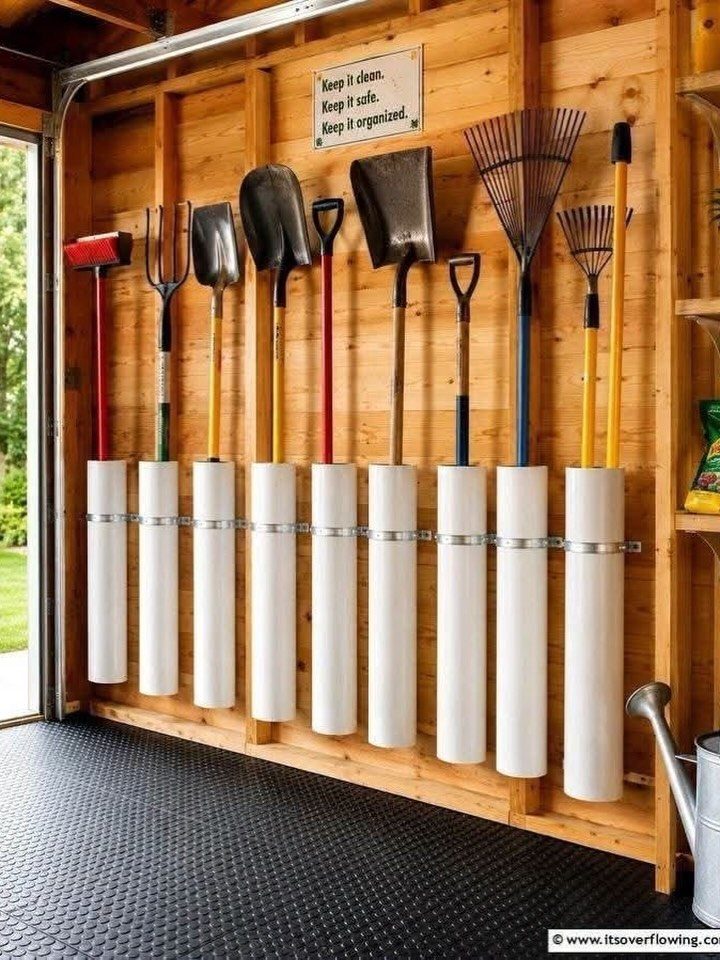
PVC pipe cut to short lengths and screwed to studs makes holders that cost almost nothing and outlast any bracket from the hardware store.
The pipes are mounted in a vertical row on raw studs, which means no drywall to repair later; I would mark the center of each pipe, drill a pilot hole and use a deck screw through the wall side.
The sign says what this is really for: keeping the floor clear so you do not trip over a rake handle in dim light.
Tools slide in handle-first, heads up, and the pipe diameter looks like standard size, which fits most wooden handles snugly.
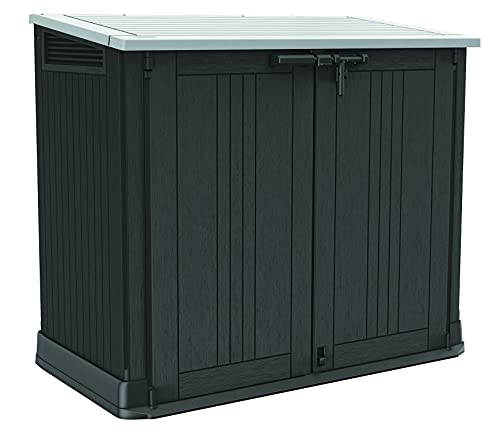
COMPACT OUTDOOR STORAGE SOLUTION – Holds up to two 32-gallon trash cans while organizing garden tools, pool floats, patio accessories, and backyard essentials.
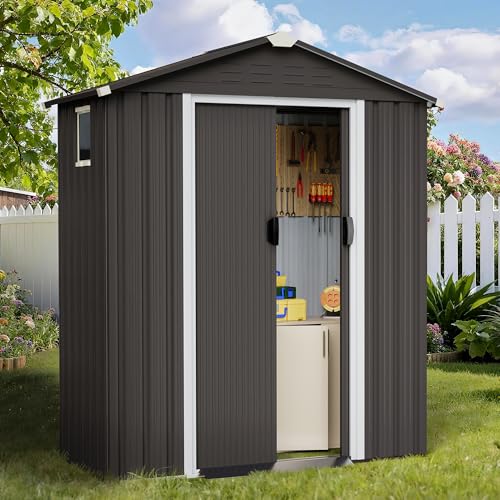
【Spacious Storage】This outdoor metal shed offers ample storage for tools,lawn mowers,bicycles,BBQ grills,and more.Its large capacity keeps your yard tidy and meets diverse needs,even doubling as a pet shelter or greenhouse.Stay organized effortlessly.
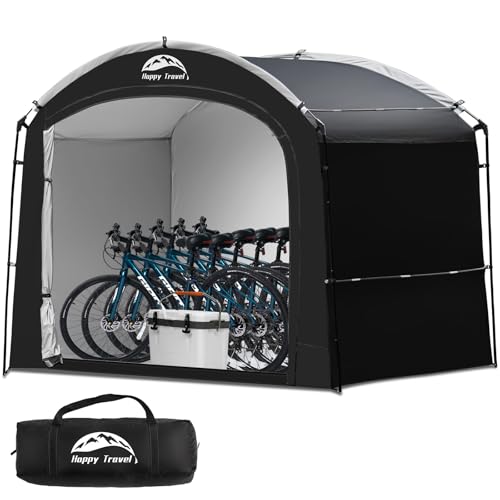
【Large Capacity Bike Shed】:The outdoor bike storage tent size has been increased to 86.5in×59in×73in, and we have adopted a new vertical design, which gives the outdoor shed more 30% storage space. It provides a large storage space and can easily store 4-5 adult bikes, so it is undoubtedly a good choice for group outdoor cycling(for outdoor bicycle storage), It can also be used for motorcycle riding and patio storage. It's a great gift for cycling enthusiasts.
7. Mobile Pallet Tool Cart
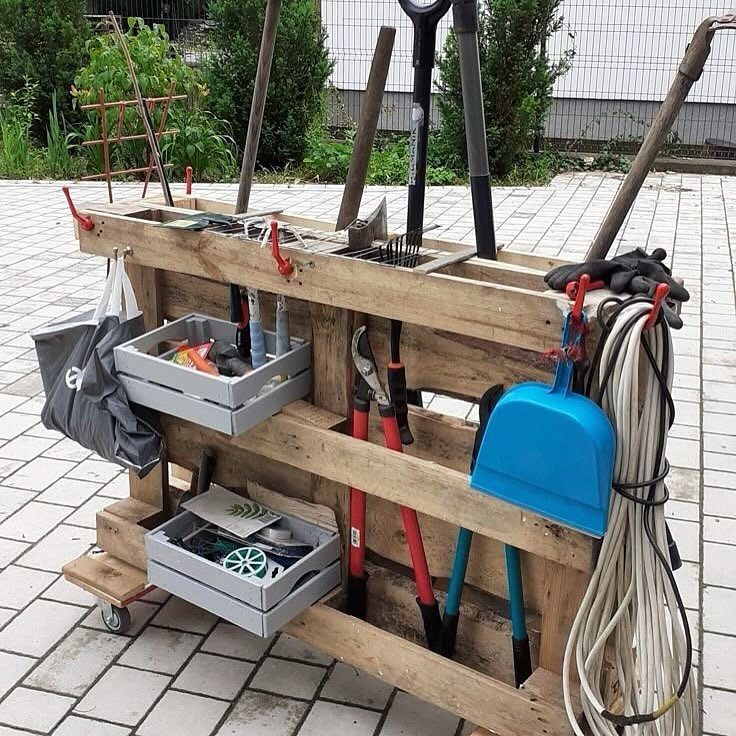
A pallet on casters turns scrap wood into rolling storage that follows you to the driveway or the back fence.
I would bolt the wheels through the center blocks, not the slats; the blocks carry weight the slats were never meant to hold. Swivel casters let you pivot in tight garage corners, though fixed wheels track straighter on long runs.
Grey bins are the detail I would copy: loose gloves, seed packets and hand tools stay sorted instead of sliding between the slats.
A scrap 2×4 screwed across the back keeps long-handled tools from tipping out when you roll over the threshold.
Check your casters before loading; outdoor-rated wheels with hard rubber tires handle concrete and grass without flat-spotting in the garage.

All Metal Material: Our garden tool organizer, both backboard and hooks are made of iron, which makes it more durable and solid.And its load-bearing capacity far exceeds other usual ABS material tool hooks. It is deal for various tools like shovel, rakes, bikes, broom, mop, trust that what you get is what you see,any dissatisfaction please contact our customer service team

【Smart Garden Tool Holder】: As a smart tool storage and tools organizer, Sttoraboks garden tool holder features 35 tool slots, delivering generous capacity within a compact footprint. Unique storage holes are engineered to accommodate various tool types and sizes, from gardening and lawn equipment to cleaning supplies. Height-adjustable feet ensure stability even on uneven ground. This yard tool organizer for garage simplifies tool classification, keeping your workspace neat and efficient.

【Upgraded Heavy-Duty Material】LBT garden tool storage rack has thickened the hanging board to prevent deformation and firmly fix it to the wall. The diameter of each hook is 9 millimeters, and thicker hooks can withstand greater weight. All hook and hanging plate welding points have been upgraded, and the welding point stability has been increased by 50%, making them more solid.
Considerations for Storage
I would measure the mower first, then shop for the rack or shelf that actually fits it. A riding mower needs floor space most wall systems will not cover; a push mower tucks in where a bike would.
I would mark out the mower’s length on the garage floor with tape and walk around it before committing to a corner.
How often you cut shapes what "accessible" means. If you mow weekly through three seasons, the mower stays where you can roll it out in one motion.
For monthly use, a back-of-garage slot or wall-mounted system works fine. I would store the spreader and edger you touch twice a year before I buried the mower behind them.
A weatherproof cover is the bare minimum if the mower lives outside.
UV degrades rubber seals and fuel lines over one summer; moisture rusts the deck faster than most people check. A purpose-built shed or enclosure beats a tarp that flaps in wind and traps condensation underneath.
Gasoline needs attention before any long-term storage. Drain the tank or run stabilizer through the carburetor; old fuel gums passages and costs more in shop time than the bottle of stabilizer.
Gas cans belong away from the water heater and any open flame, and a garage needs airflow if you are keeping the mower there.

SPACIOUS CAPACITY: Generous internal space accommodates large patio seat cushions, outdoor mats, and backyard accessories effortlessly.

【Three-sided Structure】Tri-sided gardening tool rack that integrates shelves, large tool slots, small tool racks, baskets, and hooks. The ingenious design allows the tool holder to store tools of various sizes and has a strong load-bearing capacity to realize comprehensive storage of garden tools.
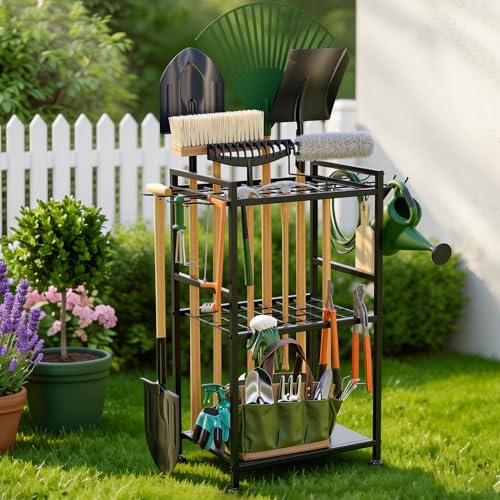
1. 【All-In-One High Density Storage】 Maximize your storage space with this high-capacity garden tool rack. It occupies only 16"×12" compact space yet can hold more than 35 tools. Equipped with 4 side slots and 5 hanging hooks, it easily stores 10 D-grip tools like pruning shears, garden trowels, short shovels and garden hoses. Ideal for tidying up messy spaces perfectly for gardening enthusiasts.
Maintenance Before Storage
After your last cut of the season, scrape the deck clean with a putty knife, wipe metal surfaces dry, and let the machine sit open for an hour before you roll it away.
I would do this outside; the debris is messy and you do not want it in the garage.
Change the oil before storage, not after.
Old oil breaks down over winter, and the acids in it etch bearing surfaces. Draining old oil and refilling it before winter beats a hard-starting engine come spring.
Electric and battery mowers need the battery removed if they sit more than a month.
Store it indoors, in a cool dry spot; an unheated garage drops below freezing in most of the country, and lithium cells degrade fast in cold.
I would check the manual for the specific temperature floor, but inside the house is the safe default.
Sharpen the blade before you put the mower away. A sharp blade cuts cleaner and strains the engine less; doing it in fall means one less task when the grass starts growing and your Saturdays are already full.

Universal Fit for 27-Gal Totes: Rail spacing adjusts from 18 1/8" to 20 1/2" to fit bins across different brands, making it compatible with all 27-gallon totes commonly sold at major warehouse clubs and home improvement retailers, including models from HDX, Greenmade, Sterilite, CX, Black & Yellow, and others (brand names for reference only, no affiliation). Works as garage shelving for totes or a storage rack for bins, meeting 27 gallon tote/bin storage rack needs.
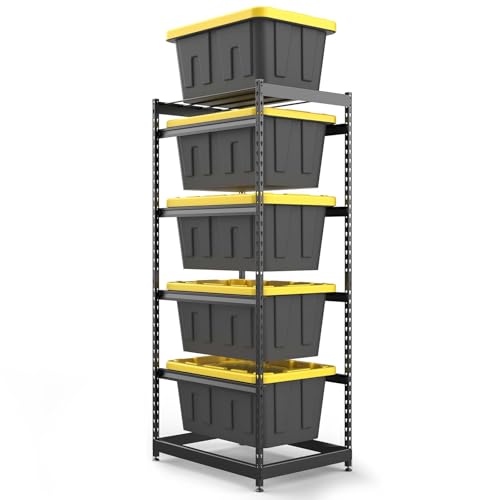
Universal Fit for 27-Gal Totes: Rail spacing adjusts from 18 1/8" to 20 1/2" to fit bins across different brands, making it compatible with all 27-gallon totes commonly sold at major warehouse clubs and home improvement retailers, including models from HDX, Greenmade, Sterilite, CX, Black & Yellow, and others (brand names for reference only, no affiliation). Works as garage shelving for totes or a storage rack for bins, meeting 27 gallon tote/bin storage rack needs.

Reliable Heavy-Duty Storage: Each shelf supports up to 200 lbs, with an 800 lb total capacity, making it ideal for tools, storage bins, cleaning supplies, and everyday household essentials. When assembled, the shelf measures 36" x 18" x 57", providing ample vertical storage space.
Safety and Security
A gas mower is a small fuel tank on wheels, and garages hold pilot lights, space heaters and power tools that throw sparks.
I would store gas cans on a low shelf, not the floor where a leak pools and vapor collects, and I would keep them well away from any flame source if the garage layout allows it.
Security matters for anything you roll outside. A shed with a hasp and padlock slows theft more than a garage door left up while you grab a drink.
For the garage itself, a bike lock through the mower’s wheel and frame anchors it to a wall stud; the lock costs less than your deductible.
Damp storage rusts blades and seizes cables faster than hard use does.

1200 lbs Tested, 750 lbs Rated: Our overhead garage storage rack undergoes rigorous 1.6 times load testing (1200 lbs) to ensure unmatched safety and durability, supporting up to 750 lbs for your tools and equipment.

Maximize Garage Space Efficiently: Use this ceiling storage for garage to free up valuable floor space. Ideal for bins, luggage, and bulky items with over 30 cubic feet of storage capacity

Maximize Garage Space Efficiently: Use this ceiling storage for garage to free up valuable floor space. Ideal for bins, luggage, and bulky items with over 30 cubic feet of storage capacity
Frequently Asked Questions
What is a good garage organizer for lawn tools?
2 pallets stood on edge in a corner catch rakes, shovels and brooms without drilling into the garage wall. I like it because it rents; when you move, it moves.
What is the best storage for lawn mowers?
A shed moves the mower out of the garage entirely, though a dedicated corner inside works if you measure the mower first and mark its length on the floor with tape.
A weatherproof cover is the bare minimum if it lives outside, since UV degrades rubber seals and moisture rusts the deck.
Is it OK to store a lawn mower in a shed?
A shed works fine. It blocks rain, sun and freeze-thaw cycles that slowly wear on the engine and deck.
Airflow matters more than most people think, especially with gas mowers. Stale fuel fumes in a sealed box are a real hazard.
What size shed will hold a lawn mower?
Push mower or riding mower?
A 6×4 ft. shed fits most push mowers with room to spare. A riding mower needs at least 8×6, and I would not go tight on that.