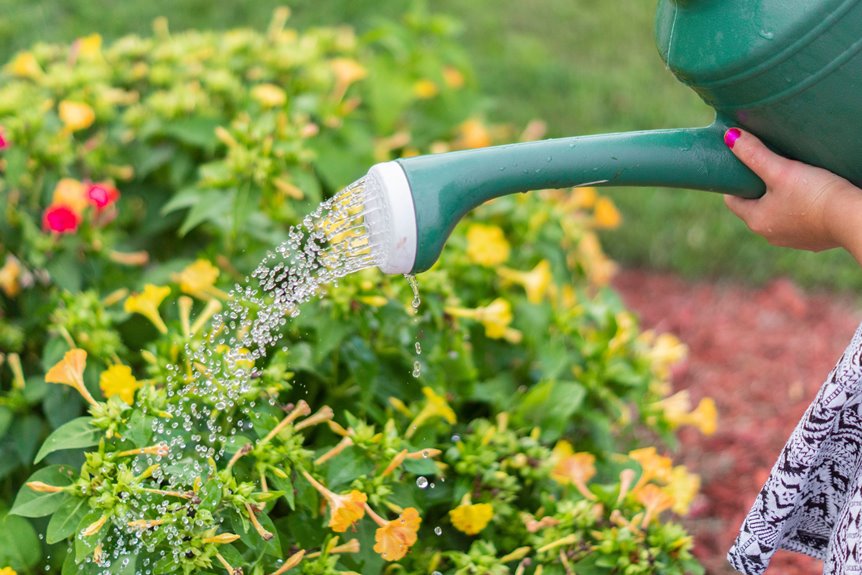
I water my outdoor plants about once a week, aiming for roughly one inch of water total from rain and my hose combined. Before I grab the hose, I stick my finger two inches into the soil. If it feels dry, I water deeply; if it’s still damp, I wait. This simple check helps prevent overwatering.
Potted plants tend to dry out faster and might need attention two to three times weekly, especially in summer heat. Adjusting your watering schedule based on your specific setup is essential for optimal plant health.
How Often Should You Water Outdoor Plants?
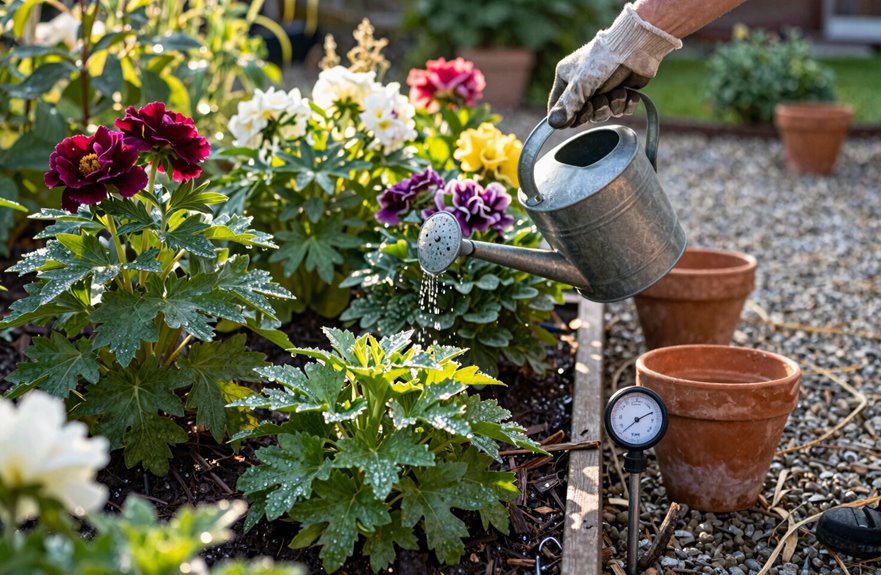
How do you know when your outdoor plants need water? Daily watering is often not the right approach. Most outdoor plants prefer moist soil, but they benefit from deep watering less frequently, which encourages stronger roots that reach down for moisture.
Skip the daily watering routine—deep, less frequent watering builds stronger, deeper roots.
Here’s what I find effective:
- Aim for about one inch of water per week from rain and watering combined.
- Increase that to two inches during heat waves.
- Avoid daily watering, as it’s typically too much.
I perform simple soil checks instead of guessing. I stick my finger two inches down. If it’s dry, it’s time to water. If it’s still damp, I wait.
For potted plants, more frequent watering is necessary since containers dry out faster—usually two or three times a week. Watering in the morning is preferable to reduce evaporation. Watch for wilting or soil pulling away from the edges of the pot. Your plants will indicate what they need.

Trusted Since 2015: Become one of the many plant lovers who rely on the proven accuracy of XLUX. Established in 2015, our soil moisture meter has earned over 60,000+ verified ratings for its consistent performance. While many many newer brands come and go, we provide the long-term reliability and quality that American households have trusted for over a decade.

Accurate Soil Moisture Detection: The XLUX Soil Moisture Meter can tell you if the soil deep inside your pot or garden is dry, moist or wet; whereas your eyes and fingers can only determine the moisture level of the soil surface. The probe is 5.5 inches (14 cm) longer than regular styles, allowing it to measure the soil moisture at the bottom of larger and deeper flower pots.

Accurate Soil Moisture Detection: The XLUX Soil Moisture Meter can tell you if the soil deep inside your pot or garden is dry, moist or wet; whereas your eyes and fingers can only determine the moisture level of the soil surface. The probe is 5.5 inches (14 cm) longer than regular styles, allowing it to measure the soil moisture at the bottom of larger and deeper flower pots.
Watering Potted Plants vs. In-Ground Gardens
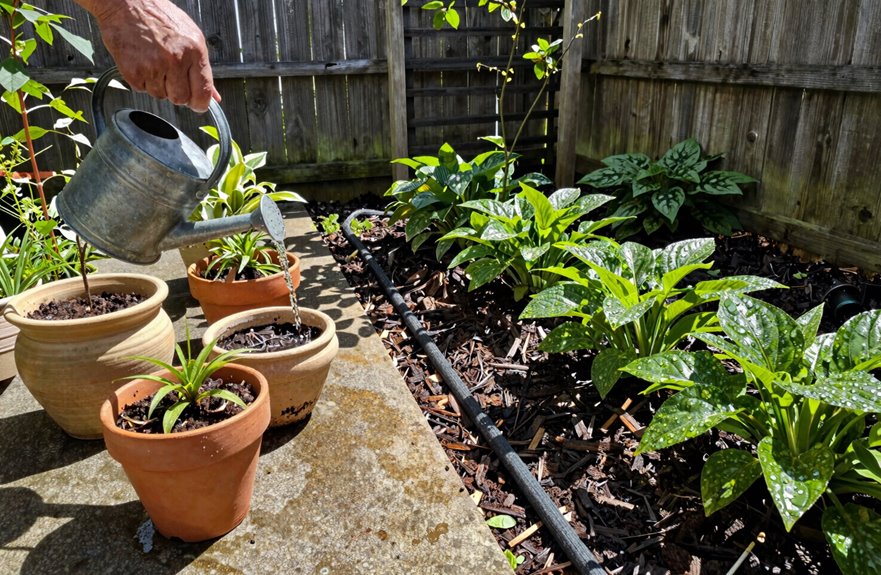
Why does my porch pot dry out faster than my garden bed? It’s because containers have limited soil that heats up quickly, losing moisture fast. My in-ground plants stretch their roots deep, tapping into hidden water reserves.
Here are some insights about watering potted plants versus my in-ground garden:
- Water more often in containers. My pots need attention almost daily when it’s sunny, while my established beds get by on weekly watering.
- Deep soak every time. I water until it flows from drainage holes, ensuring the root zone gets fully saturated. Light misting won’t suffice.
- Check with a water gauge. I stick my finger in or use a simple tool. Moisture control means checking before watering, not guessing.
- Adjust for heat. My containers require extra care during hot spells, while my in-ground plants manage dry stretches better.
We are learning together as we grow.

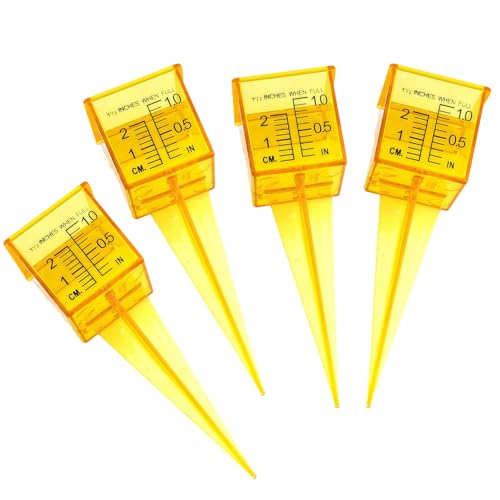
Durable Construction for Outdoor Use:Crafted from robust plastic material, this gauge is built to endure exposure to wind and rain, providing reliable service in outdoor environments for accurate water measurement
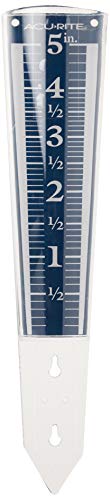
AcuRite rain gauge measures up to 5 inches of rainwater
How Much Water Do Outdoor Plants Actually Need?
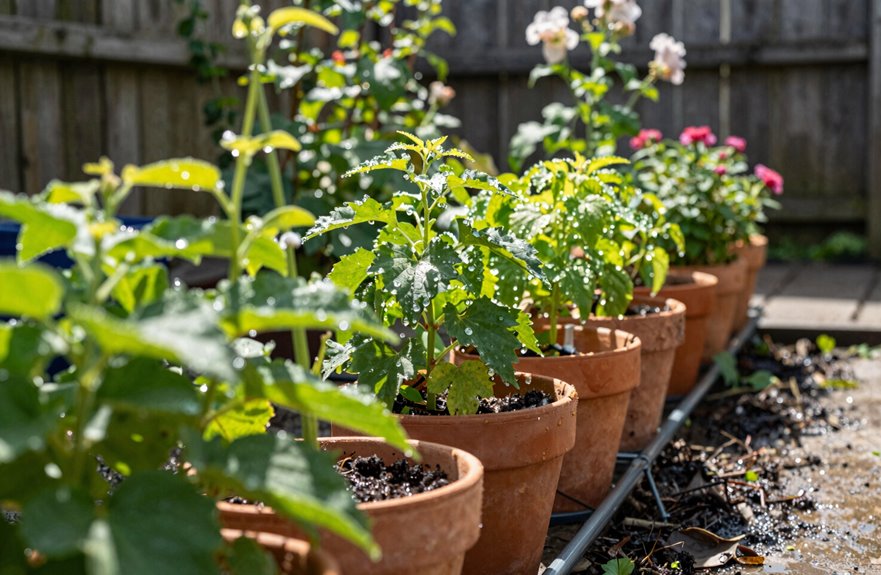
I’ve learned when to water my plants, but figuring out how much they actually need took some trial and error.
Here’s what works in my garden:
- I use a rain gauge to track 1 inch of water per week for my established plants.
- My containers need water 2–3 times weekly since they dry out faster.
- Newly planted seedlings get gentle, frequent drinks until their roots settle in.
- When heat hits, I adjust and increase to about 2 inches of water weekly.
Deep watering is more effective than daily sprinkles. I soak the soil thoroughly and then let it dry slightly. This promotes strong roots that reach down for moisture. Most gardeners can stick with roughly 1 inch per week, monitoring their plants’ response and making adjustments as needed.

Right Size - 1/2 Gallon - 64 oz size is very suitable for plant garden
Right Size - 1/2 Gallon - 64 oz size is very suitable for plant garden

High Quality Material: Made from high quality plastic, carrying capacity is strong, it is super durable, wear-resistant and can be used for a very long time.
When Is the Best Time to Water Outdoor Plants?
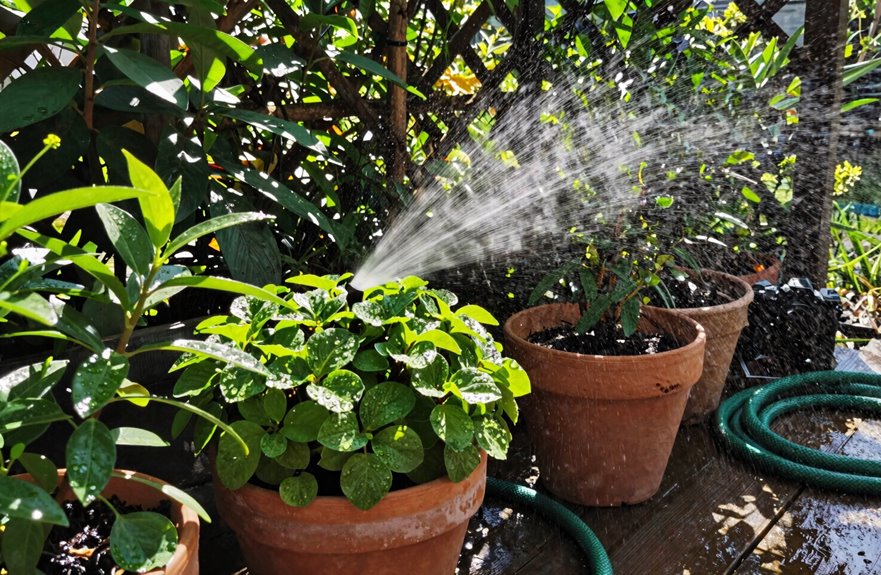
Timing is crucial when it comes to keeping plants healthy. Morning hours are ideal for watering, allowing plants to absorb moisture before the heat of the day and preventing damp conditions at night that can lead to fungus.
Here’s what I’ve learned about timing:
| Situation | What I Do |
|---|---|
| Morning routine | Water deeply to reach the root zone before 10 a.m. |
| Containers in sun | Check moisture daily; they dry out faster than beds |
| After rainfall | Skip watering, do soil checks instead |
| Drought/wilting signs | Water immediately, then adjust my schedule |
I always test the soil with my finger first. If it feels damp two inches down, I wait. For containers, I water more frequently but ensure the moisture soaks through rather than running off.

Be a Gardening Master with the help of our superior and complete Drip Irrigation Kit: 50ft flexible & durable PVC 5/16" Irrigation Tubing + 50ft 1/4" Drip Distribution Tubing + 2 x Female Thread Water Connectors for 5/16" Mainline + 20 Barbed Drip Emitters Stream + 10 Barbed Drip Emitters Vortex + 4 x 1-Way, 6 x 2-Way and 2 x 4-Way Barbed Splitters from 5/16" to 1/4" + 5 x 1/4" Tubing Tee Splitters + 2 x 5/16" Mainline End Plugs + 5 x 1/4" Distribution Tubing End Plugs

【Upgraded Tube Design & Water Saving】 Our adjustable garden watering system is upgraded to 1/2” diameter to support high water pressure. The 1/2” tee connector in the package so you can easily set up 2 drip irrigation systems as needed. Garden watering systems minimize stage water loss by recharging water directly to plant roots. While traditional irrigation often results in wasted water, this drip irrigation system saves up to 70% of water, no need for manual watering, saves water.

【Indoor & Outdoor Versatility, All-Season Smart Irrigation】:HEKIWAY Designed for year-round convenience, this automatic drip irrigation system works seamlessly both indoors and outdoors. During winter, simply charge it via the Type-C port to ensure continuous watering for your indoor plants—even in cold weather. In warmer seasons, the solar panel powers the system automatically, delivering worry-free, energy-efficient watering all day long
Are You Overwatering or Underwatering?
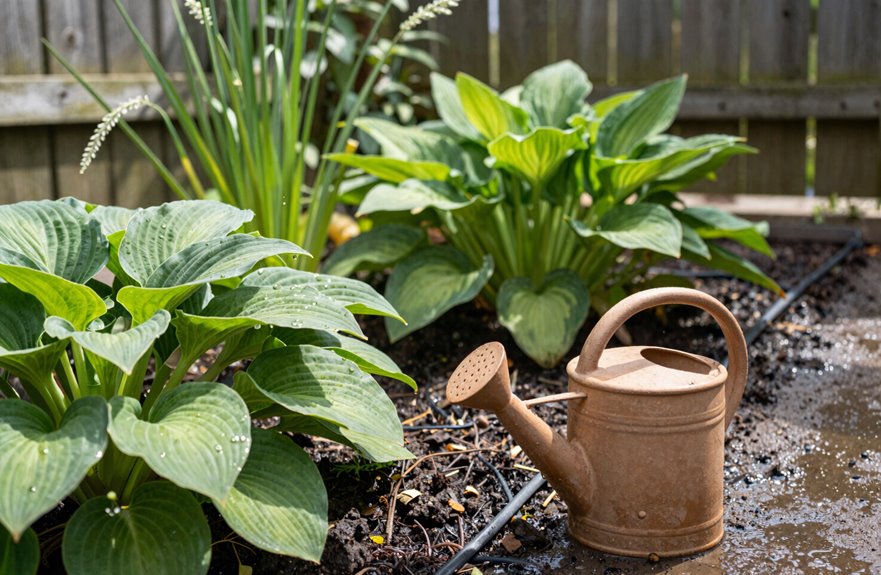
How can you tell if you’re giving your plants too much love or not enough? I use these simple signs to figure out what my plants really need.
- Soft, yellow leaves with brown tips mean I’m overwatering and rotting the roots.
- Curling, wilting leaves with faded color indicate I’m underwatering and the soil’s too dry.
- Mouldy-smelling soil or surface gaps signal that my watering frequency is off track.
- Cracked, dusty soil after half a day shows I need to water more often.
I always check the top inch first. If it’s dry, I water. If there’s still moisture, I wait. For my containers, I water lightly two or three times weekly. My in-ground plants get deep watering less often, soaking right to the root zone. Container versus in-ground matters; deep roots require patience, not daily splashes.

Vacation-Proof Hydration: Ensure your plants stay lush and vibrant even when you're away with our Glass Globe Watering System, designed for effortless watering during vacations.

DIY Vacation Self-watering System: Put the one end to a water source, this watering wick will transport water to the other end automatically, and drip within 15 minutes (the practical time depends on the length of the rope you cut off; make this watering rope completely soaked in water before use then it will drip instantly). Easy to make a DIY automatic watering device system, help you care your plants while you are away from home or when you go outside or on business
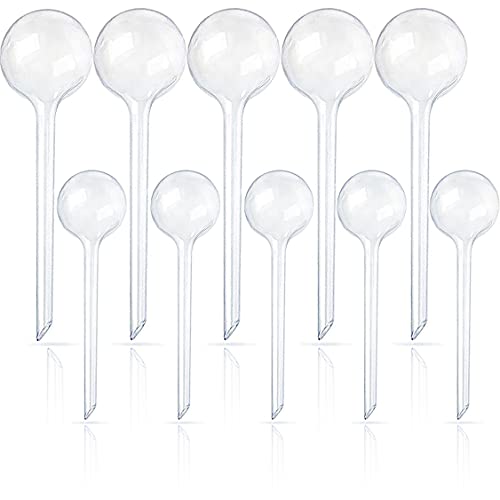
Package:Package includes 10 plant watering globes,L:3.15x3.15x10.6 inches/8x8x27cm.S:1.96x1.96x5.3 inches/5x5x13.5 cm.You can use these watering globes with your family.