
These ideas range from a bamboo divider set to a wall-mounted steel pot rack that needs a drill and stud finder. What picks one over another is whether you own the walls or just the drawer space inside them.
The black metal two-tier rack that clears a gooseneck faucet without a single screw proves you can gain storage without committing to hardware.
1. Dividers to Store Baking Sheets Vertically
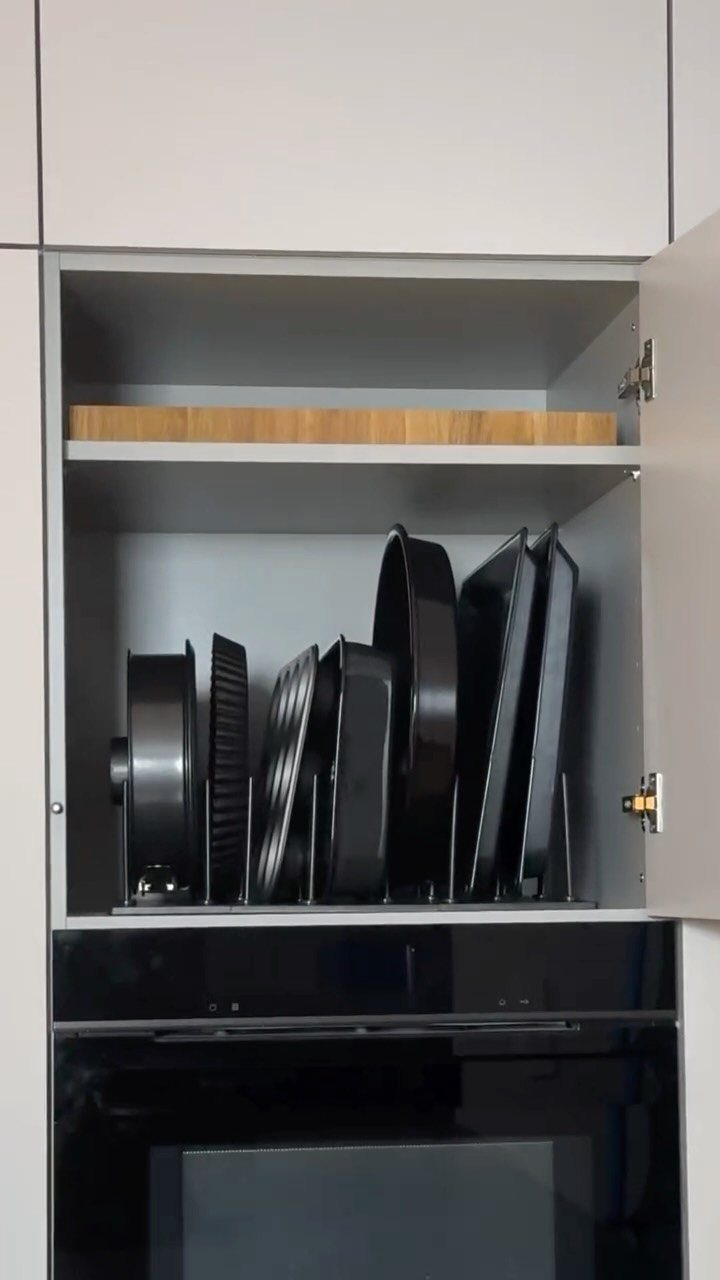
Vertical dividers turn a cabinet’s depth into storage for baking sheets, muffin tins, and cutting boards that otherwise stack into an unworkable pile.
Check the cabinet height against your tallest sheet before buying; metal dividers work well, but wood or coated wire versions do the same job.
This installs with screws or adhesive brackets, so pick the method that matches your cabinet material and how much weight you plan to load.

🎁【Suitable for Different Cutting Boards】 -- The Fikoksol cutting board storage rack has 5 storage slots. This product was updated in April 2025. The new model measures 7.87 x 7.24 x 3.28 inches, with each slot being 1.2 inches wide. ❗❗❗But please note that this storage rack is not suitable for thick kitchen utensils that are thicker than 1.20 inches, such as pots and deep bakewares.Please confirm the product size before purchasing.

FLEXIBLE TRAY DIVIDERS - Includes 6 pack cabinet dividers; Dividers SIZE: 0.2"W x 23.5"D x 23.7"H; Rails SIZE: 0.9"W x 23.5"D x 0.5"H; Dividers and rails may need to be trimmed per application
2. Pull-Out Cabinets for Pots and Pans
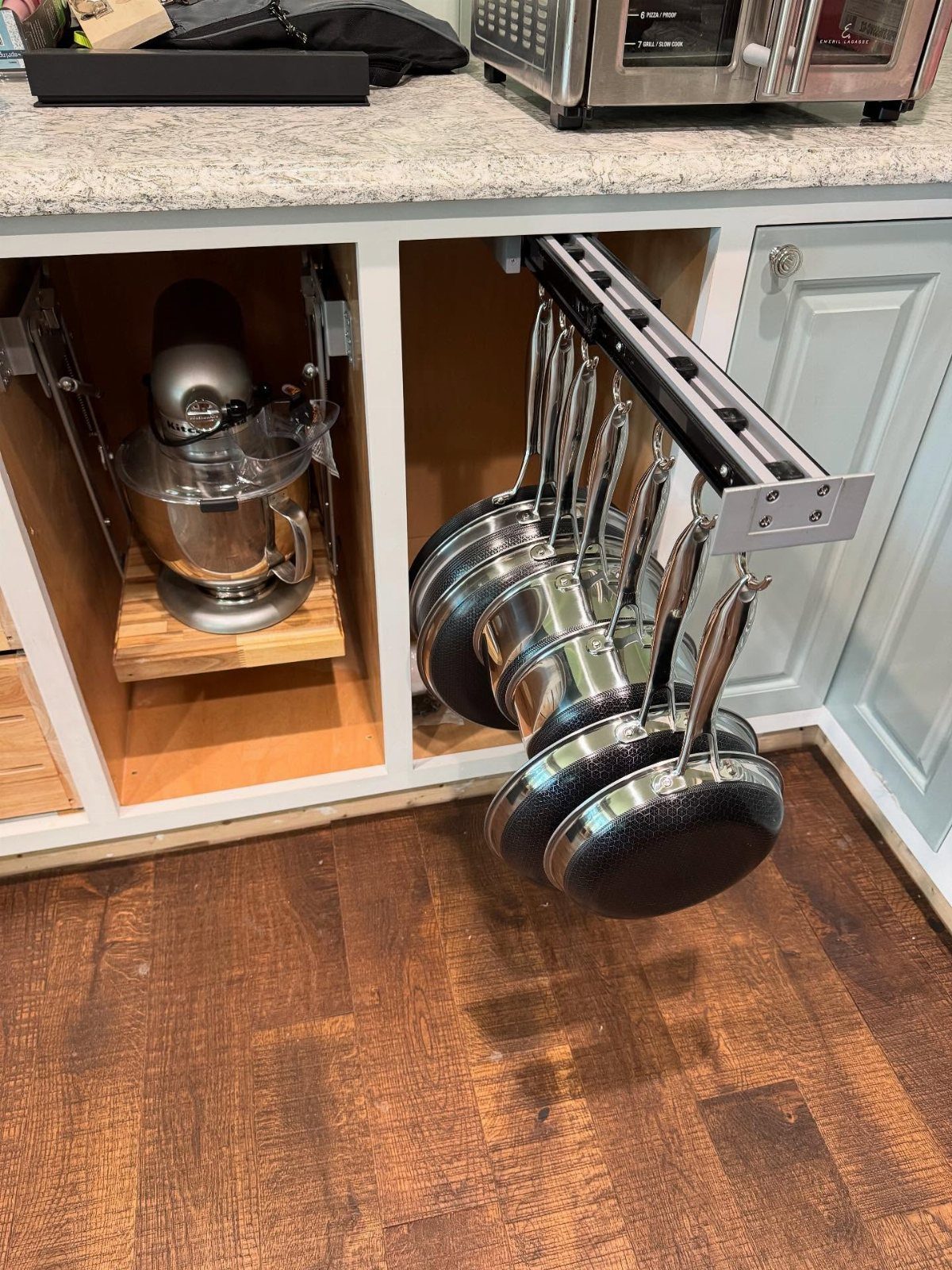
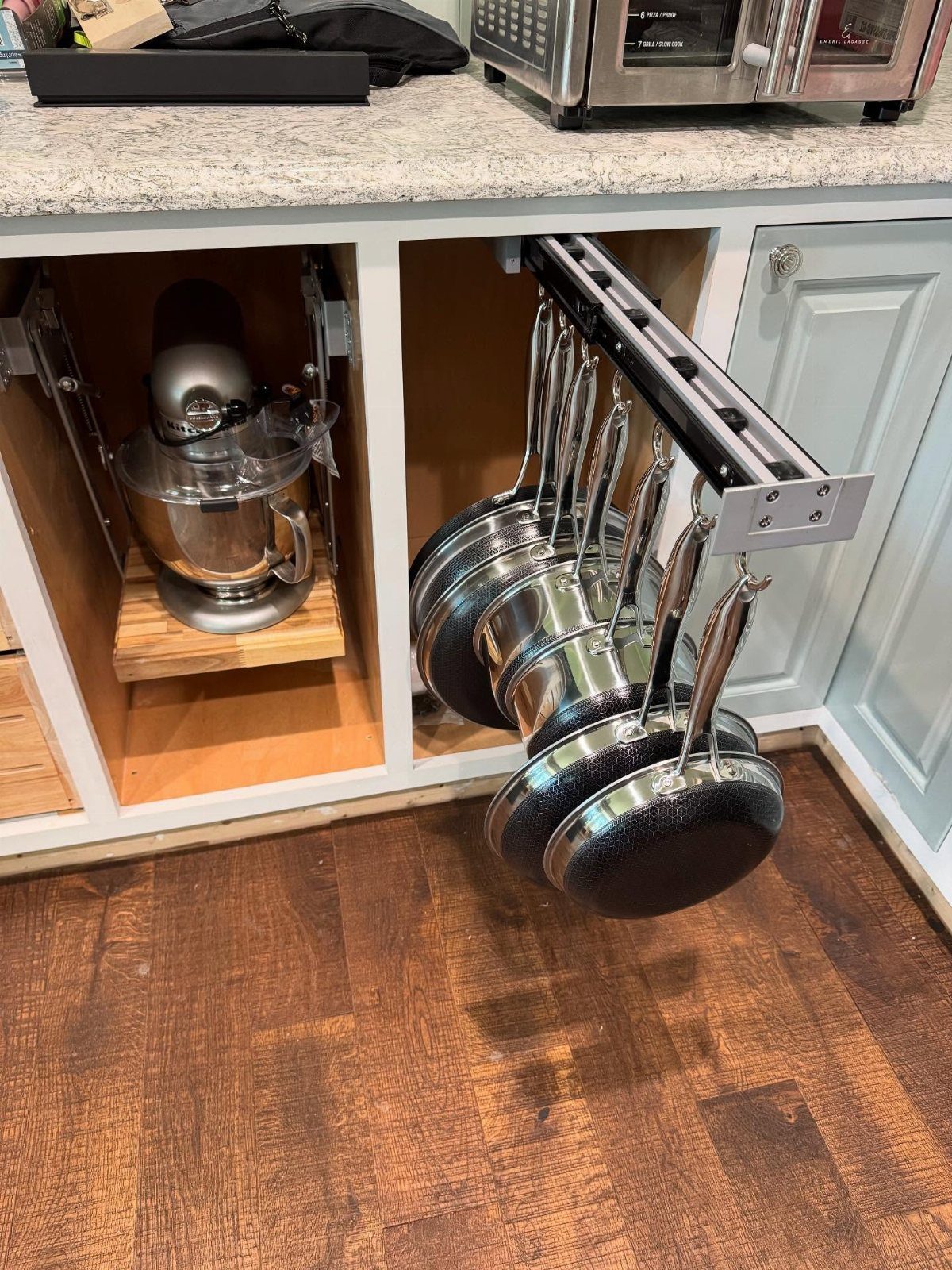
A pull-out rack brings pots and pans to you instead of sending you crawling into the cabinet’s back corner.
A two-tier version with hooks on the upper level for pans and a solid shelf below keeps lids or a mixer lift within reach.
I would measure my cabinet’s full depth, including the door frame, before ordering; most need enough clearance to pull out without catching.
The hardware is the main expense, and you will need a drill with a cabinet-bit for the slide mounts.

【Warm Tip】: Before purchasing, measure the depth and height of your cabinet to ensure that this pot and pan organizer comfortably fits with pans and lids in place. It fit most cabinets and counters but does not fit framed cabinet. Suitable for 6-10 inch lightweight pan. Please ensure that the cabinet width is greater than 10 inches, depth is greater than 20 inches, and height is greater than 12 inches.

【Warm Reminder!!!】Please measure your cabinets before ordering! and leave enough space for the handles of your pots and pans, the cabinet fronts must be frameless. Should you have any questions or encounter any issues, please don't hesitate to contact us. We aim to respond to you within 12 hours.

【Warm Reminder】Please measure your cabinets before ordering, and the cabinet fronts must be frameless. Should you have any questions or encounter any issues, please don't hesitate to contact us. We aim to respond to your queries within 12 hours.
3. Utilize Drawer Dividers
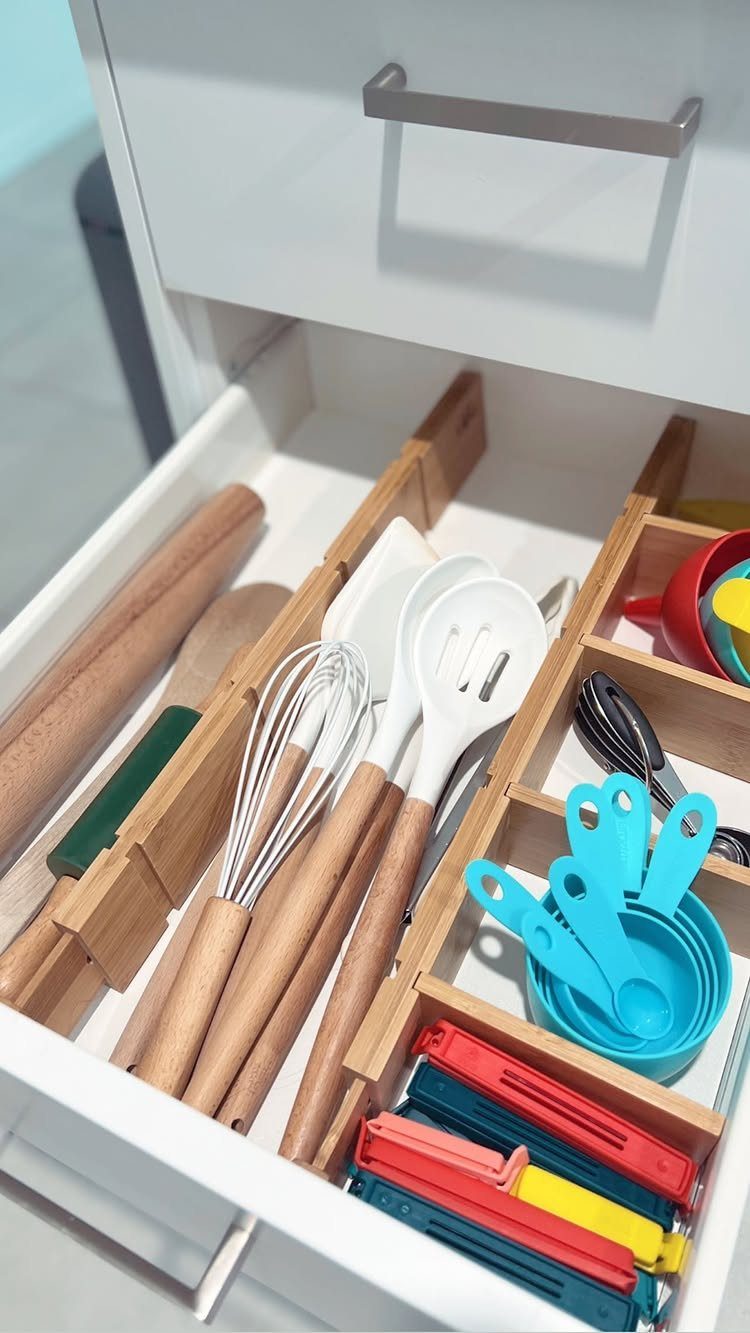
Bamboo dividers let you build custom slots around what you actually own, not around a manufacturer’s idea of a standard utensil.
Adjustable dividers with a spring-loaded end that pushes out to grip the drawer sides stay put when you open and close.
I would buy one set, test the fit, then add more; most drawers need two or three to keep everything from sliding around. Skip the pre-set plastic trays unless every item you own matches their slots exactly.

Perfect Drawer Organizer: This is a simple and easy way to organize kitchen utensils or clothes; Keep everything neat, organized and access convenience

Drawer dividers are the perfect solution to organize open drawers to keep things from shifting.

Premium Natural Bamboo: Crafted from solid bamboo with a smooth polished surface; sturdy for daily use; natural finish complements most cabinet and drawer interiors in kitchen bedroom or office
4. Maximize Vertical Space
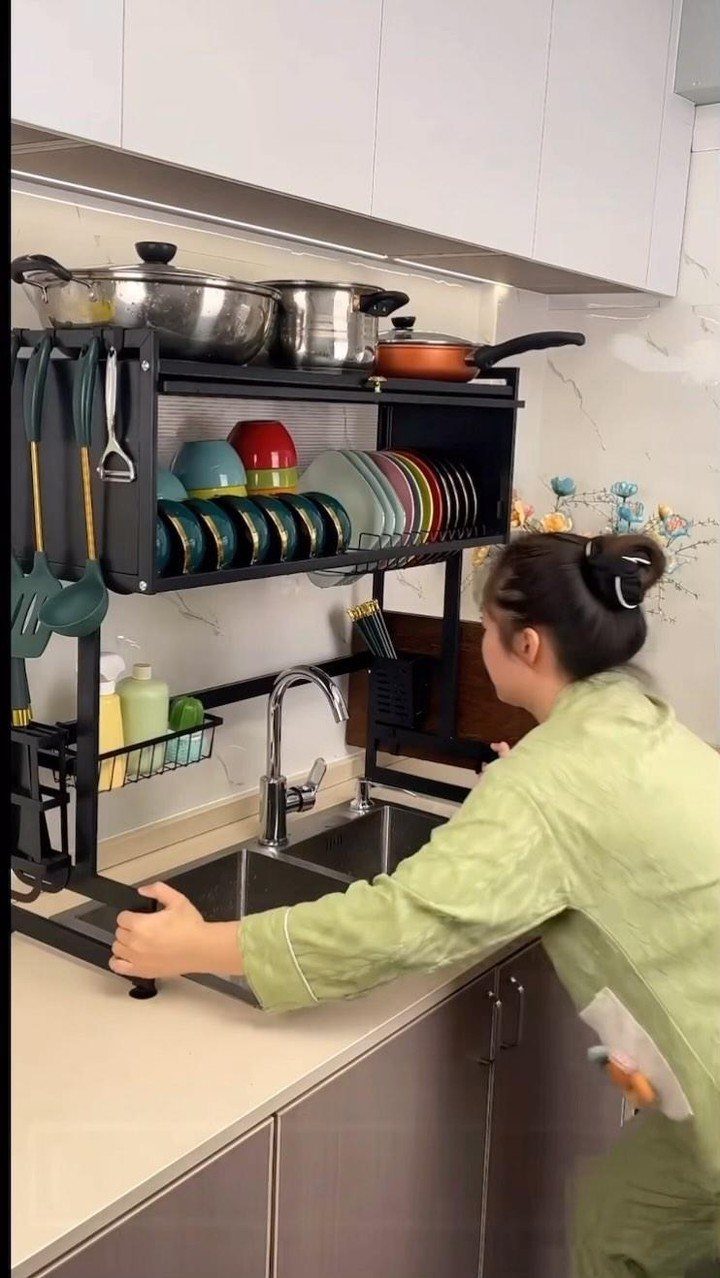
A two-tier rack over the sink uses vertical space that cabinets cannot reach and keeps dishes where they drip dry.
A black metal frame with a slatted top for plates and a lower shelf for glasses or utensils doubles your counter space without drilling into cabinets.
I would check my faucet height against the rack’s bottom bar before buying; most need enough clearance to fit around a standard gooseneck. This works best when you wash by hand daily and have no dishwasher to fill.

LARGE CAPACITY: The Sakugi dish rack for kitchen counter boasts an impressive capacity that can accommodate a variety of tableware and cleaning supplies, including bowls, dishes, knives, wine glasses, cutting boards, sponges, brushes, and more. With just one dish rack over sink, you can easily organize and keep your countertop tidy.

【Perfect size】Rack dimensions 35"L x 10.63"W x 21.26"H, adjustable to fit most sinks. Ensure faucet is under 21.26" high and cabinet bottom to counter top height is at least 25.6". Please note potential 0.4-0.8 inch measurement error, so measure carefully before purchasing.

2026 NEW VERSION UPDATED NOW!!!
5. Dedicated Spice Rack
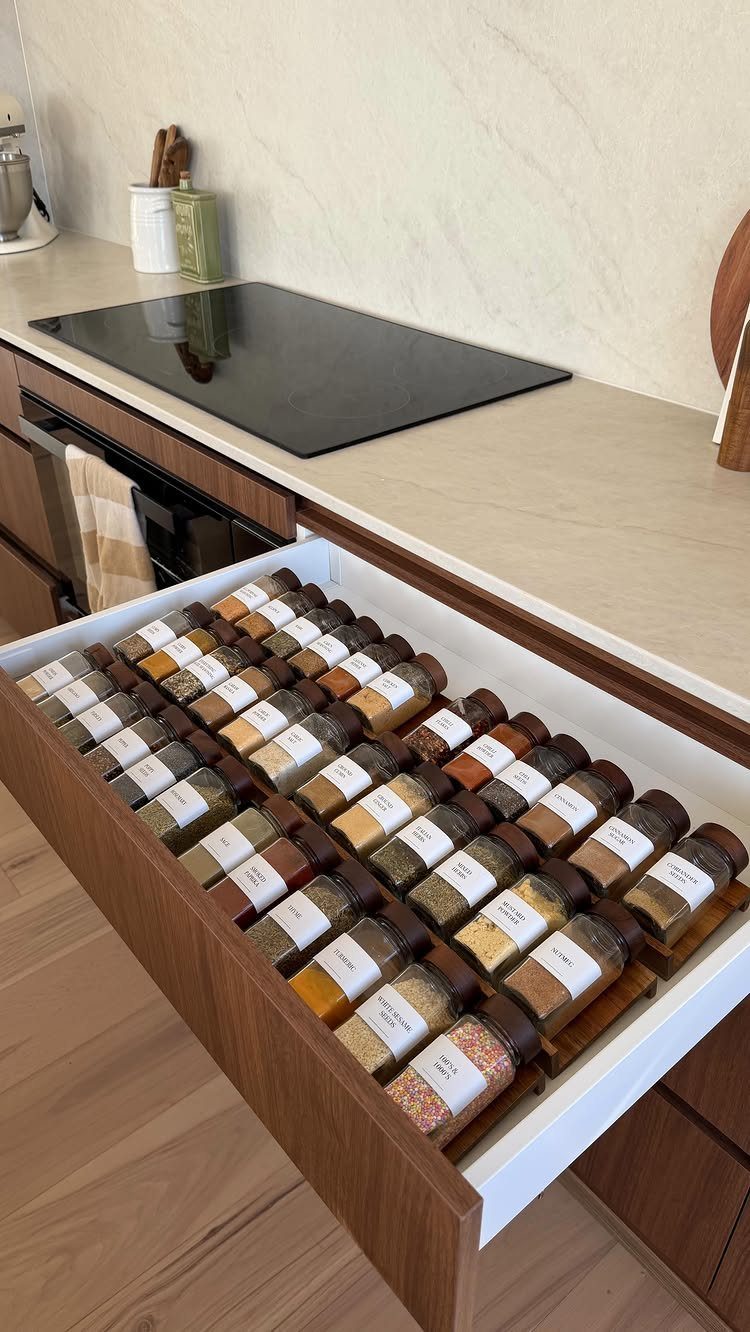
Tiered trays inside a drawer bring every spice jar into view at once, no crouching or unstacking required. A wooden three-level insert with matching glass jars and printed labels facing forward keeps spices visible and easy to grab while cooking.
I would transfer spices to uniform jars for this system to work; mismatched bottles waste the tiered space and hide labels. The insert is the main purchase, and refilling your own jars costs less than buying pre-filled sets.

【Sturdy and Durable Spice Organizer】: Our spice rack is made of high quality transparent acrylic material, which is strong and durable, has a long service life. The L-shaped structure can firmly support jars of different weights.
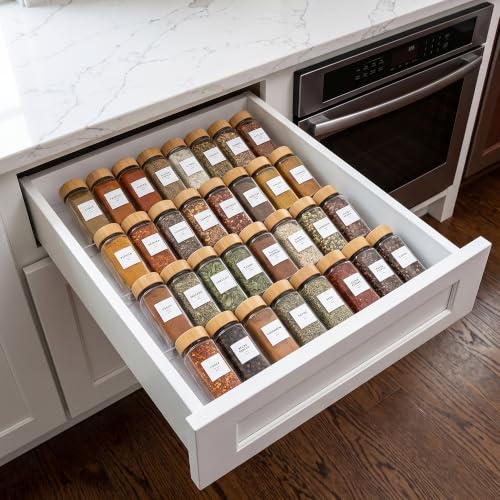
BEAUTIFULLY SORTED SPICE RACKS: Modular acrylic drawer spice organizer stacks vertically or side-by-side expanding from 13"–26" wide. Create a custom in-drawer spice rack that fits your space and style.

IMPORTANT NOTICE - This spice drawer organizer needs at least 3 inches deep drawer space to fit in when you add jars on; PLEASE MAKE SURE YOUR DRAWER IS AT LEAST 3" DEEP
6. Hang a Pot Rack
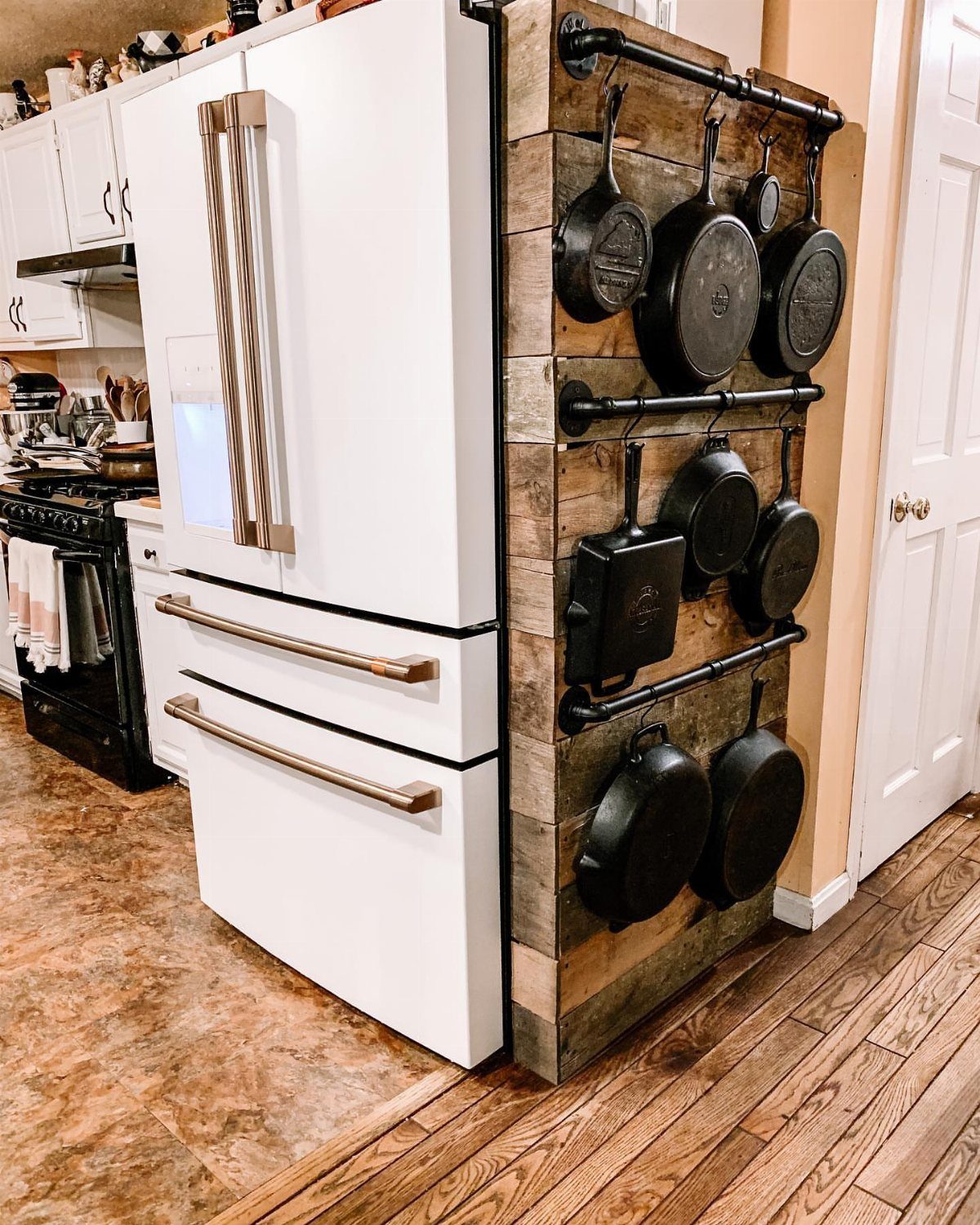
Black steel rails with S-hooks hold skillets flat against the wall and keep the cooking surface from knocking around.
I would mount into studs or use toggle bolts rated for heavy loads; a full skillet carries more weight than it looks like.
This suits renters only if their lease allows wall anchors, since the holes will show when the rack comes down.

Wooden Tray Dividers: Our 4 tier tray dividers for cabinets' horizontal size is 16.73 x 12.4 x 8.94 inches (L x W x H), and the vertical size is 8.94 x 16.73 x 12.4 inches (L x W x H), with each layer separated by a distance of 2.09 inches (W).

Multipurpose: Our bakeware rack is perfect for organizing a baking/cookie sheet, big dish or plate, tray, pans, tins, and cutting boards. Its also rust resistant, so it can also be a cooling/drying rack. No assembly or tools are required!

FLEXIBLE STORAGE: Includes seven adjustable dividers to organize your bakeware, cutting boards, and pans in a lower cabinet or pantry. Dividers keep bakeware upright and separated, so you can quickly see and grab what you need.
7. Sliding Hanging Utensil Organizer
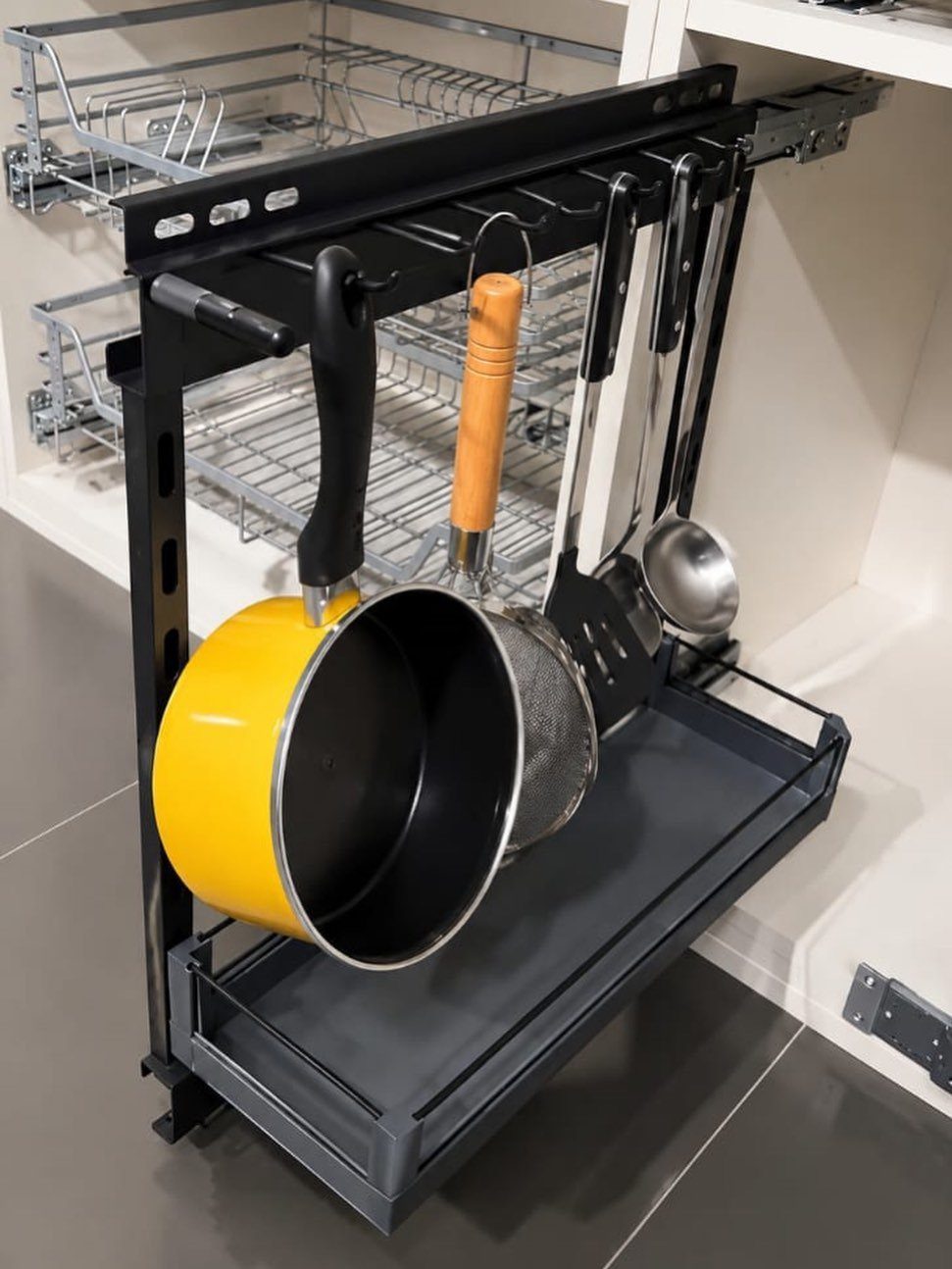
A pull-out rack mounted under an upper cabinet brings utensils down where you can reach them and slides back when you need the counter.
The hooks on top hold pots, strainers, spatulas and ladles that would otherwise clutter a drawer, while a lower tray catches anything that drips.
I would check my cabinet depth against the rack’s closed length; anything that sticks out becomes a hazard when you walk by.
This needs a solid mount into the cabinet base, so skip it if your upper cabinets are thin laminate rather than solid wood or plywood.

【Expandable Depth & Adjustable Dividers】This pots and pans organizer under cabinet is an expandable depth design, which measures (16.54 D"~23.23" D)*7.87" W*8.66" H, you can adjust the size according to the depth of the cabinet, making full use of your cabinet space. It contains 10 adjustable U-dividers and can hold at least 9 items, such as pots, pans, cutting boards, lids, etc. Providing a super large storage capacity, Providing a clean and tidy kitchen environment.

Adjustable Pot Rack For Cabinet - The New Design pot organizers with 10 hooks is made of stainless steel and Aluminum alloy, high-texture paint frame,Newly upgraded metal base for greater durability. Adjustable Pot Racks is 22inch (56cm) long and is suitable for Cabinet with a depth of more than 23inch (58cm).

【Customized Guardrail/Handle Bracket】We have fully studied consumers' pain points and needs. This pot and pan organizer is a special design and exclusive patents, equipped with 2 adjustable guardrails on the side to support the handle of pots and pans to ensure its safety, stability, and sturdiness. The guardrail can be adjusted freely, and you can install it on the left or right side according to your needs.
8. Tiered Countertop Pan Stand
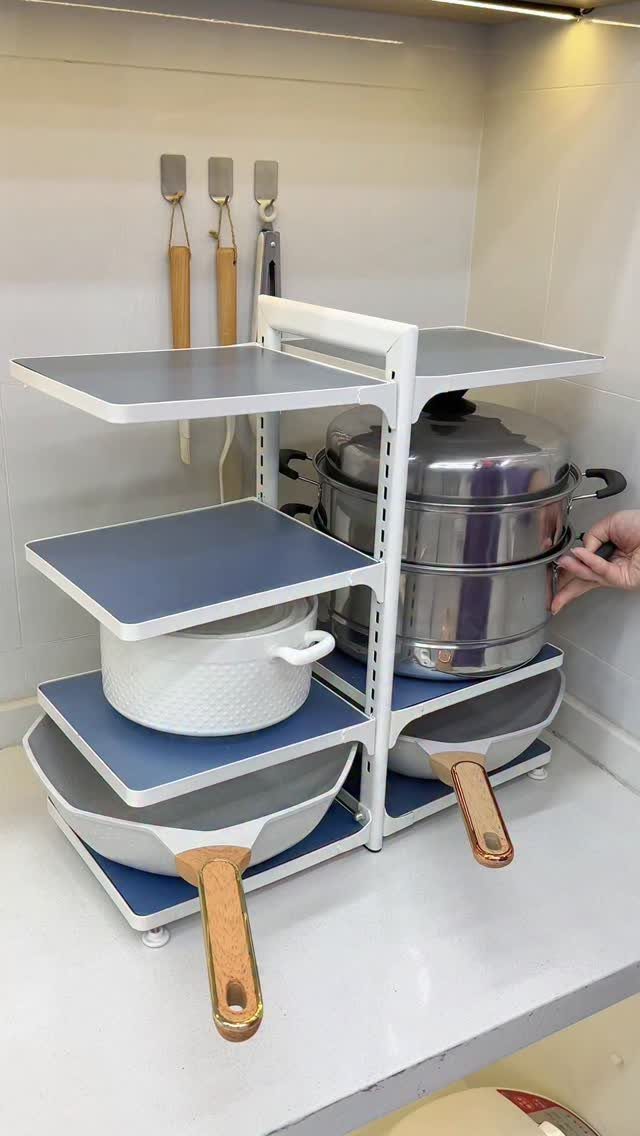
A freestanding tiered stand on the counter stacks pans vertically when cabinet space runs short.
A white metal frame like this one holds a steamer on top, a pot in the middle, and pans below, each level taking weight without pressing on the piece beneath.
I would measure my counter height against the stand’s total height; a tall unit blocks sightlines across the kitchen and collects grease near the stove.
This trades counter workspace for storage, so it suits kitchens with unused corner space or an island where the stand can sit out of the main work path.

PREMIUM BAMBOO: Bamboo adjustable drawer dividers are durable, sturdy and have a great design,bringing you super smooth, sturdy & durable drawer dividers for your healthy life.

4 Drawer Dividers with 9 Inserts: Customize your drawer with our bamboo dividers and inserts; You can organize everything from silverware to utensils. The mini dividers can be easily inserted to make smaller or larger storage parts; LENGTH SIZE: Expandable from 17" to 22" Long

Multipurpose Use: This utensil drawer organizer is perfect for storing a wide range of items beyond just silverware. It can neatly store cutlery, stationery, jewelry, tools, and even office supplies. Perfect for use in the kitchen, living room, bedroom, office, and utility room, this silverware drawer organizer offers versatile storage for multiple items across various settings.
9. Cabinet Pan Organizer Rack
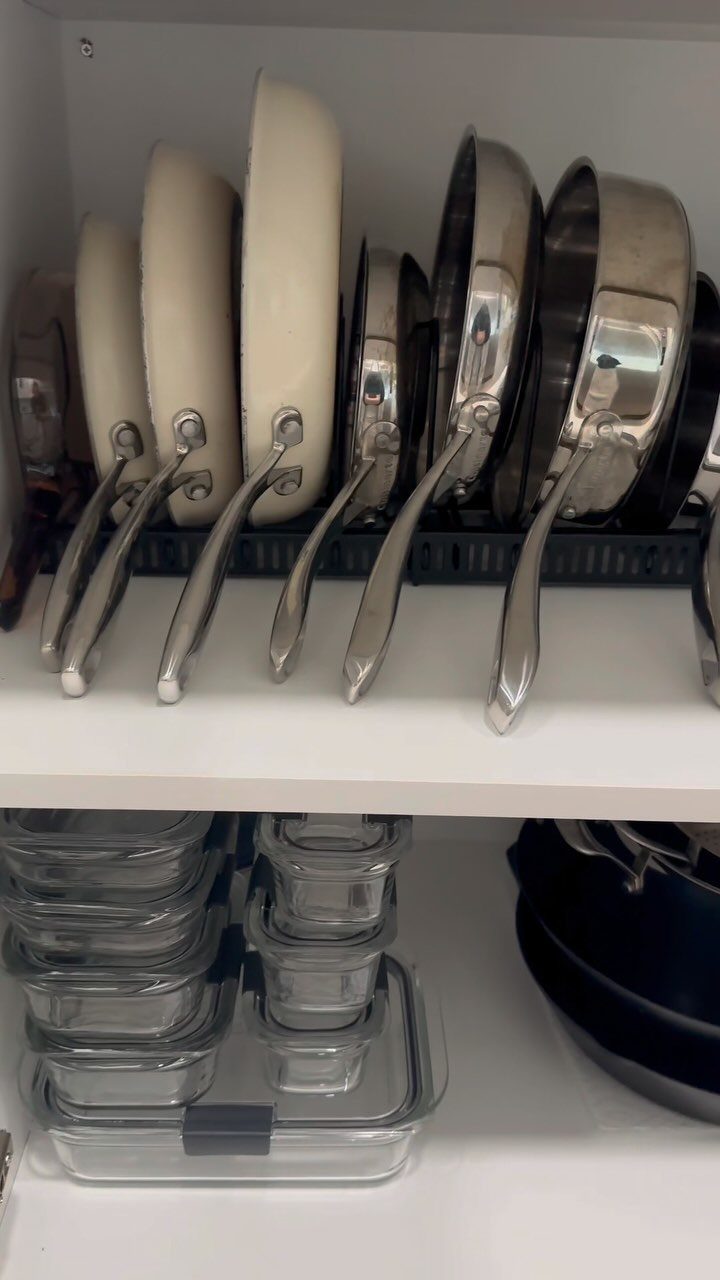
A slotted wire rack inside a cabinet shelf keeps frying pans upright and separate, so you can pull one out without toppling the stack.
A black rack like this sits on the upper shelf with pans slotted front to back, leaving room below for glass containers.
I would count my pans and measure their diameters against the slot width before buying; a rack too narrow for your largest skillet wastes the space it occupies.
This needs a shelf you can spare entirely, since the rack’s footprint takes most of it.

【Perfect size】Rack dimensions 35"L x 10.63"W x 21.26"H, adjustable to fit most sinks. Ensure faucet is under 21.26" high and cabinet bottom to counter top height is at least 25.6". Please note potential 0.4-0.8 inch measurement error, so measure carefully before purchasing.

【Perfect size】Rack dimensions 35"L x 10.63"W x 21.26"H, adjustable to fit most sinks. Ensure faucet is under 21.26" high and cabinet bottom to counter top height is at least 25.6". Please note potential 0.4-0.8 inch measurement error, so measure carefully before purchasing.

LARGE STORAGE SPACE: Maximize your storage space effortlessly with the Kitsure large-capacity drying rack for kitchen sink. Its expansive, two-tier design boasts ample space to keep your daily cleaning routine efficient and accommodate various cleaning supplies like bowls, dishes, knives, and wine glasses. Experience a tidy countertop with Kitsure!
Benefits of Kitchen Organization
A well-organized kitchen buys you back the minutes you spend hunting for the right lid or digging past three pots to reach the one on the bottom.
That time adds up across a week of cooking, and the saved minutes usually turn into actually making dinner rather than giving up and ordering out.
Clutter also weighs on you more than most people admit. A counter stacked with unused appliances and a sink buried under dishes raises the mental cost of walking in to start a meal.
Clearing that visual load makes the kitchen a room you want to enter, which is half the battle in cooking at home regularly.
Safety matters in ways the tidy pictures do not always show.
A knife loose in a drawer, a heavy pot balanced on a high shelf you cannot see past, or a mixer cord snaking across a walkway are accidents waiting for a distracted moment.
Proper storage of heavy and sharp items is not about looks; it is about not getting hurt.
Cleanliness follows organization because you can see what needs wiping.
Spills under a stack of pans or crumbs behind a row of jars sit undetected until they attract pests or smell. An organized space lets you spot problems while they are still small.
Kitchens, often the most frequented rooms in a home, are prime spots for clutter accumulation. A disorganized kitchen isn’t just unappealing to the eye; it significantly complicates cooking and cleaning tasks.

Important Notice: This bamboo spice drawer organizer requires at least 3.1 inches of drawer depth to fit properly when you place jars in it. Please make sure your drawer is deeper than 3.1 inches before buying.

Customize Your Spice Storage: Enhance your culinary space with our spice organizer for drawer that adapts to your needs. This horizontally expandable spice organizer fits drawers from 11" to 22" wide, with a required interior height of ≥ 3". Choose the compact 4 Pack for shallower drawers, or maximize capacity with the 8 Pack for deeper storage. Create a seamless spice solution tailored to your kitchen

Tiered design prevents round and square spice jars from rolling and provides visibility to labels
Frequently Asked Questions
How can I organize my kitchen tools and equipment?
Start with drawer dividers for utensils, vertical dividers for baking sheets, and pull-out racks for pots and pans. These 3 systems handle the tools most people use daily and keep everything reachable without stacking.
Start with what you actually own, then buy the organizer that fits those tools, not a preset system that forces you to rearrange your whole drawer.
What is the best kitchen utensil organizer?
Adjustable bamboo dividers win for most people because they adapt to your drawer and your tools instead of dictating both.
The spring-loaded ends that push out to grip the drawer sides keep them from shifting, which is the main failure point of cheaper trays. Skip anything with fixed slots unless every utensil you own happens to match them exactly.