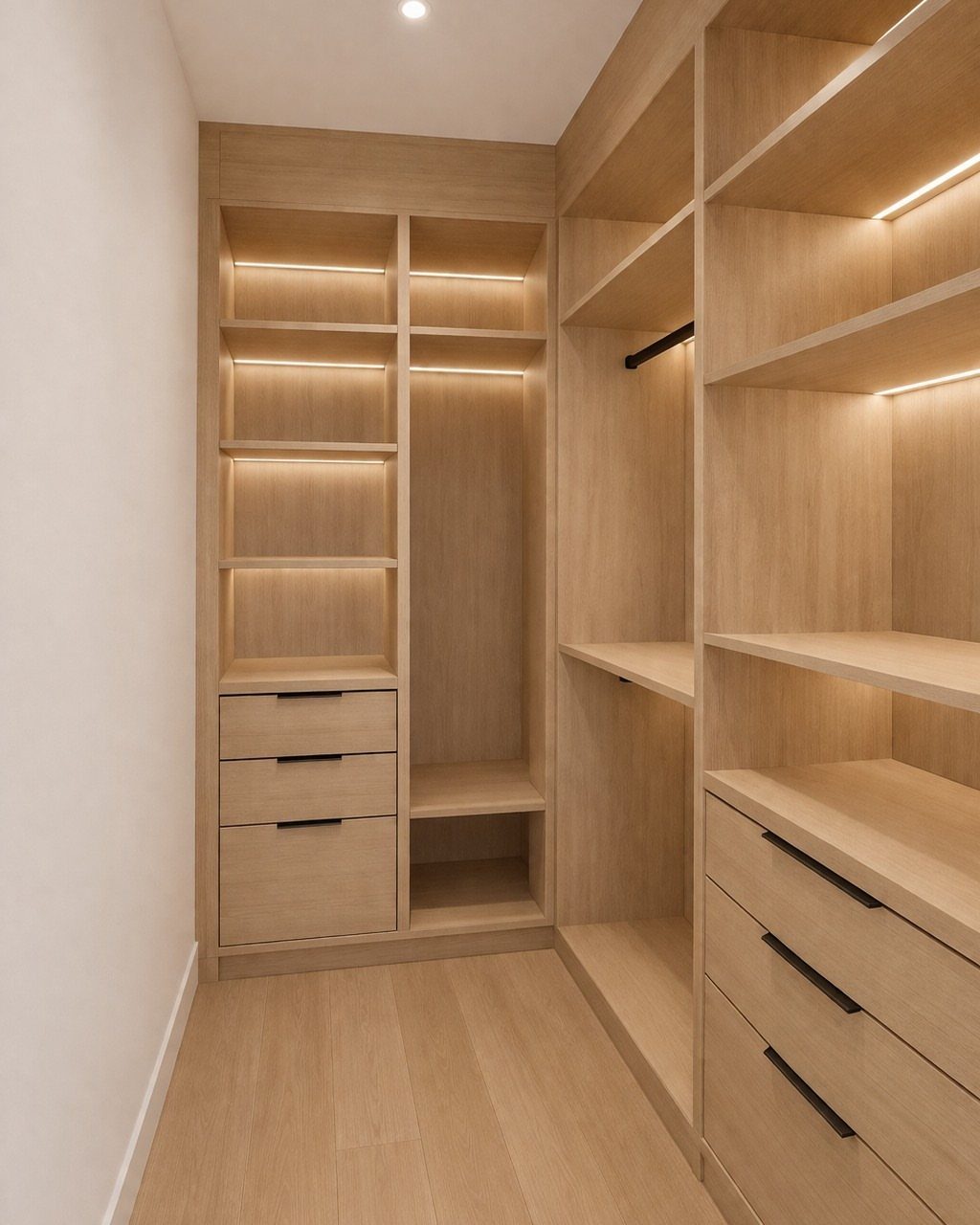
These 9 walk-in closet storage ideas run from a Saturday morning re-sort to a full custom build with hardwired lighting and a center island.
The deciding factor is floor space: narrow closets need vertical solutions like double hanging rods and high shelves, while only a wide layout justifies an island with 36 inches of clearance on all sides.
I would hardwire LED strips at 2700K or 3000K if I were already opening walls; the warm white keeps colors accurate, and anything cooler turns fabrics gray.
1. High Shelves
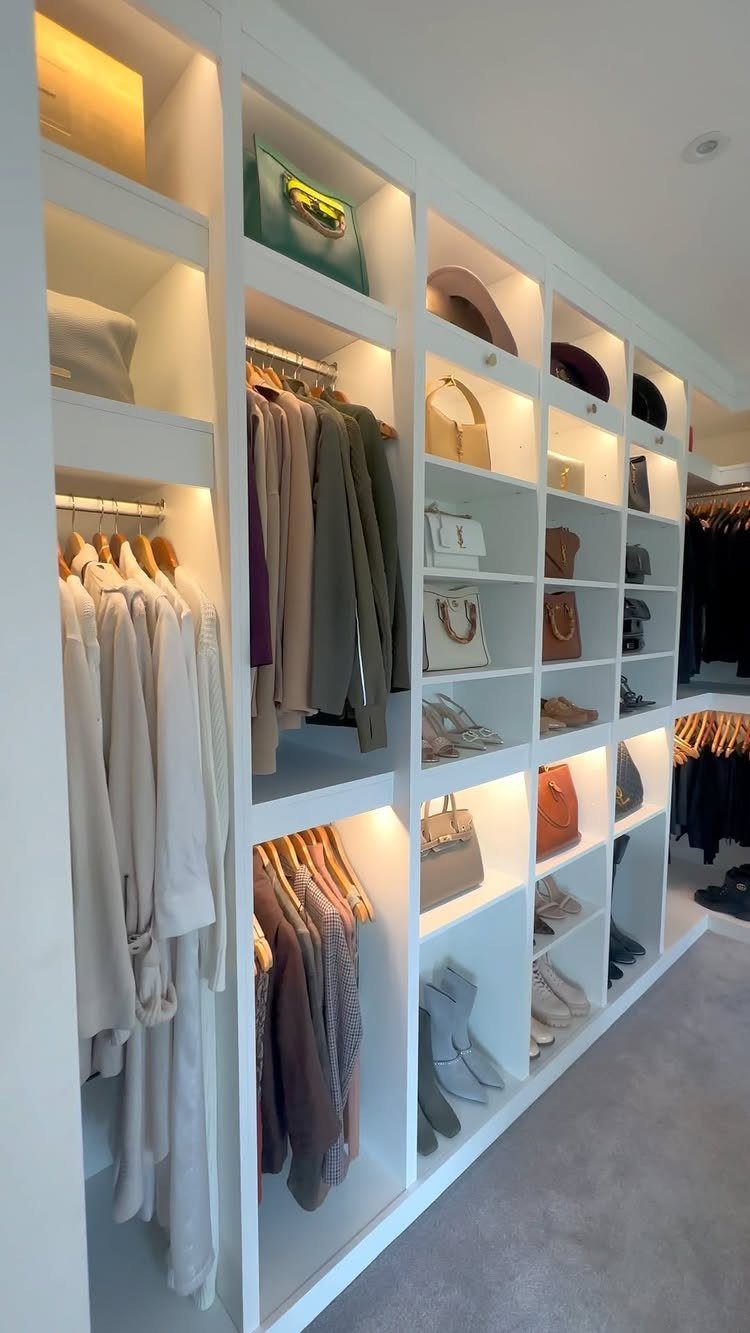
High shelves turn the dead zone above your head into storage for the things you rarely need: hats, bags, seasonal items you pull down twice a year.
Downward lighting underneath matters more than the shelf itself; without it, you are guessing at colors in shadow.
Check your ceiling height first. Below 8 feet, high shelves eat visual space and the top row becomes a hassle.
I would skip them in a low closet unless you are storing flat items only. Add a small step stool on a hook nearby or you will never use what you put up there.

New Design: Dual stepless adjustment, with a length adjustment range of 17–30 inches and a height adjustment range of 18–34 inches, allowing for seamless adjustment within these ranges

New Design: Dual stepless adjustment, with a length adjustment range of 17–30 inches and a height adjustment range of 18–34 inches, allowing for seamless adjustment within these ranges

【Upgrade Adjustable Width & Height】The width range is from 17 to 29 inches, and the height range is from 14.6 to 37.1 inches. The user-friendly design has six adjustable heights, which can maximize the unused space beneath hanging clothes. Dimensions: 37.1"H x 29"W (Fully Expand)
2. Adjustable Shelves
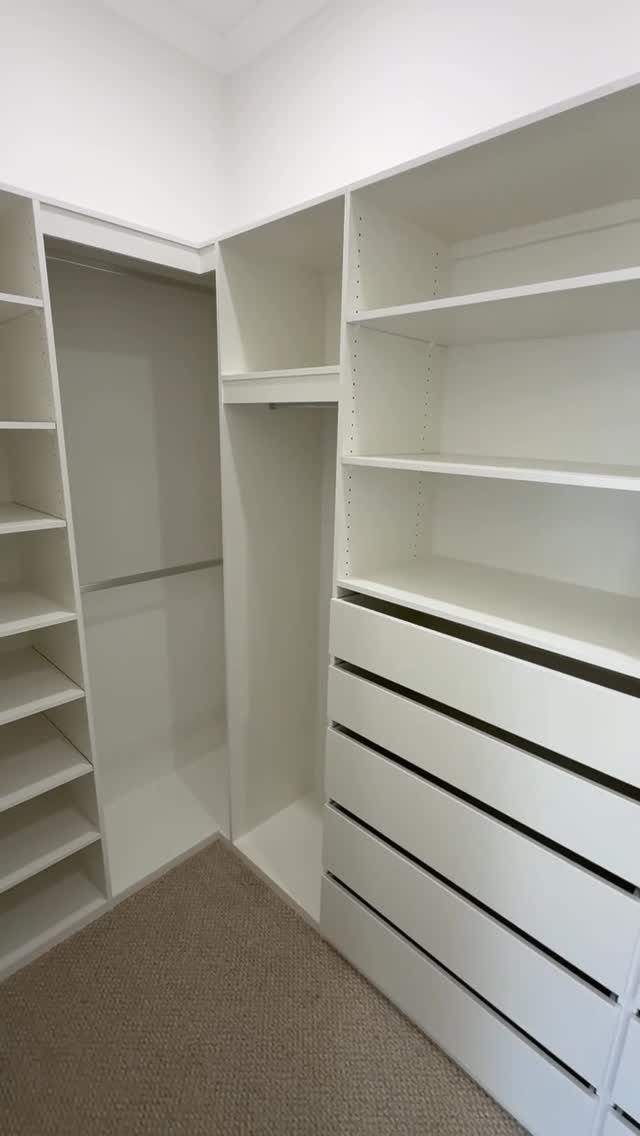
Adjustable shelves run on peg holes drilled up the cabinet sides, letting you move a shelf in minutes when your boot collection outgrows your sweater stack.
The peg holes are the standard spacing that gives you real flexibility without looking industrial.
Before you buy, check whether the shelf pins are metal or plastic.
Metal lasts; plastic cracks under a full load of jeans or heavy knits. I would also confirm the shelf thickness; thin stock is what bows across a span.

【Durable Material】Pegs for shelves made of high quality zinc alloy and polished nickel,good quality and durable for long using life,surface is smooth without metal burrs,can meet your daily shelving needs.

【Durable Material】Pegs for shelves made of high quality polished nickel,good quality and durable for long using life,surface is smooth without metal burrs,can meet your daily shelving needs.

【High-Quality Metal Construction】Our 1/4 inch Shelf Support Pegs are made from durable metal with high-grade electronic plating, make good metallic feeling and ability of anti-corrosion, cracking, smooth without burrs, not easy to rust and oxidize, and can be used for a long time
3. Prioritize Drawer Space
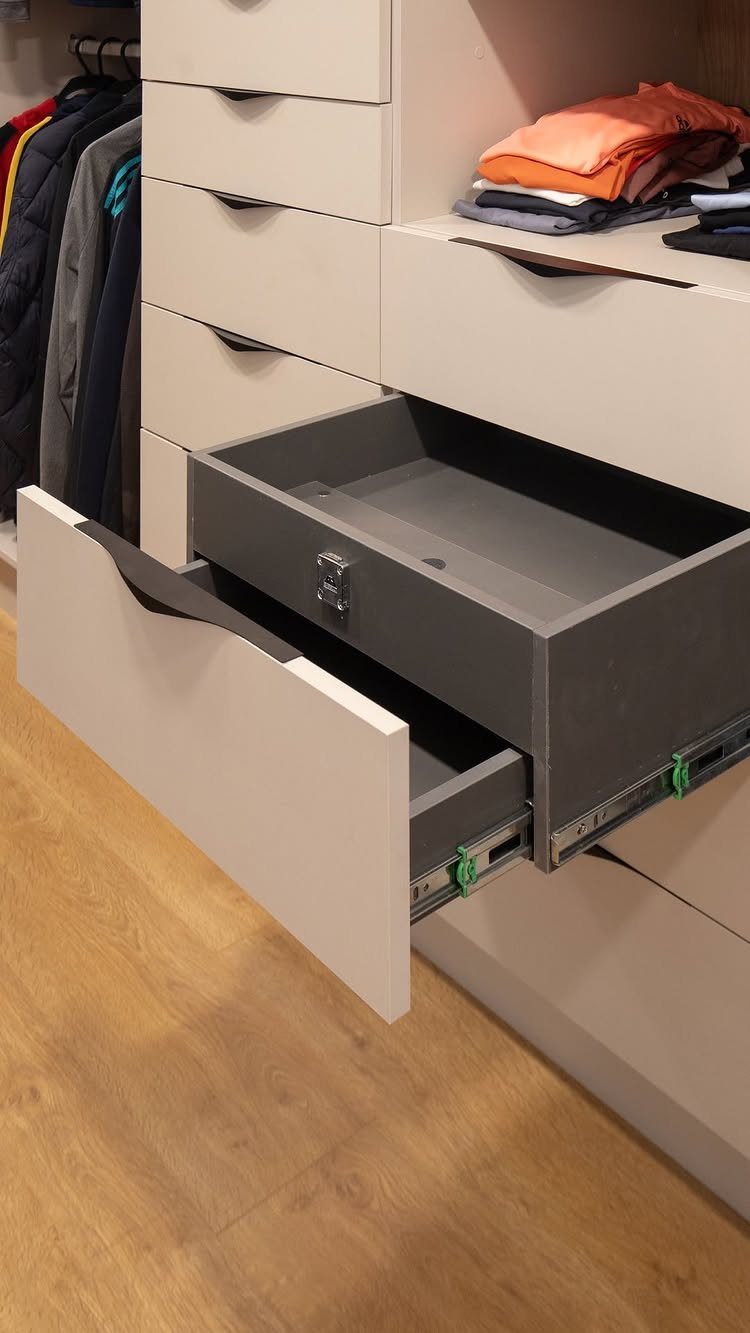
Drawers beat open shelving for anything that wrinkles, rolls, or looks messy folded: underwear, socks, workout gear, folded tees.
That pull-out inner compartment with a lock reads as a jewelry or document safe rather than standard drawer guts. That detail tells me this system was planned around specific storage, not stuffed in as an afterthought.
Depth is the decision point.
A shallow drawer front holds folded shirts fine; a deeper one swallows sweaters without hanging over. I would choose charcoal or navy over white or beige every time.

Pull-out Design: This clothing storage basket adopts a tray pull-out design. Unlike other products that require two hands to hold with one hand and pull with the other, the storage basket can be easily pulled out with one hand, freeing up both hands and making life more convenient.

[🔝 WARM TIPS]: Please note that this pull out cabinet organizer suitable for cabinets with internal width exceeding 13" and depth exceeding 21". This pull out drawer for cabinets with Upgraded Raising Pads are compatible with both frameless cabinets and framed cabinets with edge heights up to 0.4 inches. It is essential to carefully measure your cabinet's dimensions before installation to ensure compatibility.

Zoned Storage: The wooden closet shelf features 11 compartments for hanging, displaying, or stacking clothes, making it easy to organize seasonal clothing and bedding for a family of three or an individual
4. Group Clothing by Type and Color
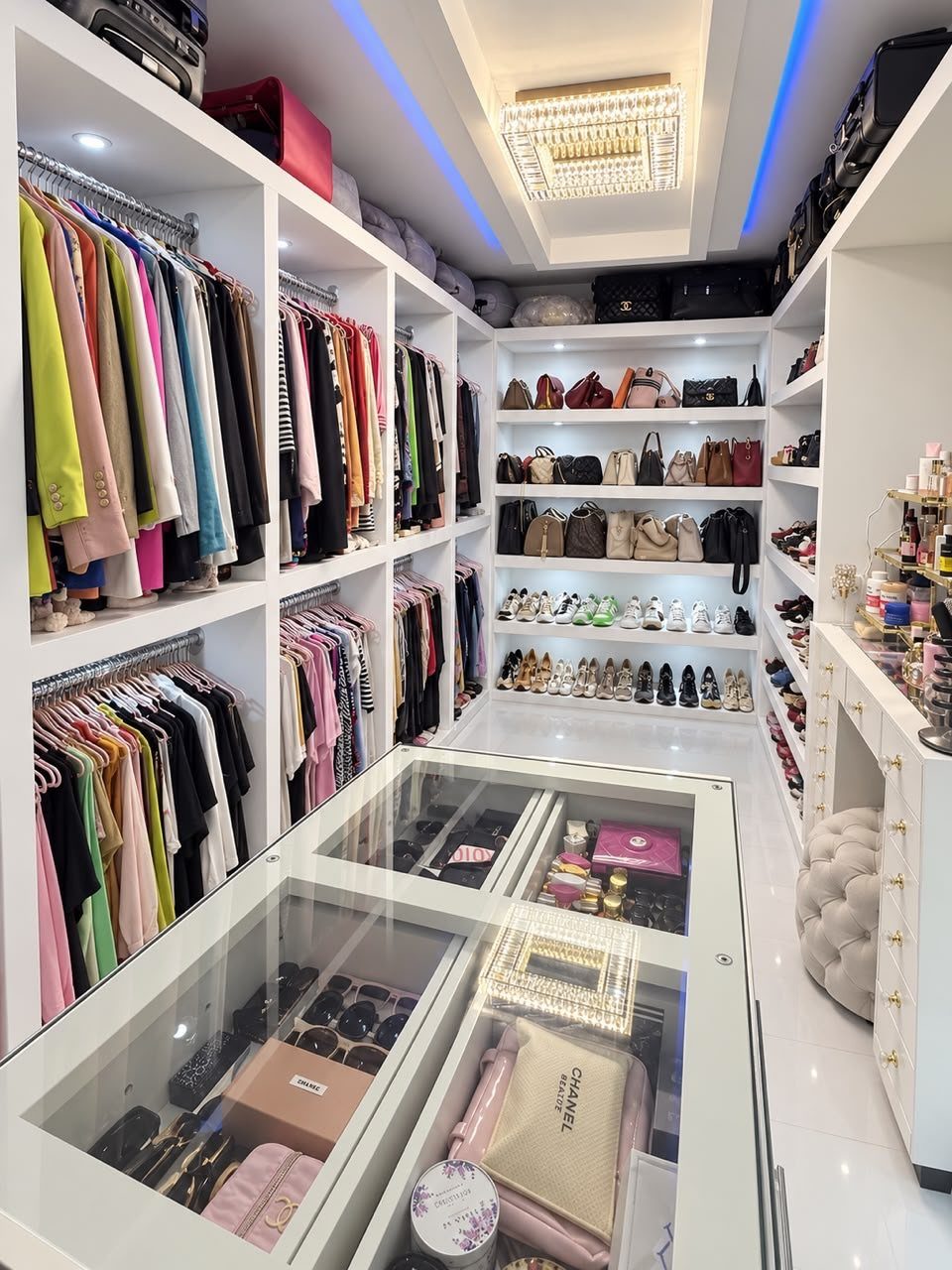
Grouping by type then color sounds obsessive until you try it. All shirts together, light to dark; all pants, light to dark.
You stop buying navy pants when you see how many you already own. The photo pushes this to a full boutique display with glass drawers and labeled accessories, which is not the version I would build.
For a real budget and a Saturday morning, start with what you have.
Pull everything out, sort into piles, put back by category. Color within each category comes second and takes only a few extra minutes.

Upgraded COB LED: Different from traditional SMD LED strip lights, COB (chip on board) LED strip lights are composed of LEDs that are closely spaced one by one, which looks like a continuous and uniform light, brighter and almost no dark spots! 180° beam angle, wider lighting range. DC24V low voltage, safer & Brighter

Automatic LED Cabinet Light:Built-in motion sensor and night sensor, auto-on with 10 feet when it detects the motion of human in the dark,auto-off after 20 seconds of no movement or placed in a bright environment

COB Technology for ideal Uniformity:This COB LED strip light featuring an expanded 8mm PCB width, it ensures superior heat dissipation, supporting 5120 LEDs per roll at an ultra-high density of 156 LEDs/ft. The result is a seamless, glare-free linear light source ideal for premium architectural and decorative applications. Note:Power Supply and Dimmer are not included.
5. Install a Shoe Rack
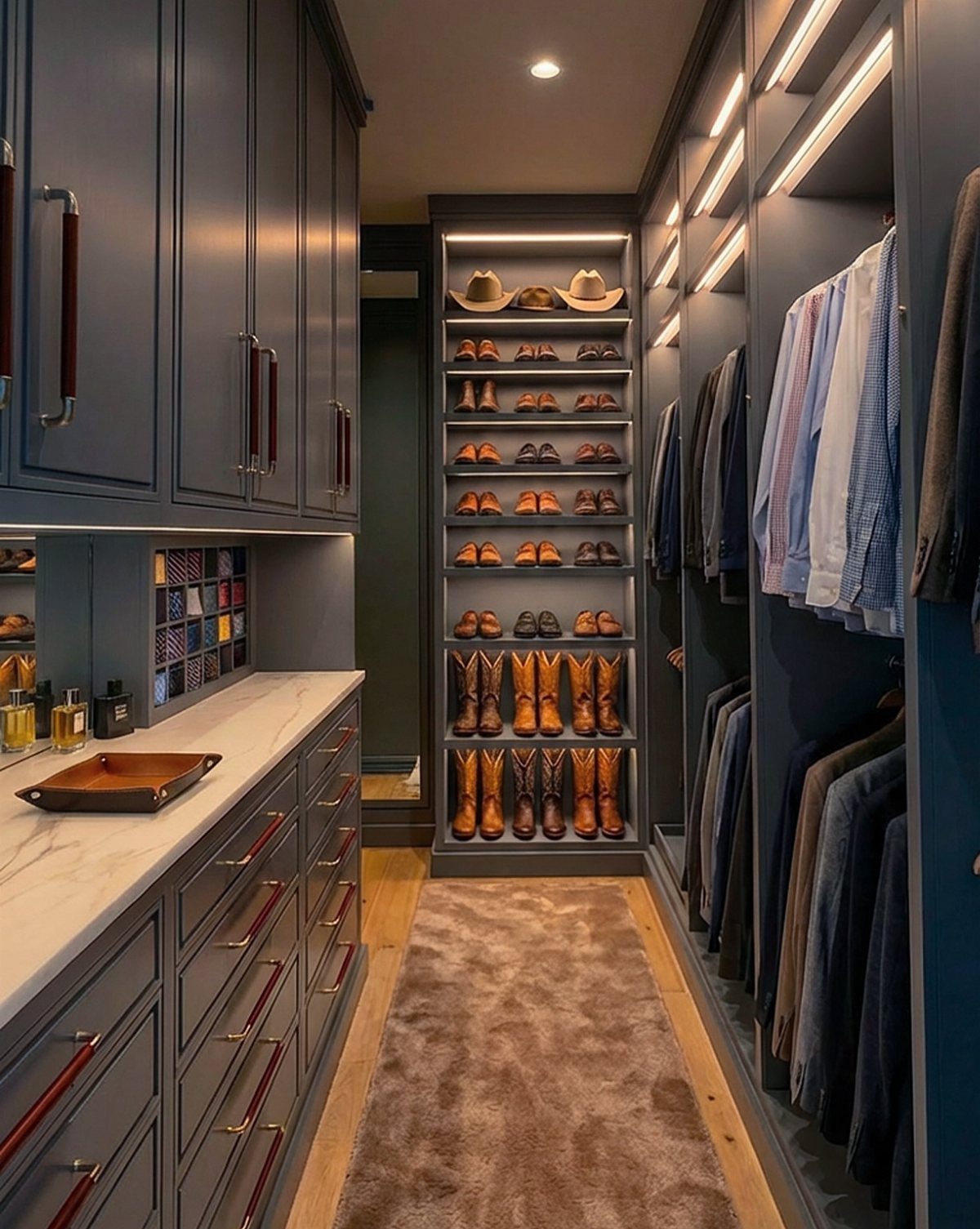
A dedicated shoe rack stops the floor pile that every closet grows. Tall illuminated shelving at the far end of a narrow closet, backlit shelves making the display readable from the doorway.
I would build or buy to standard shelf depth for men’s shoes, slightly less for most women’s, more only if you store boots standing upright. In a narrow closet, that vertical concentration keeps the center aisle walkable.

MODERN MINIMALIST DESIGN: This 5-tier closet organizer uses an open-shelf vertical tower to add closet organizers and storage in a wardrobe closet, bedroom, or living room, making the closet organizer both versatile and space-friendly

MODERN MINIMALIST DESIGN: This cube closet organizer features a clean open-shelf layout that streamlines closet organizers and storage for wardrobe closets, bedrooms, and living rooms, making the closet organizer practical and space-saving

Tall, space-saving design: 62.2" H x 20.15" W x 8.45" D maximizes vertical storage for bathrooms, closets, or hallways.
6. Consider a Full-length Mirror
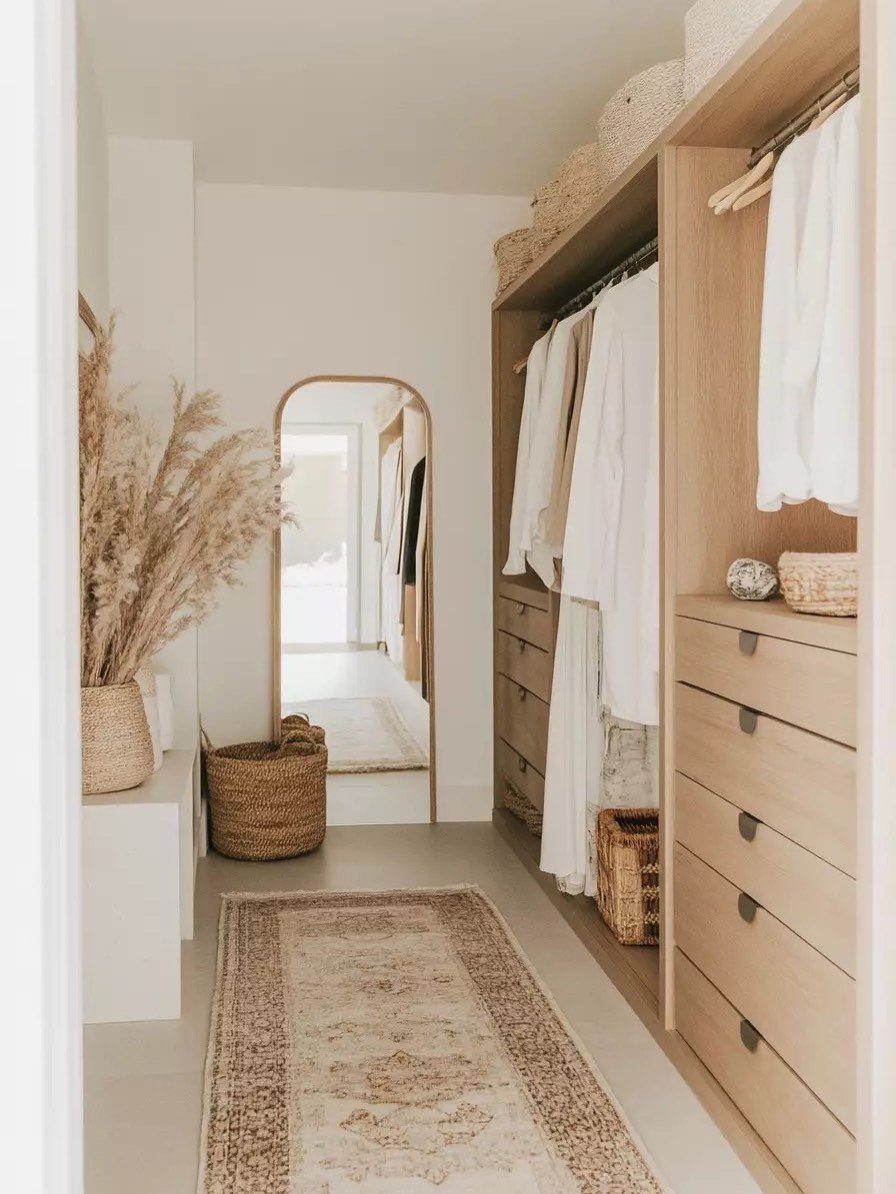
A full-length mirror in a closet saves the bedroom wall space and lets you check an outfit where you build it.
A full-length mirror placed opposite a light source doubles the brightness, which matters more in a closet with no natural light of its own.
I would mount it with a few inches of clearance from the floor so you can see your shoes without bending; too high and you will be craning to check your hemline.
A thin black metal frame would read as intentional contrast for less money, and I would probably go that direction myself.

This 23.7"L × 15.8"W × 81"H wooden closet organizer system features 2 built-in hanging zones (top and bottom), along with an extra expandable side hanging rod (22"-39.4"). Designed with dual-tier hanging space, it effortlessly organizes shirts, jackets, pants, and long dresses without cluttering, while the bonus side rod instantly maximizes your total hanging capacity. For larger space requirements, easily combine multiple units or pair with our matching cabinets to build a custom L-shaped or U-shaped walk-in closet system.

This closet rod makes full use of the unused space beneath the hangers.

This closet rod makes full use of the unused space beneath the hangers.
7. Integrated LED Shelf Lighting
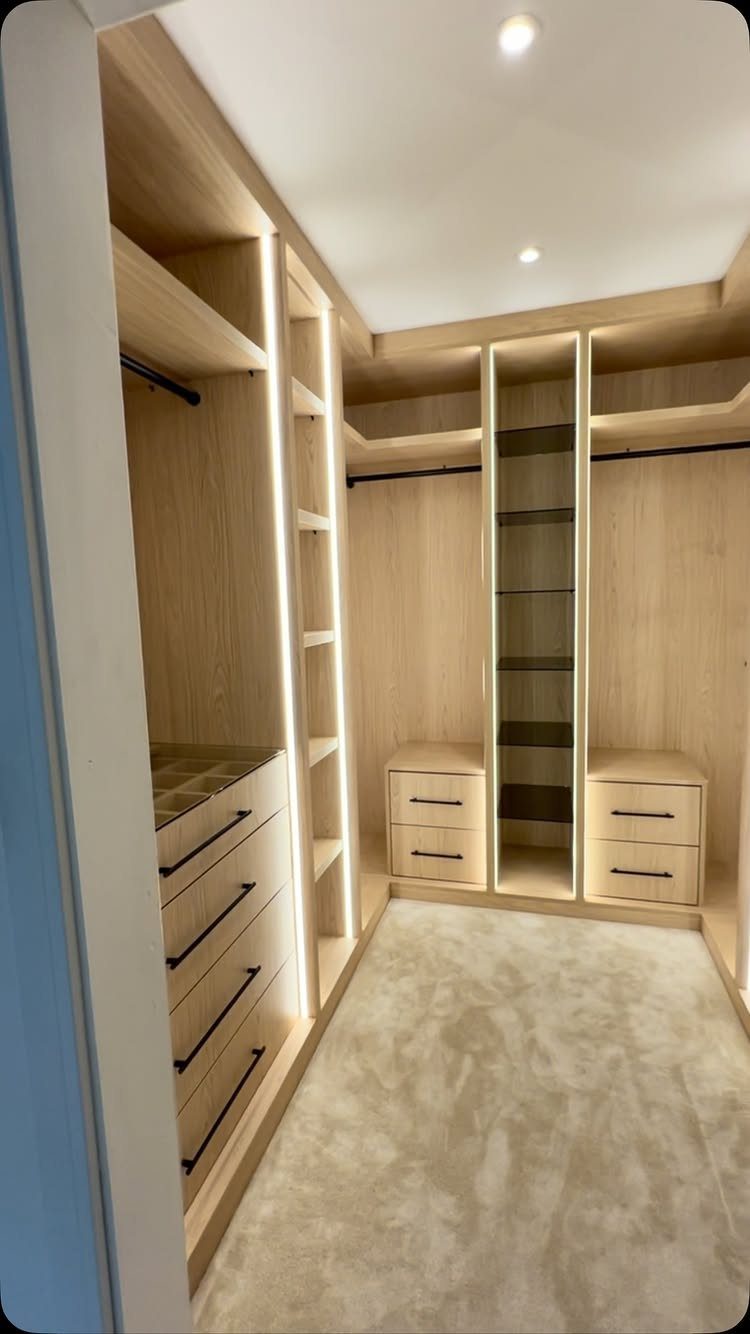
Integrated LED shelf lighting runs in thin strips along the vertical edges of shelving units, casting light across open shelves and into drawers without a fixture hanging down into your space.
Warm white strips, probably 2700K or 3000K, are what I would pick for shelf lighting; anything cooler turns clothes gray and makes color matching impossible.
Battery-powered strips install anywhere but need regular replacement; hardwired strips need an electrician and a switch.
I would hardwire if I were already opening walls, or go rechargeable battery if I wanted the look without the commitment. Check your shelf depth; strips mounted too far back leave the front third in shadow.

[Package] 50 x shelf support pegs, 1 x plastic box.
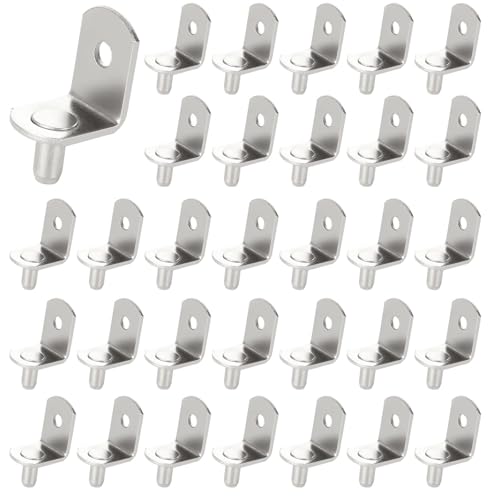
100Pcs SHELF PEG : Shelf support pegs with white plastic sleeves fit all cabinets with a diameter of 0.19 ", needle length of 0.39 "/10mm, shelf length of 0.74" /19mm and width of 0.5 "/13mm, 100 in quantity sufficient for your daily use(Please verify the size information before placing an order.)

Size: Shelf pins fits all cabinets with 1/4 Inch (6.35mm) holes. You will recive 50 pcs L-shaped shelf bracket pins, Cabinet shelf clips diameter is 6.35mm/ 0.25 inch, helf pin length 8mm/0.32inch. Please make sure the thickness of the cabinet will not lower than it
8. Center Island Storage
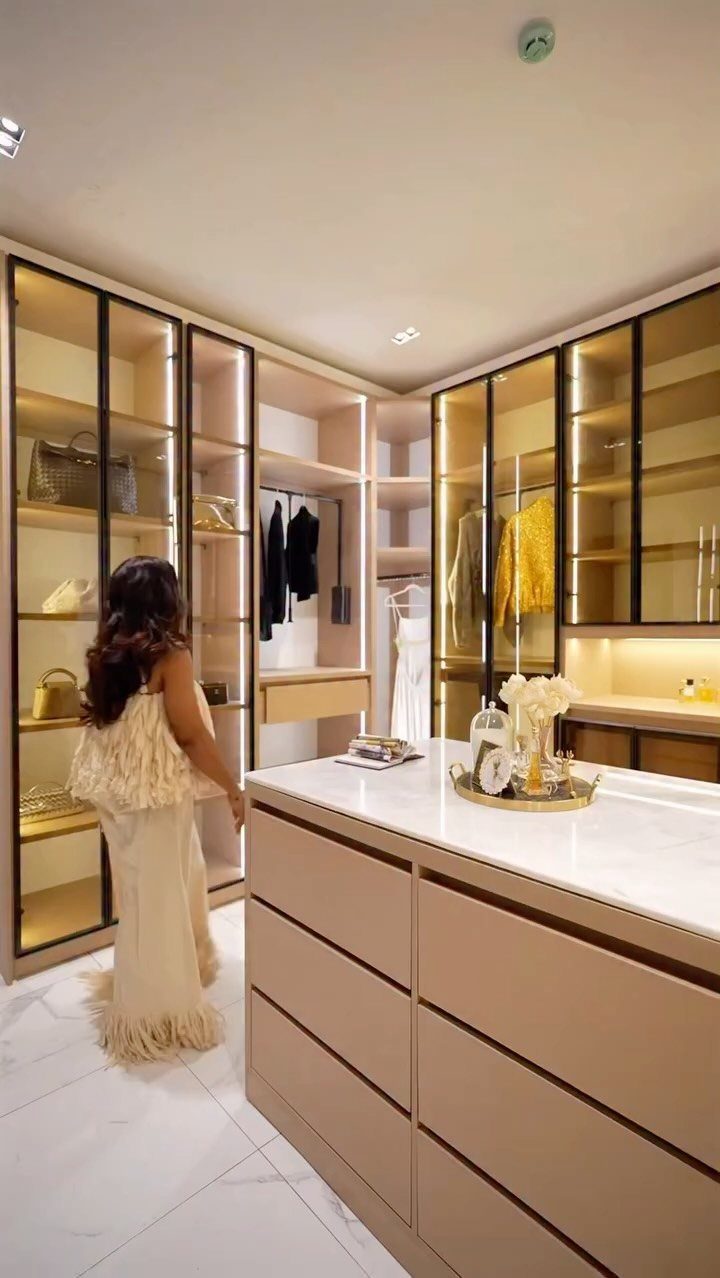
A center island in a walk-in closet gives you drawer storage below and a flat surface above for folding, packing, or laying out tomorrow’s clothes.
A hard surface top handles the same function without needing to be luxury-grade; just pick something that will not scratch from a belt buckle or watch.
This idea needs space. A narrow aisle around all four sides means at least 36 inches on each face, more if you want to open drawers while someone passes behind you.
I would measure my floor plan twice before committing; an island that pinches walkway flow becomes an obstacle, not an asset. For most reach-in and small walk-in closets, this is not the idea that fits.

Smooth Pull-Out Drawer Design: Featuring a convenient drawer type design, our clothes storage bin allows for easy access to your belongings with a smooth pull. The enclosed structure keeps dust away, ensuring your items are protected and organized. Please note, if you need to pull out the clothes drawer in stacking boxes, please hold down the upper edge of the outer box, and pull out the handle
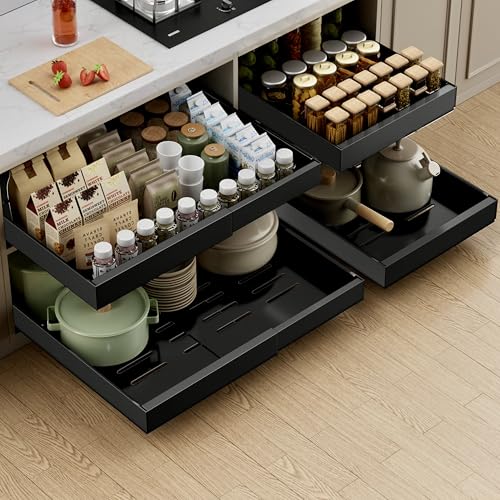
[🔝 WARM TIPS]: Please note that this pull out cabinet organizer suitable for cabinets with internal width exceeding 13" and depth exceeding 21". This pull out drawer for cabinets with Upgraded Raising Pads are compatible with both frameless cabinets and framed cabinets with edge heights up to 0.4 inches. It is essential to carefully measure your cabinet's dimensions before installation to ensure compatibility.

【Adjustable & Spacious Hanging Area】Equipped with 6 sturdy expandable hanging rods, this closet system offers ample space to organize your clothes. The rod length is adjustable, allowing for a flexible fit in closet spaces ranging from 72" to 127.8", making it perfect for various room sizes
9. Double Hanging Rods with Cubbies
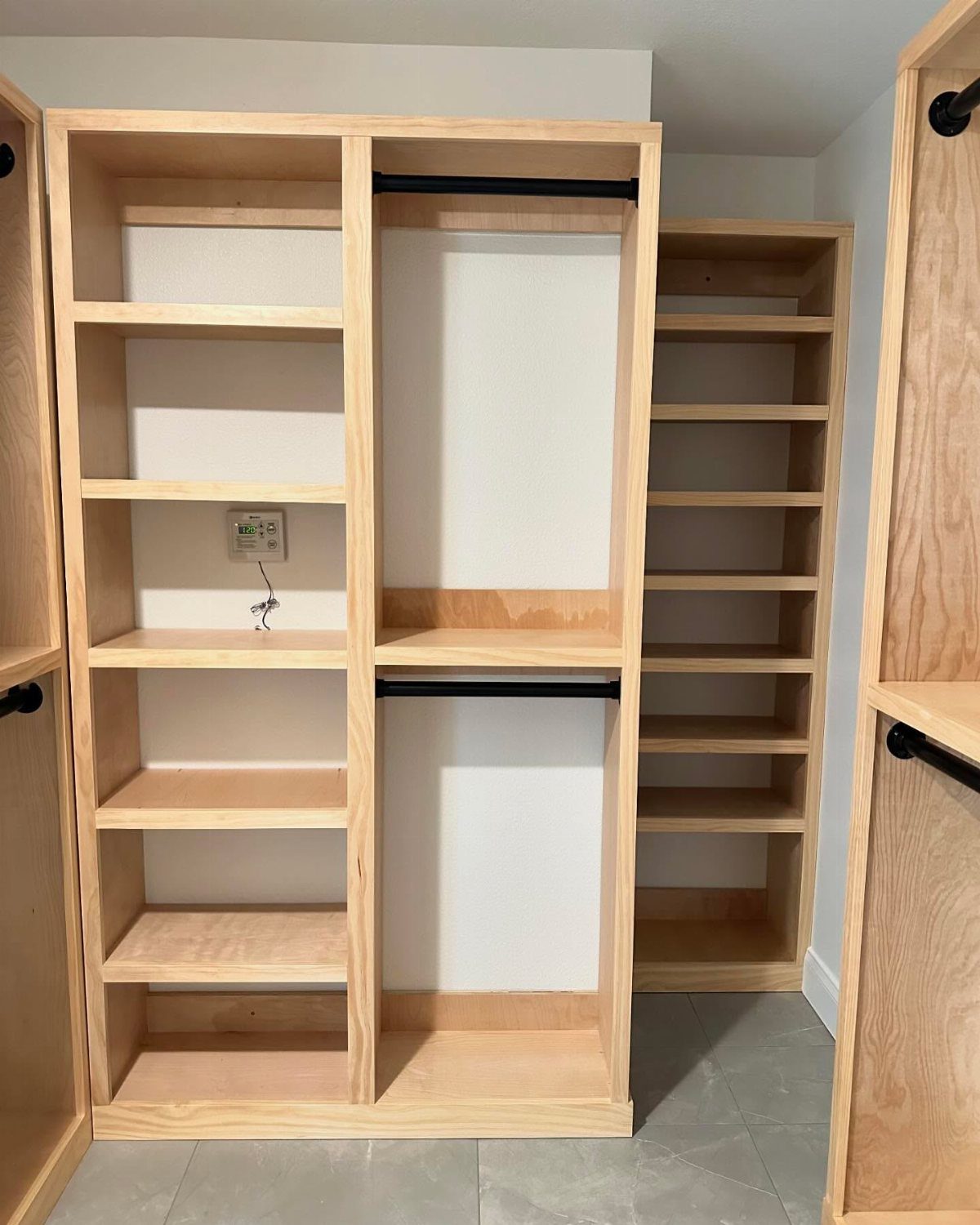
Double hanging rods stacked one above the other double your short-item storage in the same vertical footprint: shirts and folded pants on top, skirts and blouses below, or any split that matches your wardrobe.
Open cubbies beside the rods hold bags, hats, or folded sweaters where they stay visible and reachable.
The rod spacing matters.
Too close together and long sleeves tangle; too far apart and you waste the gap. I would allow enough vertical space between rods for shirts to hang freely, more if you hang blazers or anything with structure.
The cubbies work best with bins or baskets; left open, they collect dust and read as cluttered faster than closed storage. Light wood with black hardware keeps the look cleaner than darker finishes in a small space.

REQUIRES 24V DC POWER SUPPLY — Designed for 24V DC systems only. Not compatible with 12V power supplies. Power supply, dimmer, controller are not included. Ideal for under cabinet lighting, shelving, cove lighting, architectural accents, and professional low-voltage lighting applications.

High Density Design for Exceptionally Smooth Even Light:This COB strip light is a white COB LED strip featuring tightly packed LEDs. It creates a seamless and uniformly soft light beam, providing comfortable, glare free illumination that is ideal for elevating any space and effectively brightening dark areas

REQUIRES 24V DC POWER SUPPLY — Designed for 24V DC systems only. Not compatible with 12V power supplies. Power supply, dimmer, controller are not included. Ideal for under cabinet lighting, shelving, cove lighting, architectural accents, and professional low-voltage lighting applications.
Importance of Organization
Organization in a closet is not about appearance; it is about whether you use what you own.
I have watched people rebuy black belts and white tees because the ones they had sat folded under something else, invisible and forgotten. A system that puts every item in view pays for itself in what you stop replacing.
The daily routine matters more than the storage itself.
A shirt you find right away versus one buried behind shifting hangers changes how you feel about the space every morning. I would rather have less total storage with everything visible than more cubic feet with half of it buried.

MODERN MINIMALIST DESIGN: This 6-tier closet organizer features a slim vertical tower that streamlines closet organizers and storage in wardrobe closets, bedrooms, and living rooms, making the closet organizer practical and space-saving

MODERN MINIMALIST DESIGN: This 3-tier closet organizer uses a clean open-shelf layout to enhance closet organizers and storage in wardrobe closets, bedrooms, and living spaces, making the closet organizer practical and space-saving

【Boutique-Style Purse Display】Turn your handbag collection into a clean, beautiful display. The open shelf design keeps purses upright and visible, so your favorite bags are easy to see, choose, and grab before heading out.
Custom Closet Systems
Custom systems earn their cost when standard widths waste your specific space.
A sloped ceiling, a jog around ductwork, a window placed where a wall unit would go: these are the gaps a custom build fills that off-the-shelf kits leave empty.
I would start with an inventory, not a catalog.
Count your shoes, measure your longest hanging items, note whether you fold or hang sweaters. A system built around those actual numbers fits; one built around a showroom display leaves you improvising with bins on the floor.
Most people fill the hanging rod and stop there, leaving the door back and that wall behind the clothes untouched.
Hooks for tomorrow’s outfit, a shallow rack for accessories, a mirror mounted on the door itself: these additions cost little and use structure already in place.
Seasonal Storage Tips
Seasonal rotation works only if the out-of-season items leave the prime zone entirely.
I would store summer linen or winter wool in sealed bins on the highest shelf, not in a stack that slowly migrates forward into your daily sight line.
Label the bin contents on the short side, readable from below with a step stool. "Winter" is not enough; "winter sweaters, heavy" tells you whether this is the bin you need without opening it.
The transition itself needs a schedule. I would swap seasons twice a year on a fixed weekend, not when the first cold morning sends you digging.
Pull the incoming season down the night before, air anything that smells of storage, and move the outgoing batch up before the new items settle into drawers.
Frequently Asked Questions
How to maximize storage in a walk-in closet?
Use the full vertical height with high shelves for seasonal items, add adjustable shelving that moves as your wardrobe changes, and prioritize drawer space for anything that wrinkles or looks messy folded.
Is it cheaper to build or buy a closet system?
Off-the-shelf kits cost less upfront, but custom systems earn their price when standard widths waste your specific space like a sloped ceiling or a window in an awkward spot.
For most real budgets, a mix works: buy standard units for straight walls and build or customize only where the kit leaves gaps empty.
What is a walk-in closet called now?
Most people still say walk-in closet, though you will hear dressing room or dressing foyer in real estate listings and design magazines.
The name does not change the function: a space you enter and move around in, with storage on more than one wall.
I would worry less about what to call it and more about whether the layout fits your actual clothes.
Are walk-in closets a waste of space?
A poorly planned one is, but any square footage becomes efficient storage if you use the walls, the back of the door, and the full ceiling height.
A reach-in closet with good organization often beats a walk-in with a floor pile.