I’ve kept squirrels out of my raised beds using these seven methods. First, I build bamboo hoops with tight netting clamped at the corners and sides to prevent sagging. Second, I upgrade to a permanent hardware cloth cage with a hinged lid for easy access. Third, I line the bottom with mesh and extend it up the sides to deter diggers. Fourth, I add metal edging at soil level to block chewers. Fifth, I ring the beds with a stone border that makes tunneling difficult for them. Sixth, I use spring clamps to easily remove the netting during harvest time. Seventh, I wrap my container tomatoes in hardware cloth and add hoop tops. These steps work together, and it’s important to know how to implement each one effectively.
Build Bamboo Hoops With Taut Squirrel-Proof Netting
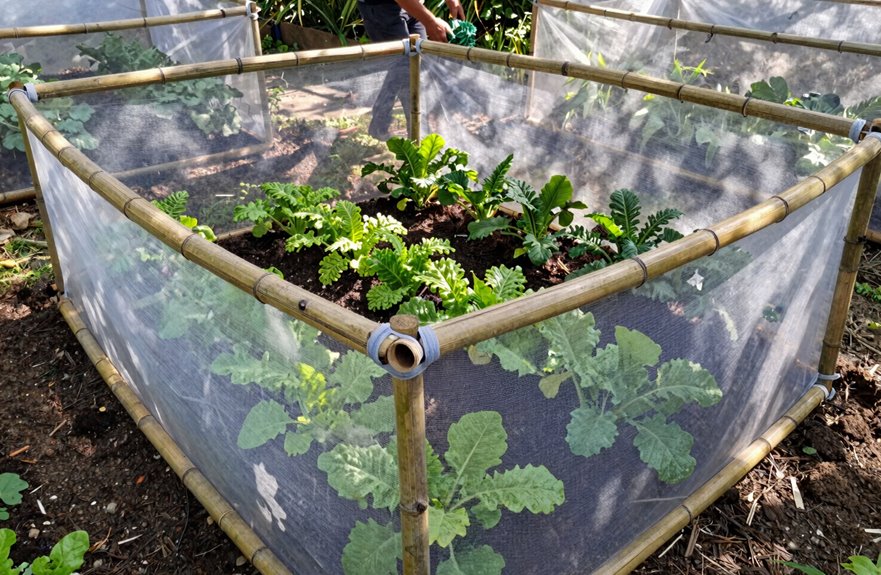
One effective way to protect a raised bed involves using bamboo hoops.
I cut 4-foot bamboo stakes for the corners and sides of my raised beds, then place them vertically to outline the bed. Next, I loop a drip irrigation hose over these stakes to create arches that span the planter. I add a horizontal stake across the top and tie it tight for stability.
I drape netting over the hoops, extending it past the bed’s edges, and pull it taut to the sides and ends. Four plastic spring clamps hold everything tight. This keeps the netting secure so birds don’t get stuck and blocks squirrels from reaching my vegetables. It is simple, affordable, and effective.

【Effective Plant Protection】Garden Covers for Raised Beds,Pop Up Garden Rows Plant Cove,Create a secure growing environment for your plants with these raised garden bed covers. The fine mesh effectively keeps out insects, birds, rabbits, squirrels, and other animals while allowing sunlight, air circulation, and moisture to reach your plants for healthy growth

【Garden Protector】Garden mesh netting kit is suitable for different critical stages of gardening, from initial planting to protecting crops like cabbage, cauliflower, and other vegetables. Protect yard, vegetable garden and raised garden beds from animals and pests, help crops growing better and ensure a bountiful harvest.
Upgrade to a Squirrel-Proof Cage With Hinged Access
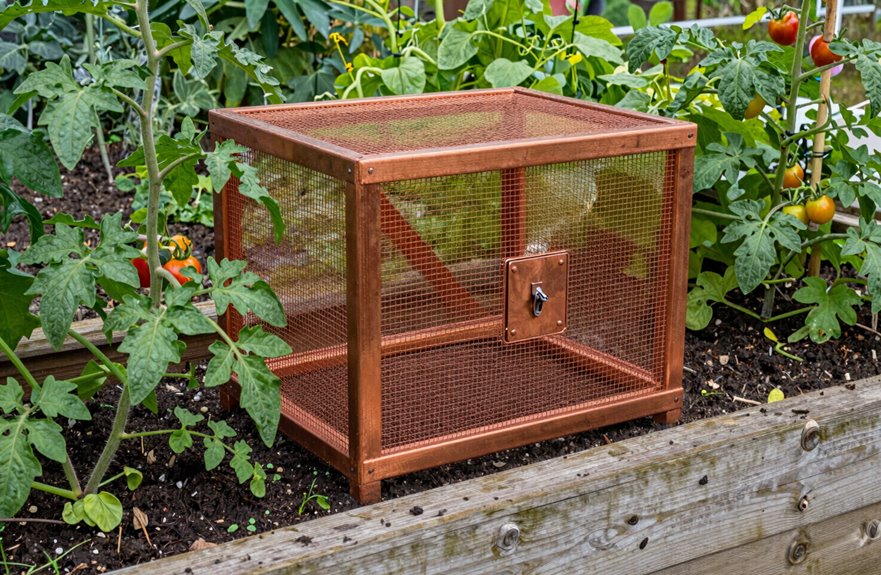
Why settle for hoops when you can build something sturdier? A full squirrel-proof cage provides reliable protection for your crops.
Why settle for flimsy hoops when you can build a sturdier, full squirrel-proof cage that truly protects your crops?
Building Your Cage
I use hardware cloth or heavy-duty mesh for the entire enclosure, matching my bed’s footprint. Squirrels cannot squeeze through if you choose the right gauge.
Making It Accessible
Hinged access significantly improves usability. I add a lid with a simple latch or a small walk-in door with a hasp. This allows you to tend to tomatoes or strawberries without needing to dismantle the structure.
Securing the Frame
I build with wood or PVC, ensuring every edge is tightly stapled or screwed. This eliminates gaps and weak spots.
This setup protects your crops while allowing bees to pollinate. Gardeners often recommend this upgrade after experiencing its benefits.

✔ DURABLE - Chew-proof metal rimmed entry hole is great for grey squirrels & Flying Squirrels
Block Digging: Install Mesh Under and Around Beds
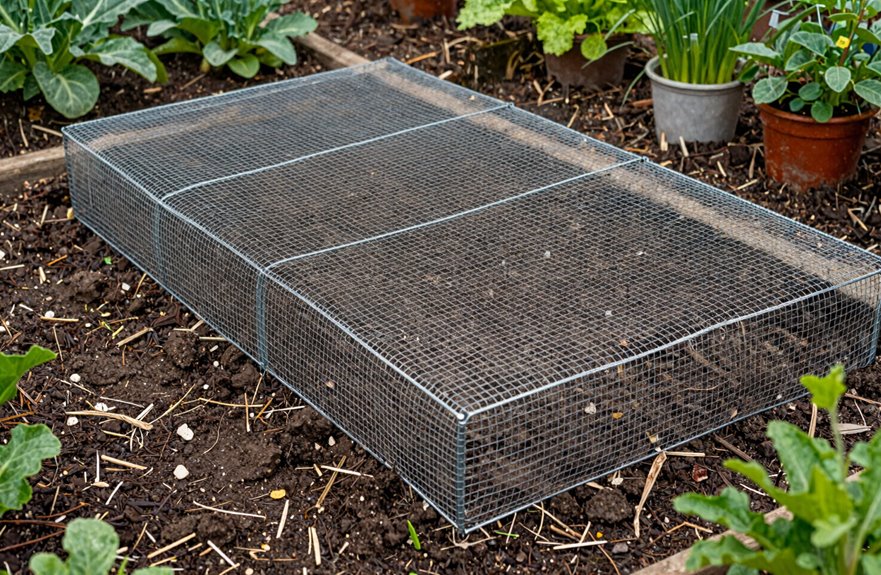
Blocking squirrels from below requires more than a sturdy bed frame. This guide covers mesh bottom barriers, side perimeter defense, and how to choose the right hardware cloth so you don’t leave any weak spots for persistent diggers.

Material and size: The size of the hardware cloth is 48 inch×100.1 ft square and 1/2 inch×1/2 inch thickness, adopt 19 guage hot-dipped galvanized material

Material and size: The size of the hardware cloth is 48 inch×100.1 ft square and 1/2 inch×1/2 inch thickness, adopt 19 guage hot-dipped galvanized material

SIZE & SPECS – 36" W x 50' L wire mesh roll with 1" x 1" square openings and 17-gauge wire. Please confirm the roll size and mesh opening before ordering to ensure it fits your project.
Mesh Bottom Barriers
If you’ve ever caught a squirrel tunneling up through your raised bed as if it’s searching for treasure, securing the bottom is essential before planting. To effectively create a barrier against squirrels, start below the soil line, where these diggers often enter unnoticed.
Here’s what works in my garden:
- Line the interior with hardware cloth before adding dirt, securing it to the frame’s underside.
- Extend mesh up the sides a few inches to block vertical escape routes.
- Overlap all seams and use exterior-grade screws to prevent squirrels from prying at joints.
- Ring the outside with gravel or stone to deter digging at the edges.
This method protects your roots and keeps your plants in place.
Side Perimeter Defense
Where do squirrels love to sneak in? Right through the sides of your raised beds, that’s where. A solid perimeter defense involves wrapping hardware cloth around the outside, not just underneath.
Here’s what I check when sealing my beds:
| Spot to Check | What I Look For |
|---|---|
| Bottom seams | Gaps where mesh meets wood |
| Corner joints | Tiny spaces squirrels exploit |
| Soil line edges | Places they can push through |
| Hardware attachment | Loose staples or gaps |
| Ground perimeter | Exposed mesh edges |
I use 1/2-inch hardware cloth inside and out, ensuring every edge is covered. Squirrels can squeeze through holes you’d never expect. I also add gravel around the base to prevent digging underneath. This approach helps deter squirrels effectively.
Hardware Cloth Selection
Side perimeter defense stops squirrels from sneaking in through the walls, but they will still attempt to dig underneath if you don’t protect the bottom. Installing hardware cloth creates a solid foundation for your raised bed, ensuring complete pest control. Here’s how to do it effectively:
- Choose ½-inch galvanized hardware cloth; it resists rust and prevents squirrels from chewing through.
- Line the entire bottom; cut the mesh to fit and extend it up the sides to block edge digging.
- Secure tightly with exterior screws or staples; gaps can become entry points for squirrels, so ensure there are none.
- Allow drainage; add small gaps or sloped undersides so water can escape without weakening the barrier.
This underground shield effectively protects your garden from below.
Add Metal Edging to Stop Chewers at Soil Level
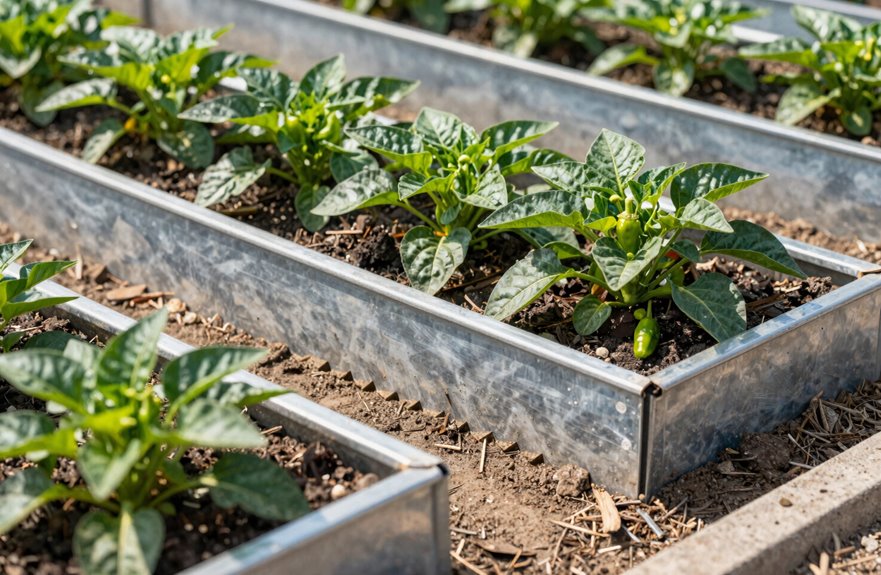
Why do squirrels keep finding their way into my raised beds? They chew right through wood edges and squeeze through tiny gaps at soil level. Metal edging is an effective solution for preventing squirrel access.
I install galvanized hardware cloth with half-inch mesh along the outside of my raised garden beds, burying it below the soil line. This stops gnawing before it starts. I also attach a continuous metal edging skirt to cover the bottom edge, blocking their favorite squeeze-through spots.
I secure everything with exterior-grade screws so nothing shifts. When possible, I extend the edging a few inches above ground. This creates a chew-proof barrier that protects my vegetables from persistent teeth.
Pairing this with a gravel border provides a solid ground-level defense.

EASY TO INSTALL: EasyFlex Aluminum No-Dig Edging provides an easy installation for a permanent and maintenance-free edging solution

𝐅𝐥𝐞𝐱𝐢𝐛𝐥𝐞 & 𝐄𝐚𝐬𝐲 𝐭𝐨 𝐈𝐧𝐬𝐭𝐚𝐥𝐥: Each panel measures 40" (L) × 5" (H), including 3" underground stakes for strong anchoring, leaving 2" visible above ground for a clean, low-profile border. The hammer-in design makes installation fast and effortless—perfect for creating neat, professional-looking edges without digging.

Durable Galvanized Steel: This metal lawn edging uses galvanized steel with a treated surface that helps resist rust, fading, and cracking. Outdoor borders stay neat and dependable through everyday weather changes
Surround Beds With Stone Borders to Deter Tunneling
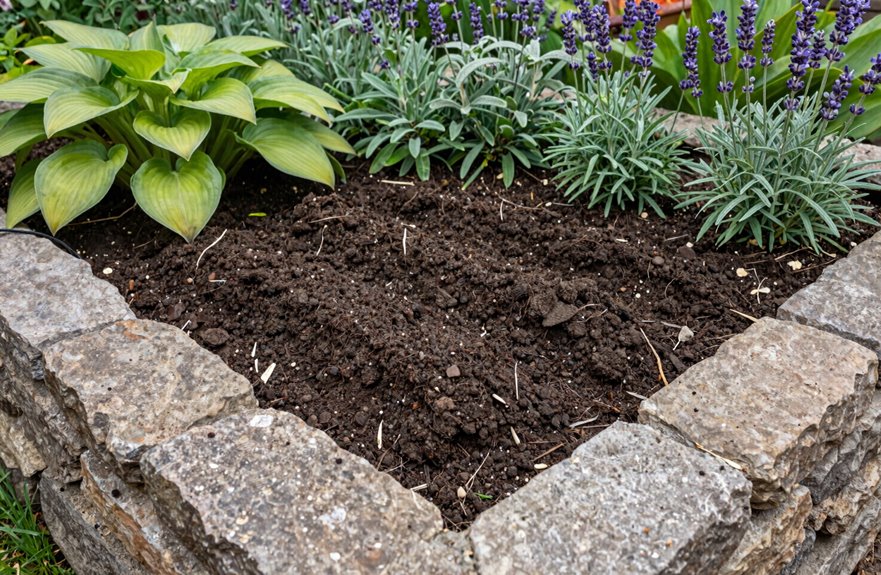
Metal edging blocks chewers, but it won’t stop diggers. Gravel borders create a simple tunneling deterrent that makes squirrels think twice about burrowing into our raised beds.
Metal stops chewers, gravel stops diggers—layer your defenses to outsmart persistent squirrels.
Here’s how I set up my stone perimeter for solid raised bed protection:
- I spread a 2-inch layer of gravel or stone around the outside edge of each bed, not inside where it would disrupt my soil.
- I ensure my mesh barrier extends over this border, so there’s no gap for clever diggers to exploit.
- I keep the stone surface wide enough that tunneling feels like too much work for a hungry squirrel.
- I pair this with netting overhead, as layered defense helps keep our garden’s harvest safe.
Stone borders are low-maintenance and effective. Our vegetables remain protected.

Effective Protection: The garden net is made of PE material, which is very light but durable, not easy to tear, and has a long service life Excellent Permeability: Air, water...
Use Spring Clamps for Tool-Free Harvest Access
I appreciate how spring clamps simplify netting challenges. They allow for quick access during harvest and keep the netting taut, preventing squirrels from finding gaps. I’ll demonstrate the best placement for these clamps to ensure your bed remains secure while still opening easily.
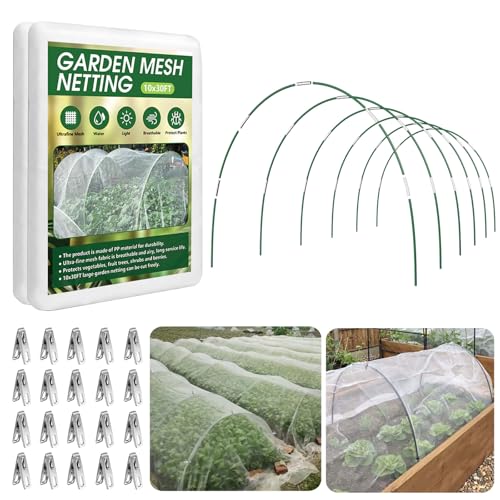
【Garden Mesh Netting Kit】The kit contain 1 pack 10*30ft garden netting, 6 sets of 8ft garden hoops (36 x fiberglass greenhouse hoops+30 x connecting pipes) and 20 pcs clips. The garden netting pest barrier kit is widely used at outdoor garden raised planter bed, it is good for protecting plants from insects, birds or strong sunlight.

Ultra-Fine Mesh Netting: Large Size 2pack 10x33 Feet provide more security, Ultra Fine Garden Netting has a 0.04in ultra-fine mesh, It also allows sunlight | artificial light as well as air and rain to pass through. Light material, no burden for plant buds. Provide healthy growth environment for plants. Tip:(Not two packages, it's one package with two 10*33FT garden nets inside)

ALL-IN-ONE GARDEN NETTING KIT: Fippy Garden Mesh Netting Kit includes a pack of garden netting pest barrier(10 x 50 ft), 10 set garden hoops and 20pcs garden fixing clips—everything you need to build a garden hoops grow tunnel. Perfect for creating protective barriers in gardens, orchards, vegetable patches and raised beds to protect your fruits and vegetables from insects and animals
Rapid Entry Method
How often do you skip checking on your veggies because taking down netting feels like too much work? I understand we’re all busy, and wrestling with barriers can diminish the joy of gardening. That’s why I’m using spring clamps to create a rapid entry method.
Here’s my simple setup:
- Position four clamps at key edges where netting meets your planter sides.
- Create a harvest hatch using a removable netting section held by clamps.
- Pull everything taut so no gaps tempt squirrels to reach through.
- Check weekly that clamps stay tight and positioned correctly.
Now I can pop my harvest hatch open in seconds, grab my tomatoes, and seal it back up. No tools, no hassle, and no skipped garden visits. We’re protecting our crops without the headache.
Secure Netting Tension
Loose netting won’t keep squirrels out for long. Proper tension makes a significant difference between a protected garden and a free buffet.
Here’s how I keep my netting tight and effective:
Cut and Drape Right
I cut my netting to drape over the hoops with extra length past the planter edges. This gives me enough material to pull everything taut toward the sides and ends.
Clamp for Security
I use four plastic spring clamps to grip the netting against the hoops. This creates firm tension that holds everything in place. I can easily remove them with my fingers when it’s harvest time.
Keep It Snug
Tight netting prevents birds from getting tangled and stops sagging between supports. I position clamps at even intervals so the tension remains uniform across my entire bed.
I check and re-tighten after storms or when plants push upward. Maintaining that tension ensures continuous protection for my growing community of vegetables.
Clamp Placement Guide
Clamp Placement Guide
Where should you place those clamps for optimal hold? Smart placement can significantly impact the stability of your setup.
Here is my system for securing raised bed netting:
- Hit the corners first. Anchor all four corners with clamps to stop the whole sheet from shifting.
- Add mid-side clamps. Placing clamps at the middle of each long side keeps everything pulled tight.
- Space evenly every 12–18 inches. This prevents gaps where squirrels could sneak through.
- Attach to hoops or stake tops. Clip to the outer edges so the netting stays flush with the planter.
Check your clamps after storms. A quick re-tighten ensures that the barrier remains effective, and tool-free access makes harvesting easier.
Extend These Methods to Container Gardens and Tomatoes
Since I grow tomatoes in containers every summer, I’ve learned that squirrels will raid both ground and potted plants. The good news is that the same tricks used for raised beds can be adapted for containers.
1. Cage Your Containers
I elevate my tomato pots and wrap them in hardware cloth from the ground up. This prevents climbing and digging in one step.
2. Add a Hoop-and-Netting Top
I bend simple hoops over my containers and drape netting across, clamping it tight with spring clips. This allows access for maintenance while keeping squirrels out.
3. Line From the Inside
For larger planters, I fit hardware cloth inside the pot walls, then add a cage around the plant itself. This provides double protection.
4. Mix Materials Smartly
I use hardware cloth at the base where they chew, then switch to lighter netting above two feet. This approach saves money while remaining effective.