Creating a cozy indoor garden has never been more appealing, especially if you live in a small space. With urban living on the rise, many people find themselves navigating the challenge of limited room for plants. This post was inspired by the desire to help fellow plant lovers maximize their green space, no matter how tight it may be. You deserve to enjoy the beauty and benefits of indoor plants, even if your living area is on the smaller side.
If you’re a busy urbanite, a small-space gardener, or someone who simply loves bringing nature indoors, this guide is for you. You might be wondering how to display your beloved plants without cluttering up your home. I’ve collected 14 unique plant stand ideas that not only fit snugly in corners and utilize vertical space but also add charm to your home decor. These ideas are practical, stylish, and allow you to create an inviting indoor garden even in the smallest of areas.
From innovative ladder plant stands to wall-mounted holders, you’ll find solutions that suit your taste and space requirements. Get ready to transform every nook and cranny into a thriving green oasis. With these tips, you’ll learn how to maximize your space and showcase your plant collection beautifully.
Key Takeaways
– Discover 14 creative plant stand ideas that fit perfectly in tight corners and small spaces, making them ideal for urban living.
– Learn about vertical gardening solutions that allow you to display your plants without taking up too much floor space.
– Explore unique styles, including minimalist designs and vintage stands, to match your home decor.
– Find DIY plant stand ideas that let you get crafty while enhancing your indoor garden.
– Get practical tips on transforming repurposed furniture into charming plant displays, adding both function and flair to your space.
1. Ladder Plant Stand
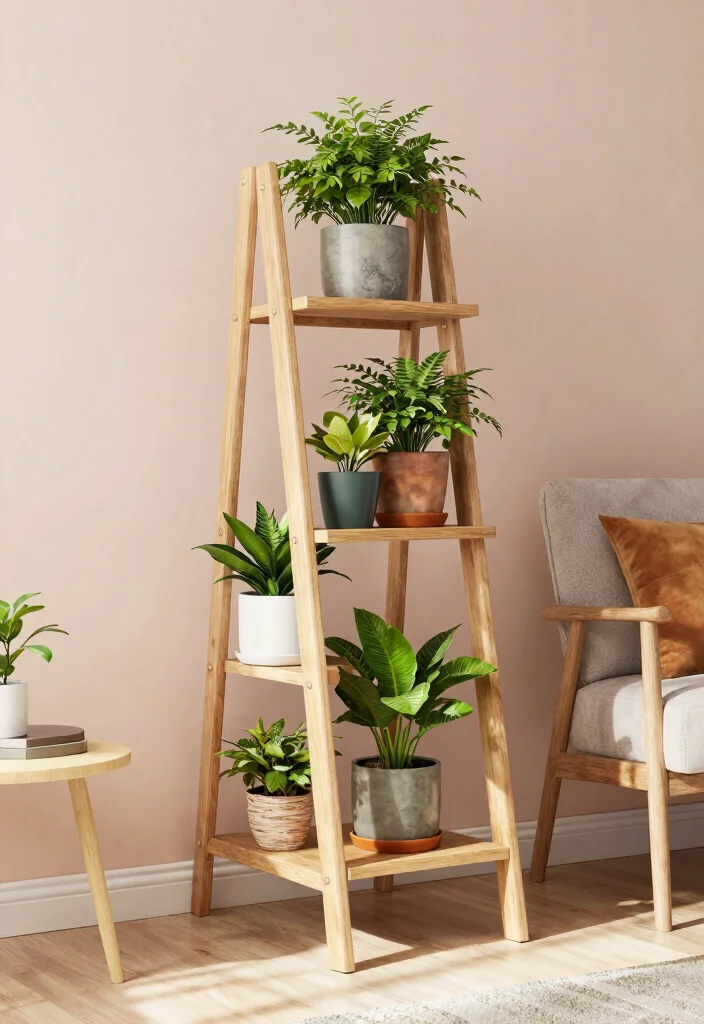
A ladder plant stand is an excellent choice for those wishing to utilize vertical space efficiently. This design allows you to showcase multiple plants at various heights, enhancing visual appeal and ensuring each plant receives ample sunlight. Opt for a rustic wooden ladder for warmth, or choose a sleek metal design to emphasize modernity. Both options can beautifully transform any corner of your home into a green sanctuary.
To make the most of your ladder stand, consider these practical tips:
– Select a height that fits comfortably in your corner without overwhelming the area.
– Mix different sizes of plants to create a lively and dynamic display.
– Use pots that match the stand’s material for a cohesive aesthetic.
– Add fairy lights for a cozy ambiance during the evening hours.
Ladder stands are perfect for living rooms, hallways, or sunny kitchens, making them a stunning focal point in any space.

[A Shelf for Every Room] Fill an empty corner in your living room, use it as a corner plant stand in the study for greenery, or nestle it in the entryway, dining room, or bedroom...this corner shelf can come into full play

Indoor Small Forest: Create a stylish and organized indoor plant area with the Yzosvki Indoor plant stand. Its L-shaped design allows for the perfect display of up to 6 plants, ensuring that each plant has sufficient room to grow both upwards and downwards.
2. Corner Plant Shelves
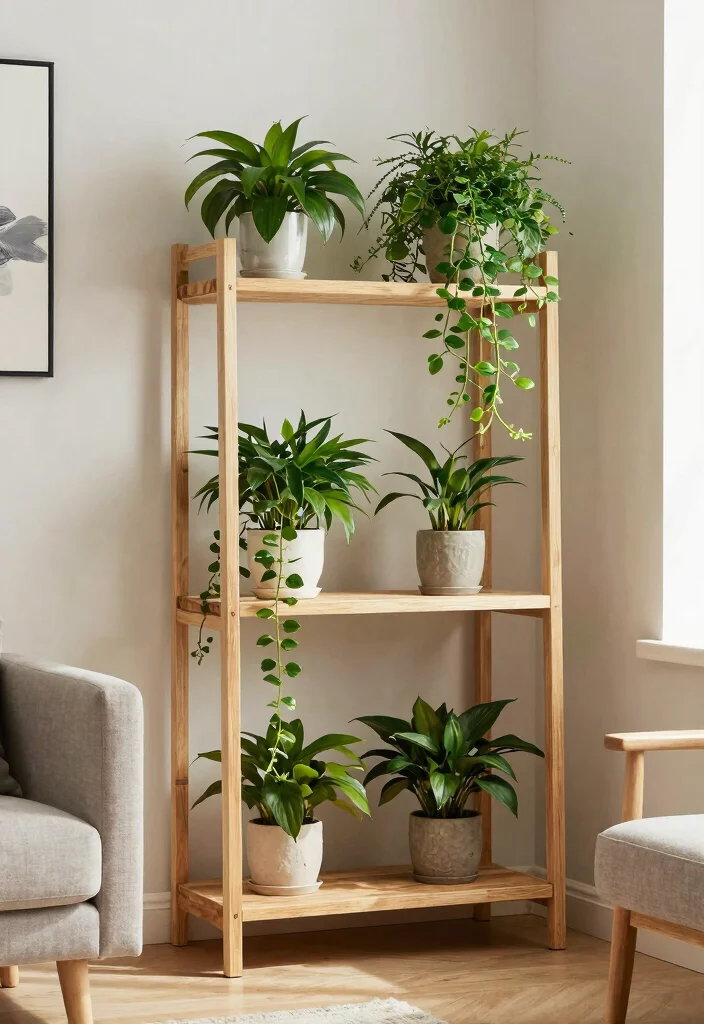
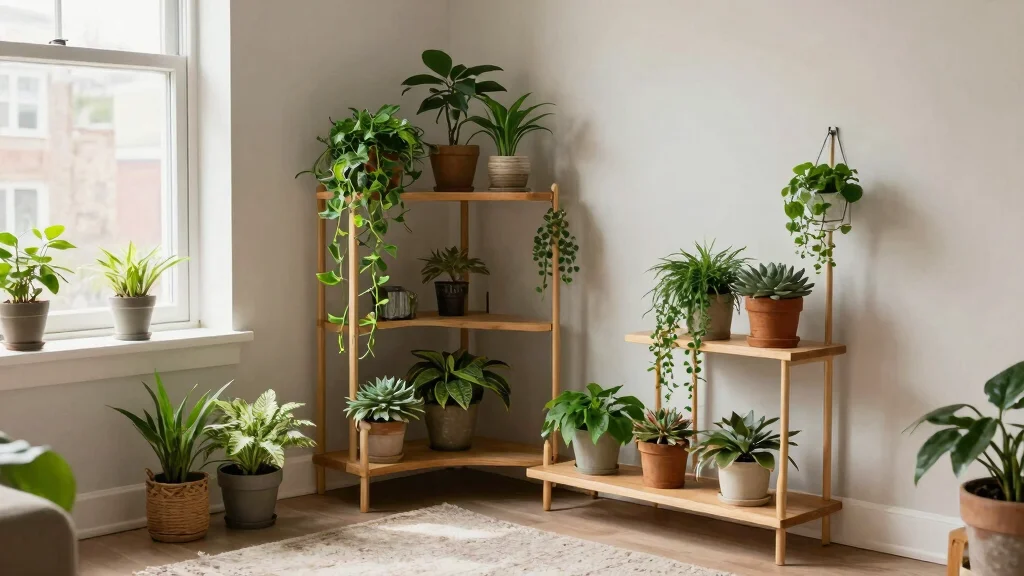
If you have a forgotten corner in your home, corner plant shelves can revitalize that space beautifully. Designed to fit snugly into corners, these shelves utilize often overlooked areas, bringing life and vibrancy to your home. You can purchase ready-made options or easily create your own using wood and brackets. Stacking shelves can further enhance vertical space, making room for more plants.
Here are some creative ideas for corner shelves:
– Group plants with similar light and moisture requirements together for easier care.
– Use decorative pots to uplift the overall look.
– Place a small lamp on a shelf to add warmth during the evenings.
– Paint the shelves a bold color for an eye-catching statement.
This setup is perfect for living rooms or bedrooms, showcasing trailing plants that create a stunning visual effect.

Durable Material and Robust Connection : We use sturdy metal material with substantial weight, ensuring reliability and durability. Threaded joints are employed for solid connections, guaranteeing the product maintains its solidity after assembly. No worries about insufficient material or poor connections.

【3 pcs Wall Plant Holder Set】Turn any blank wall into a lush vertical garden with 3 iron wall mounted plant shelves in one value set.

Elevate Your Green Space with Style: Designed exclusively for plant parents and greenery enthusiasts, these wall-mounted plant shelves are the blend of artful display and functional decor. Their unique vertical design transforms ordinary walls, windowsills, or blank corners into a lush, living gallery. Whether in your living room, bedroom, or bathroom, these floating shelves add a touch of modern elegance and instantly elevate the aesthetic appeal of your indoor and outdoor areas
3. Hanging Plant Holders
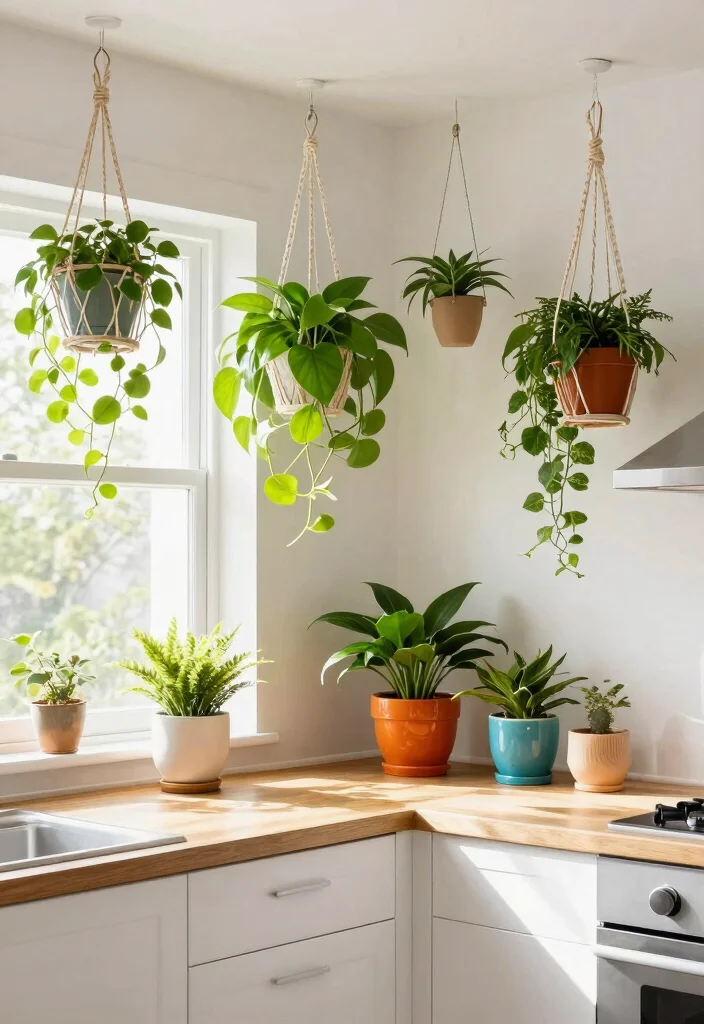
Hanging plant holders provide a clever way to conserve floor space while infusing your home with artistic charm. These holders can be hung from ceilings or walls, allowing plants to dangle elegantly and adding a vibrant touch to your decor. From macramé hangers to simple hooks, they turn vertical space into a lush display.
To style your hanging plants effectively:
– Mix various styles and lengths to achieve a layered effect.
– Use colorful pots to introduce lively hues.
– Opt for trailing plants like pothos or spider plants for a cascading look.
– Ensure they are securely attached and spaced adequately for growth.
Hanging plants are ideal for areas with limited surfaces, such as kitchens or bathroom windowsills, making them an excellent choice for vertical gardening.

[Space-Saving Design]: Our 2-pack corner plant stand is perfect for small spaces, featuring 47 "tall 6 tiered plant shelves and 4 hanging hooks to maximize vertical space. This plant stand indoor can help you arrange multiple plants neatly, turning a cluttered plant arrangement into a beautiful organized display.

【Highlighting the highlight moments of plants】Plant stand indoor with grow lights not only provides the plants with the necessary light but also brings warmth and vitality to the corners at night. The green plants and the light create a harmonious scene, making each pot of plant a visual highlight in the space.

SPACE-SAVING CORNER DESIGN: This 3-tier corner shelf features a compact vertical layout with rounded shelves, making it perfect for utilizing unused corner space in living rooms, bedrooms, or small apartments
4. Tiered Plant Stands
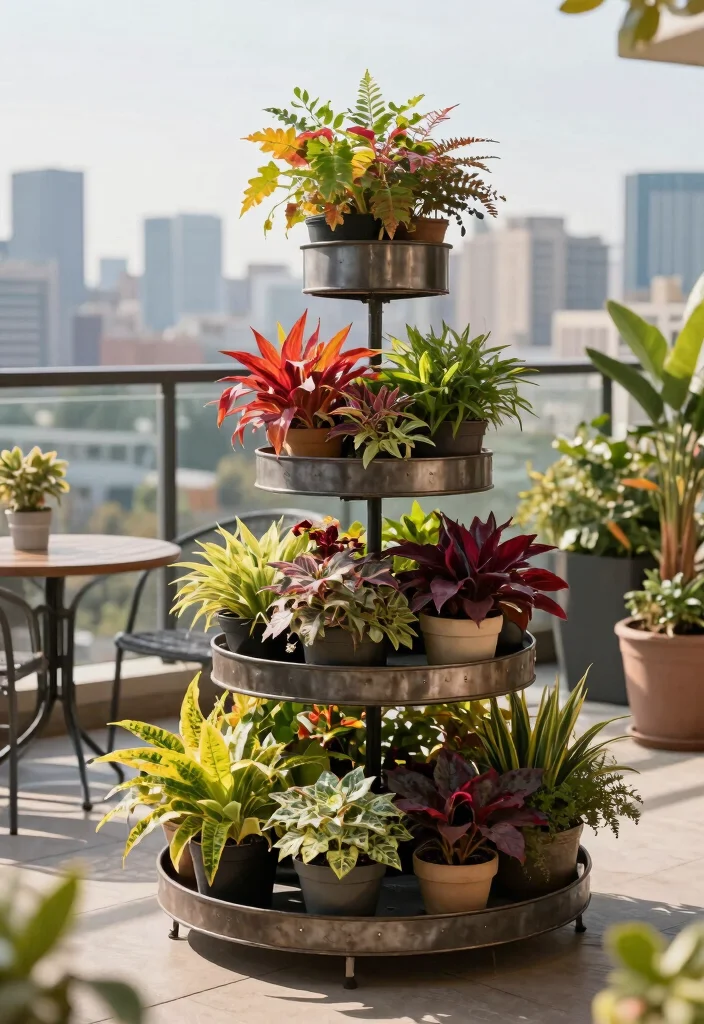
Tiered plant stands offer an elegant solution for showcasing a variety of plants while optimizing small spaces. Featuring multiple levels, these stands allow for a creative arrangement, adding depth and interest to your indoor garden. Seek out sturdy materials that can support your plant collection effectively.
Consider these benefits of tiered stands:
– They simplify watering and care, allowing you to reach all plants easily.
– The varying heights create an appealing visual arrangement.
– They are versatile enough for use indoors or on balconies.
– Choose designs that harmonize with your home decor for a seamless appearance.
Tiered stands shine in sunny areas like balconies, giving your plants plenty of exposure to light.

【Sturdy 61-Inch Hanging Plant Stand】 This hanging plant stand indoor stands 61 inches tall and is constructed from thickened steel tubing with a durable rust-resistant finish. Supporting up to 20 lb, it provides reliable strength for displaying hanging plants in humid indoor environments.

【𝐅𝐢𝐭𝐬 𝐋𝐚𝐫𝐠𝐞𝐫 𝐏𝐨𝐭𝐬 𝐄𝐚𝐬𝐢𝐥𝐲】This plant stand indoor features 11-inch wide trays that give larger planters plenty of space, making it easy to place bigger pots without feeling tight or limited

MAXIMIZE YOUR SPACE, MINIMIZE THE CLUTTER: Free up precious floor space by hanging up to 6 plants in the air! This tension rod plant shelf transforms any corner into a lush vertical garden while adding a touch of natural beauty to your home decor
5. Wall-Mounted Plant Holders
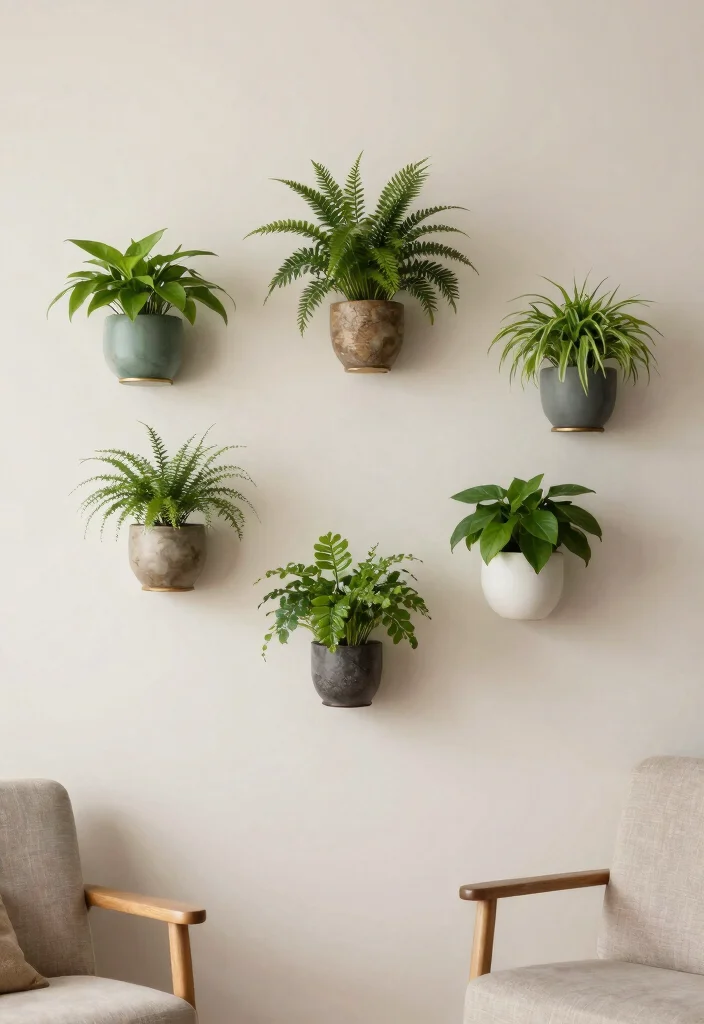
Wall-mounted plant holders are a brilliant way to save floor space while making a bold design statement. These holders can be installed in kitchens, living rooms, or bathrooms, where vertical space is often unused. Available in various styles, from modern geometric shapes to rustic wooden shelves, they can enhance any decor.
For installation success, keep these tips in mind:
– Use secure anchors to support the weight of your plants and pots.
– Group different plant types together for a unique wall arrangement.
– Add decorative items like candles or books to complement your greenery.
– Consider waterproof designs for humid areas like bathrooms.
This idea not only beautifies your walls but also introduces greenery that can enhance your home’s air quality.

Full-Spectrum Grow Light for All Plants: Equipped with a full-spectrum grow light, this plant shelf supports all types of plants at every growth stage. From seedlings to blooming flowers, it ensures your greens thrive year-round with optimal light conditions.
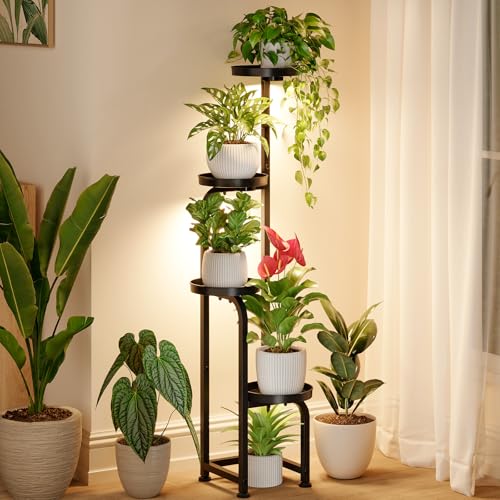
Optimal Growth Lighting: plant stand indoor with grow lights delivers full spectrum illumination; two magnetic circular lamps automatically provide 16 hours of daily light for photosynthesis

【Mogaath Plant Stand Indoor with Grow Lights】 The Mogaath plant stand indoor with grow lights is designed for plant lovers who want to bring nature into their home. Equipped with 2 full-spectrum grow lights, 3 adjustable brightness levels, and 3/9/12-hour timer settings, this plant stand with grow lights ensures your plants receive optimal light for healthy and vibrant growth—all without the need for direct sunlight.
6. Repurposed Furniture as Plant Stands
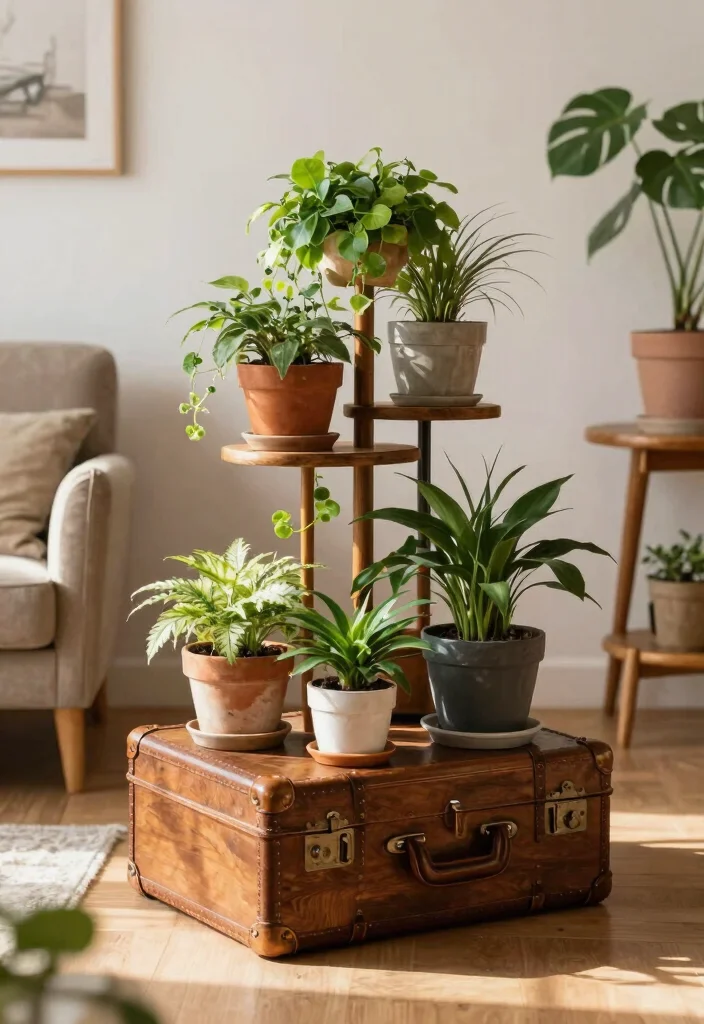
Get creative by repurposing old furniture into charming plant stands that reflect your personality. Items like small side tables, stools, or even ladders can become ideal displays for your plant collection. This approach not only adds a unique touch but also infuses character into your space.
Here are some inventive ideas for repurposing furniture:
– Use a vintage suitcase as a quirky plant holder.
– Transform a nightstand into a multi-level plant display with stacked pots.
– An old wooden crate can serve as a rustic stand for various plants.
– Paint or distress furniture pieces to suit your decor style.
Repurposed furniture not only personalizes your plant display but also embraces sustainable practices.


Decorative Plant Holder for Home: This 5-tier ladder plant shelf offers a dedicated spot for pots, allowing you to arrange herbs, succulents, and flowers beautifully. Beyond plants, it also serves as a versatile bookshelf or décor, suitable for the living room, patio or office

Compact Size: Standing at 46 in tall and 8.8 in wide at the base, this corner plant stand fits perfectly in tight spaces; enhances any living space with its sleek design; a great addition for a plant stand indoor tall setup
7. Multi-Purpose Plant Stands
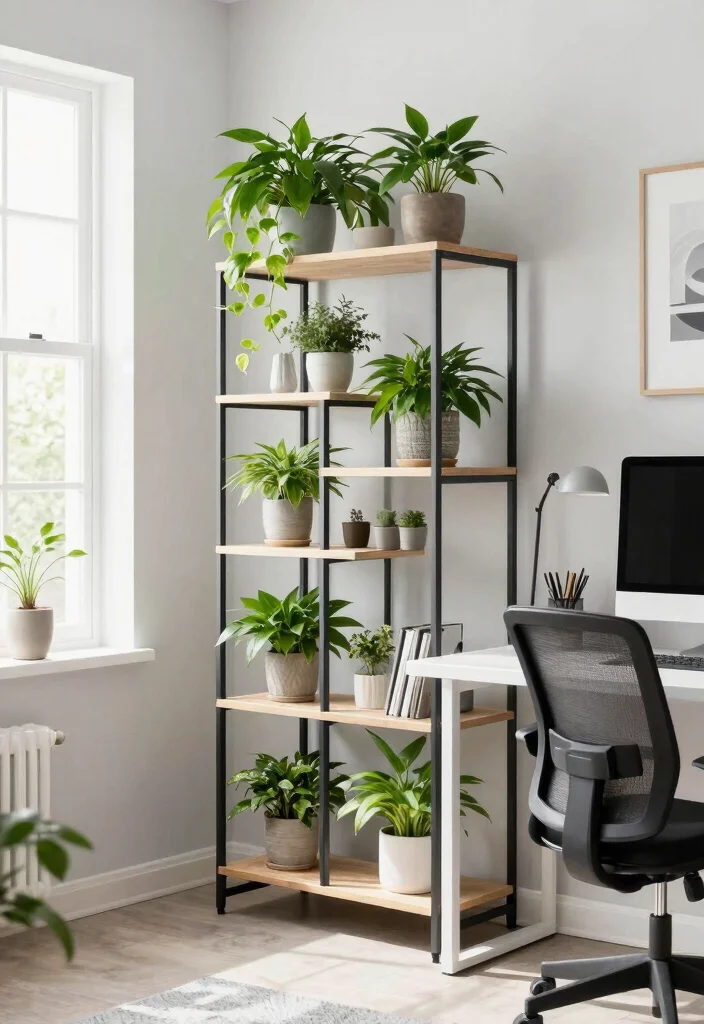
Multi-purpose plant stands are a smart solution for maximizing functionality while optimizing space. These versatile stands often include shelves or compartments for storage alongside your plants, making them perfect for small apartments.
Explore the benefits of multi-purpose stands:
– They provide extra storage for gardening tools or decorative items.
– Look for designs with wheels for easy mobility.
– Choose stands that match your decor, whether modern or vintage.
– Feature a mix of open and closed storage for added versatility.
These stands are ideal for living rooms, home offices, or any area that craves greenery without sacrificing functionality.
❝ Fun fact: a well-designed multi-purpose plant stand can add up to 30% more usable space in a tight corner. With shelves and wheels, you’re turning your plant stand ideas into extra storage for tools and greens.

【𝐊𝐞𝐞𝐩 𝐏𝐥𝐚𝐧𝐭𝐬 𝐒𝐞𝐜𝐮𝐫𝐞𝐥𝐲 𝐢𝐧 𝐏𝐥𝐚𝐜𝐞】Designed with a front guard rail, this wall plant shelf helps keep pots from sliding off, giving your plants a more secure display while reducing worries about spills, broken pots, or everyday messes

【𝐒𝐢𝐦𝐩𝐥𝐞 𝐀𝐬𝐬𝐞𝐦𝐛𝐥𝐲 𝐢𝐧 𝐌𝐢𝐧𝐮𝐭𝐞𝐬】Everything you need is included in the box, such as expansion screws and clear, easy-to-follow instructions. Mounting this wall plant hanger takes just 2 screws, allowing for a fast setup and a secure, reliable display
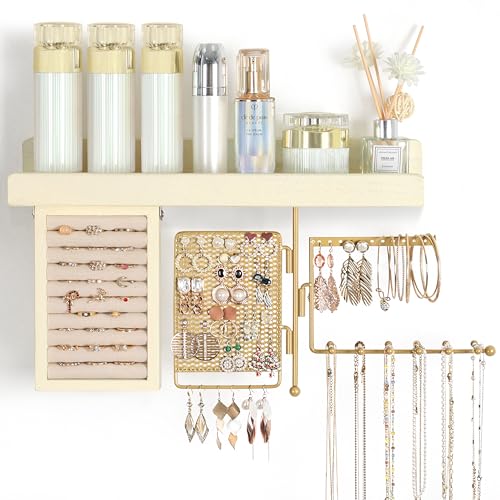
💝【4 in 1 Hanging Jewelry Organizer for Wall】Unprecedented large capacity and 4 functional areas in one. The jewelry holder features 1 wood shelf for storing your makeup or daily accessories, 1 ring box for holding 35 rings for the ultimate organization and easy display, 1 rotating peg board for hanging ear studs and earrings, 2-tier rotating necklace rack for displaying necklaces and earrings.
8. Minimalist Plant Stands
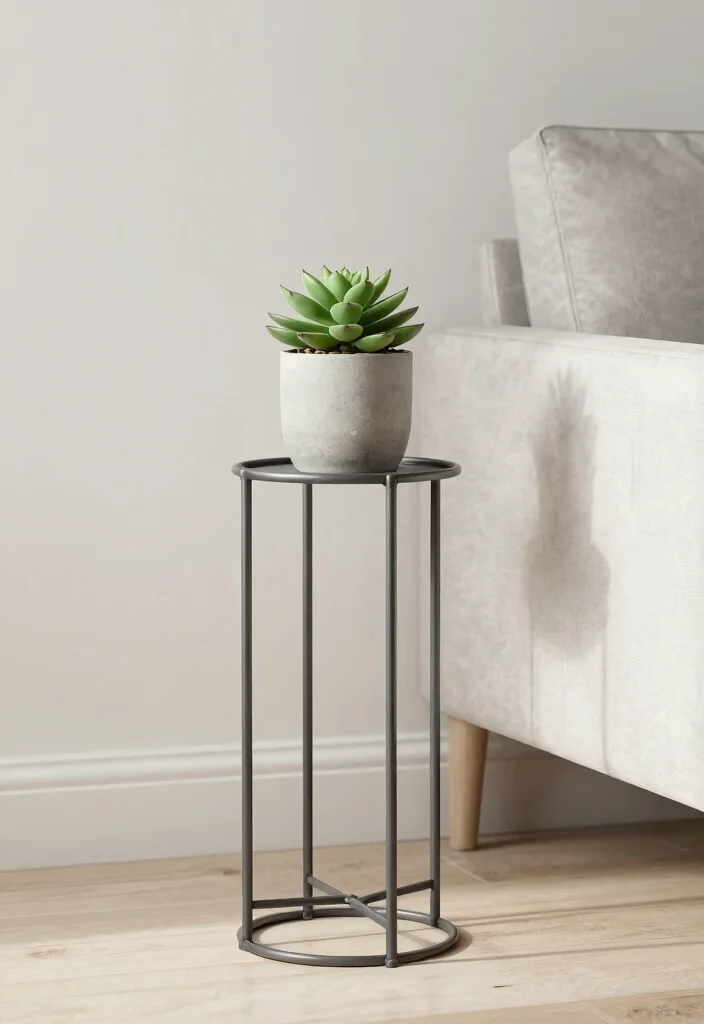
For those who appreciate a clean and uncluttered aesthetic, minimalist plant stands are perfect. With simple lines and neutral tones, these stands allow your plants to take center stage while enhancing a modern home environment.
Key characteristics of minimalist stands include:
– Opt for materials like metal or light wood for a sleek finish.
– Choose geometric shapes that add visual interest without overcrowding the space.
– Utilize a monochromatic color scheme for a unified look.
– Pair with low-maintenance plants for an effortlessly chic appearance.
Minimalist stands can complement any room, providing a refined touch while beautifully showcasing your favorite greenery.

Full-Spectrum Grow Light System: This plant stand features adjustable full-spectrum LEDs (3000K-6500K) that mimic natural sunlight for optimal growth at all stages - from seedlings to flowering plants. The 8-level dimming meets each plant's needs.

No Tool Required: Worried about the difficulty in assembly? Choose this 5-tier corner shelf and you will have a joyful experience. You just need to twist in the components with your hands and finish everything without additional tools, simple and relaxing.

Maximize Corner Potential: The 5-tier corner shelf, sized 11.8”L x 11.8”W x 59.4”H, with a fan shape fantastically turns unused corners into super practical storage sports. It is an ideal choice for optimizing space in living room, bedroom, kitchen and office
Dimensions & Size Guide
Standard Sizes & Measurements:
When selecting a plant stand, the dimensions are crucial for fitting your space. Most indoor plant stands range from 18 to 48 inches in height. For width, expect sizes between 12 to 36 inches. If you’re using a ladder plant stand, they typically measure around 24″ wide and 60″ tall. Ensure your plants fit comfortably on the stand, allowing for at least 6-12 inches of space between shelves. This space ensures proper light exposure and air circulation for the plants.
Minimum requirements for proper fit vary. For corner plant stands, aim for a base that’s at least 15 inches on each side. This measurement allows the stand to fit snugly in a corner while supporting your plants effectively. For vertical gardening solutions, like wall-mounted plant holders, keep in mind the mounting height. A height of 4-5 feet is ideal for visibility and access.
Quick Reference Table:
Size/Dimension – Best for: [use case], Minimum space needed: [measurement]
– 18″ – 24″ Tall – Best for: Small plants, Minimum space needed: 12″x12″
– 24″ – 36″ Tall – Best for: Medium-sized plants, Minimum space needed: 18″x18″
– 36″ – 48″ Tall – Best for: Larger plants, Minimum space needed: 24″x24″
– Ladder Stands (24″ wide) – Best for: Multi-tiered displays, Minimum space needed: 15″x15″
– Wall-Mounted (12″ wide) – Best for: Vertical displays, Minimum space needed: 12″x24″
Space Planning Tips:
1. Measure Your Space: Always start by measuring the area where you’d like the plant stand. This prevents any surprises when the stand arrives. Use a tape measure for accuracy. ✔️
2. Consider the Height of Your Plants: If you have tall plants, make sure your stand can accommodate them without crowding. Aim for a height that allows easy access for watering and maintenance.
3. Leave Room for Growth: Remember that plants grow! Choose a stand that gives your plants room to expand. This is especially important for climbing plants or those that spread out.
4. Avoid Overcrowding: Don’t cram too many plants onto a small stand. Each plant needs space for air circulation and light. Overcrowding can lead to unhealthy plants and may damage your stand.
5. Be Mindful of Weight Limits: Check the weight capacity of your stand. If you’re planning to fill it with larger pots, ensure the stand can hold the weight without tipping or breaking.
Pro Tip: The most important measurement to consider is the height. If you can’t comfortably reach the plants for care or watering, your stand might not be the best fit. Choose a height that works for you to enjoy your plants fully! 💡

2-Tier Design with Hanging Hook — Features two spacious shelves for potted plants plus a top hanging hook for trailing plants or decorative items, maximizing vertical display space in small areas like balconies, patios, and corners. Dimensions: 16.1 x 11.8 x 68.9 inches

[Multi-Tier Plant Display] Showcase your plants with this versatile plant stand indoor tall, featuring two spacious trays and a top hanging bar for ample storage. The three-level design, including two trays and one hanging space, provides an elegant way to display a variety of plant pots while maximizing vertical space

【𝐌𝐮𝐥𝐭𝐢-𝐔𝐬𝐞 𝐇𝐚𝐧𝐠𝐢𝐧𝐠 𝐃𝐞𝐬𝐢𝐠𝐧】This hanging plant stand features a 71-inch top hanging rod and 2 removable hooks, giving you extra space to display hanging plants, trailing greenery, baskets, or small decor with more flexibility
9. Vintage Plant Stands
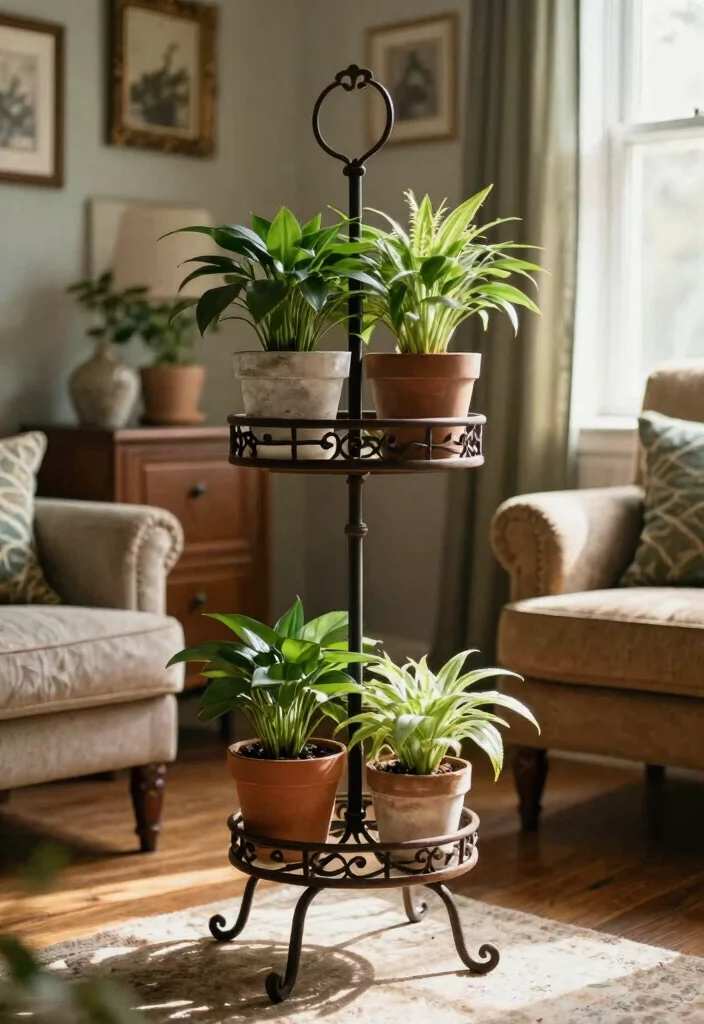
Vintage plant stands infuse character and charm into any space, offering a nostalgic touch that tells a story. These stands are often discovered at flea markets or thrift stores, adding unique history to your home. Their intricate designs can become captivating focal points in any room.
To incorporate vintage stands effectively:
– Mix and match with modern decor for an eclectic vibe.
– Repaint or refinish them to align with your existing style.
– Use them to display prized plants or rare varieties.
– Pair with vintage pots for a cohesive appearance.
Utilizing vintage plant stands is a wonderful way to add personality while showcasing your plants beautifully.

Upgraded Shelf with Grow Light: The indoor plant stand after upgrading, the partition shelves more wider for large pots or placing more pots. Unique design capable of saving space while allowing each layer of plants to get plenty of sunlight and we also provide grown light for indoor plant allowing your plants to receive more energy.

Multiple Tiered Display Shelf: Lawei bamboo tabletop plant stand approximate dimensions: 25 L x10 W x 14 H (in inches), this plant stand features a total of 4 platforms in 2 tiers, which offers adequate growing space for at least 5 potted plants and sparing much space in your balcony. The flower rack is suitable for placing small succulent pots, germinated seeds, and new cuttings for cultivation.

Modern&Elegant Style Design: Well fits to most home decor and furniture, goes with a variety of plants and flowers on vases or plant pots, modern and stylish design adds a touch of class to any rooms, tables, office desks. NOTE: Pot and Plant are not included.
10. Compact Plant Carts
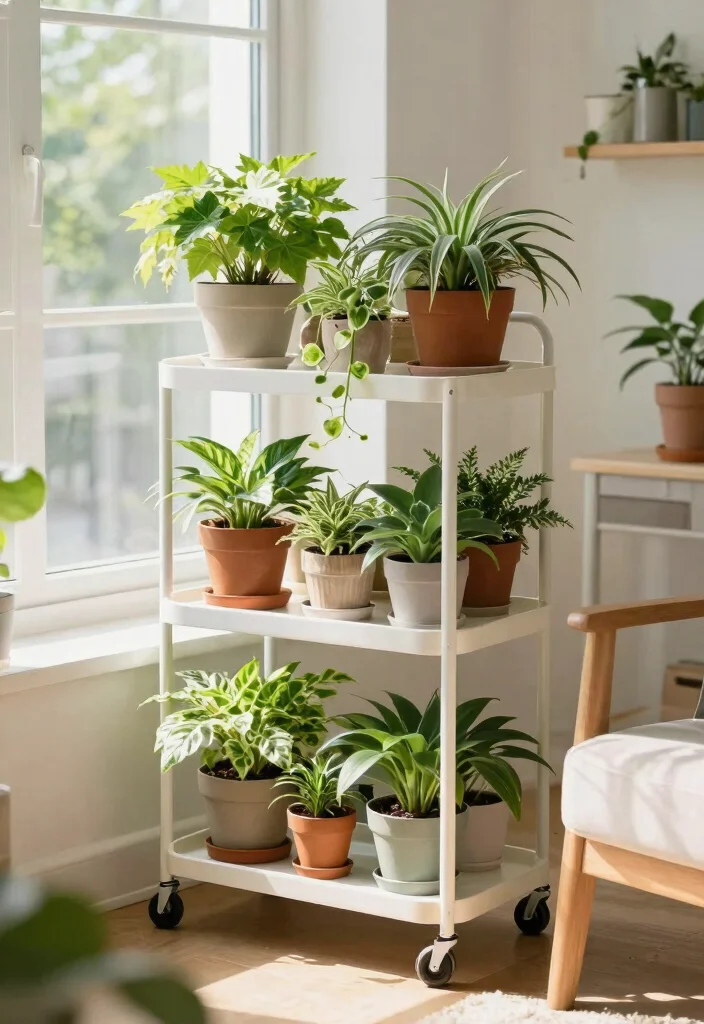
For those short on space, compact plant carts offer versatility with style. These rolling carts can be tucked into corners or easily moved around the house, allowing you to change your plant display as desired. Typically featuring multiple shelves, they provide ample space for your green companions.
Advantages of plant carts include:
– Easily reposition them to capture the best light throughout the day.
– Use them to store a mix of plants and gardening tools for convenience.
– Select a design that complements your home’s aesthetic.
– Look for carts with lockable wheels for stability.
Plant carts are perfect for balconies, sunrooms, or any area where flexibility and style intersect.
11. DIY Plant Stand Ideas
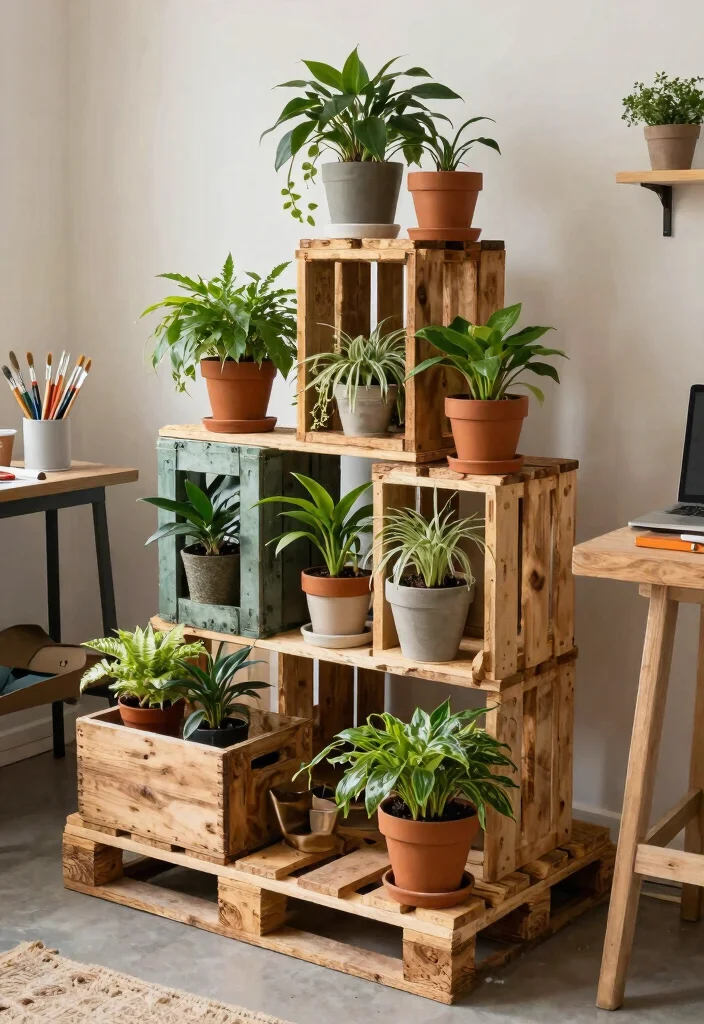
Creating your own plant stands adds a personal touch to your gardening space. DIY projects can range from simple to intricate, depending on your skills and available materials. You can transform old wooden pallets, crates, or even branches into unique stands that reflect your creativity.
Consider these tips for crafting DIY plant stands:
– Design your stand to fit your specific space and style preferences.
– Use weather-resistant materials if placing them outdoors.
– Get creative with colors and finishes to match your decor.
– Incorporate storage options for pots and gardening supplies.
DIY plant stands not only save money but also provide satisfaction and a sense of ownership over your plant display.
12. Floating Shelves for Plants
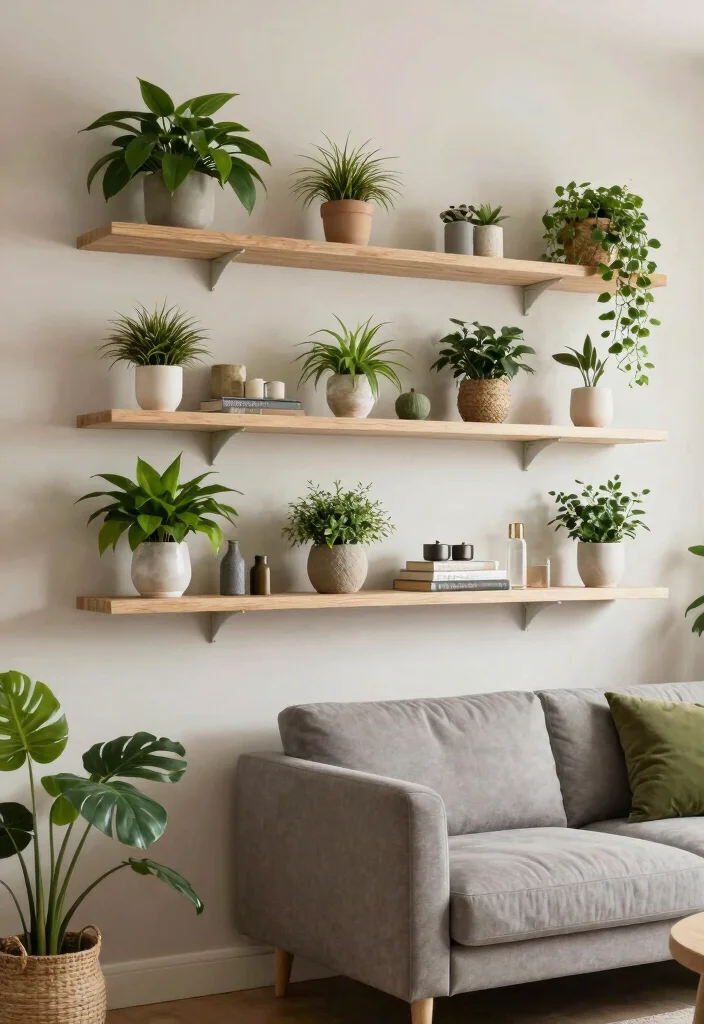
Floating shelves present an innovative way to display plants while keeping floors clear. These shelves create a sleek, modern look and can be installed at various heights to enhance visual interest. Use them in living rooms, kitchens, or bathrooms for a stylish display that captures attention.
Styling tips for floating shelves include:
– Arrange plants in odd-numbered groups for a more natural appearance.
– Mix in decorative items like candles or books for added depth.
– Ensure each plant receives adequate light according to its needs.
– Use brackets that match your home’s decor for a seamless fit.
Floating shelves can enliven any wall, providing a unique platform for your plants.
13. Decorative Plant Columns
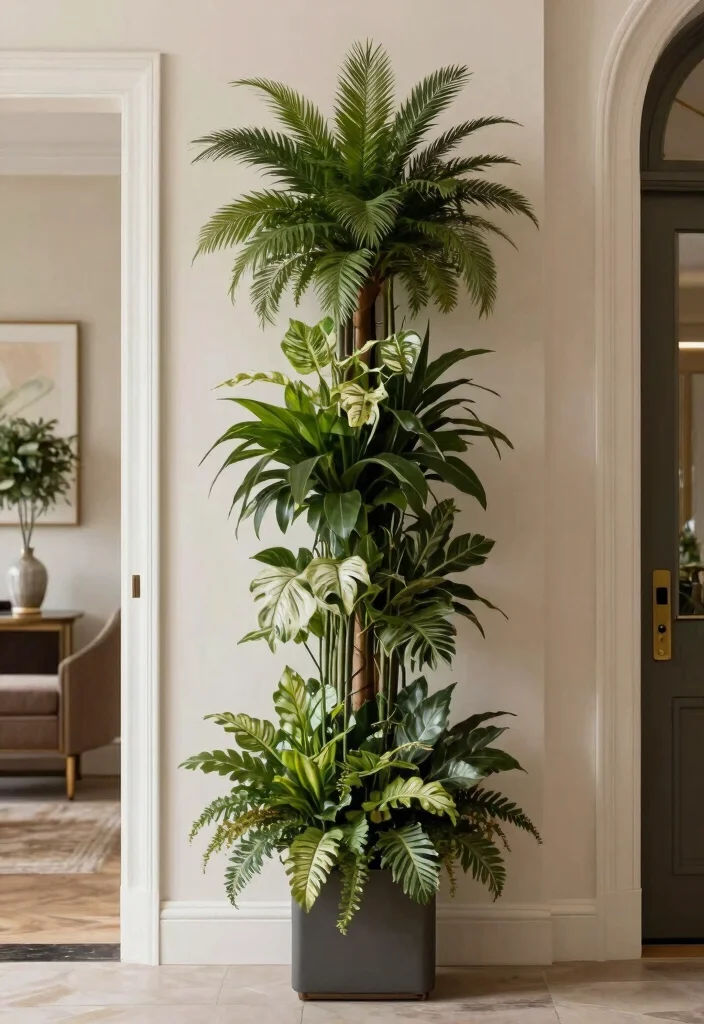
Plant columns serve as a striking way to make a statement while saving space in your home. These tall, slender structures can hold multiple plants in a vertical arrangement, drawing the eye upward and adding dramatic flair. They’re perfect for entryways, living rooms, or any spot that could benefit from height.
When selecting a plant column, consider these factors:
– Look for designs that match your decor, whether modern or traditional.
– Ensure stability and adequate weight capacity for your plants.
– Choose a model with adjustable tiers to accommodate different plant sizes.
– Position them to receive the right amount of sunlight.
Plant columns not only enhance your space but also allow for a stunning showcase of your plant collection.
Fun fact: a single decorative plant column can hold 4–6 plants in the footprint of a small chair, instantly multiplying your green space. In tiny homes, plant stand ideas that use vertical columns save floor space while delivering maximum impact.
14. Vertical Garden Frames
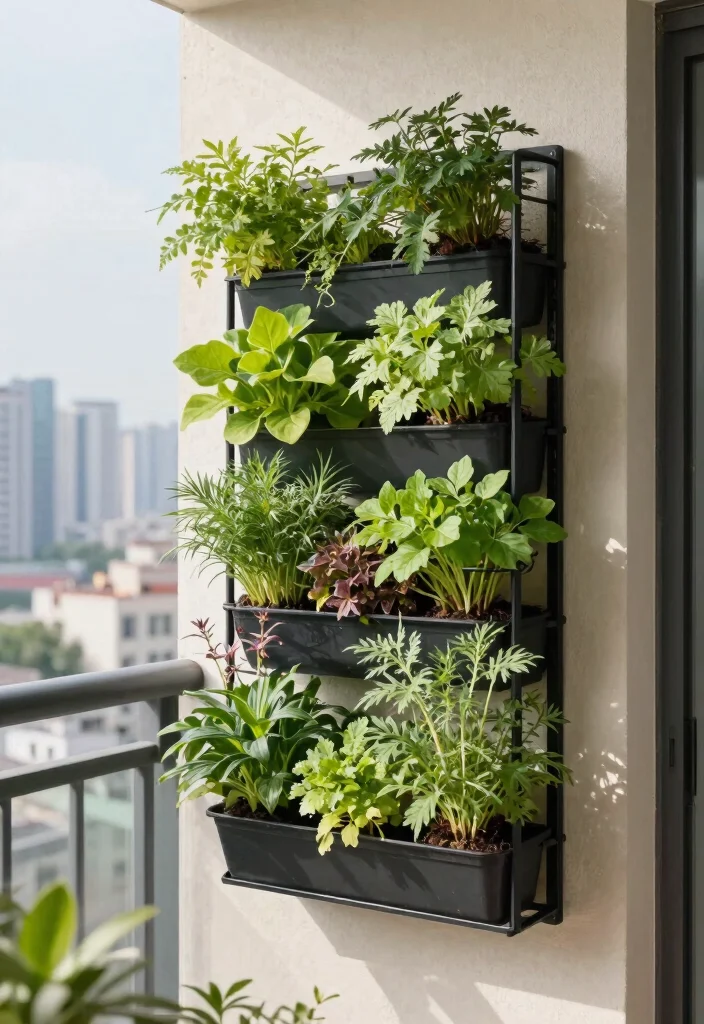
Vertical garden frames are an outstanding solution for small spaces, allowing you to grow plants directly on a wall while conserving floor area. These frames can be customized to fit your space and often include pockets for smaller plants like herbs or succulents. They are particularly useful in kitchens or balconies where horizontal space is limited.
Keep these considerations in mind for vertical garden frames:
– Choose lightweight materials for easy installation.
– Ensure a watering system is in place if using soil for planting.
– Incorporate a mix of plants for a vibrant and diverse display.
– Consider seasonal plants for ongoing interest throughout the year.
Vertical garden frames offer an innovative way to garden in tight spaces while creating an eye-catching display.
Did you know vertical garden frames are one of the best plant stand ideas for tiny spaces? They can reclaim up to 40% of floor space by letting herbs or succulents flourish on the wall.
Conclusion
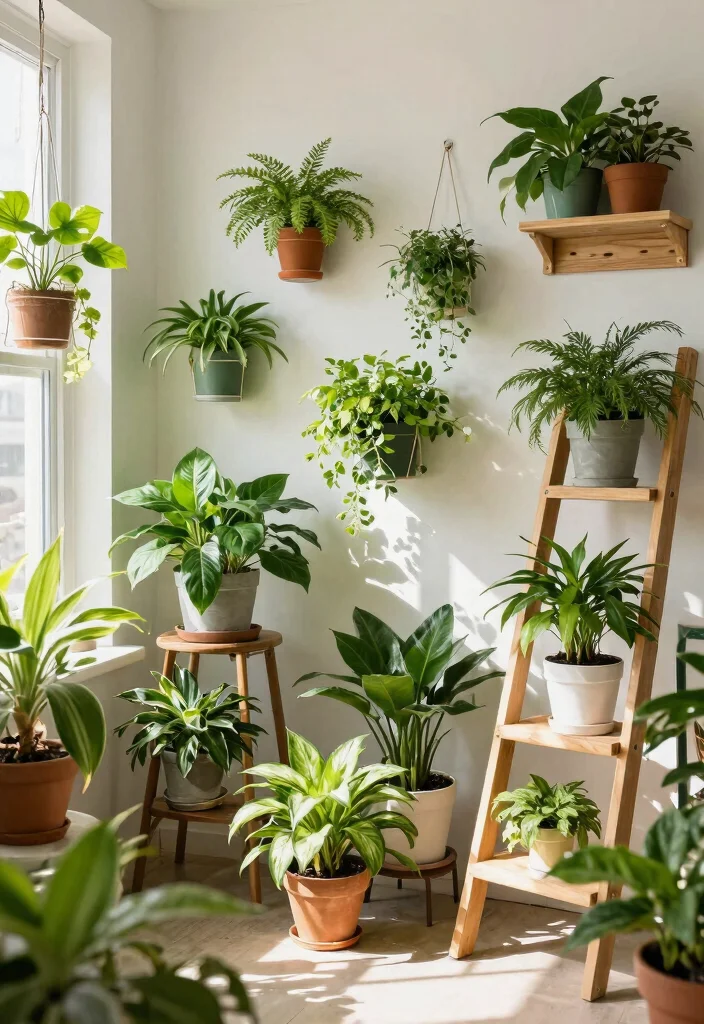
Embracing green space in tight corners or small areas is all about creativity and resourcefulness.
From tiered stands to wall-mounted displays, the options are endless for transforming your home into a vibrant plant haven. Choose the ideas that resonate with your style and space. Don’t hesitate to experiment and find joy in your gardening journey, even in the most compact areas.
Frequently Asked Questions
What are the best plant stand ideas for maximizing space in small apartments?
In small spaces, start with plant stand ideas that go vertical. Think tiered stands, wall-mounted shelves, and clever corner plant stands that tuck into tight nooks. Stack and stagger plants on a tall ladder shelf, use slim nesting stands, or convert a vertical bookcase into an indoor plant display. Always measure to fit your small space gardening setup and avoid crowding.
Tips: choose lightweight, stable materials, group plants with similar light needs, and rotate plants to keep the display fresh. If you want mobility, pick modular or foldable options for easy rearrangement.
How can I arrange corner plant stands to create a vertical display without clutter?
Place a tall corner unit, stack a few narrow shelves, and vary heights to create a layered vertical gardening solutions look. Use the corner to hold a rotating plant stand or a small trellis with trailing plants for an indoor plant display. Keep a light color or uniform material to unify the space and avoid visual noise in small space gardening environments.
Practical steps: measure corner depth, choose stands with adjustable feet, ensure drainage trays, and leave air movement around plants. Then group by lighting needs to prevent mismatches.
What materials and designs work best for space-saving gardening furniture in tight spaces?
Look for space-saving gardening furniture built for clutter-free corners: modular wall shelves, slim metal stands, or lightweight bamboo racks. For durability and style, a vertical unit with adjustable shelves works well for vertical gardening solutions. Avoid bulky bases; choose designs with slim profiles, good drainage, and easy stacking. Pair metal frames with wooden trays to balance look and function for indoor plant display.
Pro tips: choose neutral tones to blend with walls, and pick stands that can be mounted to walls or anchored to corners to maximize floor space.
Can plant stands help optimize light exposure for indoor plants in small rooms?
Absolutely. Position stands near windows or under skylights to boost light for sun-loving plants, while placing lower-light plant stands underneath brighter shelves. A well-planned indoor plant display with adjustable heights helps you optimize light without crowding, a key part of vertical gardening solutions. Rotate plants every few weeks to ensure even growth and prevent leggy growth. Include a few reflective surfaces—mirror backs or white shelves—to bounce light around the room.
Tips: use light-colored trays and keep air circulation around stacked stands to avoid humidity buildup.
How do I choose and combine multiple plant stand ideas to create a cohesive look?
Start by selecting a few plant stand ideas that fit your space, then mix heights, widths, and materials to create visual rhythm while staying cohesive. For small space gardening, use a consistent material (e.g., natural wood) and repeat a simple color palette to tie corners and shelves together. Use matching drainage trays and group plants with similar care needs for an indoor plant display that feels intentional. Don’t be afraid to switch out plants seasonally to refresh the look in your space-saving gardening furniture setup.
Tip: measure clearances and leave space for airflow, so every plant stands comfortably.
Related Topics
plant stand ideas
small space gardening
corner plant stands
vertical gardening
indoor plant display
space-saving furniture
urban gardening
beginner friendly
DIY plant stands
minimalist design
easy gardening solutions
trending plant decor