The right office open space decor depends on how much your coworkers will see it, not how much you like it.
Most people buy for the private office they wish they had, then learn the hard way that a 40-inch print facing the aisle becomes six people’s daily distraction.
The same research that links greenery to better focus also shows environmental cues shape attention for everyone nearby, so your peace lily needs to sit within breathing distance to purify anything, and your fairy lights need 2700K bulbs or they throw the same blue glare as the fluorescents above you.
1. Cozy Indoor Plants

A peace lily handles the low light and stale air that open offices tend to collect, and it will grow anywhere from 15 inches to 3 feet, so it fits on a windowsill ledge or the floor beside a filing cabinet without crowding the 150–175 square feet most North American plans give each desk.
Succulents do even less demanding work: a shallow tray or a mounted wooden frame keeps them off the work surface entirely, which matters when every horizontal inch already holds a monitor, a coffee cup, and the day’s paperwork.
I would put the succulents where eye level catches them during a screen break, and the peace lily where its leaves can actually filter what the HVAC recirculates.
The air-purifying benefit is real, but only if the plant is within a few feet of where you breathe.
Both need so little attention that watering becomes a Friday ritual rather than a daily chore, and that low-stakes routine is part of what makes them calming in the first place.
Fake plants save the last bit of effort, yet they do none of the air work and, to my eye, the gloss gives them away under fluorescent light.
For a few dollars and ten minutes of setup, the living ones earn their spot.
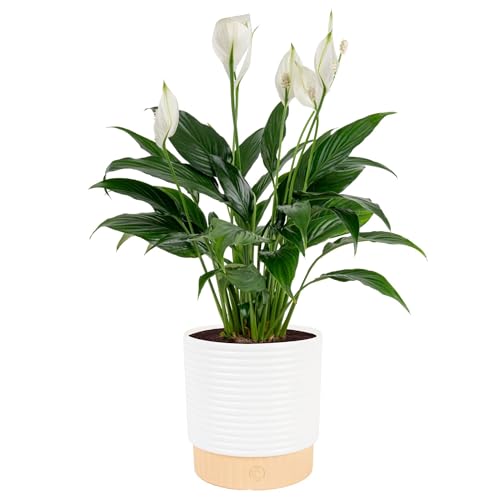
ELEGANT LIVE PLANT DECOR: The pure white blooms of the Peace Lily bring timeless sophistication to any space. Ideal as a tabletop centerpiece, living room accent, or serene office décor, this plant makes a thoughtful year-round or thoughtful gift for plant lovers and home décor enthusiasts

Potted: Comes already potted in a nursery pot with soil and some slow release fertilizer.
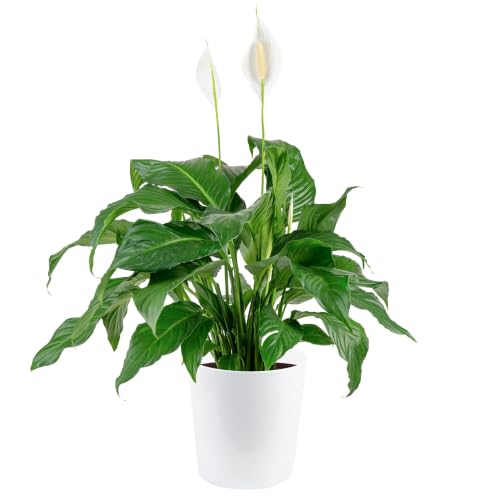
ELEGANT FLOWERING ROOM DÉCOR: The pure white flowering spathes of the large Peace Lily add a touch of timeless, sophisticated elegance. A gorgeous floor decor piece for a home room or quiet office setting
2. Boho Inspired Decor

Woven textures and natural fibers do the heavy lifting when you want to soften the corporate edge of an open office without making it look like a craft fair.
Macrame wall hangings add visual warmth against white or gray partitions, and wood bark coasters or a single wooden accent piece ground the space in something that feels collected rather than issued by HR.
Restraint matters: one or two tassel elements per desk zone, not five. Too many and the look tips from relaxed to messy, which reads as unprofessional in a shared floor plan where your neighbor’s clutter becomes yours visually.
A small peace lily or snake plant on the desk ties the bohemian feel to the biophilic benefit sources keep pointing to: greenery near your workspace nudges productivity and mood upward.
What I would skip is the impulse to layer every surface with texture. A woven desk mat or a single throw blanket over your chair does more than a full textile spread, because open offices already compete for attention.
Collected pieces, a ceramic bowl from a local maker or a small brass object with patina, signal that someone actual works here.
That small claim of personality matters in a sea of identical workstations, and it costs little more than a free weekend to pull together.
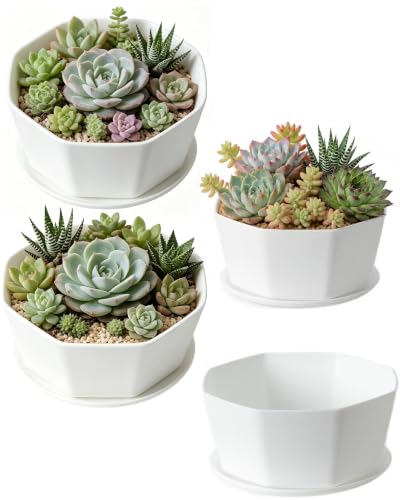
Size & Dimension: 5.9" Upper Diameter, 4.7" Lower diameter, 2.6" Height. Perfect for smaller bonsais or bigger succulents

Premium Material: Made of high-density smooth glazed ceramic, these cactus pots feature a minimalist pure white finish that matches all modern, boho, farmhouse and minimalist home decor styles. The glossy seamless glaze resists dirt, super easy to wipe clean with a damp cloth, ideal decorative plant containers for office, bedroom, living room and kitchen tabletop.
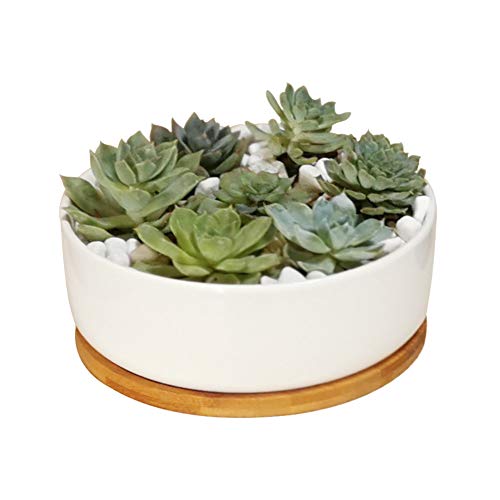
Perfect for displaying live 3 or 4 miniature plants such as succulents, herb and small cacti.
3. Fairy Lights
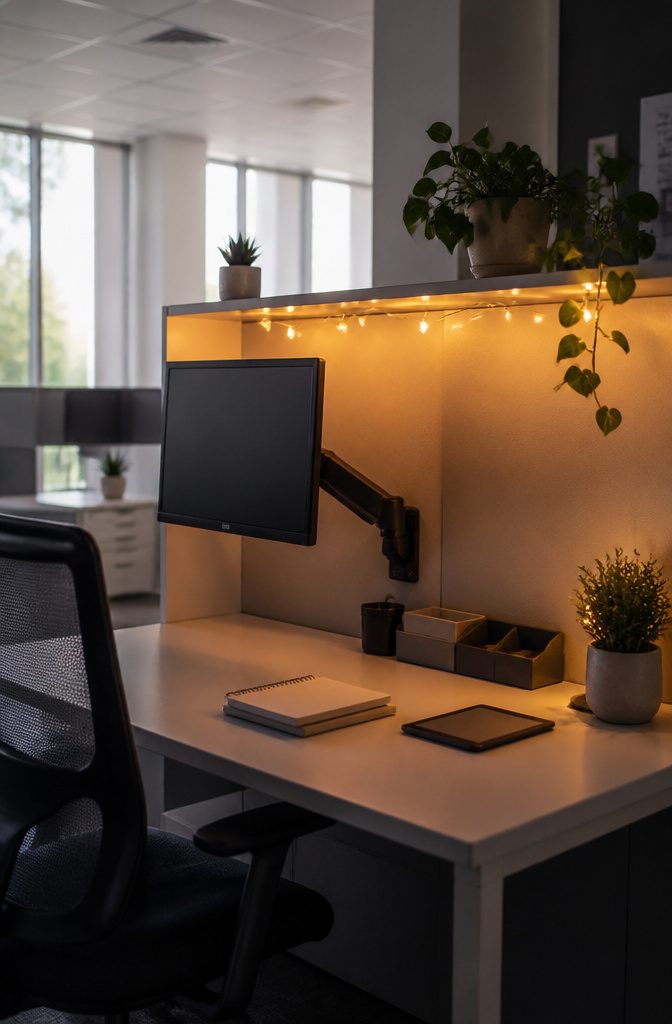
Overhead fluorescents in an open office drain focus the way a gray sky drains energy.
I swap them out mentally the minute I walk into a space, and the first replacement I reach for is a strand of warm fairy lights run along the top of a bookshelf or the back edge of a desk hutch.
Bulb temperature matters more than most people expect.
A 2700K filament reads as candlelight; it softens the room without fighting your monitor. A 4000K strand, by contrast, throws the same blue-tinged glare as the fluorescents you are trying to escape.
I have made the mistake of ordering the wrong temperature and ended up with a dental-office glow above my keyboard. Now I check the Kelvin rating before I check the price.
String placement is the part that takes five minutes of thought and saves hours of regret.
I run them where the wire hides in shadow: behind monitor arms, along the underside of floating shelves, tucked into the frame of a cork board. What you want is light without visible infrastructure.
Battery-operated sets win in open layouts for one blunt reason. Plug strips turn a shared desk bank into a cable negotiation with coworkers you have not met yet.
Battery boxes tuck behind a desk leg, run for weeks on a timer, and move with you when the office manager reshuffles seating again. You will replace AAs twice a year, which I will take over extension-cord diplomacy every time.

Grow Light with Base: Our grow light for indoor plants is designed with a detachable base, it has two install methods: 1, Place the pot on the base to ensure stability; 2, Just insert it into the soil; Ideal for desks, tabletops, and plant shelves


NOTE: The product stand needs to be pressed down by the flower pot to be stable. Not wireless style. 2 Installation Methods: Specially designed plant light for indoor plants, which can be inserted in the soil or stand for lighting.Unique and easy to assemble and disassemble.
4. Minimalist Office Setup

A minimalist desk in an open office is less about aesthetic restraint and more about regaining the 25 minutes you lose every time a visual distraction pulls you out of focus.
Information workers get interrupted roughly every 10.5 minutes, and I have watched neighbors across the aisle lose whole mornings to clutter they stopped seeing themselves but everyone else reads at a glance.
Surface area is the first thing I would cut. A monitor stand, one notebook, and the single device you are actually using right now.
Everything else lives in a drawer. The discipline is simple: if you did not touch it today, it does not sit out.
Cable management is not a separate project; it is the look.
A single fabric-wrapped cord running down the desk leg disappears where a plastic snake of four adapters becomes the thing someone three desks over studies while you are trying to think.
Velcro straps in black or white, matched to the leg, cost almost nothing and matter more than the desk itself.
Open offices punish ornament because your taste becomes everyone else’s visual noise.
I would skip the cute resting pad and the motivational quote block. The calm you feel in a stripped-down setup is the same calm you are buying for the person facing you.

Size : Macrame 14" Width X 33" Length (from the dowel to the bottom of the longest fringe). Wood dowel: 17". Tips: The macrame may be curly during transport, you can iron it with an iron steam or pull down the strings to regain the straight shape.

BOHO WALL DECOR SET: Includes 2 handcrafted macrame wall hangings with artificial eucalyptus plants in green-gray tones, perfect for adding bohemian charm to any living space, bedroom, or office

【Large Woven Tapestry】The large size 39"X29.5"(100X75cm) is a great fit for your wall, great size to place at any place of your house. The package includes 3 splicing wooden rods, which can be easily assembled into a large macrame wall hanging or also divided into two small wall decorations.
5. White Office Aesthetic

Pure white walls in an open office can feel like a clinic if you let them.
I would start with a warm white, something with a cream or barely-there greige undertone, rather than the stark blue-white that reads sterile under fluorescent light.
Texture matters more than color here: a limewash or matte plaster finish catches light differently across the day, and woven shades or a bouclé chair break up the flatness without adding clutter.
Sources recommend keeping to one accent color maximum in a serene environment, and I would pick blue for that role; it promotes focus and concentration in a way yellow, which can be overstimulating, does not.
A single navy bookshelf or slate ceramic lamp does the job.
Maintenance is where the white office aesthetic lives or dies.
I would skip high-gloss paint on shared desks; every scuff shows. Matte or eggshell finishes on walls, and performance fabrics with tight weaves on seating, hide the wear of daily use far better.
Textured materials also soften acoustics in an open plan, which matters more than most people account for until they are three hours into a conference call they can hear from six desks away.
One accent color, warm undertones, and surfaces that forgive fingerprints are what keep white looking intentional rather than unfinished.

Timer & Dimmable Function: Newly upgraded electric fairy lights plug in with remote control, provides four brightness options, 25%, 50%, 75%, 100%, to meet your needs in different scenarios, comes with 3 different timing modes, 6H/8H/6639H, more power saving, no need to manually turn off

【2700K-6500K CCT Tunable White】Freely adjust color temperature from warm 2700K to cool 6500K with 5 color temperature. Perfect for creating any ambiance from cozy indoor lighting to bright outdoor illumination

Connectable String Lights Indoor Outdoor: These 66ft Christmas lights feature 200 warm white LEDs and offer a timer, memory function, waterproof construction, 13 lighting modes, and a connectable design. The fairy lights emit a warm, inviting glow, creating the perfect atmosphere for Christmas, weddings, dates, or everyday decorations. Effortlessly connect multiple strands to cover larger areas in rooms, gardens, and so on. Wrap your world in a soft, romantic radiance!
6. Feminine Office Decor

Feminine office decor in an open plan comes down to three things that read as intentional rather than themed: softer lines in the furniture, a color palette kept to two or three muted tones, and organizers that do work but look like desk accessories you’d keep on a vanity.
Blush pink, soft pastels, and gold accents run through most of the setups that pull this off without sliding into cliché.
I would pick the glass monitor stand with gold hardware over a standard black riser; it lifts the screen to eye level and reflects light rather than absorbing it, which matters when you are working elbow-to-elbow in shared space.
A ceramic vase with fresh or dried foliage does more than a generic pen cup, and a chic organizer in the same metal finish ties the look together without cluttering the sightline to the next desk.
The overlap with chic feminine office is mostly in the metallics and the restraint, both of which keep personal touches from looking like they escaped a dorm room.
I would skip anything with a script font or a literal "boss lady" plaque; the tone stays cleaner when the femininity is in the materials, not the messaging.

LIVE INDOOR PLANT: Bring home a beautiful Peace Lily to add a relaxing, calm feel to any space. These houseplants are natural air purifiers that help keep your indoor air fresh and clean. Easily fits tabletop, shelf, living room, office, or bedroom decor

ELEGANT INDOOR HOUSEPLANT: Add a touch of timeless, sophisticated style with a live Peace Lily. Featuring iconic white blooms and lush green foliage, it’s a perfect tabletop decor piece for your home or office

About the Plant: Peace Lily, scientific name: Spathiphyllum, is a low-maintenance and popular houseplant. It displays vibrant green leaves and bright white blooms that give off a sweet scent. Peace Lilies make perfect home decor and look beautiful sitting on a windowsill, end table, or bookshelf.
7. Multi-Screen Desk Setup
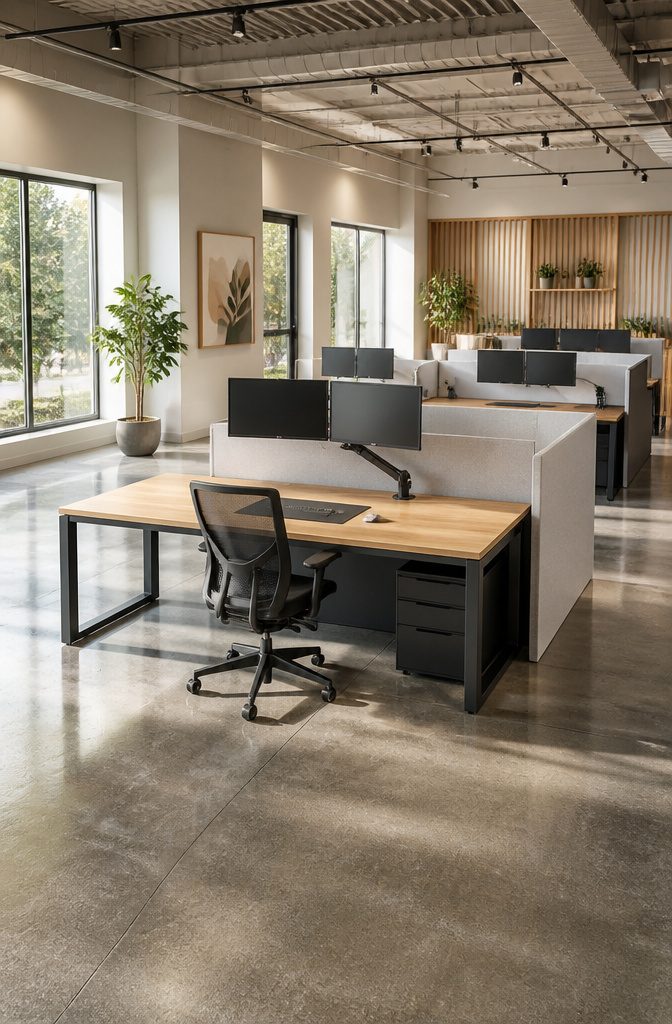
A dual-monitor arm mounted at the back edge of the desk keeps sight lines open across an open floor plan.
I would pick a gas-spring arm over a fixed-height pole, since the adjustability costs little extra and lets the screen sit flush with the desktop when you want the surface clear.
The arm itself disappears behind the bezel if you choose black on black, which matters in a space where five people might glance your direction.
For cable routing, I run power and display cables down the arm’s built-in channel, then straight to a tray bolted beneath the desk rear.
A loop of slack stays hidden there, so nothing dangles into the sight line between you and the person across the aisle.
The gap between monitor back and desk edge should stay under 4 inches, or the bundle starts to read as a visual barrier from ten feet away.
I would skip the third monitor unless your work genuinely tiles three full windows side by side. Most people stack a laptop below and call it a third screen, which only crowds the primary viewing distance.
I would also skip vertical monitor stacks in any open plan. A portrait screen on top blocks the eye contact that makes these spaces tolerable, and the neck angle is wrong for more than occasional scanning.

Quality material: This succulent planter pot is made of ceramic which is durable and will not fade. The glazed ceramic planter pot is both beautiful and artist.

Sizes and Accessories: The top outer diameter of the succulent pot is 5.6"/ 14.2cm, the waist diameter is 6.1"/ 15.5cm, and the height including tray is 2.6"/ 6.5cm, with a removable ceramic plant saucer and a mesh pad(ONLY CERAMIC PLANTER IS INCLUDED, PLANTS ARE NOT INCLUDED)

High quality materials and Easy to Care. Ceramic planter is made of high quality ceramics forged at high temperature.The surface of this flower planter is made of smooth glaze, so it’s easy to clean the succulent planter.
8. Bulletin Boards
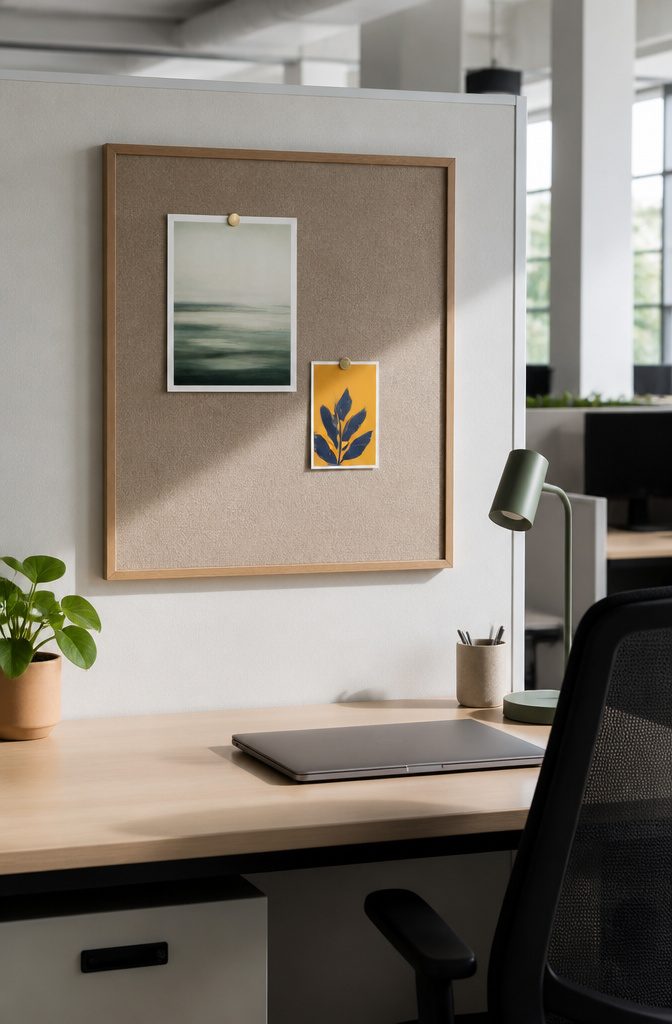
Cork boards still work, but in an open office they read like a dorm room unless you frame them.
A thin oak or painted metal border turns a 24 x 36 inch sheet into something that looks chosen, not inherited from the supply closet.
I would skip the aluminum trim that comes standard; it dents and the corners go sharp after a year.
Felt boards in charcoal or warm gray handle push pins better than cork and shed the brown cafeteria look entirely.
Magnetic boards cost more but hold heavier items without the pocked surface that collects dust. For a shared desk, I think felt wins: quiet, no slam, and the pins stay put when someone bumps the partition.
What you pin matters in a sight line shared by six people.
A single 8 x 10 print, a postcard with color you actually like, and one current list keeps the board personal without turning your cube into a bulletin for everyone else’s eyes.
Leave off the layered overlapping collage; it scans as clutter from ten feet away and you will stop seeing it yourself in a week. Keep the bottom third empty so papers you actually need have somewhere to land.

AIR-PURIFYING STYLE: The architectural upright leaves of this live Snake Plant provide a modern, sleek look that defines minimalist decor. Known for its hardiness, it’s the perfect set it and forget it plant for busy professionals

【Compact Yet Powerful – Perfect for Small Plants】This small LED grow light is perfect for tight spaces and small indoor plants like succulents, herbs, or seedlings. At only 12.8 inches tall, it fits easily on desks or windowsills without crowding your space, Ideal for plant lovers in apartments or dorms. Small light, big impact

SMALLER & STRONGER: SANSI LED pot clip plant light equipped with SANSI unique ceramic technology, provides more efficient power conversion. The indoor plant light provides 5W output power with 35.78 μmol/s/㎡ @6 inches growing power. Compared with the similar 10W plant light, the output power is saved by 50% and the plant growing effect increased by 25%. The LED grow light is suitable for various indoor potted plants, such as succulents, aloe vera, devil's Ivy, calibrachoa, African violet, etc.
9. Modern Office Decor
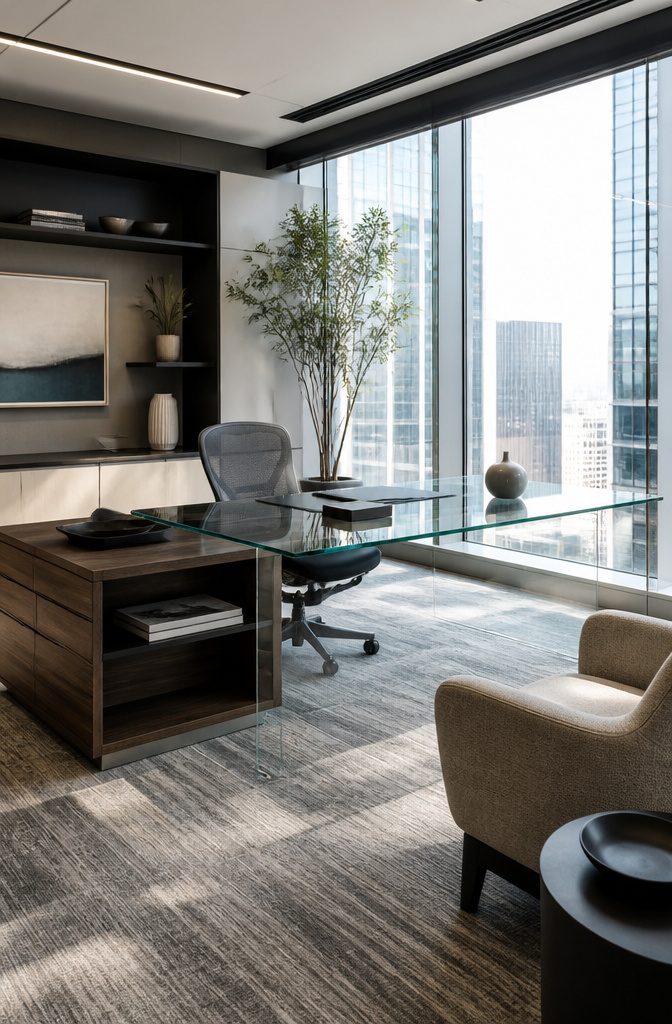
Modern office decor earns its keep through material contrast rather than restraint.
Where minimalist setups strip down to essentials, modern layering brings in metal frames against engineered wood surfaces and glass partitions that catch light without closing off the floor plan.
I would pick a desk with a powder-coated steel base and an ash veneer top over all-white laminate every time; the mix reads current without demanding a full redesign.
Glass-topped meeting tables or semi-frosted dividers keep sightlines open, which matters when the same square footage has to serve focused work and team huddles.
Engineered wood shelving units on casters let you reconfigure zones in minutes, not hours. I would skip fixed built-ins entirely in an open plan; flexibility is what lets a small office absorb multiple tasks without feeling cramped.
The sharper geometry comes from how you combine these pieces, not from any single statement item.
A rectangular glass desk paired with a linear metal storage unit already gives you the angle. Add one rounded element, maybe an upholstered lounge chair, and the contrast does the work.
I think the common mistake is over-coordinating finishes; matching all your metals or all your wood tones flattens the look that makes modern office open space decor feel alive.

ADORABLE SIZE: Approx 10" W x 16.5" L ,and 10" Wx 17.5"L wooden dowel 10" L (from top to the ends of longest fringe).This adorable size will bring some compliments from guests

Large Size: This large tapestry wall hanging measures about 43" x 32", making it a bold centerpiece for any room. Its generous scale fills your wall with rich texture and natural boho beauty (lroning makes the tassels straighter and nicer)

BEAUTIFUL SYMBOLISM - This macrame dream catcher is the perfect boho wall hanging decor for adding a touch of positivity to any space. Its design is inspired by the elements of the sun, waves, and beach, symbolizing warmth and healing, firm and indomitable, stability and tolerance. Hang it in your room will bring sunshine to any space
10. Wallpaper

Peel-and-stick wallpaper is the only kind I would hang in an open office, because standard paste-up is a landlord conversation I do not want to have.
Most rolls come 20–24 inches wide, and a single accent wall in a 150–175 square foot zone needs roughly 6–8 linear feet of pattern before it starts reading as intentional rather than apologetic.
For that footprint, I would stick to a repeat no smaller than 6 inches and no larger than 18, anything tighter fights the scale of the room, anything looser turns the wall into a billboard you cannot escape from your desk.
Busy prints in shared sight lines are where I draw the line.
What reads as energetic on a sample swatch becomes visual static when twelve people catch it in peripheral vision all day. I would pick a tone-on-tone texture or a loose geometric over anything botanical or illustrative every time.
Installation is a Saturday job if the wall is smooth and you have a second person for the long drops.
Removal is the real selling point: the better brands lift clean in one piece if the paint underneath was decent to begin with, but cheap adhesive can take drywall paper with it.
I would budget for mid-grade stock and keep the receipt, because the peel-and-stick market is half excellent vinyl and half wallpaper-shaped sticker paper that bubbles by Tuesday.
Timer & Dimmable Function: Newly upgraded electric fairy lights plug in with remote control, provides four brightness options, 25%, 50%, 75%, 100%, to meet your needs in different scenarios, comes with 3 different timing modes, 6H"/"8H"/"6639H", more power saving, no need to manually turn off

2-Pack Plug in Fairy Lights: Each set includes 2 strings, each 49.5ft long with 150 LEDs and a 6.56ft lead wire, for a total of 99ft and 300 LEDs — enough to wrap around fences, centerpieces, furniture, wreaths, mantels, and more. Designed with ultra-bright LEDs and durable copper wire, these warm white twinkle lights are an ideal choice for home decor.

Warm White Summer Ambience: These 33FT clear wire fairy lights create a soft warm white glow, perfect for patio dinners, backyard BBQ nights, weddings, porch décor, balcony lighting, and late-summer outdoor gatherings.
11. Closet Office Conversions

A closet office only works if you give yourself enough room to actually sit at the desk.
I would not attempt this in anything shallower than about 24 inches from back wall to door frame; anything tighter and your chair fights the door jamb every time you roll back.
Most coat closets run closer to 28 inches deep, which is workable, while a walk-in gives you the luxury of deciding whether the desk goes against the back wall or along a side.
Remove the door if you want the nook to read as part of the open plan.
Keeping it lets you shut away clutter when someone visits, but a closed closet door in your living area looks like what it is: a closet you are pretending is not there.
I would take the door off, patch the hinge mortises, and treat the opening as an architectural niche.
Lighting makes or breaks this.
A closet has no window, so you need to compensate for that enclosed feeling. A cheerful desk lamp helps, but I would also run a plug-in wall sconce or two up the sides to wash the back wall with light.
Sources mention wallpaper for style; I would skip busy patterns in a space this small and go with a light color that bounces what light you have.
Floating shelves above the desk keep the floor clear, and a few storage bins above eye level hide the supplies you use less than daily.
The difference from general closet storage is the ergonomic setup: a desk surface at standard height, a chair that rolls, and lighting arranged for reading and typing rather than finding your shoes.
12. Storage Solutions

In an open floor plan, your mess has nowhere to hide, which makes vertical storage the first layer worth adding. Wall-mounted shelves keep keyboards, microphones, and daily gear within arm’s reach while leaving the desk surface clear for actual work.
I would mount them at seated eye level or slightly above; anything lower starts to read as clutter from across the room.
Under-desk units handle what shelves cannot.
The IKEA Linnmon paired with Alex drawers is the combination I keep coming back to: ten drawers total if you run cabinets on both sides, which is enough to swallow cables, paperwork, and the backup supplies that otherwise colonize the floor.
A mobile file cabinet with soft-close drawers works if you need to roll your storage into a corner when the desk doubles as a dining table for extra guests.
For the surface itself, a desktop caddy in acrylic or metal finishes the job without looking like an afterthought.
I skip the multi-tiered wire racks; they tip too easily and the mesh catches dust. A low caddy for pens, notebooks, and the two devices you actually use keeps the visual field clean from every angle in the room.
The ottoman-with-storage trick belongs in a home office corner, not a desk zone: useful for throws or files you touch monthly, but too far to reach for anything daily.
13. Wall Art

Scale matters more in an open office than in any other room, because six or eight people catch the same wall in their peripheral vision all day.
A 24-by-36-inch print that reads fine in a hallway disappears at cubicle distance.
I would hang one piece at 40 inches or wider rather than a gallery wall; clustered frames read as visual noise when you are not the one who chose them, and they rarely survive the politics of a shared space.
Framing should stay thin and neutral. A two-inch ornate gilt frame turns a photograph into a personal manifesto, which is not what you want in a pod of desks you did not all pick.
I stick to slim metal or bare canvas edges, materials that recede so the image does the work.
Placement follows the sight lines. In an open plan the wall behind your monitor is dead space for you and prime real estate for the person facing you.
I center art on the aisle side or the lateral wall, where it catches glances during breaks instead of during calls.
For panel systems, skip nails entirely. Tension wire between vertical posts, or magnetic hooks rated for the panel thickness, hold a wrapped canvas without the repair bill a drilled hole guarantees at move-out.
14. Area Rugs

In an open office without walls to mark where one desk ends and another begins, a rug under your chair is the boundary line.
The standard desk footprint needs at least the front legs of your chair to stay on the rug when you roll back, so I work from roughly 5 by 8 feet as a practical minimum for most setups.
Anything smaller and the rug becomes a trip hazard that shifts every time you stand.
Low-pile or flatweave is the only pile height I would bother with under a task chair. High-pile rugs, including anything shag-adjacent, grab caster wheels and fray fast where the chair pivots.
The same goes for light colors near any coffee station; I have seen too many cream rugs turn mottled gray where drips and shoe scuffs collect. A grip pad underneath is non-negotiable on hard flooring.
Without it, the rug migrates an inch a day until it bunches under your heel. I would skip the decorative rug entirely before I would skip the pad.
Why Personalization Matters in Open Plans

Open plans strip away the walls that normally hide your desk from view, which means your neighbors see your space as clearly as you see theirs.
That visibility turns personalization from a private comfort into a shared experience, and the research on attention backs this up: a two-week mindfulness course improved focus by up to 16%, suggesting that environmental cues directly shape how well we work.
Your own area needs enough character to feel settled without adding visual clutter that distracts people three feet away.
I would keep personal items to a tight zone, about the depth of a standard keyboard tray, and I would skip anything that catches light or moves in peripheral vision.
Framed photos work if the frames stay slim and the arrangement stays low; one or two images from a trip or your family, placed where you see them but they do not face the aisle, add warmth without claiming territory.
The rule I follow: if a colleague standing at their own desk can describe your decor without turning their head, you have gone too far. Color and texture do more than objects anyway.
A linen desk mat or a ceramic cup in a muted tone signals personality without shouting across the open floor. The same plant or print that calms you might fracture someone else’s concentration.
I think the balance favors restraint, because in an open plan, your personal space is always partly public, and decor that respects that boundary tends to earn the same respect back.
Lighting That Actually Works

Desk lamp placement matters more than the lamp itself.
Position the light to your side, not directly in front or behind, and the glare drops off immediately. I aim the beam just left of my keyboard so the screen stays dark and the paper stays readable.
Natural light is the anchor.
If you can put your desk by a window, the warmth and openness it adds to the space are hard to fake. When that is not an option, a directional floor lamp with dimmable output fills in.
The ones worth buying let you switch between 2700K for warm atmosphere and 5000K for focused tasks. At 2700K, the room feels like evening even at noon, which is pleasant but soporific.
At 5000K, detail work gets easier and your brain registers "daytime," though the clinical edge can feel cold after a few hours. I run 5000K until about 3 p.m., then dial back to 2700K if I am staying late.
Color Schemes for Focus

White walls in an open office reflect sound and light in ways that can feel sterile, but the color itself is not the problem.
The issue is undiluted white without texture or warmth. I would keep existing white paint and add warmth through what goes on the walls, not what covers them.
A soft sage textile panel or a set of linen pinboards in muted clay tones changes how the same white reads, and both come down on Sunday night if the lease forbids alterations.
Pastels work the same way. A blush or dusty blue introduced through desk accessories, chair upholstery, or a single large canvas shifts the psychological temperature without a paint crew.
The research on color psychology is less definitive than designers sometimes claim, but softer tones do reduce reported eye strain under fluorescent overhead light, and that alone justifies them for a space where people stare at screens eight hours.
For a full redesign, I would go deeper into earthy tones: warm greige, oat, or a desaturated terracotta on an accent wall.
These colors absorb sound slightly better than pure white, which matters in an open plan where every conversation travels.
The cost difference is negligible; the same gallon of quality paint runs roughly the same in any tint. The real choice is whether you have permission to paint at all.
If I were renting with a weekend and $200, I would buy two large stretched canvases in a warm neutral, lean them against walls I cannot paint, and call the color problem solved.
Acoustic Fixes for Open Offices

Open offices amplify every keyboard clack and side conversation, so the fix starts with what you can move yourself.
I would stack soft materials where hard surfaces dominate: a thick runner between desk rows, upholstered panels clipped to existing dividers, or a fabric-wrapped pinboard hung like art.
These absorb the high frequencies that bounce off glass and drywall, and most landlords will not blink at a rug or a textile wall piece.
If you need real reduction, place absorption between noise and the listener, not behind the source.
A panel hung above a desk catches what the ceiling reflects down; a panel behind the talker does almost nothing for the person across the aisle.
For anything mounted to structure, facilities approval enters the picture. Dropped ceilings, permanent acoustic baffles, or booth-style furniture all touch HVAC, sprinklers, or egress paths, and that means paperwork.
I would skip the fantasy of rebuilding the ceiling as a renter and instead push for mobile pods or modular screens with varied heights.
These reconfigure for a one-on-one huddle or solo focus without drilling a single hole, and they build the semi-private pockets an open plan actually needs.
Each pod eats space that could hold another desk. I think that swap is worth it for anyone who spends more than an hour a day on calls, but it is a real cost in square footage, not just dollars.
Flexible Furniture That Adapts

Sit-stand converters earn their keep in an open plan where one desk might host a morning review, an afternoon design sprint, and a late-night invoice session.
I would pick a pneumatic model over electric for anyone who reconfigures monthly; the hand lever raises in two seconds without hunting for an outlet, and the lighter frame moves to a new spot without a second person.
Electric wins only if you adjust height multiple times daily and stay put.
Nesting tables suit the quarterly reconfigurer better than the monthly one. Three surfaces tuck into a footprint barely wider than a single desk, then fan out when a project demands spread-out materials or a temporary guest station.
Solid wood sets stay where you put them, but laminate pairs lift easily and cost half as much. I would skip the middle-ground particleboard versions; they sag within a year of real use.
Mobile storage, the kind on casters that lock, is the piece I would buy first for either schedule. A monthly reconfigurer wants narrow units, 12–15 inches wide, that slip between existing desks like punctuation.
The quarterly mover can afford wider cabinets that double as room dividers. Both should check that the casters are plate-mounted, not stem-mounted; stems snap off when a full drawer catches a carpet edge.
Frequently Asked Questions
What are some ideas for decorating an open office?
Plants, fairy lights, and personalized decor all work well for office open space decor.
A peace lily or succulents add greenery without demanding daily care, while warm 2700K fairy lights soften harsh overhead fluorescents. Keep personal touches restrained; if a colleague can describe your decor without turning their head, you have gone too far.
How can I make my office feel more inviting?
Warm lighting, comfortable textures, and a few collected pieces do the most work. A 2700K filament reads as candlelight, while a woven desk mat or ceramic cup in a muted tone signals personality without shouting across the floor.
One or two framed photos placed where you see them but they do not face the aisle add warmth without claiming territory.
What are the best plants for an office?
Peace lilies and succulents are the easiest wins. A peace lily handles low light and stale air, growing anywhere from 15 inches to 3 feet so it fits on a windowsill or the floor.
Succulents demand even less: a shallow tray or mounted wooden frame keeps them off your work surface entirely. The air-purifying benefit only works if the plant sits within a few feet of where you breathe.