These 13 ideas run from a five-gallon bucket bolted to the wall to a full steel workbench, and the right one depends on whether you rent or own the space you are working in.
A pegboard on a framed panel comes down clean for a landlord; French cleats and overhead racks need studs and joists you can drill into without asking.
1. Pegboard Wall Storage
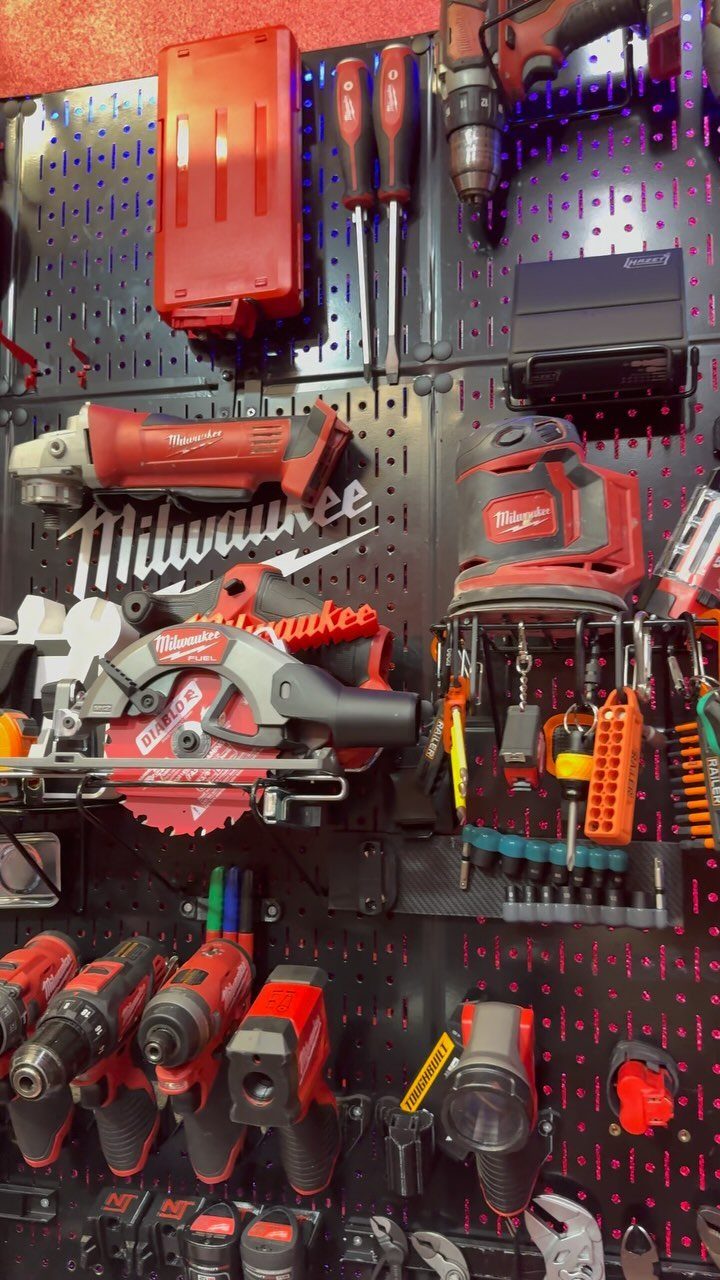
A pegboard turns any open wall into a layout you can rearrange as your collection grows.
Slotted metal pegboard takes standard hooks and bins from most hardware stores, and a black finish hides oil marks better than the classic brown masonite.
I would mount it on studs with a gap behind so hooks seat fully.
For renters, a framed panel screwed to the wall comes down with minimal patching. Weight capacity is the real limit: heavy grinders and large batteries need a shelf or cleat instead of a hook.
Pegboard needs to be installed a little bit away from the wall so that the pegboard hardware can be properly inserted. Pegboard spacers ensure that this happens.

METAL NAILBOARD: Our peg board panels are made of high quality steel with a powder coated finish that is strong, scratch resistant and easy to clean. Each small pegboard has a weight capacity of up to 50 lbs. This is a favorite product for tool organizers, DIY enthusiasts, store owners and office workers.

Value Package: Our pegboard tool organizer comes with 120pcs pegboard accessories,16 different type pegboard hooks including 5pcs pegboard bins, curved hooks, angled hooks, straight hooks, and ring tool holder, multi tool rack. 49pcs of them are peg locks for fixing hooks

Value Package: Our pegboard tool organizer comes with 278pcs pegboard accessories, 16 different type pegboard hooks including 12pcs peg board bins, curved hooks, angled hooks, straight hooks, and ring tool holder, multi tool rack. 109pcs of them are peg locks for fixing hooks
2. DIY Workbench with Storage
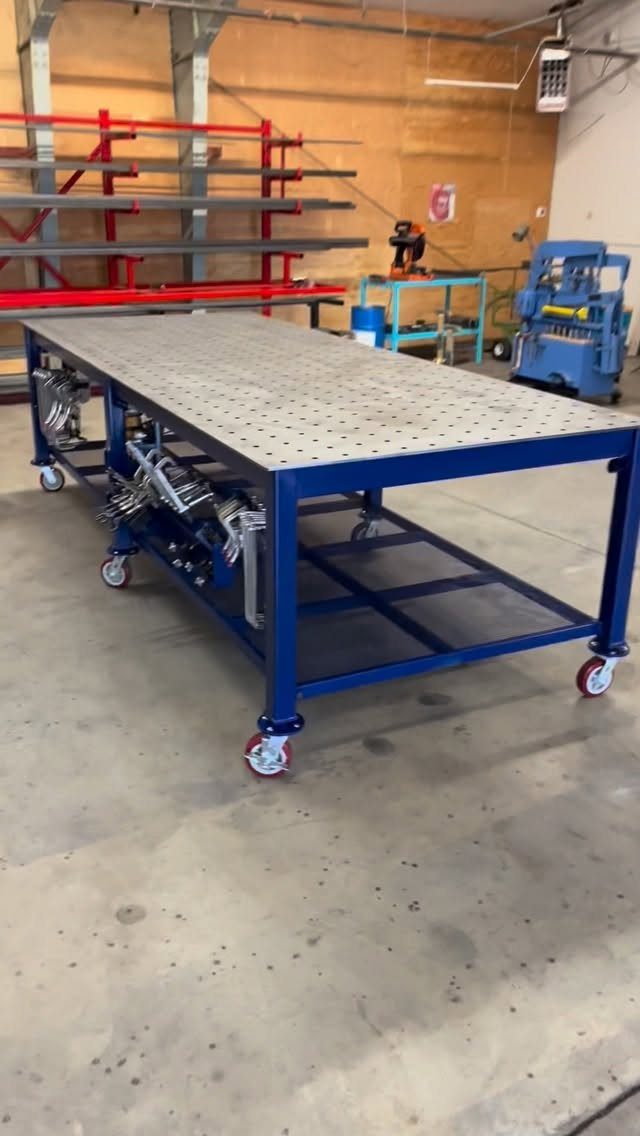
A perforated steel top lets you clamp anywhere along the edge, and the open frame below is dead space until you add racks or drawers. Clamp storage underneath the work surface is worth copying before adding anything above.
A bench that fills most of a single-car garage bay gives you room to spread out without losing the car.
If that sounds large, scale down to 30 by 60 inches and keep the casters; mobility matters more than span in a small shop.
I would budget for steel and a used top, or half that if you weld your own frame and scavenge the surface plate.

More secure tool board hook engagement over conventional peg board pegs

More secure tool board hook engagement over conventional peg board pegs

Wall Control metal pegboard is more than 10 times stronger than conventional pegboard
3. Tool Chests
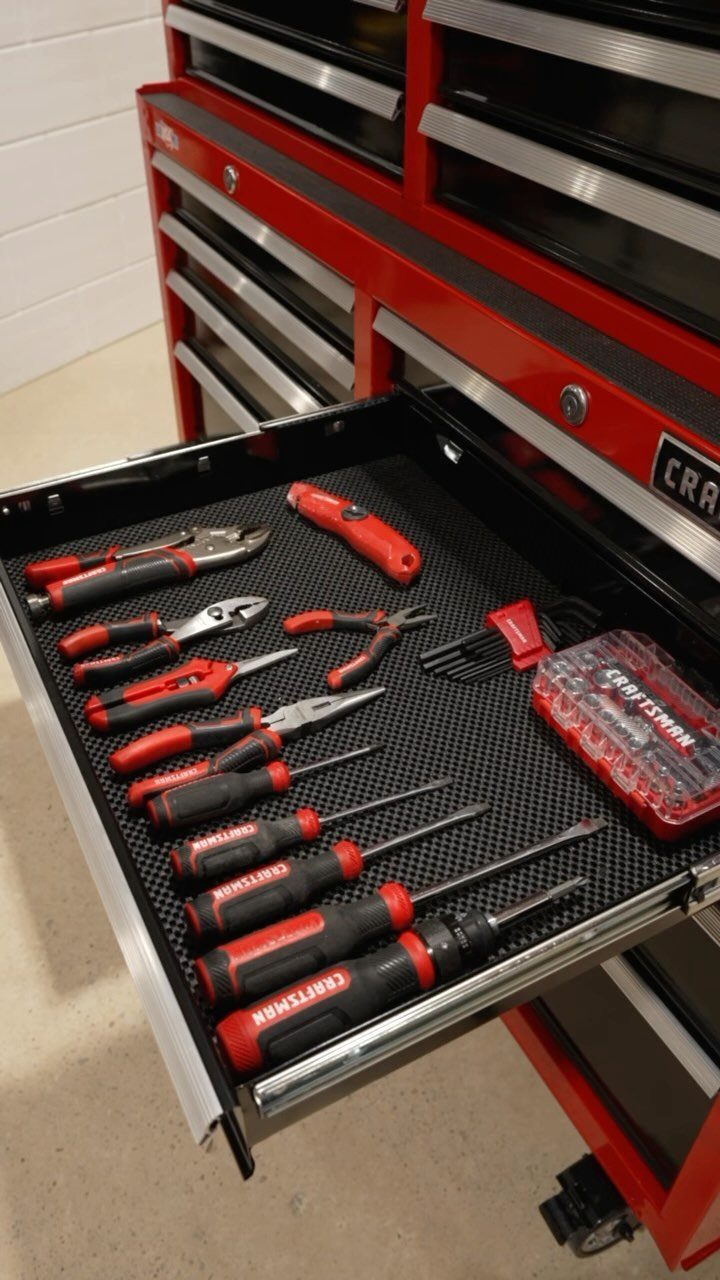
A rolling chest keeps hand tools clean and moves where the work is. Black foam inserts holding each tool in place prevent the jumble that turns a full drawer into a long search.
Check drawer depth against your tallest wrench or level before buying. I would look for full-extension slides so the back row comes to you, not the other way around.

DESIGNED FOR PRECISION TOOL STORAGE: Our tool box foam organizer is engineered with customizable layers to perfectly fit your tools. The dual-color design allows easy identification of tools and proper placement. Keep your workspace tidy and efficient with these durable toolbox foam inserts and customizable foam insert.

FROM CHAOS TO CONTROL: Keep every tool exactly where it belongs. This toolbox foam system creates a custom layout that improves visibility, access, and workflow efficiency. Upgrade your workspace with premium tool box foam.

FROM CHAOS TO CONTROL: Keep every tool exactly where it belongs. This toolbox foam system creates a custom layout that improves visibility, access, and workflow efficiency. Upgrade your workspace with premium tool box foam.
4. Wall Storage Racks
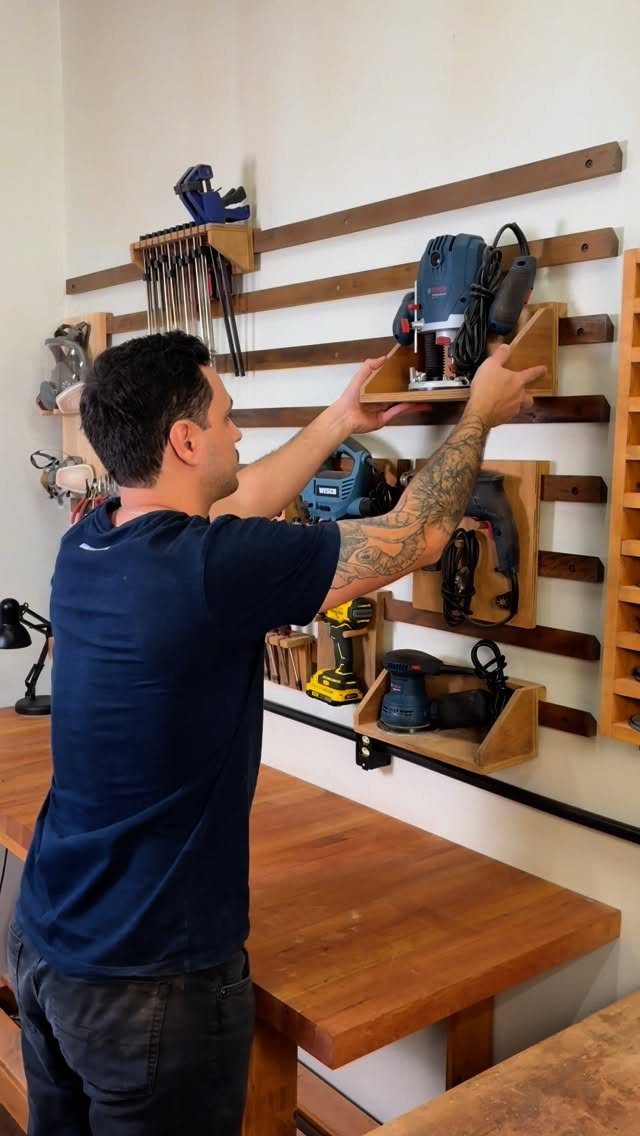
French cleats let you hang shelves, bins, and tool holders that lift off for cleaning or reconfiguration. A beveled rail screwed to studs with matching blocks on each shelf back lets gravity lock them in place.
I would rip the wall rail from plywood on a bevel, then cut matching cleats for every holder. A rail and a handful of shelves takes a morning and a small stack of material.
Check that your studs land where you need them; the cleat spreads load along the wall, but it still needs solid anchoring at both ends.

SCREWDRIVER ORGANIZER - 10 bigger holes with 0.78 inches diameter can hold 10 bigger size screwdrivers. 15 smaller holes with 0.39 inches diameter for 15 regular screwdrivers. Holds all your screwdrivers in one rack.

PRECISION 2.5″ CLEAT CUTS: Our jig is engineered to produce uniform 2.5″ French cleat boards with clean 45° cuts, helping you create matching cleat hanger pieces for wall organizers, cabinets, tool holders, and workshop storage layouts with consistent accuracy

【Secure Decorative Hook】: Our French cleat picture hangers are made of high-quality aluminum alloy, never rusting, ensuring strong support and long-lasting durability. Its innovative design incorporates the French cleat hidden hook technique, securely fastening your picture frames to the wall, preventing wobbling and instability.
5. Mobile Tool Carts
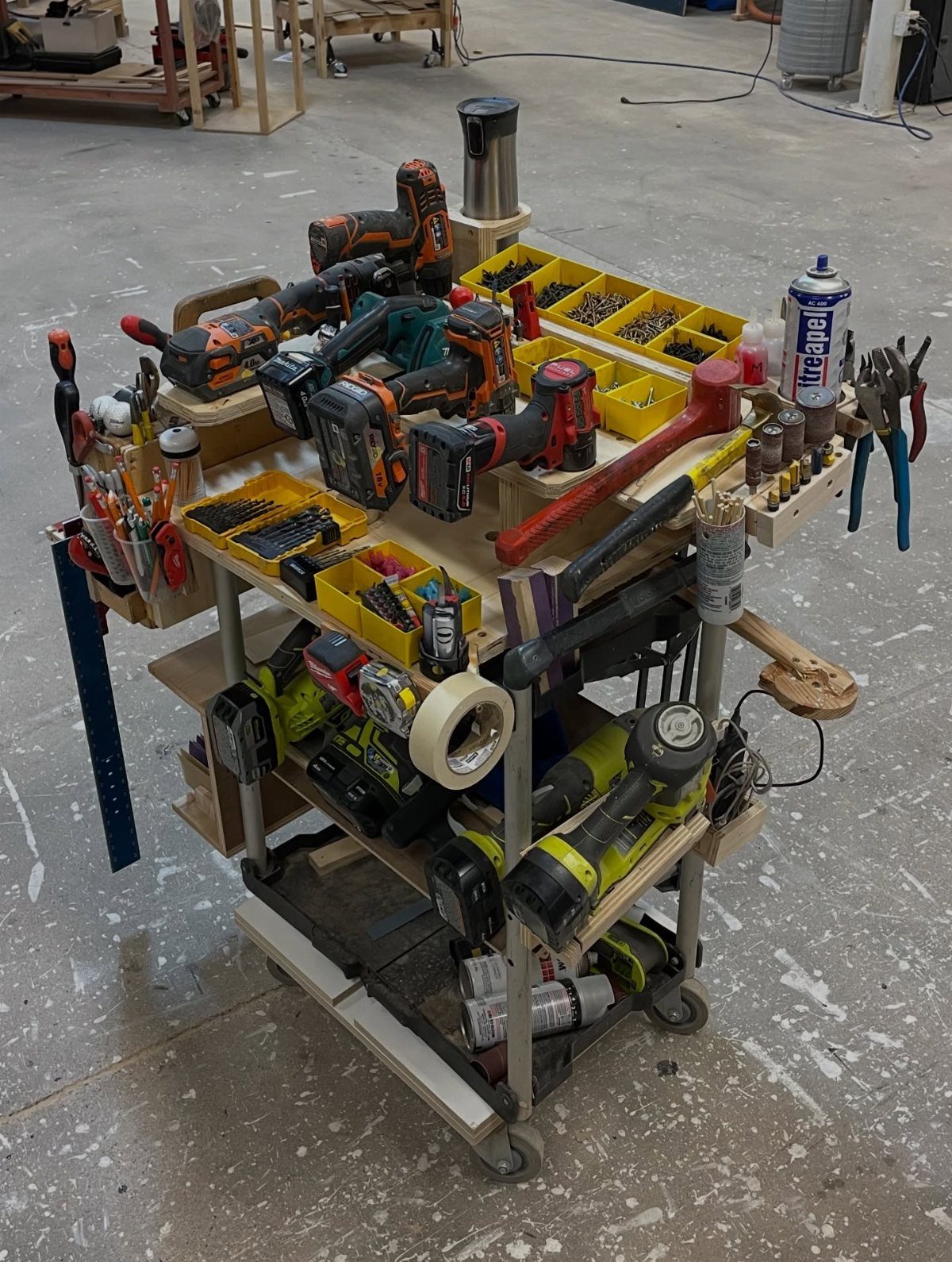
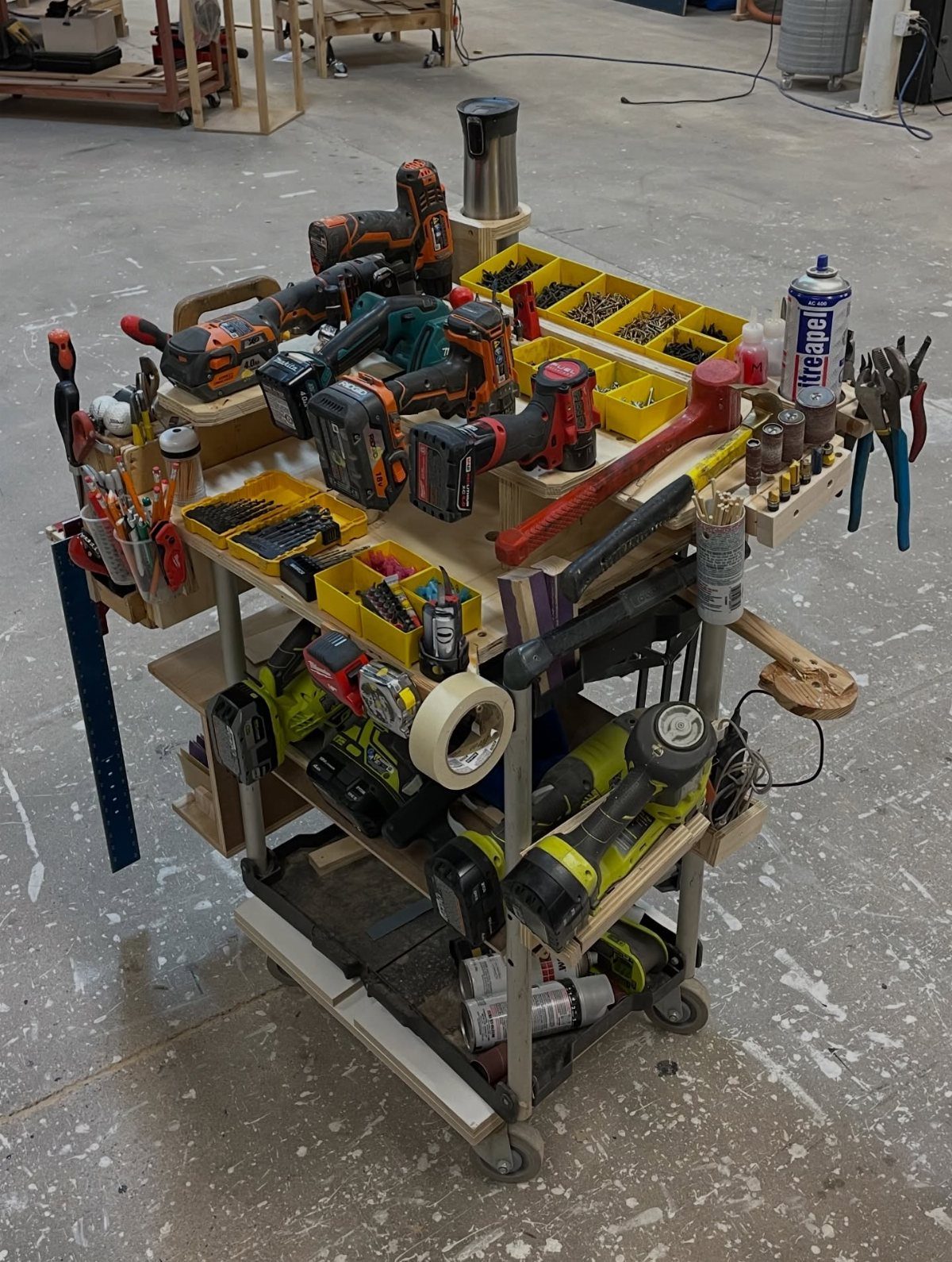
A cart on casters brings the right tools to the job instead of walking back to the wall for every cut.
Cordless tools on top, fasteners in bins below, and tape and hand tools in the middle matches how often you reach for each.
I would build or buy to a width that clears your table saw wing or fits between car and garage wall.
Locking casters with some diameter are the minimum; smaller wheels catch on expansion joints and floor seams. A metal frame cart costs more than scrap plywood and a weekend if you build your own.

INSTANT TOOL CHANGES: Transform your workshop with this flip-top powerhouse. Mount a benchtop grinder and sander, or any two tools, and switch between them effortlessly. No more time-consuming setups or wasted space – just instant access to the tools you need

Height adjusts from 35 to 48 inches

Flip Top Benchtop Machine Table: 20" x 25" work surface accommodates many benchtop machines, Benchtop machines can be find the most comfortable working position (between 30" and 35") for the user. Supports up to 400 pounds and easily accommodates two machines operating simultaneously
6. Overhead Storage Racks
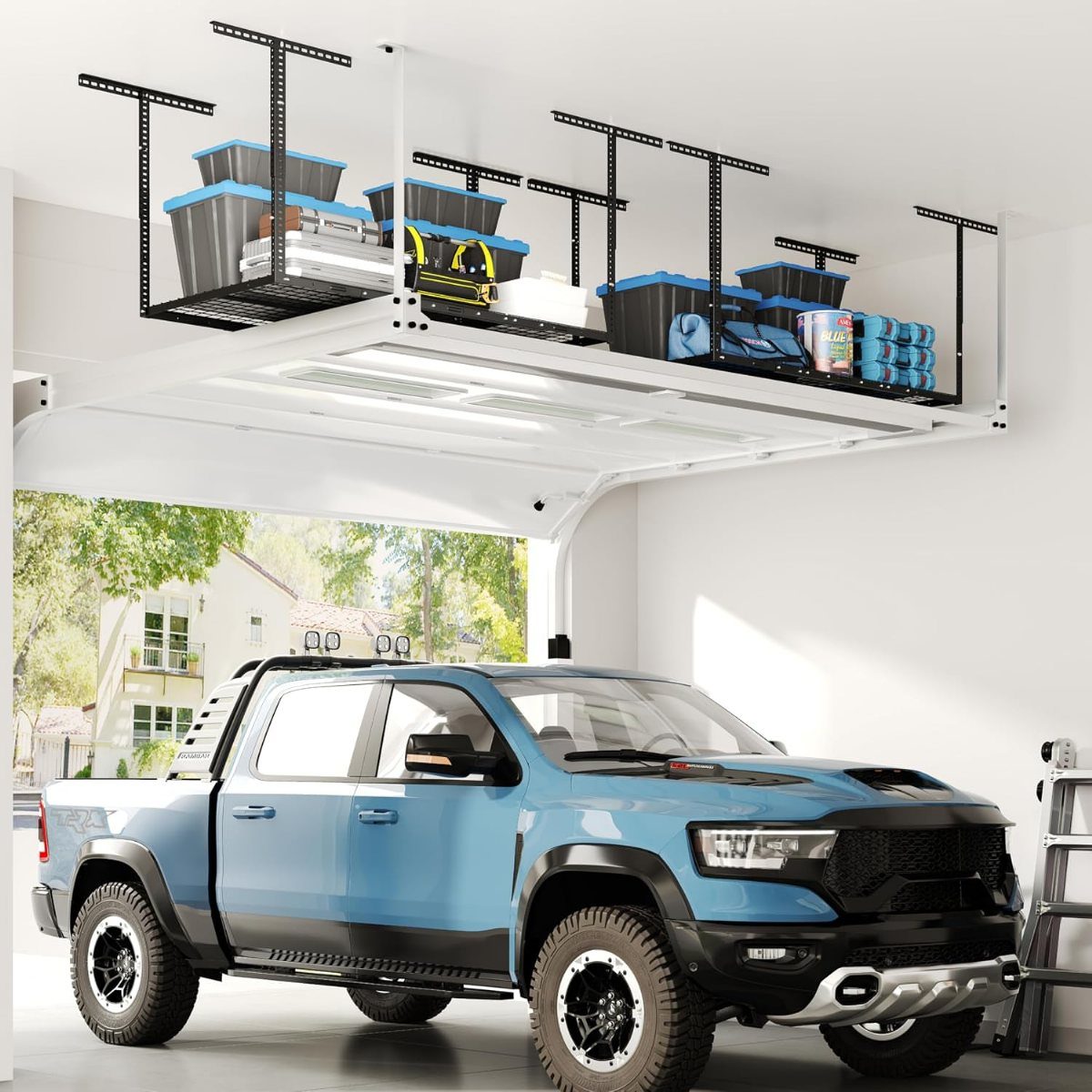
Ceiling racks free wall space for tools you use weekly and move the seasonal stuff out of the way.
I would mount to joists, not drywall, and keep total load modest per section unless the manufacturer rates higher. Sealed lids keep dust off holiday lights and camping gear that lives overhead for months.

EXTREMELY STURDILY MATERIAL: The garage hooks is made of premium heavy-duty solid steel and the plate are reinforced with three layers, providing superior load capacity, the utility hooks are great for ladders, sports equipment, lawn trimmers, gardening equipment and other bulky items!

UNIVERSAL FIT – Designed to fit standard 1/4" pegboards with 1" spacing, these flat pegboard hooks require no peg locks and hold up to 33 lbs, ensuring a secure and reliable hanging solution.

All Metal Material: Our garden tool organizer, both backboard and hooks are made of iron, which makes it more durable and solid.And its load-bearing capacity far exceeds other usual ABS material tool hooks. It is deal for various tools like shovel, rakes, bikes, broom, mop, trust that what you get is what you see,any dissatisfaction please contact our customer service team
7. 5-Gallon Tool Bucket
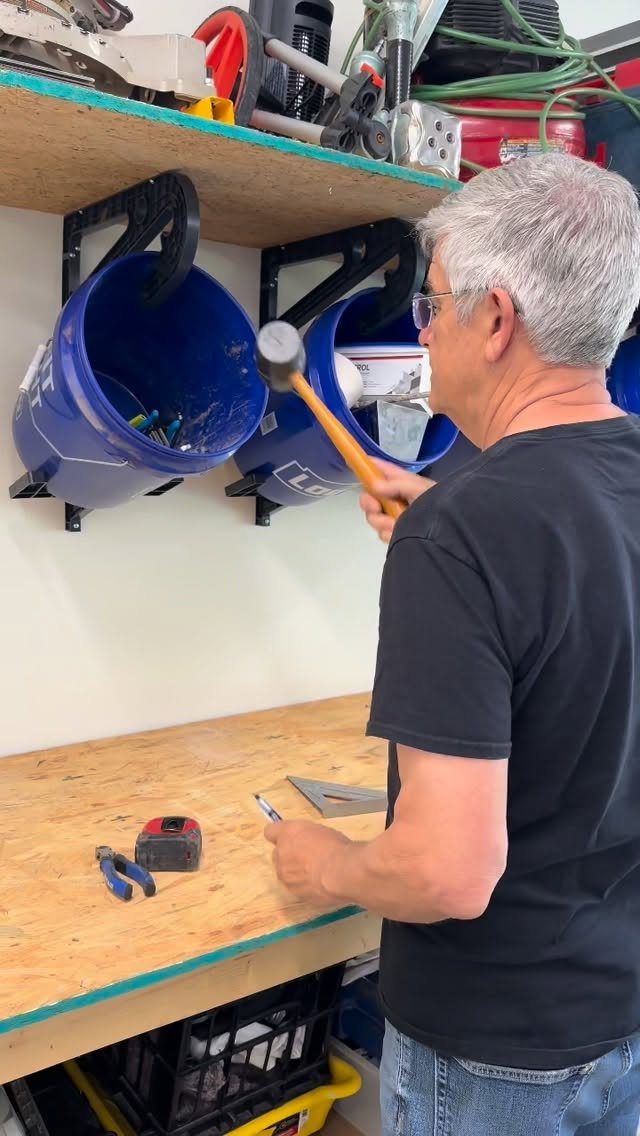
A five-gallon bucket on its side, bolted to a wall bracket, turns scrap lumber and offcuts into a lumber rack that costs less than a store-bought system.
Any hardware store carries these blue contractor buckets; HDPE holds up to oil and most solvents.
I would check that the bracket lip supports the rim, not just the flat side, or the bucket will sag under weight. For short stock this beats a full lumber cart on a footprint you can park against a wall.

More secure tool board hook engagement over conventional peg board pegs

More secure tool board hook engagement over conventional peg board pegs

More secure tool board hook engagement over conventional peg board pegs
8. DIY Tool Cabinet
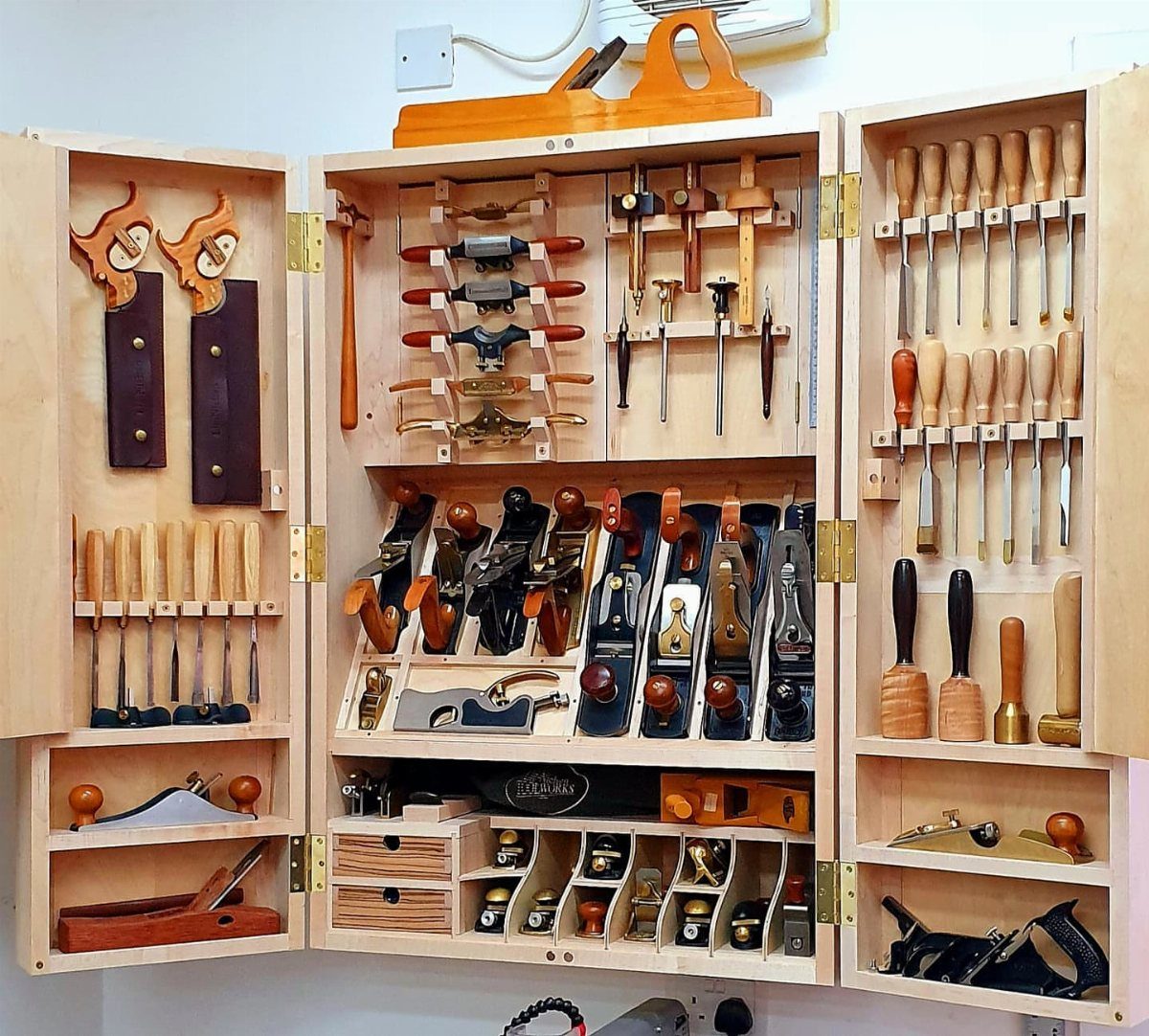
A wall-hung cabinet with shallow depth keeps hand tools visible and dust-free behind doors that swing clear of bench space.
The light wood and fitted holders suggest a build from plywood with routed recesses or hardwood blocks screwed to the back panel.
I would hinge the doors to fold flat against the sides, not the front, so they do not block the aisle in a narrow shop. A hasp or simple slide bolt keeps them closed if you move the cabinet later.

[SILENT & SECURE - INCLUDES EVA NON-SLIP PADS ] – These tool trays set Includes 7 sheets /107pads for custom placement included: 4 round sheets (20 pads/sheet) for Large & Medium toolbox trays , and 3 square sheets (9 pads/sheet) for Small trays, giving every tool box organizer tray a non-slip footing. These stick-on pads reduce noise and prevent movement in tool carts, rolling tool chests, tool boxes, and garage drawers. Ideal for magnetic socket trays, screwdriver bins, power tool drawers, and any setup that needs an anti-rattle design.

【Non-slip Foam Material】 Protect your tools from scratching and sliding the bottom of your tool box with our tough. The liner keeps your tools in place on the move, in your trunk, or when opening & closing.

Protective Cushioning: Crafted from high-quality polyethylene foam, these organizers offer superior protection for your tools. The foam construction absorbs shocks and vibrations, reducing the risk of damage during transit or storage, thus extending the lifespan of your tools and toolboxes.
9. Drawer Organizers
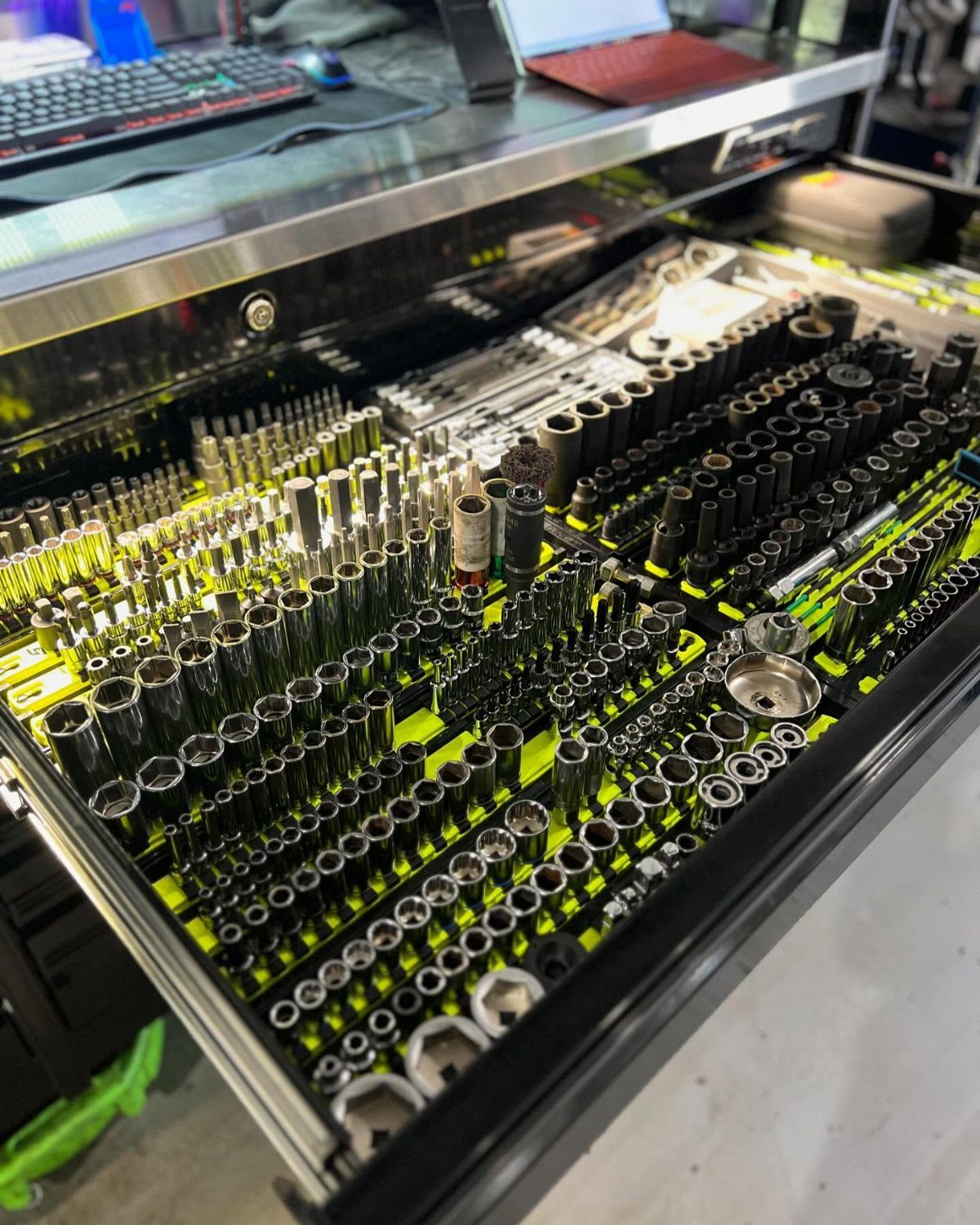
Foam organizers cut to socket size keep roll sets from mixing and let you spot a missing size at glance distance.
High-visibility trays like these green ones save time digging; color matters less than density.
I would measure drawer height against the tallest socket plus tray before ordering, and buy one size larger than your current set if you are halfway to the next drive size already.
Slotted rail versions work for bits and small wrenches where foam would waste space.

Interlocking Z Clip Hanger: AENTGIU French cleat is made from rust-resistant, durable aluminum alloy material, securely supporting up to 120 lbs without. Z-shaped interlocking design locks your artwork firmly in place while allowing to easily adjust in seconds. Ideal for rotating seasonal décor or achieving a clean, professional gallery-style display

Heavy Duty Picture Hangers: AENTGIU 30 inch black heavy duty french cleat hanger is crafted from durable aluminum alloy. Z clips design effortlessly supports picture frames, wall decorations, with a maximum load capacity of 200 lbs

[𝐅𝐫𝐞𝐧𝐜𝐡 𝐜𝐥𝐞𝐚𝐭 𝐰𝐢𝐭𝐡 𝐕𝐞𝐫𝐬𝐚𝐭𝐢𝐥𝐞 𝐌𝐨𝐮𝐧𝐭𝐢𝐧𝐠 𝐎𝐩𝐭𝐢𝐨𝐧𝐬]: Our 12 inch French cleat hanger provides a flexible solution for various applications, from hanging art to whiteboards and cabinets.
10. Hardware Cubby Shelving
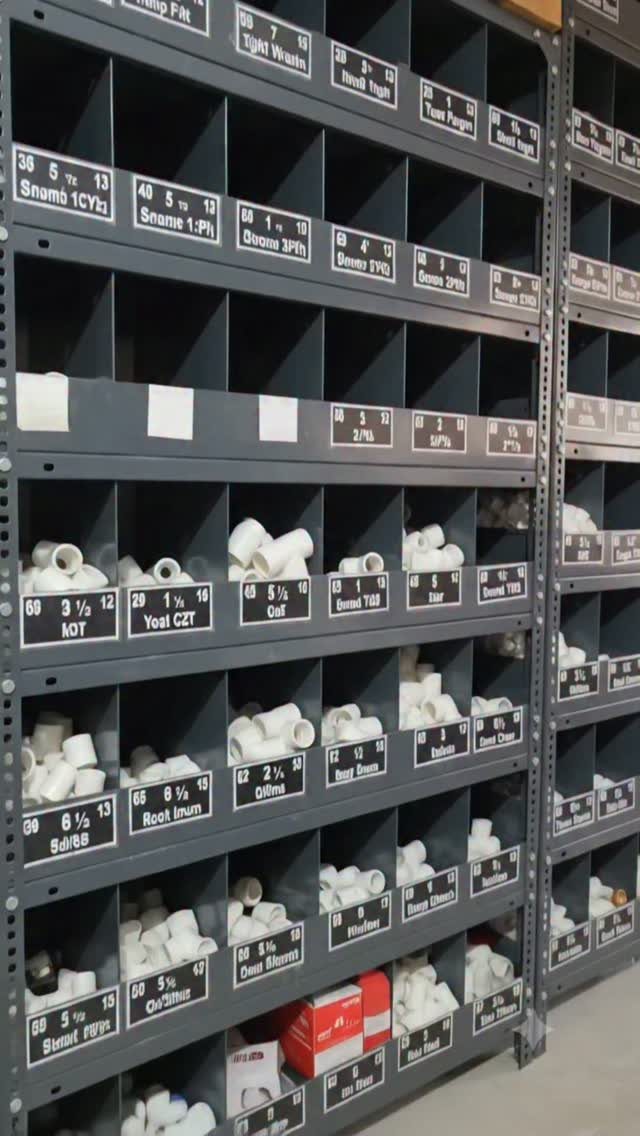
Cubby shelving with printed front labels turns a wall of small parts into a pick list you can read from the aisle.
The gray metal units are industrial bin shelving, sized for hardware store stock and shallow enough to keep parts visible.
I would sort by material first, PVC from steel from electrical, then label each bin with the part name and the project it last served; codes alone mean nothing by next spring.
For a home shop, a single wide unit holds most plumbing repair stock without dominating the wall.

YOUR MOBILE WORKSTATION: Transform your workspace from chaotic to controlled. Featuring a solid wood top that doubles as a convenient, stable workbench for any project

Heavy-Duty 2,000 lb Capacity: This adjustable workbench offers a 60 x 24 inches surface and supports up to 2,000 lb. You stage tools and tackle cutting, drilling, or heavy storage with steady confidence

Heavy-Duty 1,500 lb Capacity: This adjustable workbench offers a 48 x 23.6 inches surface and supports up to 1,500 lb. You stage tools and tackle cutting, drilling, or heavy storage with steady confidence
11. Magnetic Wristband for Fasteners
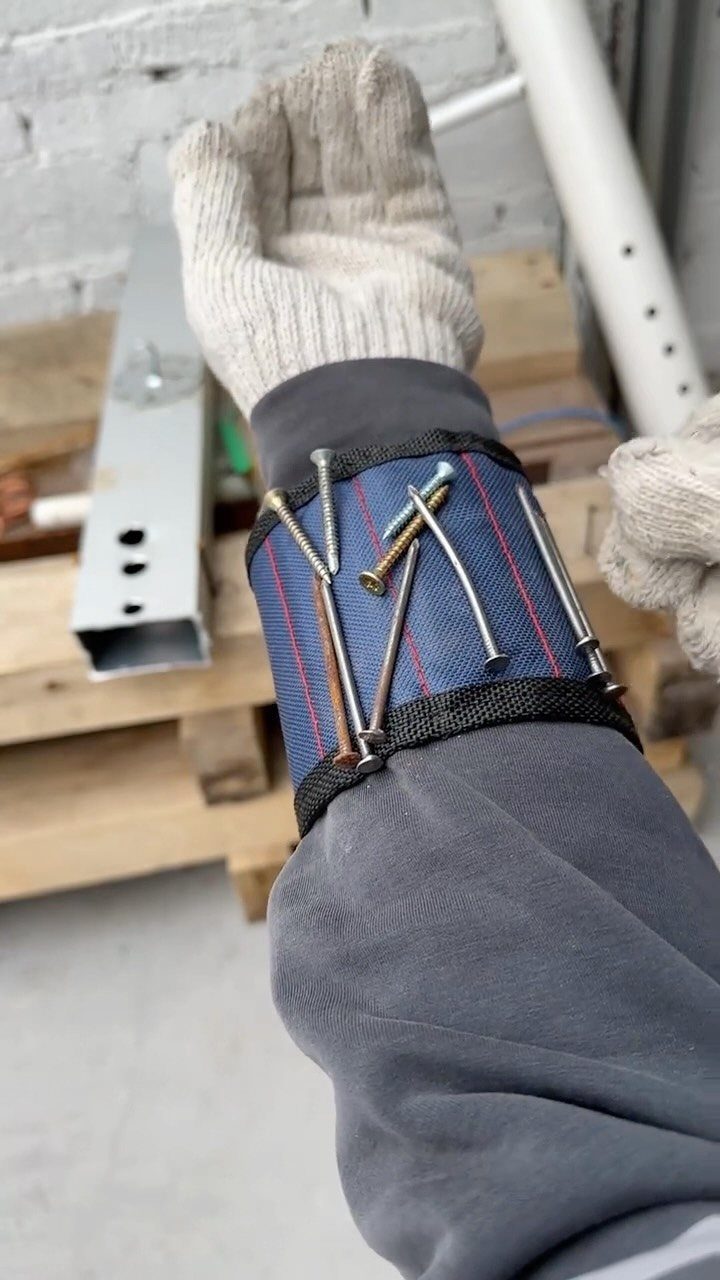
A magnetic wristband keeps fasteners at hand when you are on a ladder or under a sink and the bit tray is across the room.
The blue band holds screws and nails on a surface about the size of a deck of cards.
I would check magnet strength against the heaviest fastener you use; roofing nails and lag bolts need a stronger field than trim screws.
The band frees one hand for holding work, but I would still pocket a backup handful for the drops.
12. Dedicated Grinder Stand
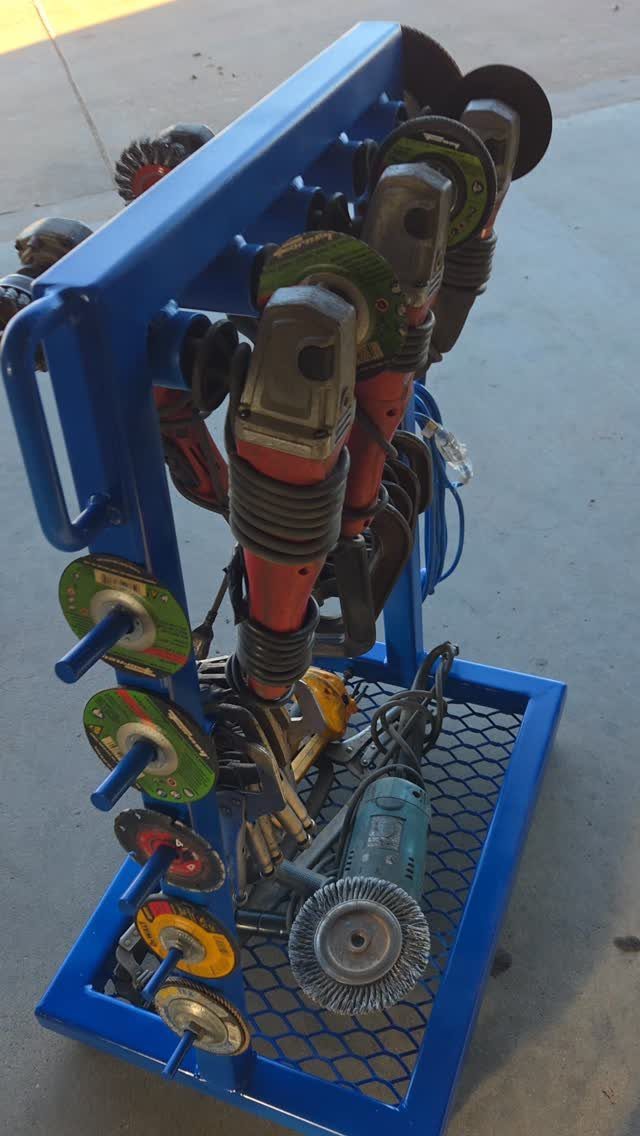
A freestanding rack for angle grinders and discs keeps the one tool that should never roll off a bench in a dedicated spot.
The blue stand uses expanded metal mesh for the base, which lets grit and dust fall through.
I would space side pegs by disc diameter for the 2 common sizes, and check that the uprights clear the grinder guard in its resting position.
A foot-operated switch looped over one peg completes the setup if you wire it yourself.
13. Wooden Chisel Holder
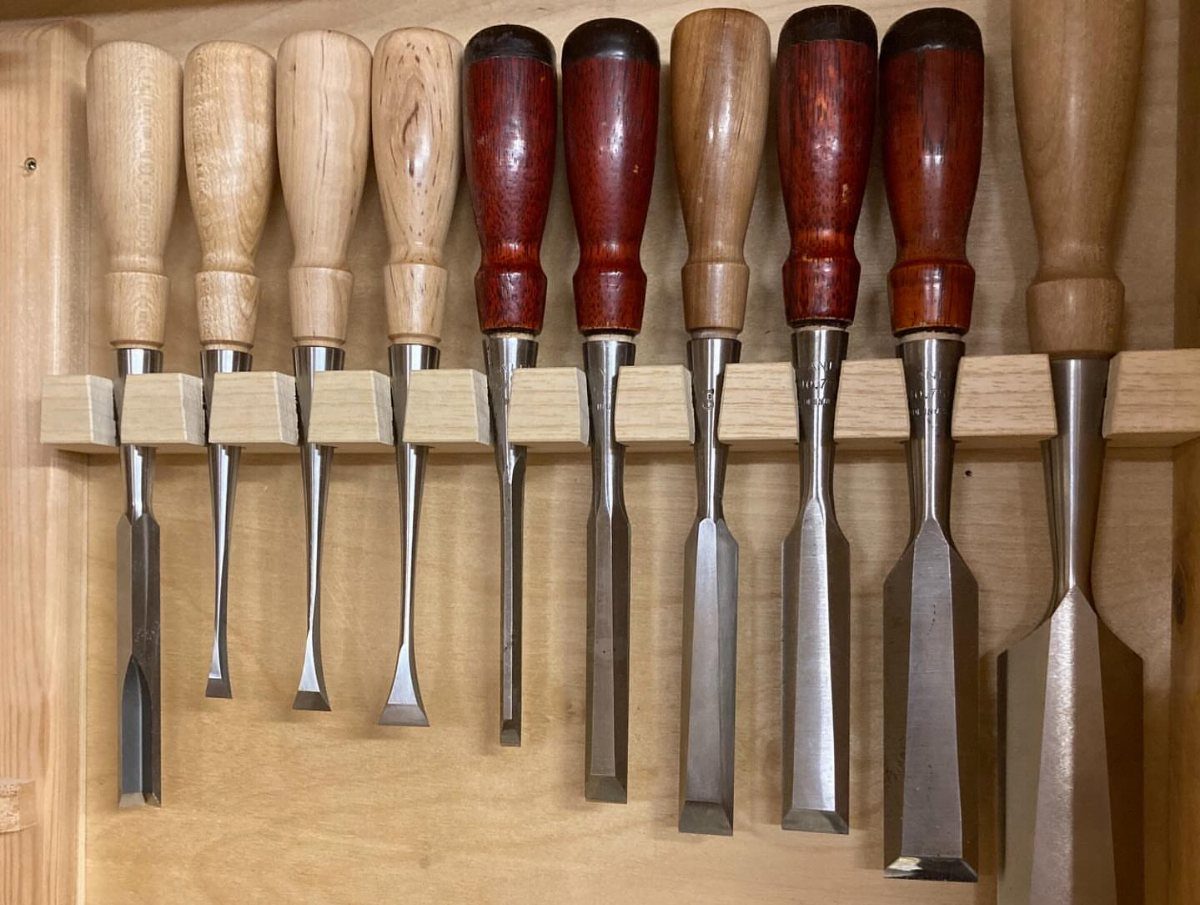
A backer board with stepped slots keeps chisels handle-up and edges protected, so you grab the right width without reading labels.
I would space slots by handle diameter, not blade width, so the tool seats firmly and the edge stays clear of the wood.
Hard maple or birch plywood resists the dents softer pine takes from sharp corners. A shallow chamfer at each slot mouth helps the handle find its place when you are working one-handed.
For a wall mount, keep the rack low enough that the longest chisel does not tip forward; inside a cabinet door, check clearance when the door swings shut.
Regular Maintenance
A workshop drifts out of order faster than most spaces because the work itself is the priority. I set a 30-minute appointment with myself every six months to look at what has gone unused.
The harder habit is the 15-minute reset at the end of each project. Every tool back in its place, floor swept, scraps in the bin.
Starting clean is the single best way to start the next job, and it only happens if I do it immediately. Waiting until tomorrow means it waits until next weekend.
One survey puts disorganization as the main workshop problem for 57% of DIYers. That matches what I see: the time lost searching is usually more than the time saved by skipping the reset.
Safety Considerations
Personal protective equipment needs its own assigned spot, not a drawer where goggles get buried under tape measures. I keep mine in the tool cabinet where I will see it before I reach for the tool that requires it.
Goggles, ear protection, gloves, dust masks, respirators; each gets a specific compartment so grabbing the gear is as automatic as grabbing the drill. The rule is use it every time, not most times.
Locking storage matters for tools themselves, especially in a shop where other people walk through or where expensive gear sits for weeks between uses.
A cabinet with a hasp or built-in lock protects the investment and keeps curious hands away from sharp edges.
A small shelf or hook strip by the door keeps the gear I reach for most; the last step walking in is suiting up, not turning the shop upside down.
Frequently Asked Questions
What are effective tool storage ideas?
Pegboards, rolling tool chests, and French cleat wall racks are the most effective systems because they keep tools visible and reachable.
I would pick slotted metal pegboard over masonite since it handles oil better and lasts longer. For heavy items like grinders, skip hooks and use a dedicated stand or shelf instead.
How can I organize my workshop?
Use vertical space first, assign every tool a fixed home, and label bins so you can read them from across the aisle.
Twice a year I block off half an hour to sort through what I have not touched since the last pass, and I make myself spend fifteen minutes putting everything back before I walk out after any project.