Plastic sheds have a lower initial cost and require minimal maintenance, needing just a quick hose-down each year.
Wood sheds typically range from $1,500 to over $6,000 but can last 20 to 30 years with annual sealing.
Plastic sheds resist rot and moisture and have a lifespan of about 10 to 15 years, while wood sheds provide better durability for heavy storage and security.
Plastic is lightweight and portable, but it should be anchored in windy conditions.
Wood allows for customization, such as adding shelves, paint, and windows to match your home.
Plastic sheds can offer wood-like finishes with less maintenance.
Your decision will depend on your budget, how long you plan to stay in your current location, and the extent of customization you desire.
Consider these factors carefully as you make your choice.
Plastic vs. Wood Sheds: How to Choose Based on Actual Needs
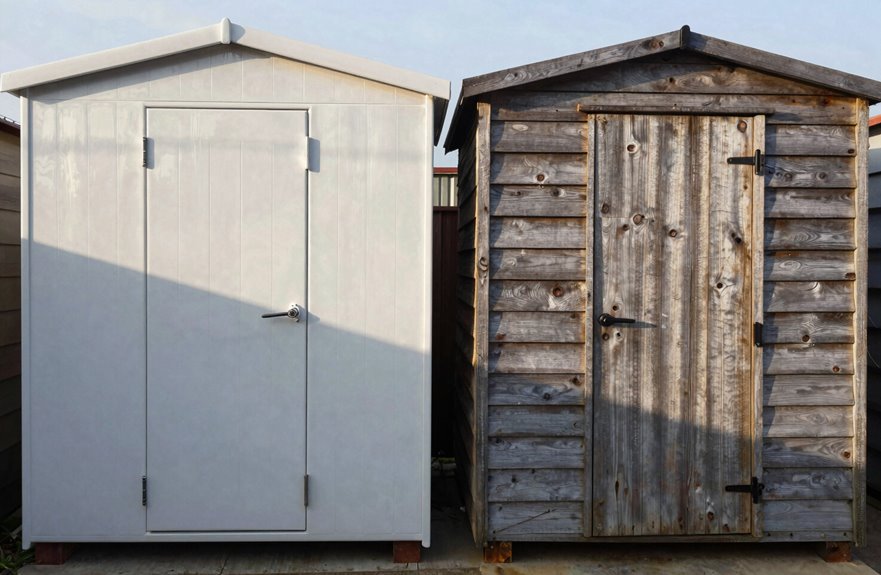
Where do you even start when picking between a plastic shed and a wood shed? It can be overwhelming to sift through options online.
Let’s break it down.
1. Ask yourself: what’s your real priority?
Plastic sheds excel in maintenance; they don’t require painting or sealing. Wood requires more upkeep, but it provides character and aesthetic appeal.
Plastic wins on low maintenance, while wood rewards you with timeless charm that evolves with your property.
2. Think about how you’ll use it.
If you need something portable, plastic is lightweight. If you want to add shelves, windows, or paint it to match your home, wood offers customization that plastic cannot provide.
3. Consider durability and weather.
Plastic resists rot and moisture. Wood offers strength for heavy storage and enhanced security.
4. Check your budget reality.
Plastic is often less expensive upfront, but consider how your choice will influence the utility and integration of the shed into your life.
You’re not just purchasing storage; you’re selecting a structure that fits your needs.

【Durable Resin Shed with Two Exterior Looks】 Built from low-maintenance resin panels, this plastic outdoor shed is made for everyday backyard storage through changing seasons. The surface helps resist rain, UV exposure, rust, rot, cracking and fading, while the reversible panel design lets you choose between two different exterior appearances to better match your outdoor setting

KEEP LONG-HANDLED TOOLS UPRIGHT AND EASY TO REACH. This vertical resin storage shed or tall outdoor storage cabinet fits long-handled tools, patio umbrellas, and gardening supplies, so yard gear stays organized and off the ground.

KEEP LONG-HANDLED TOOLS UPRIGHT AND EASY TO REACH. This vertical resin storage shed or tall outdoor storage cabinet fits long-handled tools, patio umbrellas, and gardening supplies, so yard gear stays organized and off the ground.
Upfront Costs: Why Plastic Sheds Cost Less (Wood’s Long-Term Value)
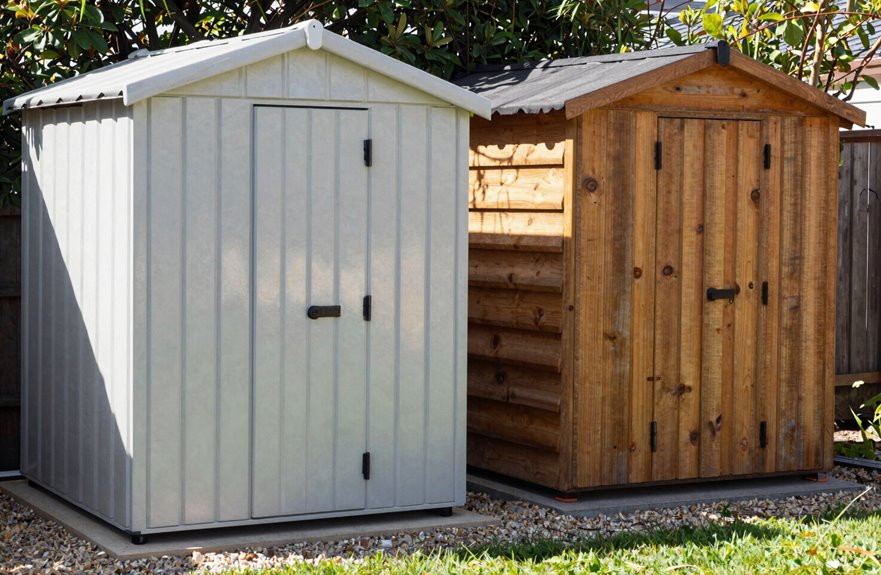
I notice plastic sheds usually start around a few hundred dollars, while wood ones often cost $1,500 to $6,000 or more. That price gap makes plastic appealing initially, but I also consider the long-term implications of my purchase. Wood costs more upfront, yet with proper care, it can last longer and provide greater value over time.
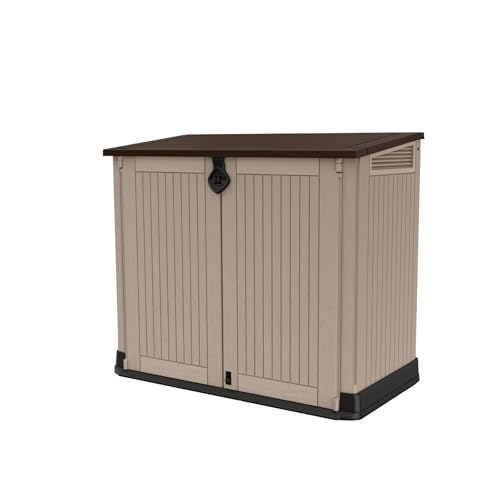
VERSATILE 30 CU. FT. OUTDOOR STORAGE – Spacious interior accommodates up to two 32-gallon trash cans, gardening tools, pool supplies, patio accessories, pet gear, and other outdoor essentials.

Hybrid Construction – Combines [fir wood framework] + [metal panels] , this outdoor storage cabinet ensures long-lasting durability while withstanding outdoor elements

【STURDY & ANTI-DENT STRUCTURE】 Tired of flimsy sheds that dent easily? Our outdoor storage cabinet is crafted from 0.8mm thickened galvanized steel, providing superior impact resistance compared to standard 0.5mm models. The reinforced metal frame ensures long-term stability in your backyard or garage without warping.
Price Gap Reality
I notice something tricky. That lower upfront cost can mask what you’re giving up. Wood costs more because it offers durability and options to customize. The long-term value question can be addressed later, but the gap itself reflects what you value most: savings now or potential benefits down the line.
Long-Term Investment
Why do plastic sheds cost less initially? They use simpler materials and faster manufacturing, resulting in lower checkout prices. This is beneficial for my budget.
However, let’s examine this cost comparison more closely.
Upfront vs. Over Time
- Plastic sheds: Lower initial price, minimal maintenance, 10–15 year lifespan
- Wood sheds: Higher upfront cost, regular sealing and painting needed, 20–30+ year potential
Finding My Balance
I am weighing immediate savings against true long-term investment. Wood requires more time, care, and money for upkeep, but offers durability and decades of service. Plastic allows for short-term savings, though it will likely need replacement sooner.
Both choices have their merits. I am deciding what fits my current needs and what I am willing to maintain for the future.
Maintenance Reality: Hose-Down Plastic vs. Annual Wood Sealing
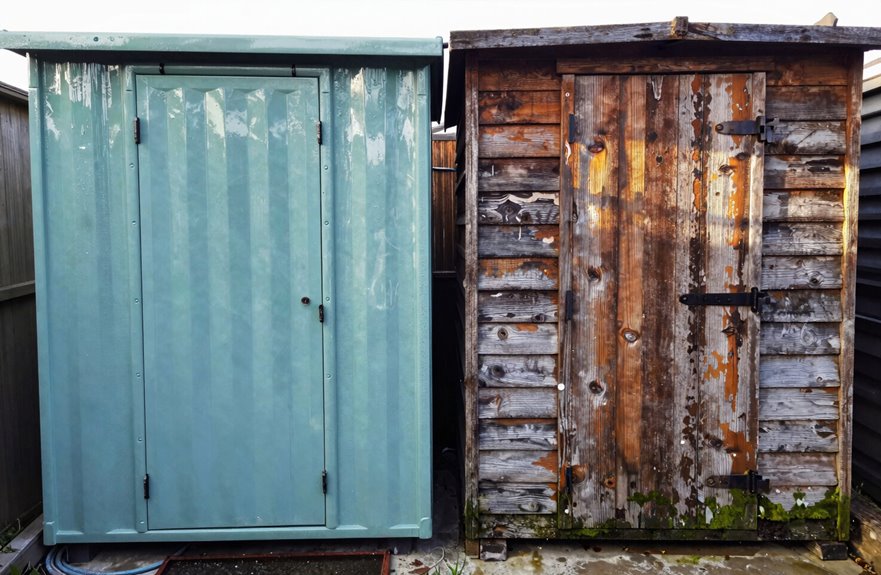
I appreciate how little work my plastic shed requires; a quick hose-down keeps it looking fresh. In contrast, my neighbor’s wood shed needs annual sealing and painting to prevent rot and insect damage. Let’s explore the reasons behind the differing maintenance needs of these two materials.
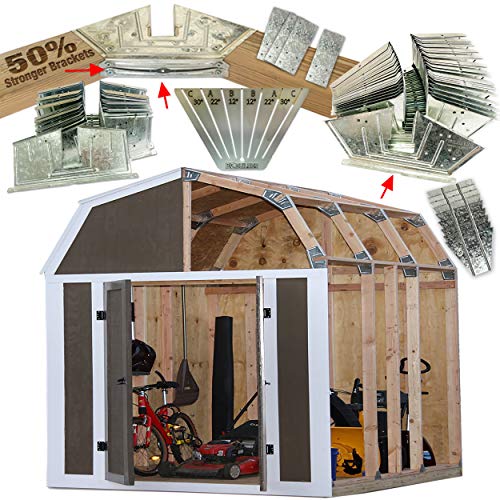
50% STONGER - Have you tried a framer kit from the other guys? Did the brackets bend when you flipped it over? EZBUILDER has the solution! Now 50% stronger, galvanized steel...
Zero Maintenance Requirement
How much time do you want to spend keeping your shed looking good? You value weekends with family, not chores. That’s why I lean toward plastic sheds; they eliminate the hassle entirely.
Wood sheds demand constant attention. You’ll face painting, sealing, and repairs just to combat weather and pests. For plastic sheds, a quick spray with a hose is all it takes.
Here’s what you’re signing up for:
- Plastic sheds need zero painting or sealing, ever.
- Wood sheds require yearly coatings to stay protected.
- Plastic upkeep means a quick spray-down when dusty.
- Wood maintenance involves sanding, staining, and fixing rot.
I choose freedom over schedules. With plastic, I can spend Saturdays relaxing instead of scraping paint. The choice becomes clear when you envision how you want to spend your time.
Yearly Upkeep Demands
The yearly reality of shed upkeep varies depending on the material. I’ve learned this through experience, and I’ll break it down so you can make a confident choice.
Plastic Sheds: The Easy Route
With plastic sheds, I simply grab my hose and some soapy water. There’s no need for painting or sealing, making maintenance straightforward. They resist rot and pests effectively. Yearly upkeep takes about an hour, and costs remain low.
Wood Maintenance: The Commitment
Wood requires more attention. I need to paint and seal every couple of years to prevent weather damage. Without regular care, moisture can lead to rot and pest issues. Annual repairs can become expensive, and maintenance costs increase over time.
I choose based on how much effort fits into my lifestyle.
Weather Tested: Rain, Snow, and UV Exposure Results
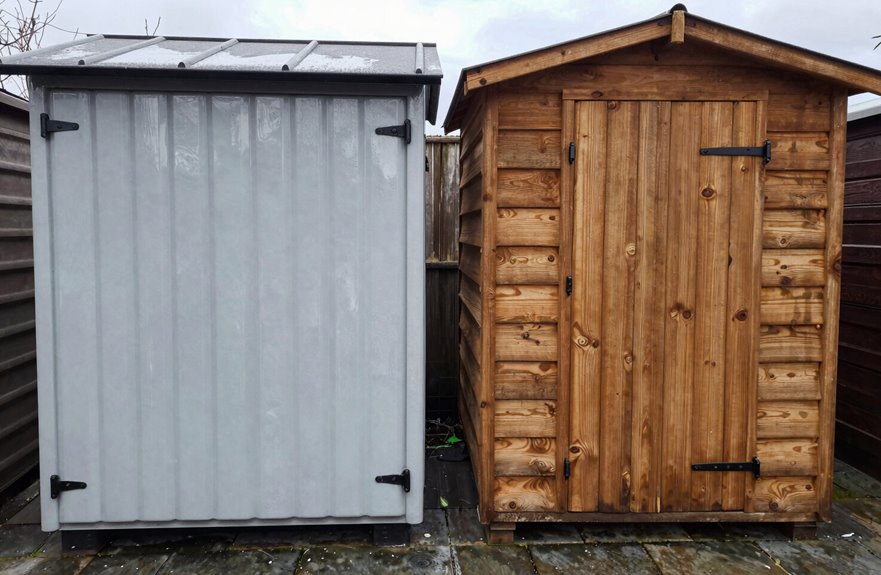
When you’re selecting a shed, the weather is likely a major consideration since it will be exposed to the elements year-round. I’ve examined how plastic and wood sheds perform in various conditions, and the results are as follows.
- Rain and snow slide off plastic sheds without soaking in, while wood sheds require regular sealing to prevent moisture and rot from entering.
- UV exposure can fade plastic over time unless you choose UV-treated resin models; however, wood allows for staining or painting whenever a refresh is needed.
- Plastic remains impermeable, keeping your belongings dry, while wood relies on barriers and coatings to achieve the same level of protection.
- Wood provides natural insulation for cooler summers and warmer winters, while plastic offers low-maintenance durability in extreme temperatures.

【Varied Floating Shelves】- Let's use our creativity and imagination! The uniquely designed matte surface metal triangular bracket can be installed on the top or bottom of the shelf. Natural wood color with white is suitable for a variety of minimalist and scandinavian home styles.

Large Capacity Organization System: Outdoor storage cabinet with 6 adjustable shelves; flexible layout for garden tools, watering cans, gloves and patio accessories; removable shelves create large open space for bulky items like shovels and buckets

QUALITY: Designed for style and built to enhance your outdoor space with lasting appeal.
Lifespan Expectations: 10–15 Years Plastic, 20–30+ Years Wood
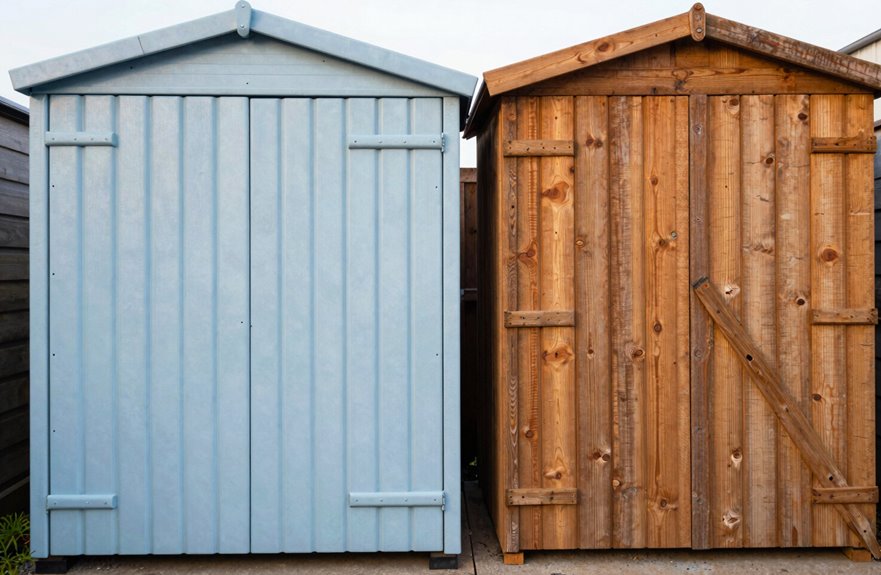
Why does lifespan matter when choosing a shed? I want something that serves my needs for years, not just a few seasons.
How Long Each Shed Lasts
Plastic sheds typically last 10 to 15 years. Quality resin types resist warping, cracking, and pests, enhancing their weather resistance. Wood sheds can last 20 to 30 years or more with regular maintenance.
The Maintenance Trade-Off
Wood requires more effort, including sealing, painting, and inspections. Neglecting these tasks can lead to moisture and pests compromising the shed’s durability. Plastic sheds require less maintenance, making them easier to care for.
What This Means
Wood offers a longer lifespan through dedicated upkeep, while plastic provides a more straightforward ownership experience with a shorter lifespan. Both materials can withstand weather conditions when selected carefully. I evaluate my time commitment against how long I want the shed to last.

Spacious Storage – 8×16 ft oversized shed delivers 852+ cubic feet of organized space, easily storing lawn mowers, bikes, tools, and seasonal items. (Measures 192.6"(L) x 92.5"(W) x 92.8"(H))

Spacious Storage – 8×6 ft oversized shed delivers 305+ cubic feet of organized space, easily storing lawn mowers, bikes, tools, and seasonal items. (Measures 70.2"(L) x 92.5"(W) x 92.8"(H))

SENSIBLE STORAGE: Preserves essential yard or patio space with extra-small footprint. Ability to easily fit in any outdoor space as well as store long garden tools, brooms and ladders.
Security Comparison: Door Strength, Lock Options, Break-In Risk
How secure does a shed really need to be? Your tools and belongings deserve real protection.
In comparing wood and plastic sheds side by side, wood consistently outperforms plastic in terms of door strength. The thick wood frames can accommodate heavy-duty locks without any issues. In contrast, the lighter doors and hinges of plastic sheds raise concerns about break-in risk.
Here are the key points to consider:
- Wood doors feel solid and resist prying better than plastic alternatives.
- Lock options expand with wood; you can add deadbolts and hasps that provide reliable security.
- Plastic sheds come with built-in latches, but I secure mine further to enhance safety.
- Overall, security is stronger with wood construction, while plastic requires additional measures.
Choose the option that ensures your belongings are well protected.

Rough Cut Texture: Low maintenance polyethylene plastic with a wood grain texture. Easy to clean, never needs to be painted, and more durable than wood alternative.
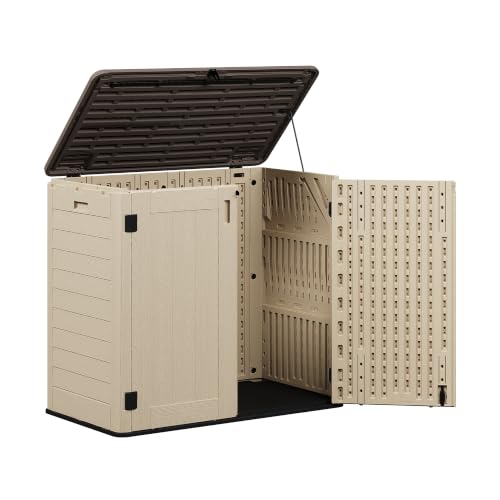
Multi-Functional Horizontal Storage Cabinet: This outdoor storage cabinet offers a large storage space of 31 cu. ft. capacity (47.6"D x 26.8"W x 42.13"H). Easily holds bulky items like lawn mowers, trash cans, and garden tool sets. Double doors make it simple to grab seasonal gear such as patio cushions or sports equipment

【Premium Materials Selection】: This outdoor shed is crafted from superior and resilient galvanized steel with waterproof, durable rust resistant and UV-resistant properties and an easy-to-clean surface. Our shed ensures reliable all-weather protection, enduring even under the most challenging conditions and year-round use
Wind and Stability: Why Lightweight Design Cuts Both Ways
Plastic sheds tend to struggle more in strong winds due to their lighter weight compared to wooden sheds. To prevent them from tipping over, it’s essential to anchor them securely to the ground using stakes or a solid foundation. Wooden sheds typically withstand gusts more effectively on their own, but both types can remain stable with proper preparation.
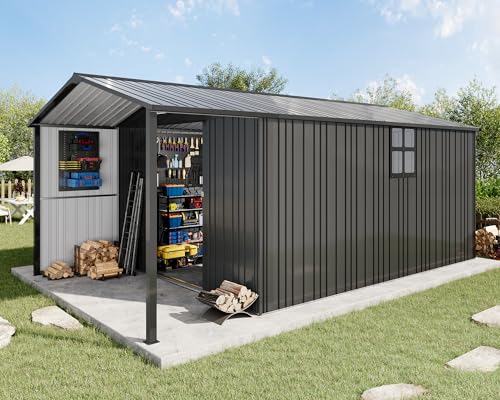
Dual Purpose, Storage Meets Relaxation: More than a shed—it’s a space to store your gear and unwind with a coffee. Lounge area (116.5"×42.5") makes it your own backyard retreat

Wood & Metal Construction – Built from solid fir wood and weatherproof metal panels, this outdoor storage cabinet blends rustic warmth with industrial strength. Designed to handle rain, sun, and temperature changes, it’s perfect for year-round outdoor use

【Weather-Resistant Resin for Outdoor Use】Made from durable resin plastic panels, this 4 x 6 FT outdoor storage shed is designed for changing outdoor conditions throughout the year. The low-maintenance surface helps resist water, UV exposure, rust, corrosion, cracking, and fading, making it a practical alternative to traditional wood or metal storage sheds.
Wind Vulnerability Issues
Where does a plastic shed stand when the wind starts picking up? Wind vulnerability affects plastic sheds more than expected.
Their lightweight design has advantages for mobility but poses challenges during gusts. Without proper anchoring, doors can slam and walls may shift. This movement raises concerns compared to heavier builds.
Foundation choices are crucial here. Plastic sheds rely on ground connection for wind resistance. Neglecting preparation increases the risk of tipping or damage.
Here’s what wind vulnerability looks like:
- Plastic walls flex and rattle during gusts
- Lightweight floors lift slightly without anchors
- Door latches strain against air pressure
- Whole structures slide on smooth surfaces
Anchor Solutions Required
So what’s the fix for keeping a plastic shed grounded when the wind kicks up? Anchoring is your answer, and it’s something plastic shed owners cannot skip.
Why Anchoring Matters
I quickly realized that a lightweight design has its downsides. While my plastic shed was easy to move into place, it could also lift or shift in strong winds without proper wind resistance measures.
Getting the Foundation Right
You’ll need a level base first; concrete slabs or compacted gravel work well. Then comes the actual anchoring:
- Anchor kits with stakes or bolts
- Ground augers screwed deep into the soil
- Concrete anchors for permanent spots
These solutions prevent wall twist and keep your walls square. Without them, I’ve seen doors jam and panels stress.
The Trade-Off
Good anchoring requires additional time and cost upfront. However, for stability during storms, it is worthwhile to protect your space and ensure security.
Customization Limits: Shelves, Paint, and Modifications That Work
The flexibility to make a shed truly yours depends heavily on what it’s made of. Wood and plastic offer different paths for customization, shelves, and modifications.
Wood allows for tailored construction. You can mount heavy shelves anywhere, add workbenches, or create your ideal interior layout without concern. Plastic simplifies things, mostly accommodating hooks and light accessories since the walls aren’t designed for heavy loads.
Here’s what works:
- Wood supports real shelving systems and pegboards that can hold substantial weight.
- Plastic works best with snap-in hooks and modular bins.
- Wood can handle structural modifications like windows or extra doors.
- Plastic limits you to manufacturer-approved interior adjustments.
If you want a space that evolves with your hobbies, wood accommodates your changes. Plastic offers ease but restricts possibilities.
Appearance Options: Natural Wood vs. Plastic Wood-Look Finishes
How do you want your shed to look in your backyard? I often think about this when comparing wooden sheds and plastic sheds, as they each convey a different aesthetic.
The Natural Appeal of Wood
Wooden sheds offer numerous appearance options. You can select board and batten, panels, or shake siding. They are paintable, allowing you to match your house or fence precisely. The natural grain feels warm and authentic.
The Modern Alternative
Plastic sheds have evolved with wood-look finishes. Some use DecoCoat finishes that look surprisingly realistic. The trade-off is between paintable wood and fade-resistant plastic. Wood allows for color changes whenever desired, while plastic maintains its vibrant appearance with minimal upkeep.
Ultimately, it comes down to selecting the look that complements your yard.

30-Pack Plastic Shims: Versatile plastic shims designed for stabilizing and leveling a variety of furniture and fixtures.

Shelf Organizer: Adds extra storage inside Suncast Vertical Sheds to increase usable space for gear, tools, and bins

Custom shelf kit perfectly compatible for Suncast BMSASHELFH2, fits Horizontal and Extra Large Vertical storage sheds precisely.
Final Recommendation: Matching Shed Material to Your Situation
Where do you actually stand when it’s time to choose? I’ve walked through the options with you, so let’s match the right shed to your life.
- Tight budget, quick fix — opt for plastic. You’ll spend less upfront and avoid heavy maintenance chores.
- Long-term home — select wood. Its longevity reaches 20 to 30 years when sealed properly.
- Make it yours — wood allows for customization. You can add windows, shelves, or a workbench to suit your needs.
- Set it and forget it — plastic keeps things simple. There’s no painting or rotting, just straightforward upkeep.
Your situation is crucial. Many find success with either option. Consider your budget, how long you plan to stay, the amount of work you’re willing to invest, and how personalized you want your space to be.

[8'x10' RESIN OUTDOOR STORAGE SHED]: Resin Shed is available in variety sizes for multipurpose use, perfect for outdoor backyard, garden, patio, utility room. The plastic shed can also be used as a pet house to provide a warm and safe room for your pet.
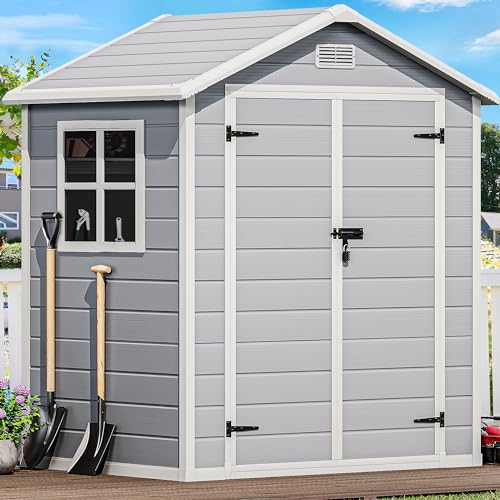
Versatile Storage Space: The bike storage shed measures 48.6" L * 67.1" W * 81.1" H externally, this 6x4.4 feet resin outdoor shed is available in a variety of sizes, colors, and shapes; Ideal for storing garden tools, lawn equipment, bicycles, patio furniture, and other sundry items; It can also serve as a cozy shelter for pets or a greenhouse for nurturing plants

Spacious Storage – 8×14 ft oversized shed delivers 743+ cubic feet of organized space, easily storing lawn mowers, bikes, tools, and seasonal items. (Measures 168.1"(L) x 92.5"(W) x 92.8"(H))