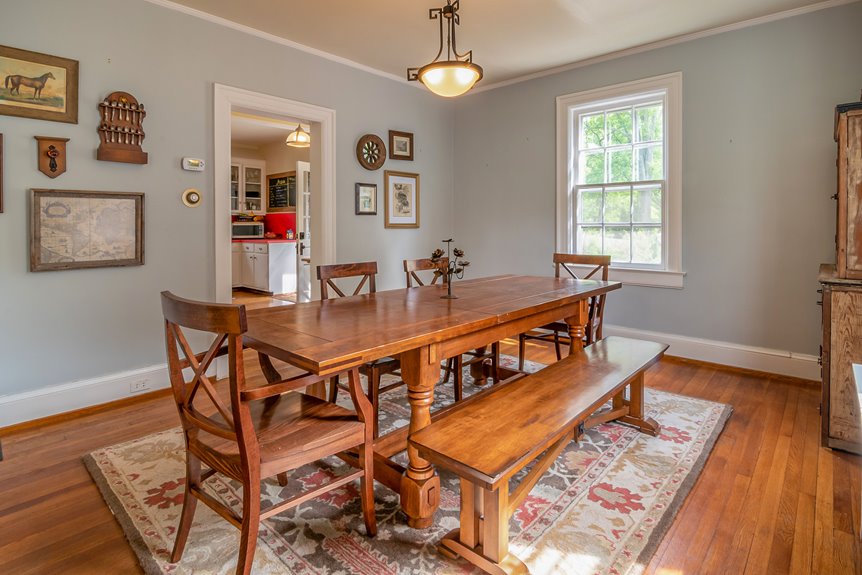
Yes, you need a rug pad under your dining table to protect your floors. I’ve seen too many scratched hardwood floors to skip this step. A good pad prevents your rug from sliding, cushions chair legs to avoid scraping, and provides a quiet buffer for meals. It also keeps your rug flat and extends its lifespan. Without one, chairs can wobble, rugs may bunch up, and your floor will suffer damage. Choose a felt-rubber blend about ¼ inch thick, trim it slightly smaller than your rug, and you’re ready to go. It’s important to understand how to match pads to specific floor types and recognize when yours needs replacing.
Do You Actually Need a Rug Pad? Floor-by-Floor Breakdown
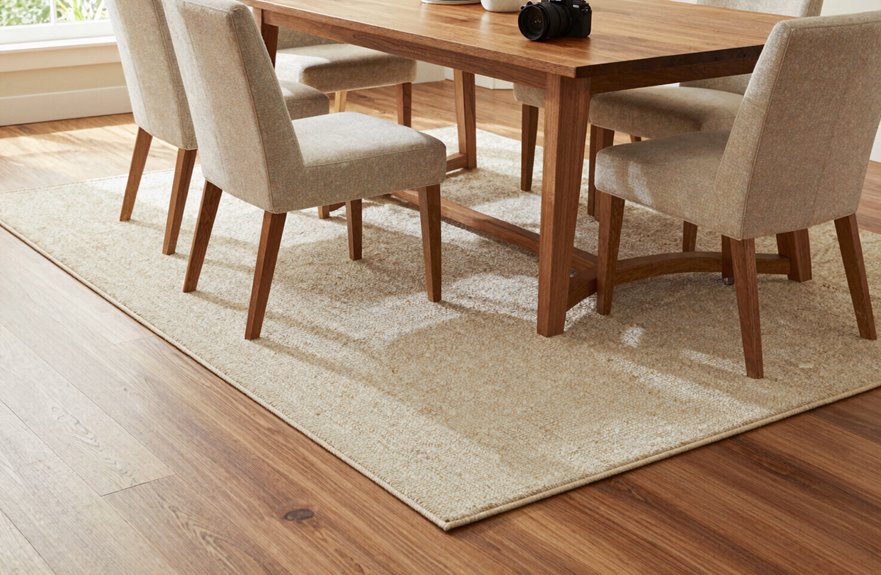
Why does a simple rug pad matter so much? It significantly affects how your dining room rug performs, especially on hardwood.
A simple rug pad dramatically impacts your dining room rug’s performance on hardwood floors.
What a Rug Pad Actually Does
- Stops slipping: Your chairs won’t slide around when you’re getting up.
- Protects floors: No more scratches from daily chair movement.
- Adds cushion: Meals feel more comfortable underfoot.
- Extends rug life: Less friction means your rug stays nicer, longer.
Finding Your Match
Testing rug pads in-store before you buy is advisable. Watts Furniture allows you to check compatibility with your specific floor and dining room rug combination.
Materials to Skip
Avoid high-pile or shag options; they are harder to clean and wear faster. A quality, non-slip rug pad keeps your dining space safe and your floors pristine without extra hassle.
Why Hardwood Demands a Rug Pad (and What Happens Without One)
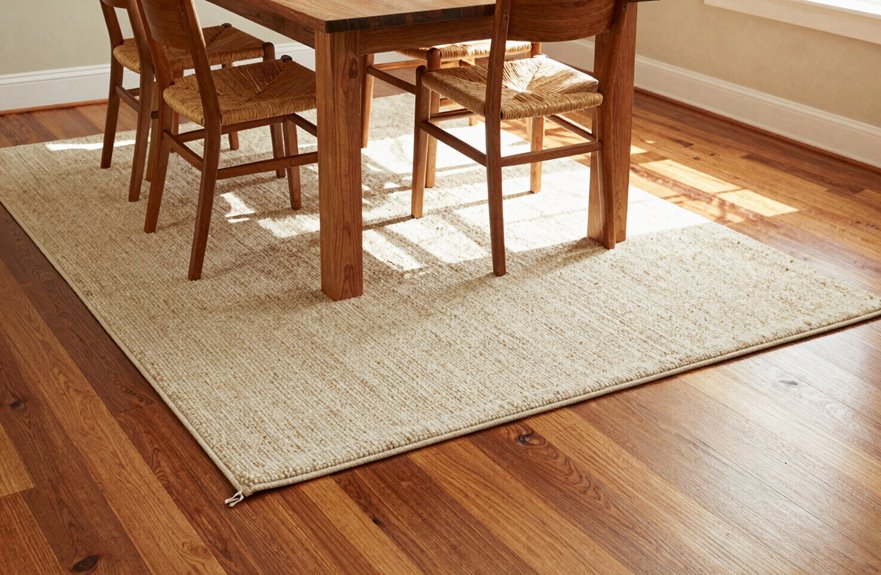
Hardwood floors are beautiful, but they can easily get scratched when you slide chairs in and out regularly. A rug pad helps keep everything in place, prevents chair legs from damaging the finish, and stops discoloration spots from forming under the rug. Without one, scratches, shifting rugs, and faded patches can gradually ruin your floors over time.
Chair Leg Scratch Prevention
How often do you actually look at the floor under your dining table? I didn’t either until I noticed tiny scratches creeping across my hardwood. Your chair legs are constantly moving, and without a rug pad, they grind directly against the finish every time someone sits down or gets up.
A good rug pad changes everything. It creates a protective buffer that absorbs daily wear. Felt-rubber blends work best; they grip the floor, cushion the rug, and prevent chair legs from causing damage.
Your dining room sees a lot of activity: family dinners, homework sessions, late-night chats. That repetition adds up. A rug pad distributes weight evenly and keeps everything stable, ensuring your floors remain smooth and welcoming. This small choice helps protect one of the most important areas of your home.
Floor Discoloration Avoidance
Where did that dark patch on my floor come from? I learned that rugs can trap moisture and chemicals against hardwood, leading to stains that won’t buff out. A quality rug pad with floor-safe backing creates a protective barrier that keeps my dining area looking fresh.
I’ve discovered a few key strategies for keeping floors spotless:
- I choose rug pads made with natural rubber or felt to avoid chemical reactions with my finish.
- I check that the floor-safe backing is labeled for my specific flooring type.
- I replace my rug pad every few years since worn backing can break down and bleed color.
- I lift corners monthly to check for early warning signs of discoloration.
My floors stay pristine, and I feel part of a community of homeowners who understand effective maintenance.
Rug Stability Enhancement
When hosting dinner, I want to ensure that no one is sliding around on a rug that won’t stay put. That’s why I always use a rug pad for stability.
Why Stability Matters
- No slips, no worries. A good rug pad keeps everything locked in place, allowing chairs to glide smoothly without moving the rug.
- Safer seating. My guests feel secure knowing the floor beneath them remains flat and firm.
- Protected floors. The pad prevents chair legs from grinding directly into hardwood, reducing scratches.
- Longer rug life. Weight is distributed evenly, so my dining rug doesn’t wear out unevenly.
Without that rug pad, I would deal with bunching corners and wobbly chairs. With it, my dining space feels solid, welcoming, and ready for any gathering.
How Rug Pads Prevent the Three Types of Floor Damage
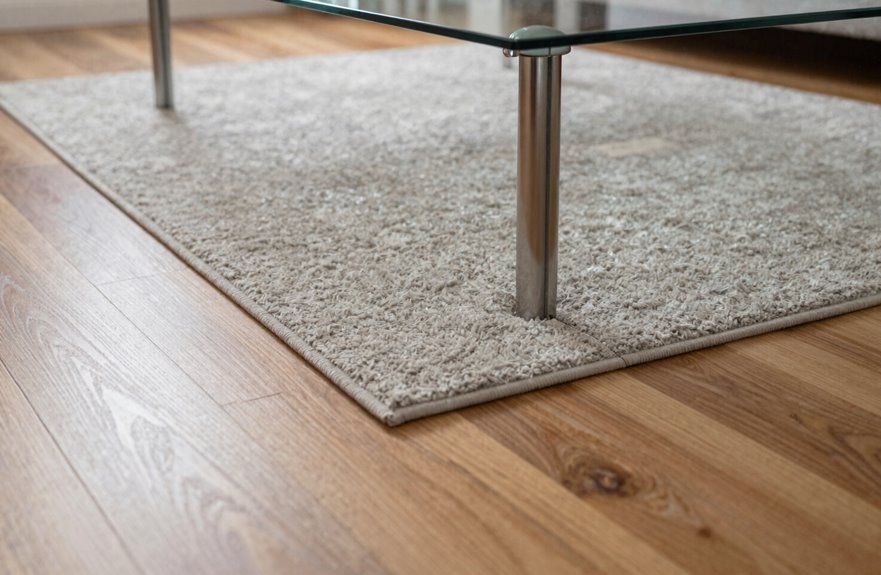
Why does a simple pad matter? A rug pad delivers significant floor protection without any fuss. It guards against the three main threats your dining area faces daily.
Here’s how a rug pad works:
- Scratch Defense – It stops chair legs from scraping and scuffing your beautiful floors.
- Friction Fighter – The cushioning reduces wear lines and dents from constant chair movement.
- Spill Shield – It blocks stains and color transfer by absorbing drips before they reach your wood.
- Moisture Barrier – For vinyl and LVP, it keeps rugs slightly raised to prevent discoloration.
I used to skip the pad to save money, which was a mistake. The small investment protects our home and its beauty.
Why Your Rug Keeps Creeping: and How a Pad Stops It
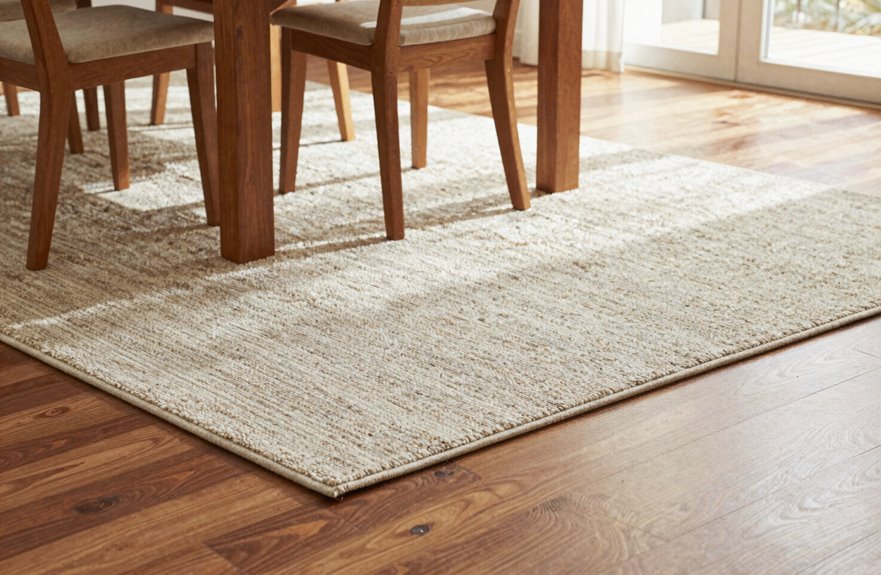
I’ve noticed my rug sliding across the floor whenever someone pulls out a chair. This situation is not only annoying; it poses a safety risk, especially for someone carrying hot food. Without a pad underneath, your rug lacks grip, causing it to creep bit by bit until it becomes bunched up under the table legs, and the chairs start scratching the bare floor. A quality rug pad secures everything in place, prevents that hazardous sliding, and helps your rug last longer by absorbing the friction from daily chair movement.
Slip Hazards Without Pads
Ever pulled out your chair to sit down and felt the rug slide underneath you? It’s both annoying and dangerous. Without a rug pad, your dining area becomes a minefield of slip hazards that can catch anyone off guard.
Here’s what you risk:
- Sudden rug shifts when you pull out chairs
- Tripping when your foot catches the creeping edge
- Unstable seating that wobbles beneath you
- Falls that could hurt you or your guests
A quality rug pad grips your floor and locks your rug in place. On smooth surfaces like tile or polished wood, that textured backing provides essential stability. You’ll feel more secure, and your family can relax knowing everyone is safer during meals.
Chair Movement Damage
The slipping we discussed isn’t just a safety issue; it’s also damaging your floors and rug.
Each time you pull out a chair, that movement grinds dirt and grit between the rug and floor. Without protection, you are essentially sanding your hardwood with every meal. I have seen beautiful finishes dulled by years of this hidden damage.
Here’s what happens without a pad:
- Chair legs catch and drag the rug, stretching and tearing fibers.
- Friction burns permanent marks into wood or tile.
- Your rug creeps inch by inch, bunching in awkward lumps.
A quality rug pad prevents this completely. It grips both surfaces, ensuring chair movement remains smooth and controlled. Your floors stay pristine, your rug stays in place, and dining feels more settled. For dining rooms, this protection is essential.
Pad Longevity Benefits
Most rug creep happens so slowly that you only notice it when you’re tripping over a bunched corner. This can be frustrating. A quality rug pad prevents this issue, keeping everything in place.
Here’s what a rug pad does for your space:
- It locks your rug in place with a non-slip grip, eliminating the need for daily adjustments.
- It cushions against chair legs, reducing friction that causes bunching and curling.
- It boosts durability by absorbing wear in high-traffic dining areas.
- It shields your floors from scratches and dents caused by shifting rugs and sliding chairs.
For busy dining areas, I recommend latex or rubber backing. This provides a stronger grip and increased longevity. Your rug stays flat, your floors remain pristine, and you won’t struggle with furniture that shifts.
How a Rug Pad Cushions Chair Movement (Quietly)
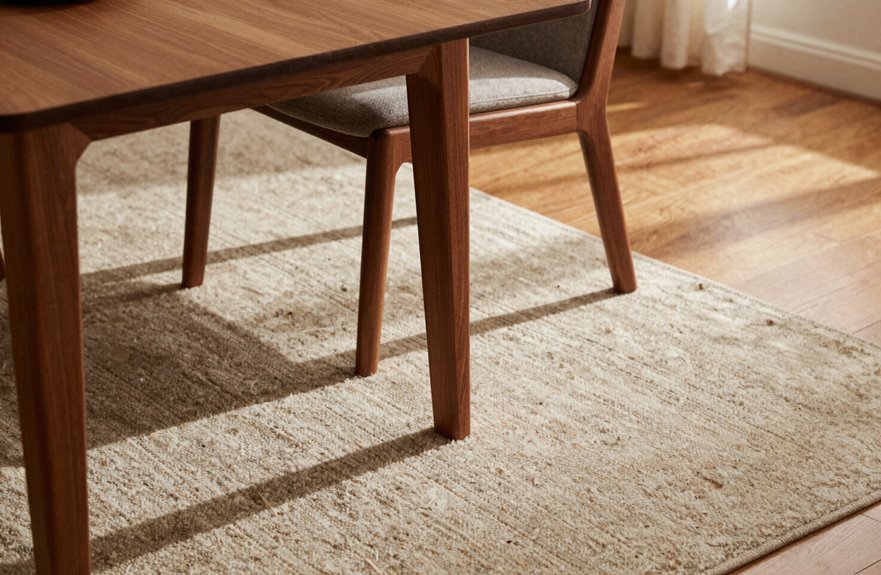
Why does pulling out a dining chair sometimes sound like a screech across a chalkboard? I’ve experienced it, and it’s not the vibe I want when hosting friends.
That screech across a chalkboard when pulling out a chair? Not exactly the dinner party vibe I was going for.
A rug pad addresses this issue. It cushions chair movement so legs glide instead of scrape. You get less noise, less floor damage, and a more pleasant atmosphere during dinner.
After adding one, I noticed several benefits:
- Quieter meals – No more cringing when someone pushes back to grab seconds.
- Protected floors – Chair legs won’t scratch hardwood through the rug.
- Smoother gliding – Chairs move without catching or bunching the rug.
Even in open spaces, the pad makes a difference. Dinner sounds softer, conversations feel cozier, and everyone is more relaxed. Small comforts like this contribute to a better dining experience.
The Right Thickness for Chair Clearance and Stability
I’ve addressed the noise and scratches, and now I need to focus on height.
Choosing the right rug pad thickness is essential for a safe and comfortable dining space. A pad that is too thin sacrifices cushioning, while one that is too thick can cause chairs to wobble like an unstable café table. Chair clearance is important, as no one wants guests tipping backward during dinner.
Here’s what I check before buying:
- The combined height of the rug plus the pad should stay around 3/16 to 1/4 inch.
- All chair legs must rest on the rug when pulled out, not half on and half off.
- Open-plan spaces can accommodate slightly thicker pads for additional dampening.
- I test stability by sitting and shifting my weight; any teetering indicates the pad is too high.
The right rug pad ensures protection while maintaining steady, grounded seating.
Rug Pad Grip vs. Floor-Safe Backing: Which to Prioritize
Since I’ve covered thickness, I need to think about what actually touches my floor.
Grip or Safety: What to Prioritize
Choosing a rug pad means balancing two important factors: keeping my rug in place and protecting my floor surface.
When Grip Wins
For my hardwood floors, non-slip grip prevents shifting during dinner parties. No one wants a sliding rug when someone is pulling out a chair.
When Floor-Safe Backing Matters
My friend with vinyl flooring learned the hard way. Some backings cause yellowing or trap moisture. Floor-safe backing keeps LVP and vinyl looking new.
My Simple Rule
I check my floor type first:
- Hardwood or tile? I prioritize grip.
- Vinyl, LVP, or laminate? I insist on floor-safe backing.
Most quality pads offer both. I read labels carefully because protecting my investment means caring about what’s underneath.
How to Pick the Right Rug Pad for Your Table Size
When I measured my dining room, I quickly realized my rug pad needed to accommodate more than I initially thought. Getting the size right is essential for creating a welcoming and comfortable space.
Here’s how I found the right fit:
- Measure your table first, then add 24 inches on every side so chairs can slide out without catching the edge.
- Choose thickness wisely; a ¼ to ½ inch pad provides cushioning without posing a tripping hazard.
- Match your pad to your rug size precisely, or opt for a slightly smaller size to keep it hidden.
- Check the material to ensure true floor protection that won’t stain or slip.
With the right rug pad, you are not only protecting your floors; you are establishing a gathering spot where memories can be made.
Rug Pads for Tile, Vinyl, and LVP: Different Needs Than Hardwood
Hardwood floors aren’t the only surfaces that need protection under your dining table.
Tile, vinyl, and LVP floors have their own challenges. These materials can discolor over time if you use the wrong rug pads, so I choose floor-safe options carefully.
Here are the features I look for:
- Non-slip backing that won’t stick or leave marks
- Materials specifically rated for my floor type
- Quality padding that prevents dye transfer
The right rug pads keep everything in place during dinner parties and provide real floor protection by creating a barrier against trapped moisture and friction. Cleanup is easier when my rug stays in place and doesn’t wear thin spots into the floor underneath.
Protecting your floors requires matching the pad to your surface, which makes a significant difference.
How to Install Your Rug Pad Without Bubbles or Slippage
I will guide you through installing your rug pad to ensure it remains flat and secure. First, prepare the surface and secure the edges properly. These two steps significantly impact whether a rug shifts or stays in place.
Prep the Surface
Why does a rug pad bubble or slide? This usually occurs when the surface underneath isn’t clean or when the wrong pad is used. Taking time to prep makes a significant difference for a smooth, safe dining area everyone can enjoy.
Here’s how I get it right:
- Clean the floor – I sweep and mop to remove every bit of dust and debris before placing the rug pad down.
- Pick quality material – I choose a non-slip pad designed for my floor type, whether it’s hardwood or tile.
- Size it correctly – I trim the pad slightly smaller than my rug so the edges remain hidden.
- Smooth it out – I press from the center toward the edges, checking for air pockets.
For open spaces, I add double-sided tape to keep everything flat and secure.
Secure the Edges
Secure the Edges
Once the floor is clean and the pad is sized right, I’m ready to lock everything in place.
Smooth It Out
I lay the rug pad flat and push from the center toward the edges. This prevents bubbles and ensures an even surface. I check that the pad aligns with the rug’s edges so nothing is visible.
Lock It Down
For my hardwood floors, I choose a rug pad with non-slip backing. It grips the floor and stays in place when chairs slide in and out. If the dining rug is large, I tape the seams or join pad sections to prevent shifting during meals.
Keep It Flat
After moving furniture, I re-tension the pad. A quick smooth-out maintains an even surface, which is important for family dinners.
When to Replace Your Rug Pad (and the Signs It’s Failing)
Eventually, every rug pad reaches the end of its life. It’s important to catch the warning signs early rather than waiting for a problem. Rug pad wear happens slowly, but the signs of failure are easy to spot once you know what to look for.
Watch for these four warning signs:
- Visible thinning or crumbling where the pad has compressed or broken down.
- Bunching or folding that creates lumps under your rug.
- Increased slipping when you walk or move chairs.
- More noise and friction during everyday use.
If your pad shows these issues, it’s time to replace it. A worn pad can’t protect your floors or ensure safety for your family. Choose a quality non-slip pad made for hardwood to keep your dining space secure and comfortable for years.