Based on my research, closet organization costs range from about $500 for basic wire shelving to over $10,000 for fully custom, furniture-grade built-ins. The main factors driving price are installation style and design choices, not just square footage. A simple wall-mounted system runs $1,000 to $3,000, while floor-mounted designs with drawers and lighting can increase significantly. Location also plays a role; labor rates vary by zip code. Three effective ways to cut costs include choosing standard finishes, collaborating with a budget-conscious designer, and limiting the number of drawers while incorporating open shelving. Here’s how those choices impact overall expenses.
Custom Closet Costs: $1,000 to $10,000+ Explained
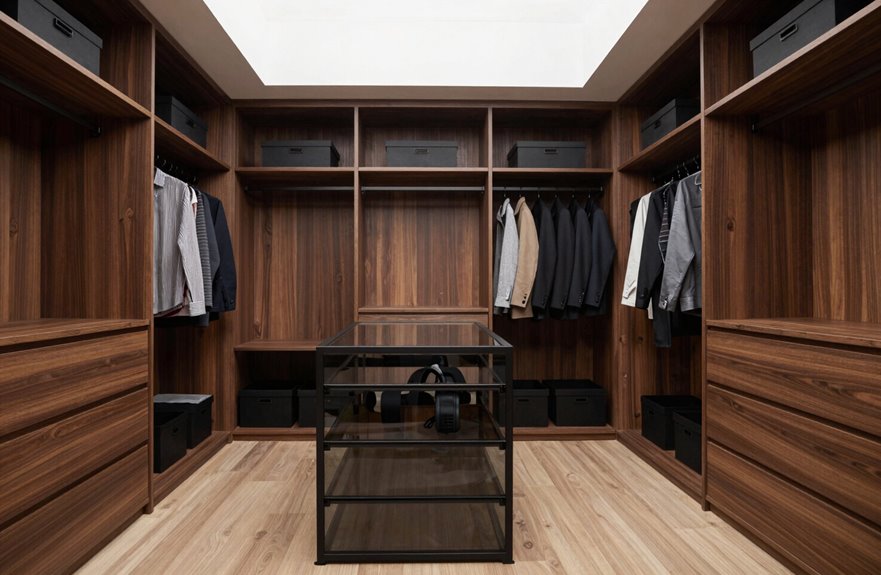
Why do custom closets cost anywhere from $1,000 to over $10,000? Let’s break down the factors involved.
Space Size Matters Most
Your custom closet price begins with the size of the space. A compact 6’x8′ walk-in requires far less material than a generous 12’x15′ boutique closet. More square footage means more shelves, rods, and hardware.
Design Choices Add Up
Cost factors include your personal selections:
- Drawer count and style
- Shoe organization systems
- Lighting and hardware finishes
- Color options and accessories
Installation Style
Wall-mounted systems typically cost less. Floor-mounted designs with base molding are more expensive but provide a more finished look.
The Real Value
You’re not buying mass-produced shelves; you’re investing in furniture-grade quality tailored for your daily life, balancing function with your budget.

Closet System with 2 Sets, 4FT-10 FT Closet Organizer System with 6 Drawers & 5 Shelves & 3 Rods, Walk-In Modular Closet System, Custom Closet Drawer Kit, Built-In Closet System, White

【Durable, Heavy-Duty Construction】This modular closet system is designed for strength and durability. Constructed from engineered wood and featuring extra-thick 0.6 mm stainless steel hanging rods, this closet system supports up to 100 lbs per rod, and the entire system holds over 2000 lbs. Perfect for closet organizer systems that require a robust, long-lasting solution. The adjustable shelves offer flexible storage options for a wide range of items without sagging, making it an ideal closet organizer drawer system.

Tips: (with 2 Sets)Due to this 6-15Ft Closet System with 8 Wooden Drawers for sale is a combination of 1*Closet System with 4 Drawers& 4 Rods and 1* 21.3" Closet System Tower with 4 Drawers. So you will may receive two separate packages at different time, and the product instructions are separate for each items, you can combine and install them into the same form as the sales picture after receiving the 2 packages, and it supports multiple combinations methods.
Retail vs. Custom: Container Store and Home Depot Prices
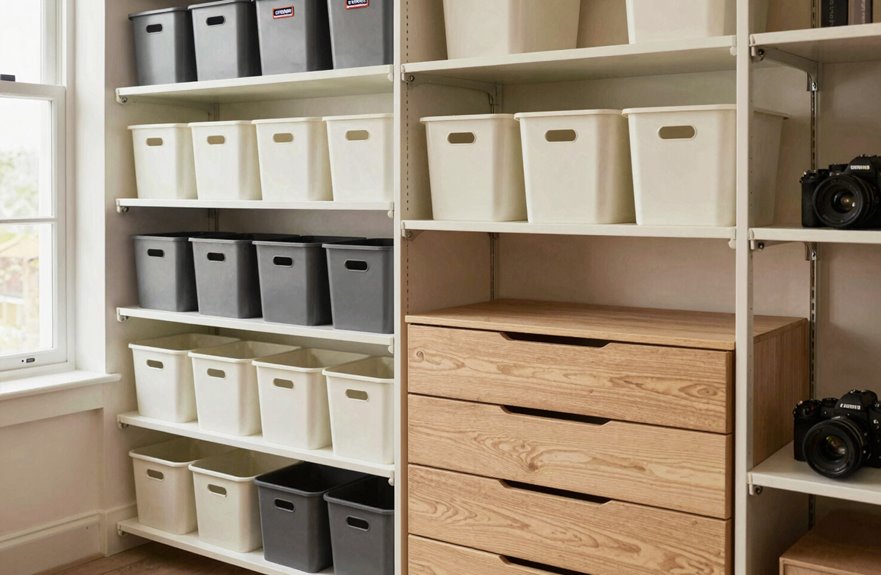
I want to show you how retail closet systems compare to custom builds, starting with actual prices at stores like The Container Store. Their Elfa Classic kits range from about $450 for smaller setups to $2,700 for more elaborate versions with mesh drawers. This provides a clear baseline for comparison. I will break down these pre-designed options and how they balance cost with flexibility, allowing you to see where retail fits between basic wire shelving and full custom work.

【Expandable Unique Design】Our closet shelf can extend its length from 16.81 inches to 28.74 inches, making it suitable for different usage scenarios. You can adjust the shelf width to fit your space and maximize storage. Neatly organize the cluttered items in your closet, such as off-season quilts, shoeboxes, and other storage containers.

Customizable & Modular Design: This closet organization system consists of vintage industrial pipe clothes rack that contains 4 retractable rods and 6 pieces of mesh for flexible configuration, allowing you to create a personalized storage solution to fit your space and needs

UPGRADED BRACKETS FOR STRONGER SUPPORT: The newly designed triangular brackets provide enhanced stability and a 150 lb weight capacity, ensuring your wire shelf stays firmly in place even under heavy loads. Each bracket also features built-in rod holders, perfect for hanging clothes, rods, or other items with ease.
Price Comparison Overview
Several retail stores sell closet systems that fit within a budget. Retail options like The Container Store and Home Depot offer solid choices for anyone looking to organize their space affordably.
Price Ranges You’ll See
Retail closet systems come in various price ranges. You can start small and upgrade later, which helps when determining what works for your home.
- Budget-Friendly Kits: Elfa Classic starts around $599.99 for a 6-foot setup and $799.99 for 8 feet. These provide the essentials without a significant expense.
- Mid-Range Choices: Opt for better materials and additional features.
- Higher-End Retail: The Decor+ by Elfa runs about $2,700.00, demonstrating that retail options can offer premium features.
These pre-designed systems may not be as customizable as custom options, but they effectively help you get organized and presentable alongside neighbors who have chosen similar solutions.
Elfa System Costs
How much should you expect to pay for an Elfa closet system? Elfa pricing fits a range of budgets, allowing you to get organized without overspending.
The closet kits start around $449.99 for the Classic 4 and climb to $599.99 for the Classic 6. If you need more space, the Classic 8 is priced at $799.99, while the Decor+ with mesh drawers costs $2,700 for a more upscale appearance.
Here are the benefits of choosing Elfa:
- Mix and match sizes to fit your exact space
- Start small and expand later as your needs grow
- Get professional style without custom prices
- Join thousands who have simplified their mornings
The Container Store makes it easy to find your place in an organized life, one closet at a time.
Pre-Designed Kit Options
Where can you find a closet system that fits your space without exceeding your budget? Pre-designed kits strike a balance between price and quality.
Retail Options Worth Exploring
The Container Store’s Elfa Classic kits provide attractive and functional storage at reasonable prices. You’ll find:
- 6 Closet Kit: $599.99
- 8 Closet Kit: $799.99
- 2 Reach-In Closet: $549.99–$579.99
Looking for a more upscale option? The Decor+ by Elfa 8 Closet is priced at $2,700, which is still lower than most custom quotes.
The Real Difference
Pre-designed kits allow for personalization through “Choose Options” features. You can customize the look while benefiting from the experience of thousands who have found effective solutions.
The average cost of these kits is significantly lower than that of custom work. You can achieve an organized and stylish space without the high price tag associated with full customization.
Size Matters Less Than You Think (Here’s Why)
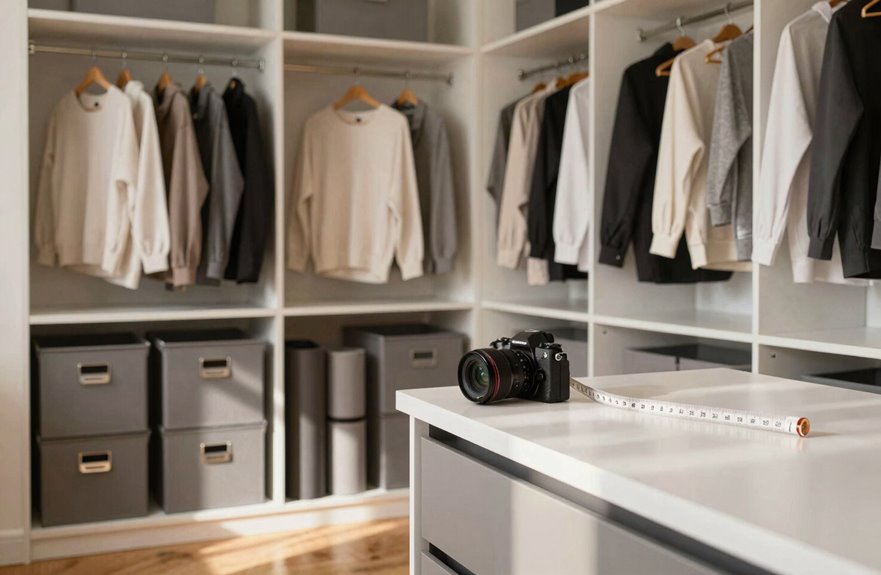
Why do so many of us assume that bigger always means pricier when it comes to organizing our closets? The truth often surprises people.
While a 12’x15′ boutique closet costs more than a 6’x8′ space, size isn’t the only factor. What really affects your final bill are the choices you make along the way.
Here’s what I’ve discovered about controlling costs without sacrificing function:
- Swapping premium finishes for standard shelves keeps money in your pocket.
- Choosing simpler hardware and lighting trims expenses quickly.
- Limiting drawers and specialty shoe solutions reduces totals substantially.
- Focusing on core organization goals helps you skip pricey add-ons.
You don’t need to max out your space to create something beautiful and practical. Smart decisions can have a significant impact on your budget, regardless of square footage.

Premium Material: made of high quality vinyl material, the self adhesive vinyl wall base with simple design is flexible. 20ft long, 6in wide and 1/12in thick, proper size is perfect for most interiors.

Durable Aluminum : Our Skirting Baseboard is made of high quality aluminum, sturdy and durable, not easy to deform. Waterproof, rustproof, smooth surface, easier to clean. Effectively protects corners and floors, keeping your home always looking perfect
Wall-Hung, Floor-Mounted, or Hybrid: Which Installation Saves Money
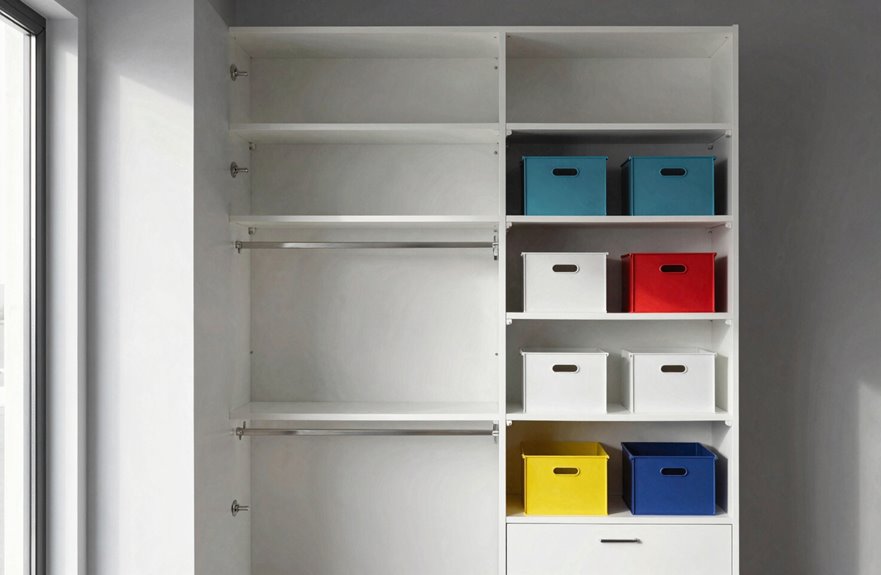
Once you’ve determined your size and features, another choice awaits: how your closet attaches to the room. There are three common paths people take, and each impacts your budget differently.
| Installation Type | How Your Space Feels |
|---|---|
| Wall-Hung | Light and open, like you’re floating above the floor |
| Floor-Mounted | Solid and permanent, like your room grew the closet |
| Hybrid | Balanced, giving you the best of both worlds |
I typically start with wall-hung systems when aiming to save money. They require less material, are simple, clean, and effective.
Floor-mounted systems offer a built-in and polished look; however, that appearance comes at a higher cost, particularly with base molding at the bottom.
The hybrid approach allows for flexibility. I might use wall-hung rods in areas where I want an airy feeling, while incorporating floor-mounted sections for a more finished appearance.
Your space layout and personal preferences are more important than adhering to strict rules. Finding what works best for your lifestyle is essential.

【Elegant Design & Modern Style】: With its simple lines and elegant doors enhanced by hazy acrylic, this cabinet is very suitable for your personal taste and interior decoration, and perfectly matches any home decor.

【Elegant Design & Modern Style】: With its simple lines and elegant doors enhanced by hazy acrylic, this cabinet is very suitable for your personal taste and interior decoration, and perfectly matches any home decor.

𝐀𝐦𝐩𝐥𝐞 & 𝐅𝐥𝐞𝐱𝐢𝐛𝐥𝐞 𝐒𝐭𝐨𝐫𝐚𝐠𝐞: The wooden shoe rack features 23 storage shelves, providing ample storage for slippers, high heels, sneakers, and boots. The upper space can store other items, helping you keep shoes organized and reduce clutter in your home
Real Quotes: Reach-In, Walk-In, and Home Office Examples
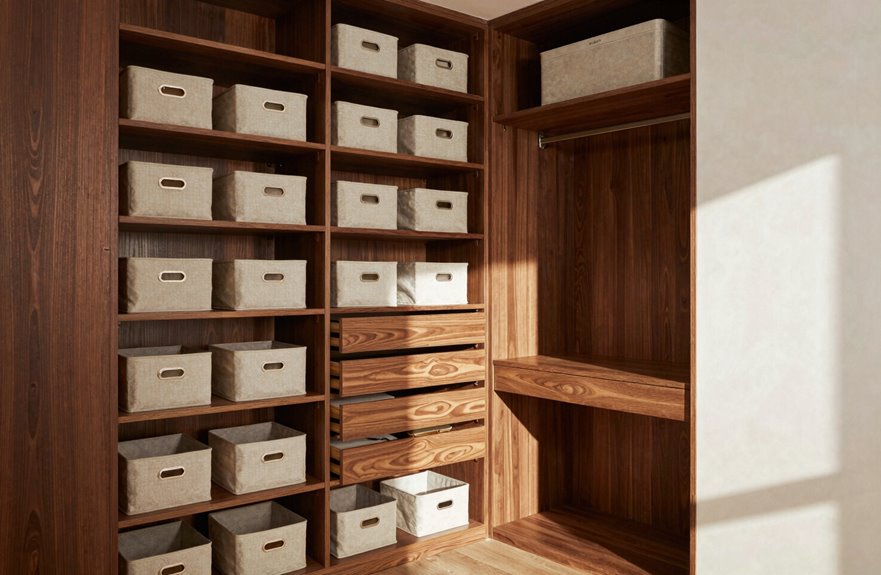
How much can you actually expect to pay? I’ve gathered real quotes to show you what homeowners typically see.
- Reach-in closets usually cost less because they are smaller and simpler.
- Walk-in closets are more expensive due to additional drawers, doors, and space.
- Home office setups increase costs with added countertops and desk features.
- Premium options like lighting, aluminum frames, or textured veneers raise any quote.
Your specific mix of features is crucial. A basic reach-in remains affordable, while a fully equipped walk-in with extras can become costly. Home offices vary in price based on the amount of workspace you require.
These examples provide a clearer picture of where your project might fall. Many homeowners start with similar questions.

CLOSET ORGANIZER SYSTEM: All in one wire closet shelves kit that creates up to 96 in. of hanging space and 144 in. of shelf space; Kit includes hang track, standards, shelf brackets, closet rods, closet rod support and SuperSlide shelves

DOES THIS FIT MY PANTRY?: Fits any closet or wall with 3 ft of horizontal space.

DOES THIS FIT MY CLOSET?: Fits any walk in or reach in closet that is 3-6 ft wide.
Level 1 to Level 4: The Complete Price and Feature Spectrum
Where do you start when every closet company seems to use its own pricing code? I break it down into four clear levels, and I will walk you through each one.
Level 1: The Starter System
This level includes fully suspended shelves and rods with visible hardware. It offers a clean and simple design, with optional baskets and pull-out accessories.
Level 2: The Workshop Feel
At this level, you will find floor-mounted drawers and deeper shelving. The finish feels more solid and permanent.
Level 3: The Built-In Look
Your closet begins to resemble real furniture at this stage. You can expect continuous kickplates, wall-to-wall construction, and trim that conceals any gaps.
Level 4: The Virtuoso System
This level features high-end finishes, aluminum-framed doors, hidden hardware, and Everstyle drawers. It represents the complete package.
Lighting options improve with each level, starting with basic LEDs at Level 1 and extending to more extensive systems at higher levels.

【ELITE WALK-IN CLOSET SYSTEM WITH 12 DRAWERS】Upgrade your room into a luxury dressing space with our heavy-duty modular closet systems, creating a seamless 94.8" W × 15.8" D × 81" H walk in closet system layout when 4 independent units are placed side-by-side. Each individual cabinet measures precisely 23.7" W × 15.8" D × 81" H, adapting perfectly to standard closet system areas from 8ft to 21ft (94.8"–252.4"). Featuring elegant minimalist lines and farmhouse-style drawer panels, this custom closet system provides a premium alternative to expensive whole-house custom furniture and serves as an ideal DIY closet system for modern homes.

【 4-in-1 Closet System, Custom/DIY as you like】- This Closet System sets includes 4 Separate closet Units: One Corner Closet system and 3 other Styles independent units with 6 Wooden Drawers and a lot of Adjustable Shelves and totally 8pieces hanging Rods. And you can customize it to be Dreamy Long or L Shape or U shape to fit your walk in Closet Perfectly for organizing (T shirt, Jackets, Coats, Outerwear, Dresses), shoes, Accessories, bags, suitcases, Toys, Bedding, and more. Say goodbye to clutter and enjoy a neat, easily accessible storage solution.

Tips: (with 2 Sets)Due to this 6-15Ft Closet System with 8 Wooden Drawers for sale is a combination of 1*Closet System with 4 Drawers& 4 Rods and 1* 21.3" Closet System Tower with 4 Drawers. So you will may receive two separate packages at different time, and the product instructions are separate for each items, you can combine and install them into the same form as the sales picture after receiving the 2 packages, and it supports multiple combinations methods.
Drawers, Lighting, Hardware: Where Your Money Actually Goes
I’ve explained the four levels, so let’s look at which pieces affect your price.
Your drawer choices significantly impact costs. More drawers increase expenses, especially if you opt for decorative fronts or unique profiles. Basic baskets are budget-friendly, while Everstyle drawers and aluminum frames fall into the higher price range.
Lighting can enhance your space. You may start with simple LED strips and expand to more elaborate systems for comprehensive illumination.
Hardware and accessories contribute to personalization. Consider items like jewelry hooks, valet rods, and pulls that feel comfortable.
Finishing details complete the look. Decorative trim and hidden hardware provide that built-in appearance.
Here’s where your budget actually lands:
- Drawer count and front style drive base costs
- LED lighting ranges from basic to extensive coverage
- Accessories like hooks and rods personalize your space
- Trim and hidden hardware create premium appearances

HIGH-QUALITY MATERIAL – HAUSHOF wire shelves are made from Q235 carbon steel, which can reach a maximum load capacity of 40 LBS. Wires are sprayed with white 80-120µm coating, thus avoiding corrosion, rust, and damage to your hands/clothes

【Sturdy and Durable】The heavy duty hanging closet organizer is made of metal with a smooth powder-coated coating, which not only protects the wall-mounted closet organizer shelves from wear, rust, and corrosion but also keeps your clothes from getting scratched. Each floating shelves can support up to 66 pounds, and the closet hanging rod can securely hold 15-20 items of clothing. Each connection point on the closet shelf organizer is reinforced with metal screws to ensure long-term use.

【Sturdy and Durable】The heavy duty hanging closet organizer is made of metal with a smooth powder-coated coating, which not only protects the wall-mounted closet organizer shelves from wear, rust, and corrosion but also keeps your clothes from getting scratched. Each floating shelves can support up to 66 pounds, and the closet hanging rod can securely hold 15-20 items of clothing. Each connection point on the closet shelf organizer is reinforced with metal screws to ensure long-term use.
Who Should Install: DIY, Pro, or Hybrid Labor
There are three effective paths for getting your closet system up and running, each suited to different budgets and comfort levels with tools. You can handle the entire project yourself if you’re skilled with a level and comfortable measuring twice. Alternatively, you can hire a professional for complex built-ins and precise finishes. A hybrid approach allows you to mix wall-mounted and floor sections for a balanced solution. Let’s explore what each option means for your budget and time commitment.
DIY Installation Feasibility
How do you determine if you should install your closet system yourself? I evaluate my skills, tools, and the system I’ve chosen. Some kits, like Elfa Classic, are designed for DIYers. Others require professional installation to achieve a built-in look.
Before I grab my drill, I check:
- Do I own basic carpentry tools, or will I need to buy them?
- Can I measure twice, cut once, and identify my own mistakes?
- Is my space straightforward, or does it have unusual angles and a lot of square footage?
- Does the supplier provide guides, phone support, or video assistance if I encounter issues?
Hybrid options allow me to install wall sections myself while leaving floor-mounted pieces to professionals. This approach can save money without compromising stability.
Professional Installation Benefits
Once I’ve assessed my DIY readiness, I need to consider the advantages of professional installation.
What You Get With Pros
Hiring a professional allows me to achieve a polished, built-in look. They ensure accurate mounting and proper alignment, which enhances both durability and aesthetics, eliminating issues like crooked shelves or wobbly rods.
When Pros Make Sense
I prefer professional assistance for larger or more complex projects. This significantly reduces the risk of mistakes and helps me avoid costly rework from measurement errors or misaligned holes.
The Investment Trade-off
While I am paying for labor costs I could save with DIY, I am also investing in a cohesive and high-end finish. For many seeking a well-finished home, the benefits justify the expense.
Hybrid Approach Advantages
Why choose between doing it all myself or hiring someone completely? The hybrid approach lets me get the best of both worlds.
This method mixes wall-hung and floor-mounted sections. I can create that built-in look I want without exceeding my budget.
Here’s how it works for me:
- I use pros for tricky measurements and integrated features.
- I tackle simpler wall sections myself to save money.
- I put pricey floor cabinets only where they matter most.
- I balance stability, storage, and cost in every zone.
Every space is different. My closet isn’t your closet. By deciding what I handle and what I outsource, I maintain control. I achieve a cohesive design that feels custom rather than overdone. It’s a smart approach.
Location Pricing: Why Identical Systems Cost Differently
Where you live significantly impacts the price of your closet system. The exact same closet setup can vary in cost depending on your zip code.
Your zip code can make the same closet setup cost more—or less—than you’d expect.
Regional labor rates and local material costs influence your estimate. The Closet Organizer Installation Calculator shows national averages starting from $79.35 to $110 per square foot as of May 2026, but your specific area can adjust that number.
Here are the factors affecting your local pricing:
- Your zip code – it directly influences labor and material rates.
- Project size – larger spaces require more products and features.
- Selected options – each choice affects your total.
Your total includes the finished surface area plus any enclosed openings. Larger closets typically cost more due to increased materials and features.
Estimates serve as educational tools, not final quotes. Actual costs may vary based on scheduling, premium materials, and additional work not included in the calculator.
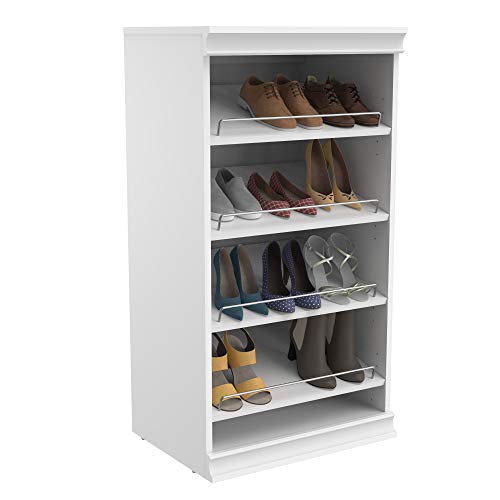
MODULAR CLOSET ORGANIZER: Stackable shoe shelf unit features four adjustable angled shoe shelves with fences and stackable design (hardware included)

Large 9-Tier Shoe Storage Cabinet - Keep everyday shoes organized in one vertical shoe cabinet. This tall shoe rack cabinet holds about 32-36 pairs of adult shoes or 40-45 pairs of kids' shoes, making it ideal for entryway shoe storage, closets, bedrooms, and small spaces.

Deep Tier Structure: Every tier features 4 reinforced rods and extra depth to keep shoes from falling off, suitable for men’s, women’s, and kids’ shoes. A reliable adjustable shoe rack for busy households.
Delivery, Permits, Demolition: Costs Nobody Quotes Upfront
Beyond where you live and what you build, some costs tend to slip through the cracks until later in the process. You’re not alone if you’re surprised by these extras; everyone wants to feel prepared and not caught off guard.
Here’s what I watch for:
- Site prep and protection, which keeps your floors and walls safe while we work
- Material delivery and transportation, because those shelves don’t magically appear
- Cleanup after installation, so you’re not left with dust and debris
- Itemized professional assessments, which give you the real picture beyond rough estimates
Permitting varies by town, and demolition of old closets usually gets billed separately too. I recommend asking your contractor early about these line items. This approach helps you budget more effectively and gain clarity on your project.

🥇 The Pantry Crisis Solved: Breathing Room for Your Food Picture this: You open your pantry, and instead of that faint "new plastic" smell lingering near your food, you're greeted by clean, fresh air. Our premium MDF panels are 100% Odor-Free and Non-Toxic, guaranteed safe for food storage. Finally, you can organize spices and dry goods on a surface you trust completely, transforming your pantry into a source of health and peace of mind.

CLOSET ORGANIZER KIT: Fixed mount closet kit has up to 120 in. of hanging space and up to 138 in. of shelf space

Abundant Quantity for Versatile Needs: this closet system part package includes 2 pcs of 47.5 inch long twin rail upright and 6 pcs of shelf bracket; The comprehensive set allows a simple assembly process and offers complete support for your shelving needs; The white metal of the twin rail upright enhances the look of any space while ensuring durability
What You Sacrifice With Cheap Wire and Builder-Grade Systems
Although everyone loves saving money upfront, cheap wire racks and builder-grade closets often lead to more frustration over time. What seems like a smart deal can quickly become a daily annoyance.
The upfront savings on cheap wire racks quickly evaporate into daily frustration and wasted time.
Here’s what you’re really giving up:
1. A system that actually fits your space
Wire racks cannot accommodate odd corners or slanted ceilings, leaving gaps where items accumulate.
2. Materials that last
Lower-grade hardware warps and chips easily. Doors can misalign within months.
3. Real stress relief
Studies show proper design reduces closet stress by 40%. With cheap systems, you may still find yourself searching for shoes every morning.
4. Your future self’s time
You will likely need to upgrade eventually. Paying twice is unnecessary.
A well-designed closet enhances your home’s functionality and aesthetics, while poorly constructed systems can create ongoing challenges.
Three Ways to Cut 30% Without Losing Function
You don’t have to drain your savings to achieve a functional closet. Smart choices can effectively reduce costs without sacrificing essential features.
- Choose wall-hung systems over floor-mounted ones. This avoids additional expenses for base molding while providing sturdy storage.
- Limit drawers and doors. Open shelving is more affordable and keeps everyday items visible and accessible.
- Pick standard finishes instead of premium colors. The function remains the same, allowing for savings.
- Work with a designer who understands your budget. They will help you focus on essential design elements, ensuring you spend wisely.
Clients have saved thirty percent using these strategies. Their closets still feel custom, function well, and provide a welcoming space each morning.