
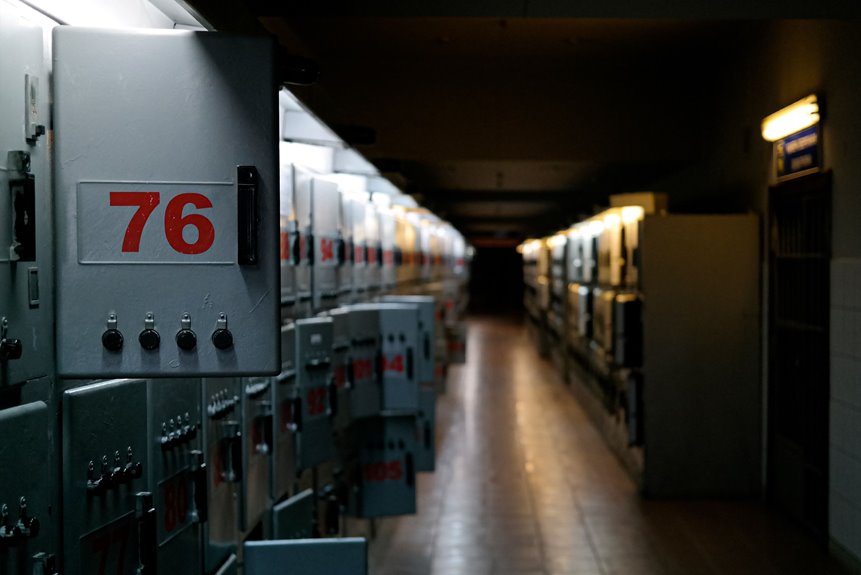
Fire-resistant filing cabinets use three key layers: thick steel walls, special insulation like gypsum or mineral wool in the core, and tight seals around doors. The insulation absorbs extreme heat to ensure that your papers remain below 350°F, even when external temperatures reach 1,700°F. UL ratings such as 350, 150, or 125 indicate the maximum internal temperature and what materials can be safely stored. This breakdown clarifies how each component functions and what the ratings mean for your documents.
What “Fireproof” Actually Means for Filing Cabinets
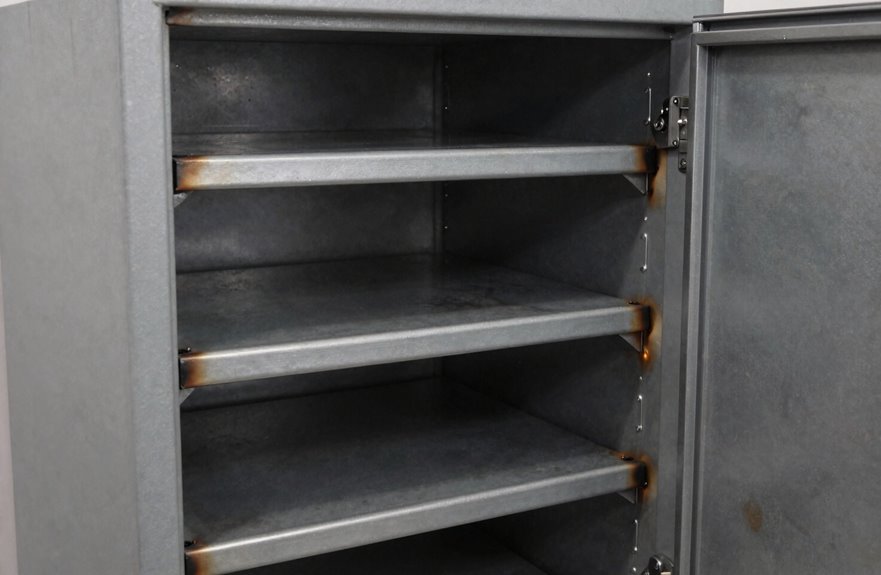
Curiosity about fireproof filing cabinets usually starts with one simple question: what does fireproof actually mean?
What does fireproof actually mean? It’s the first question most people ask when considering a fireproof filing cabinet—and the answer defines everything that follows.
It’s about keeping your items safe when disaster strikes. A fire-resistant cabinet protects papers through intense heat. I look for a UL classification to confirm it has been rigorously tested. That label indicates experts burned it to see if the contents survive.
My cabinet features thick insulation between metal walls. This material absorbs heat, helping to keep documents cool inside. Not every metal box offers this protection; I’ve found that cheaper cabinets can melt or warp quickly.
Three things I check:
- UL rating (Class 350 protects paper for one hour)
- Quality insulation filling the core
- Tight seals around doors
Without these, I’m relying on thin metal for protection.

FIRE RATED FILING CABINET can endure fire for 1 hour while maintaining interior temperatures, ensuring your documents, certificates & valuables remain safe in extreme conditions

NEW SLEEK DESIGN: featuring rounded edges & recessed drawer handles, the new Turtle Contour line modernizes an icon in fire protection

FIRE RATED FILING CABINET can endure fire for 1 hour while maintaining interior temperatures, ensuring your documents, certificates & valuables remain safe in extreme conditions
How Fire-Resistant Walls Block Heat Transfer
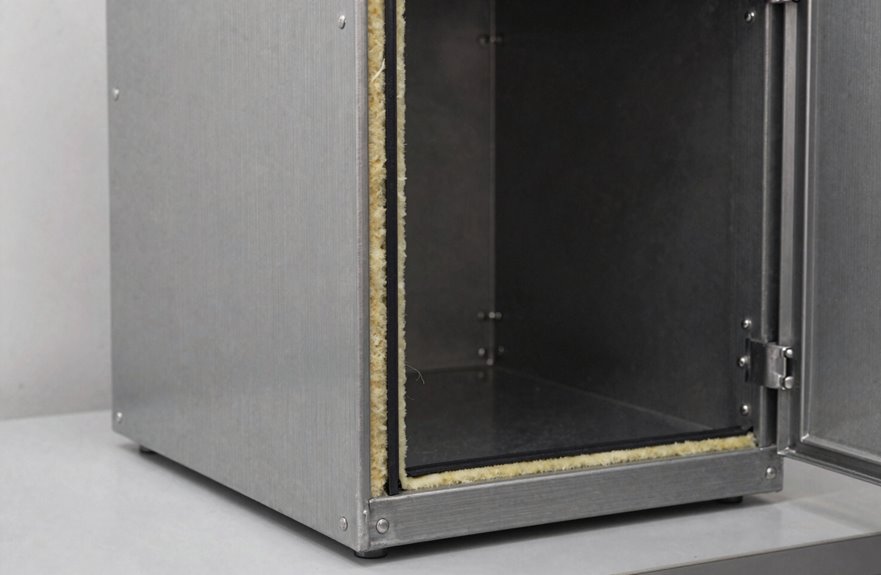
Picture how a fire-resistant wall keeps heat on one side so your side stays cooler. It relies on three main ideas: insulation core materials that block heat, thermal mass absorption that soaks up the fire’s energy, and layered wall construction that stacks barriers like a thick sandwich. Each piece works together to slow the heat down.

FIRE RATED FILING CABINET can endure fire for 1 hour while maintaining interior temperatures, ensuring your documents, certificates & valuables remain safe in extreme conditions

FIRE RATED FILING CABINET can endure fire for 1 hour while maintaining interior temperatures, ensuring your documents, certificates & valuables remain safe in extreme conditions

Two letter-size 31" deep file drawers built with high sides for use with hanging folders and 1 follower block per drawer
Insulation Core Materials
How do fire-resistant walls protect your documents when flames are roaring outside? Let’s explore what’s inside those steel walls.
The Core Matters
Fire-resistant cabinets use special insulation materials packed between thick steel layers. Manufacturers typically choose gypsum-based fillers or mineral wool to block intense heat. Specifications often show a 1″ x 2″ lattice of 14-gauge welded steel wire holding gypsum in place, creating a rigid, protective shield.
What to Look For
- Check that insulation wraps uniformly around all six sides.
- Verify that thickness and material type determine the cabinet’s fire rating.
Without these essential insulation materials, a cabinet is merely thin metal. True Class 350 ratings require proper inner cores, not just empty steel shells.
Thermal Mass Absorption
- Dense materials like concrete or gypsum absorb significant amounts of heat energy.
- They release that heat slowly, providing valuable time.
- Insulation layers next to these materials block heat transfer even further.
Higher density means better protection. That is why fire-rated cabinets use thick, heavy walls; they have substantial thermal inertia working for them. During standard fire tests, this combination keeps interior temperatures low enough to protect important documents.
Layered Wall Construction
Layered Wall Construction
Fire-resistant cabinets are designed to prevent heat from reaching your documents by incorporating multiple protective layers within the walls. This engineering is worth understanding.
How Layered Insulation Works
The walls of your cabinet are not just empty steel boxes; they contain gypsum boards arranged with steel wire lattices. This layered insulation creates a continuous barrier that significantly slows heat transfer. Between these layers, air gaps and mineralized insulation disrupt conduction, convection, and radiant heat.
What Fire Testing Proves
During UL-rated fire testing, technicians expose all six sides to extreme temperatures. The cabinet must maintain its structural integrity while ensuring that internal temperatures remain safe for documents. The outer steel shell provides strength, while internal fireproof materials perform the essential job of blocking heat.
Waterproof and impact-resistant features protect against various threats. Although they do not enhance the heat barrier, they contribute to the overall protection of documents.
These layers provide critical time when flames occur.
Why Sealed Seams Matter for Fire Protection
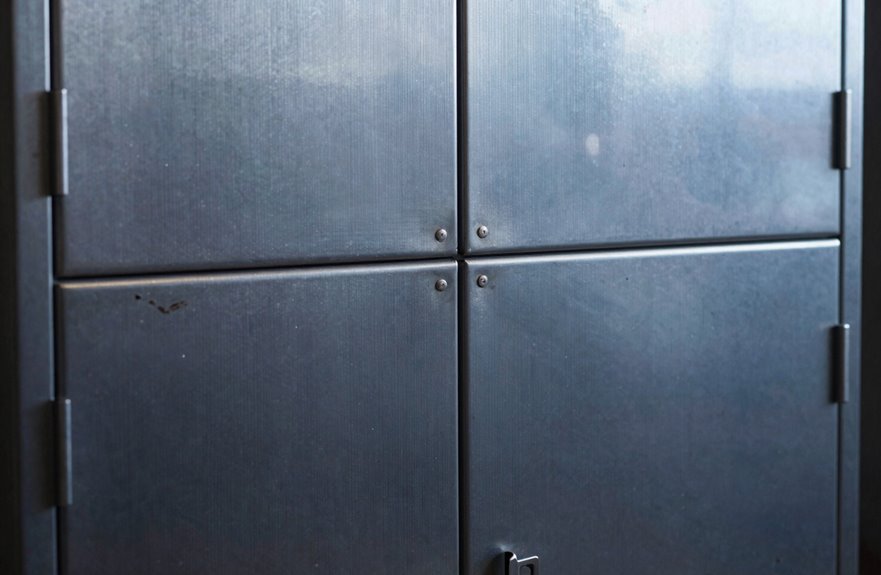
When you glance at a fireproof filing cabinet, the thick door and heavy walls may catch your eye first, but it’s the sealed seams that perform the most crucial function.
Seams are the weak spots where heat transfer can occur. When manufacturers weld steel enclosures tightly, they create a robust barrier. Proper sealing offers several key benefits:
- It blocks hot air, flames, and smoke from infiltrating between panels.
- It keeps insulation intact even when metal expands due to heat.
- It prevents water from sprinklers or firefighters from entering the interior.
- It maintains a steady interior temperature during critical moments.
This continuous barrier ensures that your documents can withstand challenging conditions. Without sealed seams, your cabinet serves merely as a decorative container. With them, you enhance the protection of what truly matters.
UL Fire Ratings and What the Numbers Mean
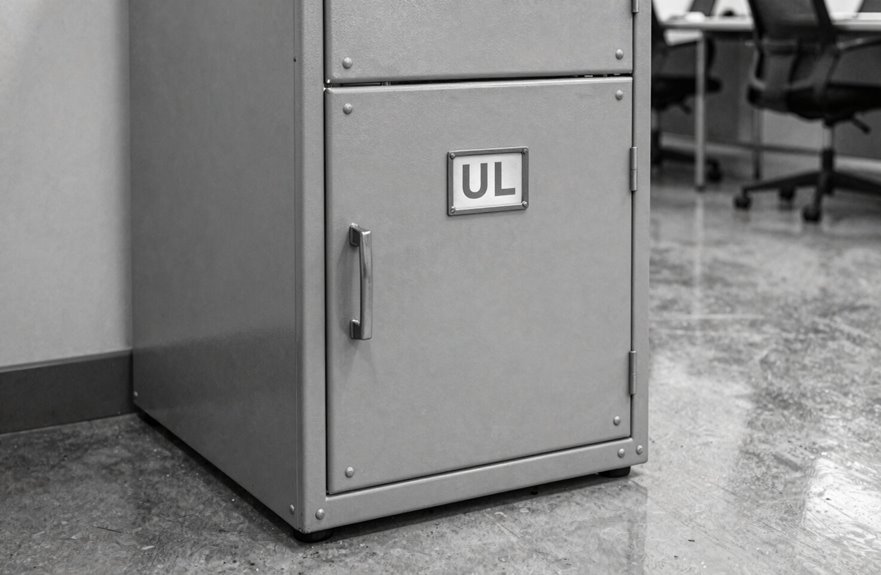
When shopping for a fireproof filing cabinet, you’ll notice labels with numbers like Class 350, Class 150, or Class 125. These UL ratings specify what you’re getting, helping you understand their significance.
UL ratings measure fire resistance by indicating the maximum internal temperature a cabinet reaches during testing. Higher numbers indicate better protection for more sensitive materials. Here’s the breakdown:
| UL Rating | Protects | Best For |
|---|---|---|
| Class 350 | Paper documents | Contracts, records, files |
| Class 150 | Magnetic media | Tapes, older hard drives |
| Class 125 | Computer disks | Modern drives, USBs, data |
Testers heat cabinets on all six sides to verify these claims. Always check for the official UL label; it confirms that you are making informed choices for securing important items.

✅ UNMATCHED FIRE PROTECTION WITH 3M ADHESIVE STRENGTH – Elevate your safety with Intumescent Smoke Seal Strip Tape that expands under heat, sealing gaps to block fire and smoke instantly. Featuring 3M’s strong grid adhesive, it outperforms competitors by staying firmly in place for maximum security.

✅ UNMATCHED FIRE PROTECTION WITH 3M ADHESIVE STRENGTH – Elevate your safety with Intumescent Smoke Seal Strip Tape that expands under heat, sealing gaps to block fire and smoke instantly. Featuring 3M’s strong grid adhesive, it outperforms competitors by staying firmly in place for maximum security.

What You Get: it comes with 2 rolls of intumescent smoke seal strip tape, each up to 9.8 feet long, which can simultaneously cover multiple doors and windows, meeting the centralized protection needs of homes or businesses
1-Hour vs. 2-Hour Fire Ratings: Which Do You Need?
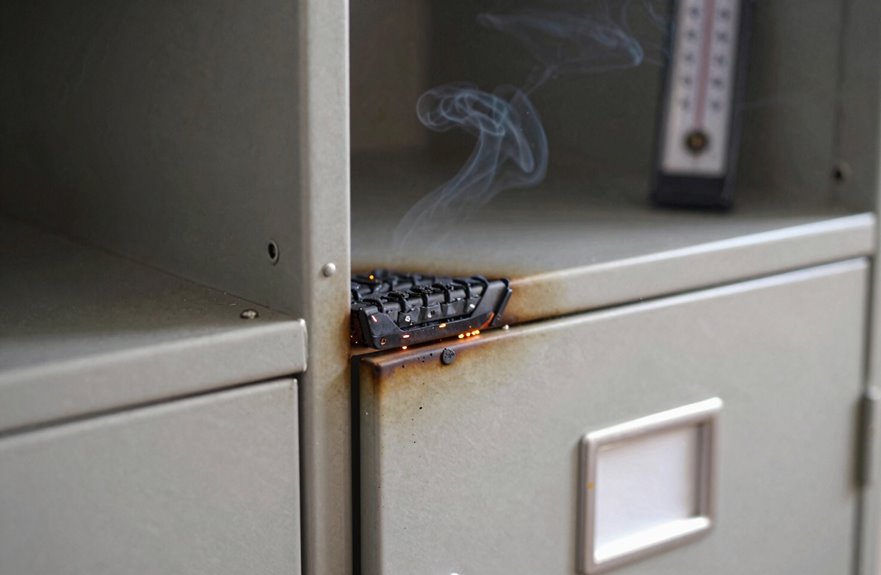
Once you’ve determined the right UL class for your materials, you need to decide how long your cabinet should withstand fire.
Once you’ve chosen the right UL class, determine how long your cabinet should withstand fire.
A 1-hour fire rating protects papers for about one hour during UL testing, while a 2-hour rating provides double that fire resistance. UL testing heats all six sides, so a higher rating means more time before the interior becomes too hot.
Here’s how I make my decision:
- Choose a 1-hour fire rating for standard home or office protection.
- Opt for a 2-hour rating if you live far from the fire station.
- If you need to store irreplaceable documents, more fire resistance offers better protection.
- Match your fire rating to your risk level and budget.

HANGS PICTURES AND MORE: This galvanized steel wire hangs framed pictures and mirrors and handles all-around binding, bracing, and repair, strong enough to support up to 75 pounds yet flexible enough to loop, twist, and cut to length.

Heavy-Duty Strength – 14 gauge galvanized steel wire, stronger and more durable than 16 gauge.

Convenient 2-Pack – Get double the wire for even more creative or practical uses around the home and garden.
Intumescent Coatings and Fireproof Insulating Cores Explained
The outer shell features intumescent coatings that swell when exposed to heat, forming a thick, charred layer that insulates the metal underneath. Inside the walls, a fireproof core made from gypsum or mineral wool fills the space between steel panels, blocking extreme heat from reaching your files. The coating expands at a specific temperature to activate early, and the sturdy core along with the welded frame helps the cabinet maintain its shape while protecting your documents.

NEW SLEEK DESIGN: featuring rounded edges & recessed drawer handles, the new Turtle Contour line modernizes an icon in fire protection

FIRE RATED FILING CABINET can endure fire for 1 hour while maintaining interior temperatures, ensuring your documents, certificates & valuables remain safe in extreme conditions

FIRE RATED FILING CABINET can endure fire for 1 hour while maintaining interior temperatures, ensuring your documents, certificates & valuables remain safe in extreme conditions
Intumescent Coating Mechanics
How does a thin layer of paint protect important papers from a fire? Intumescent coatings work by swelling rapidly when exposed to heat, forming a thick, fluffy char layer. This char acts as a shield, slowing heat transfer to keep valuable files safe.
Here are the steps involved:
- The coating expands many times its original size when exposed to flames.
- It remains flexible while swelling, preventing cracks that could allow heat to penetrate.
- The thick barrier contributes to the cabinet’s fire resistance rating, typically providing protection for one or two hours.
- Intumescent coatings often work in conjunction with an insulation core for added protection.
The thickness of the application and the use of specific fillers determine the duration of the protection.
Insulating Core Materials
Why does a fireproof cabinet stay cool enough to save your papers when the outside temperature reaches around 1,700°F? The answer lies in the materials used between the steel walls.
Insulating Core Materials: Your Secret Shield
Fireproof cabinets use insulating core materials that function like a thermal barrier. These include:
- Gypsum-based cores – These utilize plaster-like compounds, often reinforced with a steel lattice. They are rigid, lightweight, and highly effective at blocking heat.
- Mineral wool – This fibrous material contains air pockets that significantly slow down heat transfer.
Both options work in conjunction with intumescent coatings. Together, they maintain the temperature of your documents below 350°F for several hours. Choosing a UL-rated cabinet means you can rely on these proven systems.
How Metal Construction Contributes to Fire Resistance
Before we explore the details, picture a metal filing cabinet as a protective shell. You rely on this piece to guard important items, and this is why that confidence is well-placed.
Welded steel construction forms the backbone of fire resistance. This is not flimsy sheet metal; it is thick, layered, and designed to endure. Here’s what makes it effective:
- Fire-resistant insulation fills the gap between steel walls, creating a buffer zone.
- Thick steel panels slow heat transfer, preventing flames from penetrating quickly.
- Precision welds hold the frame together, even when temperatures rise.
- Seals around doors and drawers block hot air from entering.
These elements work together to keep your documents safe during a fire.

Two letter-size 31" deep file drawers built with high sides for use with hanging folders and 1 follower block per drawer

Two letter-size 31" deep file drawers built with high sides for use with hanging folders and 1 follower block per drawer

Two letter-size 31" deep file drawers built with high sides for use with hanging folders and 1 follower block per drawer
Waterproofing: The Hidden Feature of True Fireproof Cabinets
You might think fireproof cabinets only fight flames; however, they also protect against water. During a fire, sprinklers and hoses can drench everything, making water resistance just as crucial as heat protection.
How It Works
- Quality cabinets use special seals around doors to keep moisture out.
- Inside, gypsum-based fire insulation works alongside these seals. The insulation blocks heat while the gaskets prevent water intrusion.
Not every cabinet offers this feature. Some focus solely on temperature control. That’s why certification is important. Look for UL or ETL marks that verify water resistance testing.
Before making a choice, check the specifications. Ensure your cabinet lists water protection in addition to fire insulation. Your important documents deserve adequate safety.
How to Verify Fireproof Claims Before You Buy
How can I tell if a cabinet’s fireproof label is accurate? Real protection starts with verified UL ratings. It’s important to dig deeper before making a purchase.
Here’s what I check before buying:
- I look for clear certification marks like UL 350 or UL 150 stamped right on the cabinet.
- I examine the build quality, since thick gypsum cores and solid welds help hold back heat.
- I ask for test sheets from the manufacturer to confirm that the fireproof claims are substantiated.
- I cross-reference everything with independent testing databases for additional verification.
If something feels off, I verify again. Your safety is paramount, and it’s worth taking the time to ensure you make an informed decision.

✅【Premium Wood Stove Glass Gasket】Expertly designed with a unique thick-edge, thin-center profile to securely wrap and protect glass edges, ensuring a perfect seal and extended lifespan for your wood stove glass.

Abundant Supply for Every Need: every package comes with 2 rolls of our adhesive fire/smoke gasketings; With each roll being quite long, you can cut it to just the right size you require; Having a spare or sharing with family and friends has never been easier

Kit Includes Tight Weaved Gasket - Our gaskets are manufactured using a tightly woven process for a better seal, preventing dust and smoke from escaping. The gasket is impregnated with graphite, is non-flammable, and can withstand temperatures up to 1100°F, making it more durable and resistant to wear.
Fire Ratings for Paper vs. Digital Media: Different Standards
Why do some cabinets handle paper well while damaging hard drives? It all comes down to UL ratings, so let’s get specific.
Understanding the Classes
- Class 350 protects paper documents. It keeps inside temperatures below 350°F when the outside reaches about 1700°F.
- Class 150 covers magnetic media like tapes.
- Class 125 guards flexible computer disks.
Paper can withstand higher heat than digital media. This is why standard fireproof cabinets focus primarily on paper rather than hard drives.
Match Your Stuff
- Paper only? Class 350 works effectively.
- Digital files? You’ll need digital media protection through specialized safes.
Don’t assume one cabinet will cover everything. Always check those UL ratings before making a purchase, so your important files, regardless of format, remain safe.

14 GAUGE GALVANIZED STEEL WIRE – Designed for fencing, garden applications, bundling materials, securing equipment, hanging items, repairs, and general utility use for...
Maintenance Habits That Preserve Fire-Resistant Properties
Regular inspections of seals, locks, and ratings are essential to catch early warning signs in your fire-resistant filing cabinet. Wipe dust from vents and gaskets with a soft cloth, and ensure that drawer tracks and hinges move smoothly without sticking. These quick cleaning and hardware checks only take a few minutes, but they ensure that your cabinet’s protective features function properly when needed.
Regular Inspection Routines
I conduct a quick inspection of my filing cabinet every few months because small problems can escalate into significant issues when it matters. I want my cabinet to remain a part of our safety routine, so I have a simple checklist ready.
- I check locks, hinges, and tracks for wear that could compromise the protective seals around the drawers.
- I lubricate slides and hardware to prevent strain on the fire-rated metal walls inside the unit.
- I examine gaskets and replace worn ones to ensure the seals are tight against heat and smoke.
- I review the UL label and verify specifications with the manufacturer to confirm that my inspection aligns with the original design.
These habits enhance our safety and help ensure our readiness as a team.
Proper Cleaning Methods
Because dust and debris can slowly wear down the seals I depend on, I treat cleaning as a key part of protecting my cabinet’s fire-resistant properties.
I wipe down surfaces with non-corrosive cleaners, since harsh chemicals damage the insulation materials that provide fire resistance. I am careful around door seals, as even small scratches can create gaps that allow heat to penetrate.
For insulation maintenance, I keep drawer tracks lightly lubricated. This prevents sticking that might warp the cabinet’s fit. I also ensure that doors close fully flush; any misalignment risks my protection.
I clean gently but regularly, knowing this routine keeps everything working together. When my cabinet remains properly sealed, I have reliable defense against fire. Consistent attention is all that is needed.
Hardware Integrity Checks
Why do I check my cabinet’s hinges and locks so often? I understand that maintaining strong fire protection involves paying attention to the details, along with others who prioritize safeguarding important items.
Here’s what I do to protect my investment:
- I inspect hinges, locks, and drawer tracks for wear since damaged hardware creates gaps heat can penetrate.
- I lubricate slides to prevent jams that could lead to damage.
- I tighten seals and gaskets to block heat and water from reaching my files.
- I verify my fire ratings labels, like UL 350, to confirm my cabinet is still certified.
I also ensure that internal parts remain secure under load. This routine keeps my hardware integrity solid, so I am prepared when it matters.